

Lugnano in Teverina at a glance
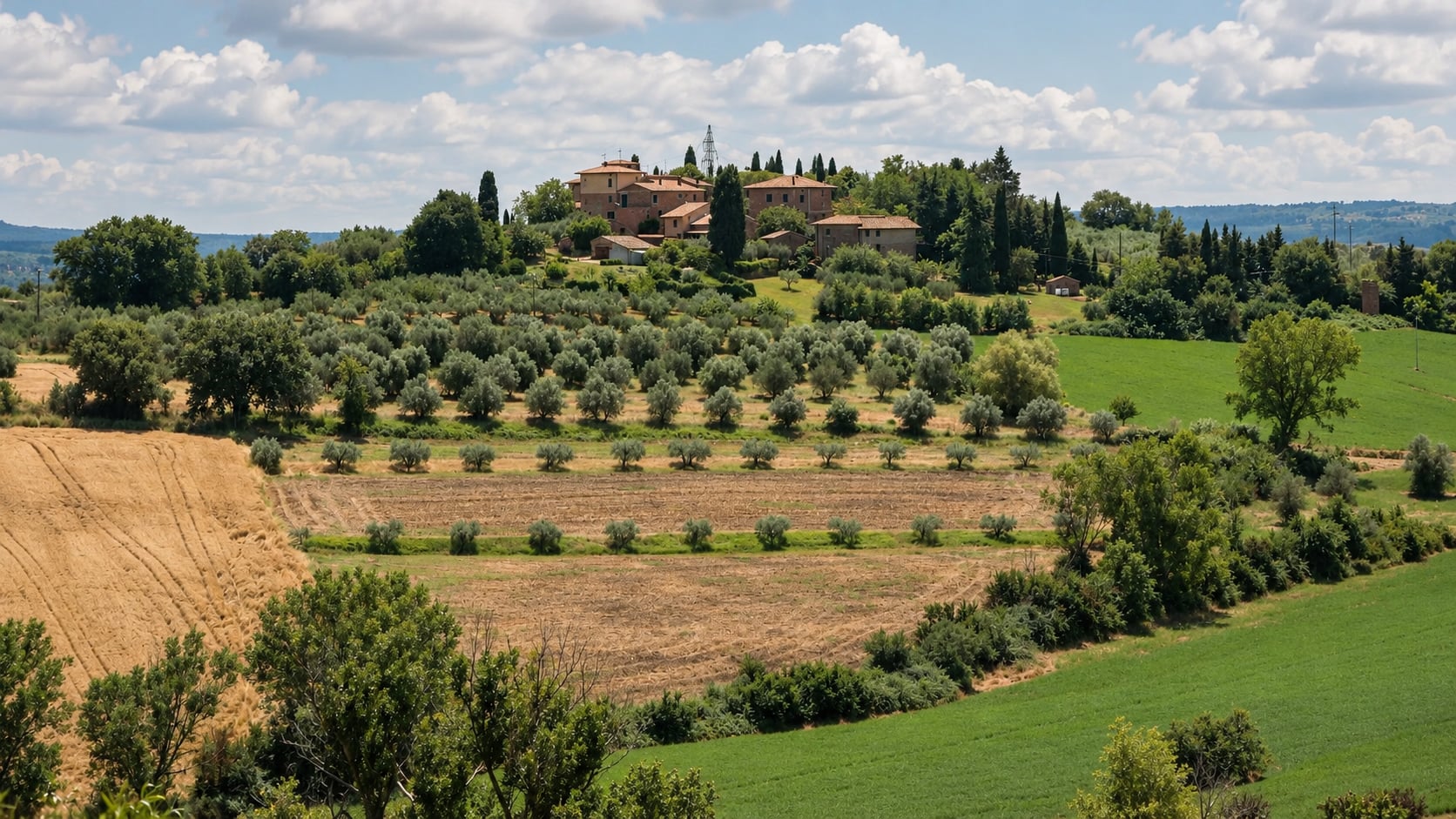
Lugnano in Teverina is a small municipality in the province of Terni, in southern Umbria, set in the gentle country between the Amerini hills and the valley of the Tiber. It is the kind of place that rewards a slow look: a walled hilltop centre, a handsome Romanesque church, a small museum of local memory, and an archaeological site that has drawn international research.
The name itself invites guesswork. The municipality's own history page suggests it may come from Lucus Jani, the grove of Janus, and reads the hilltop as a healthier spot above the marshy Tiber lowlands. Whatever the truth of the etymology, the settlement has long deserved its reputation as a hidden gem of the Teverina.
Roman roots and papal centuries
In Roman times Lugnano was a prominent settlement of the Agro Amerino-Romano, the countryside around Amelia, and the municipality points to the remains of country villas and to mentions in Pliny the Younger as evidence.
The Middle Ages and the early modern period were shaped by the Papal State. Lugnano was a Terra directly dependent on the Roman Duchy rather than a feudal holding, its statutes of 1508 followed the model of the Roman municipality, and it stayed within the Patrimony of Saint Peter until it joined the Kingdom of Italy in 1860.
A Franciscan layer sits on top of this. The convent of San Francesco, founded in 1228 to 1229, stands where Saint Francis is said to have preached and worked a miracle in 1212, and the church keeps a fresco that recalls the event.
Reading the historic centre
The old town is compact and still defined by its wall circuit and towers, with the Collegiata and Palazzo Pennone as its religious and civic anchors. Two details are worth looking for. The Porta Medioevale carries the coat of arms of Pope Pius II Piccolomini, and Torre Palombara bears a white stone dove that, according to local tradition, commemorates the townspeople's escape from danger.
Palazzo Pennone, also known as Palazzo Farnese-Ridolfi, has lived many lives. It began as a monastic complex, later passed to the Vannicelli family, housed the papal governor, and was put to work as a grain store, a mill and a silkworm house. It is a three-storey rectangular building cut in two by the Galleria Pennone, and it is a good reminder that Italian towns rarely stop reinventing their buildings. Look for the travertine corner stones, balustrades and rusticated portal, and for the wrought-iron coat of arms of the Vannicelli family above the well.
Santa Maria Assunta
The Collegiata of Santa Maria Assunta is the town's masterpiece. The municipality dates the Romanesque church to the eleventh or twelfth century, on a ninth-century foundation, and describes a portico of five columns, added before 1230, that carries effigies of the Liviani and Orsini families. Inside are three naves with decorated capitals, a floor in the Alexandrine-Cosmatesque manner and, above, a double-wheel rose window. The diocese is more cautious about the building's exact chronology and original form, so dates for its founding vary between sources.
Beneath the church lies a crypt, entered past a Schola Cantorum and known for a sixteenth-century alabaster crucifix. Municipal descriptions also credit the interior with a triptych by Niccolò Alunno, a Giottesque Crucifixion and Livio Agresti's Beheading of Saint John the Baptist, dated 1571.
The church takes its name as a Collegiata from the chapter of twelve canons who once served it. In the Middle Ages it was also a gathering place where the community took civic decisions, before it became chiefly a religious and artistic centre. Look for the eagle on the facade and the Tetramorph of the four Evangelists beside the rose window.
Music lovers will like the organs. The municipal record reports two, one by Rino Pinchi to the right of the altar and, to the left, a 1756 instrument by Johannes Conradus Werler, a German organ builder working in Rome, with eight registers and a 45-key manual, restored in 2005 by Marco Laurenti. The church is a living parish church, so it is best approached as a place of worship first, with the art and architecture as a generous bonus.
The Fabbrica and the civic museum
The Ex Fabbrica is a piece of industrial archaeology built in the early 1900s to a design by the architect Paolo Zampi. Around 1920 it housed the Helios lightbulb factory, and it later served as oil mills, a pasta works and a farm building, a neat symbol of Lugnano's farming economy and its attempts at industrialisation. The municipality acquired it in the 1990s and turned it into a cultural centre for theatre, dance, music and video art. Since 2011 its first floor has been home to the Teatro Spazio Fabbrica, a good clue to how this small town keeps its cultural life going.
Lugnano's civic museum tells a story that most visitors to Umbria never hear: how a rural community far from the northeastern front lived through the First World War. The museum was established in 2012 to keep the material from a 2006 temporary exhibition, and its permanent section shows objects and mementos, service records and a photographic archive made by the local medical officer Luigi Canepone, alongside private collections donated by local collectors. The display was renewed in 2013. The story is deliberately local: Lugnano was a farming community, many of its farmers were conscripted between 1915 and 1918, and many never came home.
Poggio Gramignano through time
The municipality dates the start of excavation to 1988 and describes a rustic villa of the second century BC that became, in the fourth or fifth century AD, a burial ground for newborns and infants. The excavators read the pattern as a sign of malaria in the Tiber lowlands, a public-health story that helps explain why settlement moved to the healthier hilltop.
Poggio Gramignano is not the only archaeological site in the municipality. Numerous others have yet to be excavated and may add to what is known about ancient settlement here and about the origins of Lugnano itself.
Olea Mundi and the olive
Olea Mundi is not a single picturesque grove but a research network, and Lugnano hosts one of its field collections. CNR describes it as Italy's largest collection of olive varieties, run under the Biomemory project to maintain and evaluate the varieties, preserve genetic diversity and support research on new cultivars and on the climate adaptation of olive growing. The Lugnano field collection was planted in 2014 and holds about 1,700 accessions, kept by the CNR institutes IBBR and ISAFOM. It sits alongside the other CNR collections at Pergusa and Follonica. The municipality of Lugnano is one of its named partners, alongside the 3A Agrifood Technology Park in Umbria and the municipality of Enna, and three CNR institutes manage the collections.
Monti Amerini and the Tiber valley
Lugnano is one of the municipalities that the Region associates with the Monti Amerini site, a Special Area of Conservation of 7,840 hectares, which gives the surrounding hills and woods a recognised ecological identity.
Down toward the river the landscape changes. The municipality describes the old path from Lugnano to the Tiber valley as running past clayey badlands to the ruins of the Castello di Ramici, where sulfurous saline springs rise at about 15 degrees Celsius.
Wine and oil of the Amerini hills
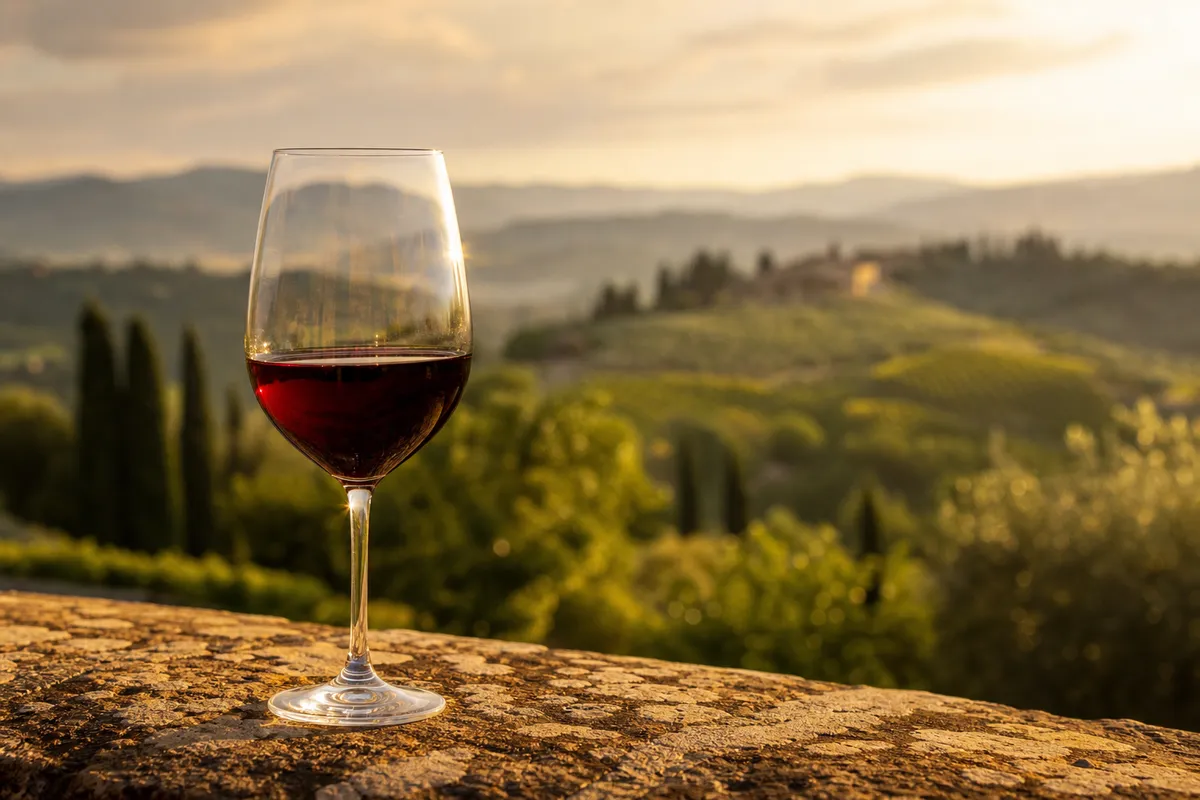
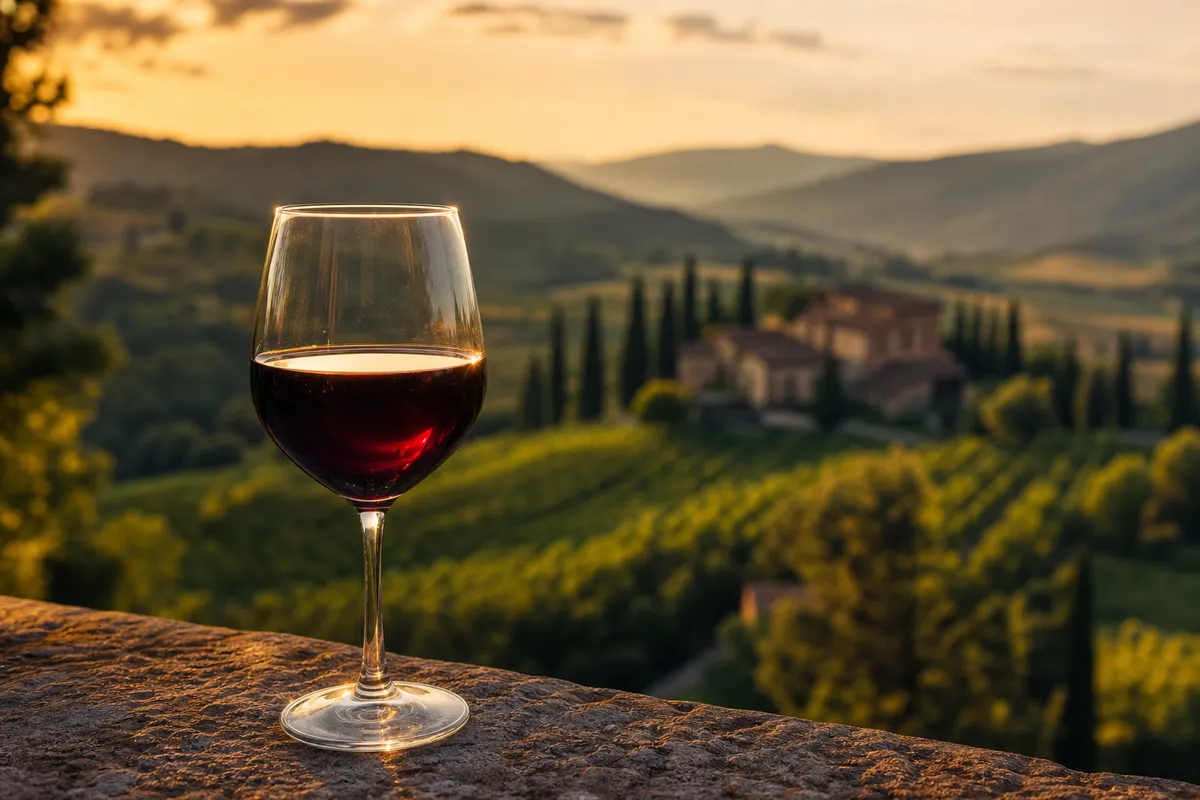
The whole territory of Lugnano in Teverina lies within the Colli Amerini production area of the Umbria PDO olive oil. It is also part of the grape-growing zone of the Amelia DOC wines. For a traveller, that simply means that the oil and wine of these hills are worth seeking out at the table, and worth asking about by name.
More of Umbria
A letter from Italy, once a month.
The places, tables and makers we found worth your time. One email, no noise.
One letter a month. Unsubscribe at any time. We never share your address.