

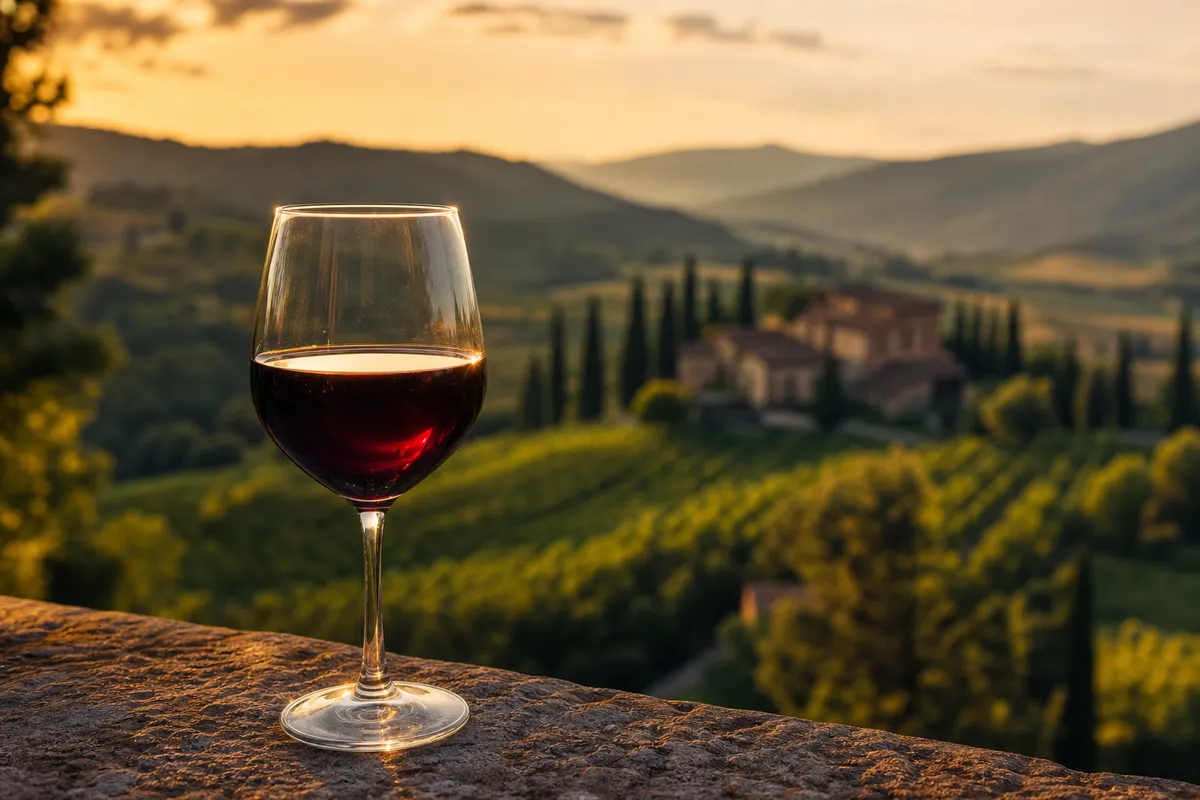
Two villages, one valley
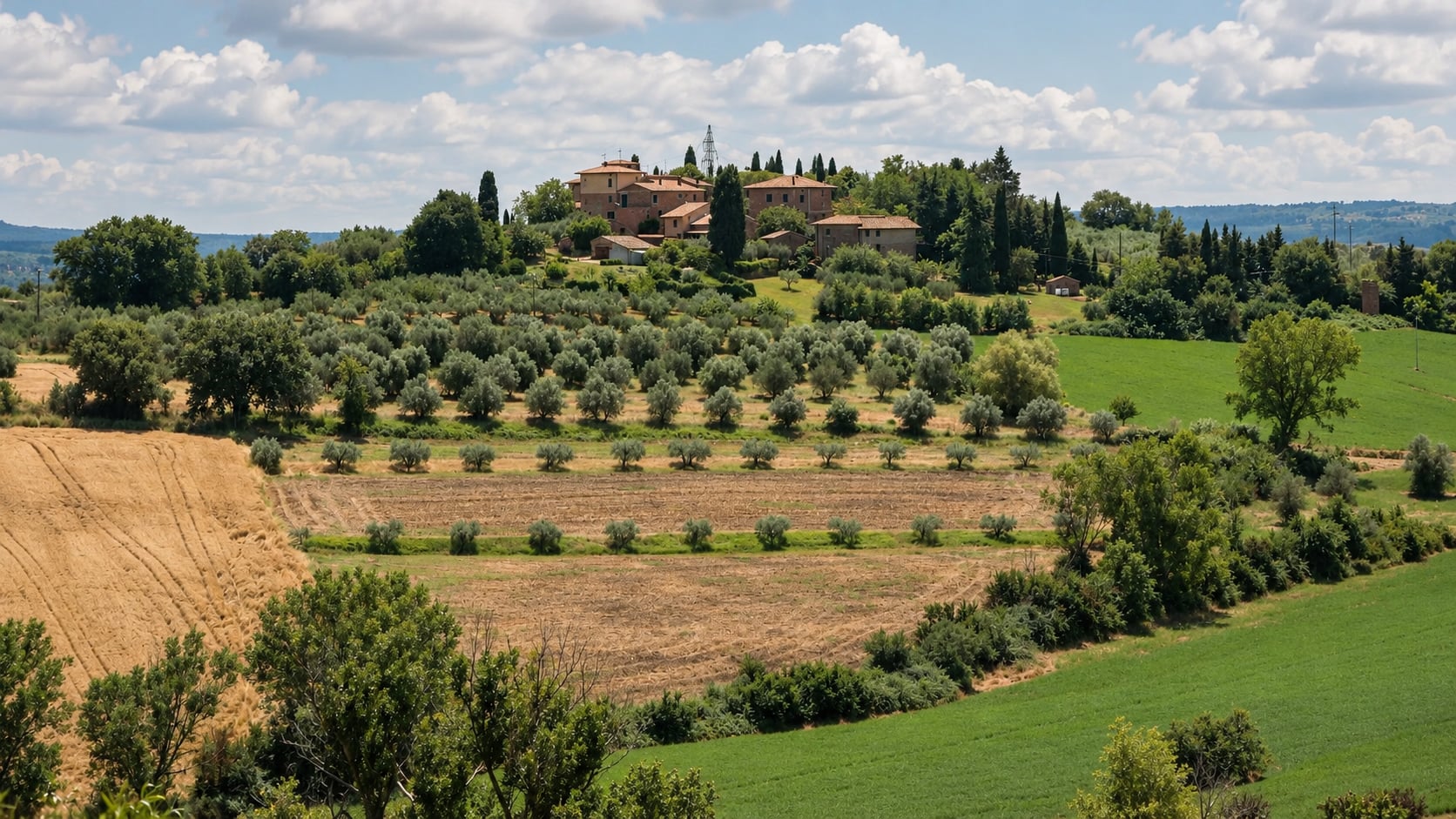
Ferentillo is a comune in the province of Terni, in the Valnerina, the valley of the Nera in southern Umbria. The name covers far more than a single village. The municipal statute defines the capoluogo as the pair of settlements Matterella and Precetto, and lists eighteen frazioni, small outlying hamlets including Gabbio, Nicciano, Macenano, Monterivoso, Umbriano and Castellonalto, spread across 69.61 square kilometres.
That shape explains how a stay here works. You do not arrive at one central piazza and fan out; you move between Matterella and Precetto and then out to the hamlets and the abbey. Keep that in mind and the valley's three great draws, the church-and-fortress skyline of Matterella, the mummies of Precetto and the abbey of San Pietro in Valle, fall into a natural order.
Matterella: a church, a fortress and a ruined hill village
Matterella's parish church, the Collegiata di Santa Maria, was built in the second half of the twelfth century under Pope Eugenius III. Prince Franceschetto Cybo had it enlarged in 1494 into a rectangular plan with three naves, and in 1560 it became collegiate. The central portal carries a Madonna and Child among cherubs' heads by Orlando Merlini, dated 1493, and the fifteenth-century bell tower houses the largest bronze bell in the Valnerina.
At Matterella you will also find the remains of the Rocca della Mattarella, a fortress of the eleventh century built, with neighbouring castles, to defend the abbey of San Pietro in Valle. Its square tower watched the routes towards the Duchy of Spoleto and the upper Nera valley, and around the fifteenth century two round bastions were added to standards set by Alberico Cybo Malaspina. The fortress passed from the Trinci family of Foligno to the Cybo, who held it until 1730, and stayed in private hands until it was donated to the municipality. It is now a protected ruin.
Umbriano, one of the statutory frazioni, is an abandoned fortified village on the steep northern slope of Monte Sant'Angelo. It probably arose in the age of Saracen raids, though traces suggest Umbrian settlement as early as the eighth to seventh centuries BC. Its houses rose in three levels, with storage and animal space below, kitchens and halls above and sleeping rooms under wooden ceilings, and stone-framed doors and windows hint at former standing. A church keeps fragments of frescoes attributed to Lo Spagna, including a Saint Sebastian and a Crucifixion, and a largely preserved watchtower once helped defend the abbey. The whole site is a privately owned ruin.
San Pietro in Valle and the Ursus altar
San Pietro in Valle is an abbey church with a former monastery beside it, traditionally associated with the Longobard duke Faroaldo II. What survives is layered: medieval building phases, an extensive cycle of frescoes, Roman material reused in the fabric and, above all, an eighth-century altar signed by a sculptor called Ursus.
The altar is the abbey's best-known treasure. Two rectangular slabs of white marble and four pilasters are carved in incision with stylised human figures and ornament. An inscription names the patron, Ilderico Dagileopa, a Lombard duke elected in 739 who died in 742, which places the work between 738 and 743. The sculptor signed himself Ursus magester and is shown praying on the front slab. Scholars have read the style as Lombard, Byzantine or Oriental, a debate that only adds to its pull.
Beyond the altar, the national heritage catalogue associates some thirty-two movable works with the abbey. Among the most striking are a sixteenth-century Madonna linked to the circle of Lo Spagna and a fresco fragment showing Saint Peter appearing to Faroaldo II, a scene that ties the church back to its founding legend and gives a visit a second thread to follow after the altar.
The abbey church belongs to a Catholic religious body, so think of it first as a place of worship and a house of centuries of monastic life.
Precetto and the mummies of Santo Stefano
Beneath the church of Santo Stefano in Precetto lies the crypt that houses the Museo delle Mummie. Burials here began in the sixteenth century, the last took place on 18 May 1871, and the display cases in use today date to 1992.
What made the crypt famous is the ground itself. Analysis found calcium salts, limestone and clay in the soil, which drew moisture from the bodies, while the cool, ventilated space helped them dry. After Napoleon's 1806 decree on cemeteries, the bodies were found naturally mummified, which drew scholars here throughout the nineteenth century.
Go as you would to any burial ground: quietly, and with the understanding that these were real members of a village community. Opening arrangements change, so confirm them with the museum before you travel.
More old churches and palaces
Matterella and Precetto hold more old buildings than first-time visitors tend to expect. The national heritage catalogue lists Santo Stefano, the church above the crypt, together with the Renaissance Palazzo del Vicario of the Chapter of San Giovanni in Laterano. A slow walk between the two halves of the capoluogo is the best way to meet them, and a short detour up to Lorino brings you to the late-Romanesque San Giovanni Evangelista, a parish church the same catalogue records.
The Nera, the park and the old mule tracks
Ferentillo lies within the Parco Fluviale del Nera, a landscape that people have shaped for millennia. The story runs from Roman water management to nineteenth-century hydroelectric works, with medieval pievi, monasteries and abbeys in between, followed by fortified settlements that set the pattern of rural life.
The regional inventory links Ferentillo to five Natura 2000 areas, all listed as Special Areas of Conservation: Valnerina, Monti Coscerno-Civitella-Aspra, Monte Solenne, Fosso Salto del Cieco and Monte la Pelosa-Colle Fergiara.
The best way to feel that history is on foot. The loop from Ferentillo to Nicciano follows part of the ancient mule track between Spoleto and Monteleone. It passes Gabbio, a largely abandoned medieval hillside village whose Romanesque church holds frescoes by Francesco da Lugnano, then runs on to Nicciano, a former farming village overlooking the Rocca valley. Along the way come wayside shrines, small mountain chapels, and traces of lime kilns and charcoal-burning sites from the valley's working past. Side paths lead to the Matterella fortress, to climbing areas near Gabbio and to Lorino, whose church dates to the thirteenth or fourteenth century.
Monks, waters and a UNESCO proposal
Ferentillo, Matterella, Precetto and San Pietro in Valle are named in Italy's 2006 proposal for the UNESCO Tentative List titled Cascata delle Marmore and Valnerina: Monastic sites and ancient hydrogeological reclamation works. It is a proposal, and Ferentillo is not itself an inscribed World Heritage property. Its pairing of monastic sites with ancient hydraulic works is still a helpful way to read a valley where abbeys and waterworks share one river.
Olive oil, wine and mountain cheese
Ferentillo sits within the Colli Assisi-Spoleto zone of Umbria DOP extra virgin olive oil, so oil from qualifying groves here can carry the protected name.
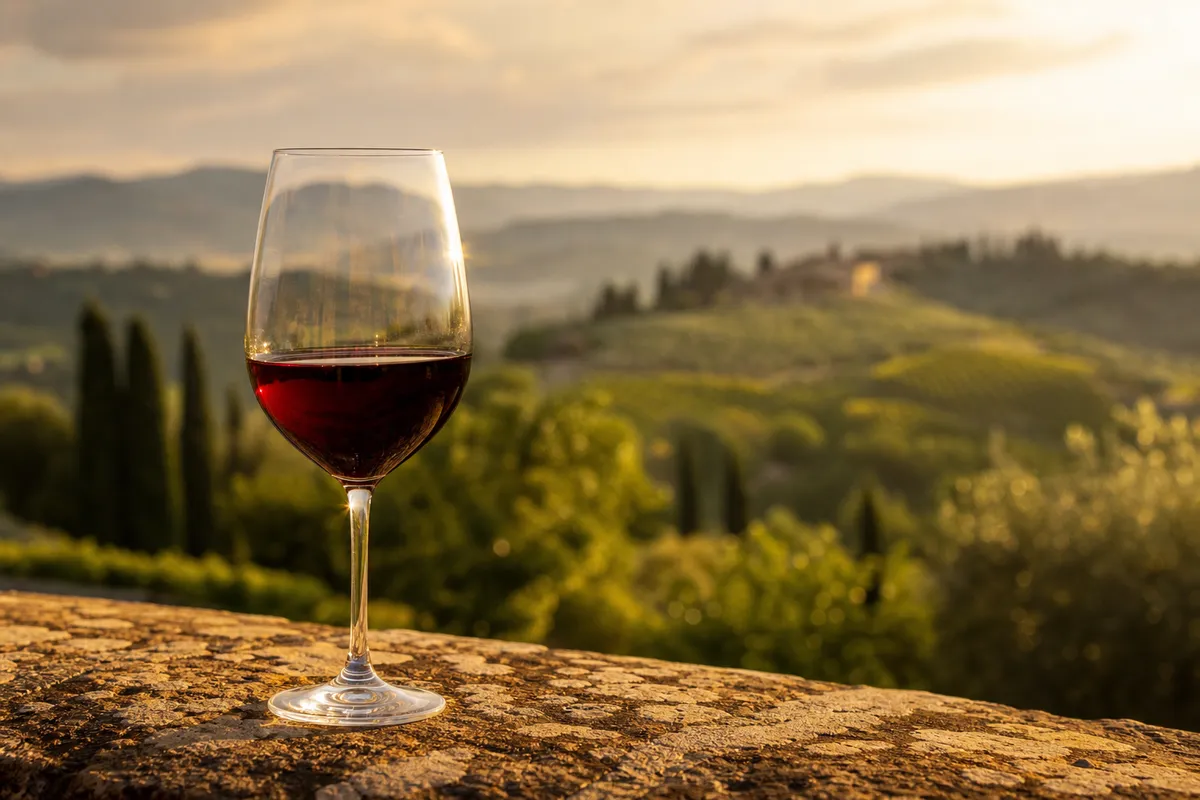
Wine here falls under Umbria IGT, a designation covering all of the provinces of Perugia and Terni. It is a regional label, so expect Umbria IGT rather than a Ferentillo denomination on the bottle.
Regione Umbria's list of traditional agri-food products (PAT) places Ferentillo within the traditional areas of Pecorino di Norcia and ricotta salata. A PAT listing records a long local tradition rather than a protected denomination like DOP, but it is a good guide to the cheeses worth asking for in the valley.
More of Umbria
A letter from Italy, once a month.
The places, tables and makers we found worth your time. One email, no noise.
One letter a month. Unsubscribe at any time. We never share your address.