

Castel Viscardo: castles, clay, and the Paglia edge of the Alfina
It is not a single hill town. The capoluogo, Castel Viscardo itself, is joined by Monterubiaglio and Viceno, both old fortified villages that the regional inventory counts as historic centres, and by Pianlungo and Le Prese, which belong to the modern municipality. Pianlungo straddles the boundary with Allerona and forms one built-up area with Allerona Scalo around the railway, while Le Prese is a small industrial and residential settlement. Seen together, they describe a working Umbrian comune in which a castle, a clay-making tradition, and a railway junction all belong to the same story.
A castle with a disputed birthday and a Baroque face
The town's founding is still told in two versions. The current municipal history credits Viscardo Ranieri with founding the place and giving it his name, dates the first fortress to the years between 1292 and 1298, and treats a pastoral visit in 1357 as the first unmistakable mention. Older accounts, repeated by the state archives and by the regional tourism board, name Giuscardo da Pietrasanta and the year 1263 instead. What is firmly documented is what followed: the castle passed through the Monaldeschi and later the Spada, and in 1879 the neighbouring village of Monterubiaglio lost its own municipal status and was aggregated to Castel Viscardo.
Castello di Madonna, which the regional inventory also lists as Castello di Madonna Antonia, is the building that gives the town its silhouette. Its plan is an irregular polygon wrapped in perimeter walls, with a moat and a bridge, and the walls are built of local stone while the window frames are cut from pale Bagnoregio stone. The medieval perimeter is only half the picture. A major restoration in 1674 and 1675 gave the castle a round-arched Baroque entrance decorated with statues, and an eighteenth-century clock later joined it. The contrast between the defensive ring of wall, moat, and bridge and that theatrical gateway is the most interesting thing about the place, and it is best read from the outside, slowly, before you walk into the lanes around it.
SS. Annunziata and the Baroque interior
The parish church of the SS. Annunziata continues the seventeenth-century story in a sacred key. Municipal history dates the main building campaign from 1670 to 1689, the completion of the work to 1716, and the consecration to 1737, so the church grew over most of a lifetime. Inside, four side chapels hold paintings associated with Carlo Maratta, Giacomo Wernle, and Bernabei of Perugia, and an altarpiece by Wernle shows Saint Bartholomew with Saint Catherine of Alexandria. The municipality also records a captured Ottoman flag kept in the church.
The national cultural catalogue adds two smaller objects from Castel Viscardo that reward a close look whenever the church is open to visitors: a marble commemorative slab dated 1682, and a nineteenth-century cross reliquary made of bronze, rock crystal, wood, stone, and glass. Like any working parish church, the Annunziata asks for quiet and for a little patience with its own calendar.
Monterubiaglio, Viceno, Pianlungo, and Le Prese
Monterubiaglio is the second historic centre of the municipality and the richest of the frazioni. It has its own castle and historic fabric, and a cluster of churches that reward a slow walk: Sant'Antonio Abate, the parish church; the church of the Rosary confraternity; and Santa Rufina. Beneath Sant'Antonio Abate lie the reported remains of an earlier church of San Bartolomeo. The Fonti di Tiberio, a recognised geosite, lies in the same corner of the territory.
Viceno is another fortified settlement with a castle and a historic church of San Nicola. Today its parish bears the joint dedication to Santi Pietro, Paolo e Nicola, a small reminder that parishes and buildings do not always keep the same names over the centuries.
Pianlungo and Le Prese tell a different, equally honest story. They have no castle and no hilltop centre; their interest lies in how the municipality lives today, with a built-up area shared with Allerona Scalo around the railway, and with homes and industry. Including them rounds out the picture of Castel Viscardo as a place that has always worked for a living.
Caldane and the wider archaeological landscape
The Caldane necropolis sits north-west of the capoluogo, in woodland in the Paglia valley, and is part of the Parco Archeologico e Ambientale dell'Orvietano. It came to light in 1986. The tombs are small chambers cut into the rock, each reached by a short entrance corridor called a dromos, and most of them date to the second half of the sixth century BCE. The Ministry of Culture notes that some tombs were found intact and that the burials yielded Orvieto-painted pottery, bucchero, and metalwork, including an Etruscan bronze mirror engraved with mythological scenes. The pottery style points to the valley's ties with nearby Orvieto.
Caldane is not the only trace. The regional archaeological inventory, drawn up from records updated around the turn of the millennium, names a longer list of places in the territory: Podere Cornale, Poggio Pastine, Barca Vecchia-Barcaccia-Podere Molino, Monterubiaglio, the historic centre of Castel Viscardo, Podere Santa Maria, the road between Castel Viscardo and Monterubiaglio, Fonti di Tiberio, Coriglia, and Podere Vitiano. Most are quiet fields and farm tracks rather than places to visit, but together they show how thickly this stretch of the Paglia valley was lived in long before the castle.
Cotto: a craft that runs on the seasons
Clay is the local trade. The national ethnographic catalogue describes Castel Viscardo as a clay-rich area whose handmade terracotta tradition appears to date from the middle of the sixteenth century, and its description of the work shows how closely it follows the calendar. In autumn the clay is prepared in the quarry, broken with the back of a hoe to remove impurities and make it take water better. Winter is for gathering firewood. In spring the clay is mixed with water, and in summer the brickmaker lays sand and ash in the mould and presses the clay in by hand. The bricks then dry on an open yard known as the piazza, bedded on sand, and their edges are trimmed by hand with a stecca.
The firing is where the skill shows. Dry bricks are stacked on edge in the shaft kiln in a herringbone pattern, sometimes split by a straight row, which lets the heat circulate and cook them evenly. The kiln can be fuelled with methane or with wood, and a wood fire is kept fed day and night for between 24 and 48 hours. The craft is not only historical: the Stefani family's handmade terracotta workshop at Trobbe dates its beginnings to 1840.
MUSEC, the terracotta museum
The Museo Etnografico del Cotto, known as MUSEC, is the best place to see how all of this fits together. The municipality created it with the GAL Trasimeno-Orvietano and Regione Umbria, and it belongs to the Ecomuseo del Paesaggio Orvietano network. It occupies an ancient spring house on Via Cavour, a fontanile that later served as a washhouse, adapted to hold three exhibition halls and a teaching workshop. Bricks, roof tiles, storage jars, dishes, and votive images tell a story of hard labour tied to brick and terracotta that runs from the Middle Ages to the present day. It is a small, specific museum, and it suits travellers who like to understand how a place earns its living before they start admiring its monuments.
Landscape, designations, and the glass
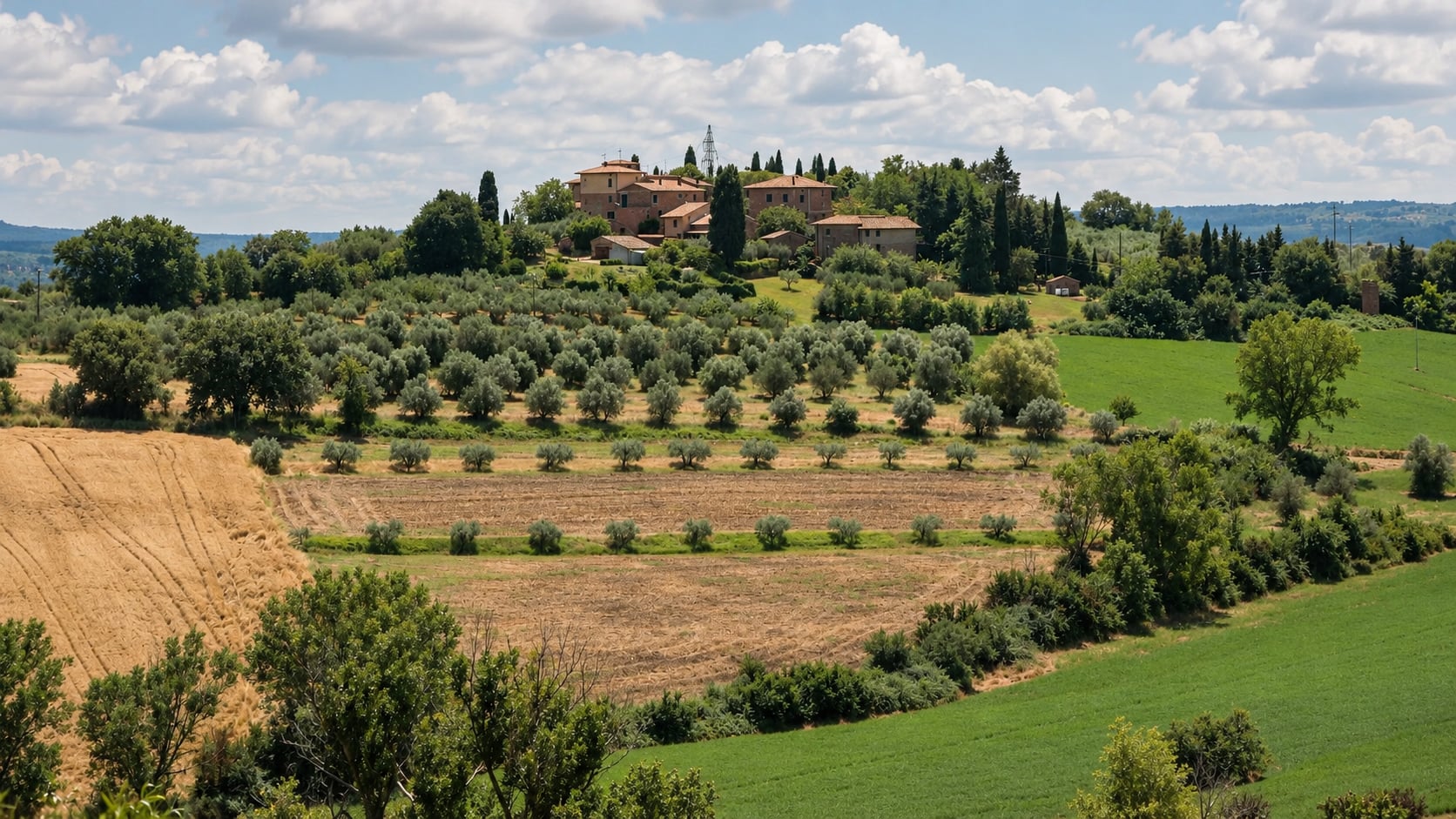
The municipality lies within the Orvietano landscape, in the transition between the Paglia valley and the Alfina plateau. Regional mapping places the Selva di Meana woodland within one of Umbria's protected natural systems and the Fonti di Tiberio within a recognised geological site, and the boundary of the Orvieto DOC wine area follows Monterubiaglio, the Paglia, the Fosso delle Prese, local roads, and the rim of the volcanic plateau. That is a useful image of the place: a valley floor, a wooded slope, and a volcanic edge.
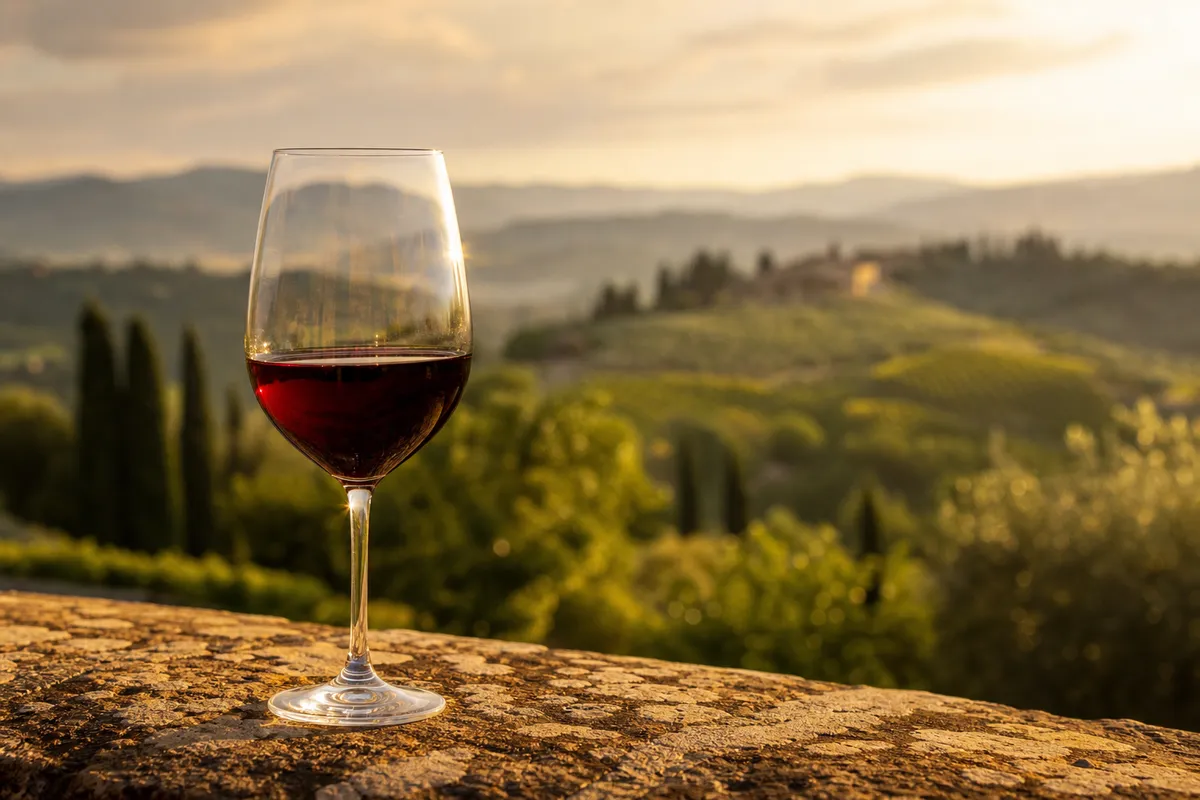
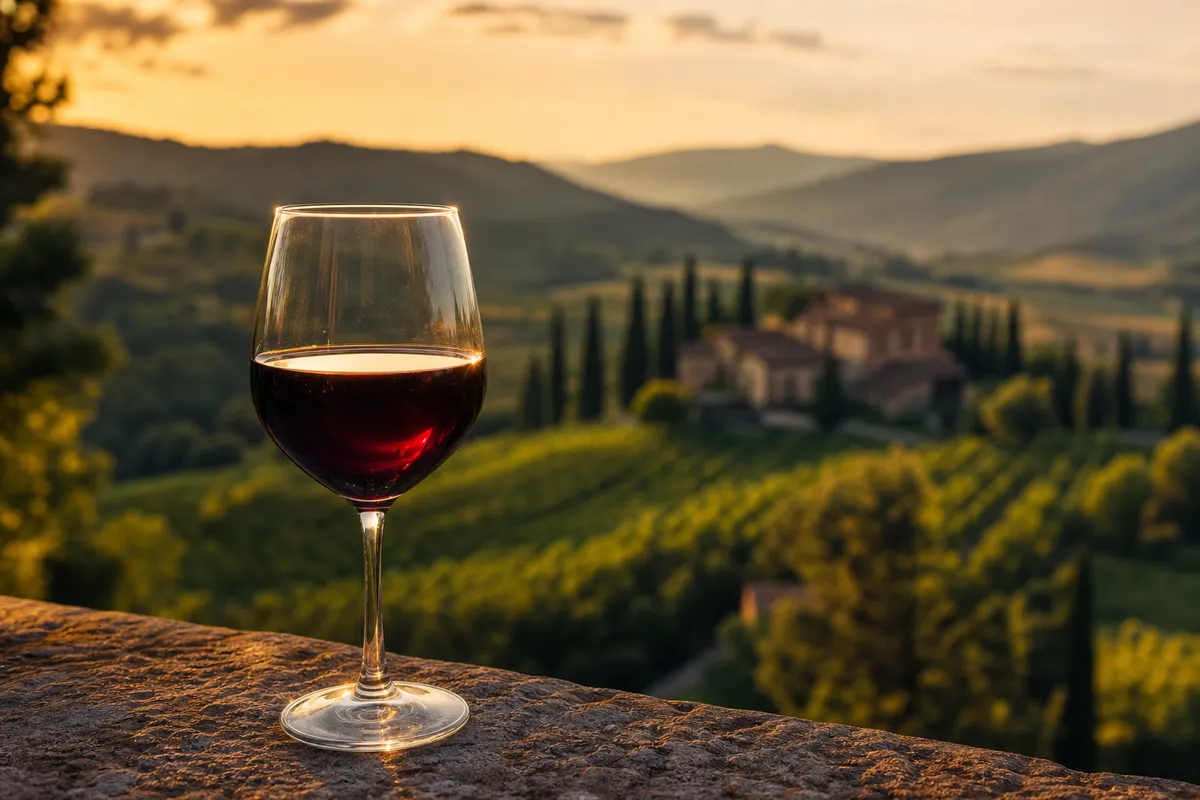
Four protected designations touch the territory. All of Castel Viscardo lies within the Allerona IGT wine area; it falls wholly or partly within the Orvieto DOC; quality-suited land across the whole municipality is eligible for Rosso Orvietano DOC; and the municipality is named in the Colli Orvietani zone of the Umbria DOP olive oil. These designations describe where grapes and olives may be grown, not which producer or bottle is worth seeking out, so it pays to read the label and ask the cellar.
Putting a visit together
Let the materials choose the order. Begin with the stone and Baroque detail of the capoluogo, the castle seen from outside and the parish church of the SS. Annunziata when it is open. Follow the clay to MUSEC, where the seasonal cycle of the kilns makes the rest of the territory legible. Then widen the lens: Monterubiaglio for its castle and its cluster of churches, Viceno for its fortified village. Caldane, the Etruscan necropolis in the wooded valley, is closed to the public, so treat it as a site to know about rather than a stop. Finish with a glass of something from the Orvietano appellations, which makes the legal geography of the vineyards and olive groves tangible in the glass. Opening arrangements for churches, and the museum change, so confirm with the Comune or the operator before you set out.
More of Umbria
A letter from Italy, once a month.
The places, tables and makers we found worth your time. One email, no noise.
One letter a month. Unsubscribe at any time. We never share your address.