

Baschi at a glance
Baschi is not one compact destination. It is a municipality in the province of Terni, in southwestern Umbria, whose hill town, scattered hamlets, Roman pottery works and lake country each occupy a different corner of the territory. The regional archives name Baschi, Acqualoreto, Baschi Scalo, Cerreto, Civitella del Lago, Collelungo, Morre, Morruzze, Scoppieto and Vagli among its settlements.
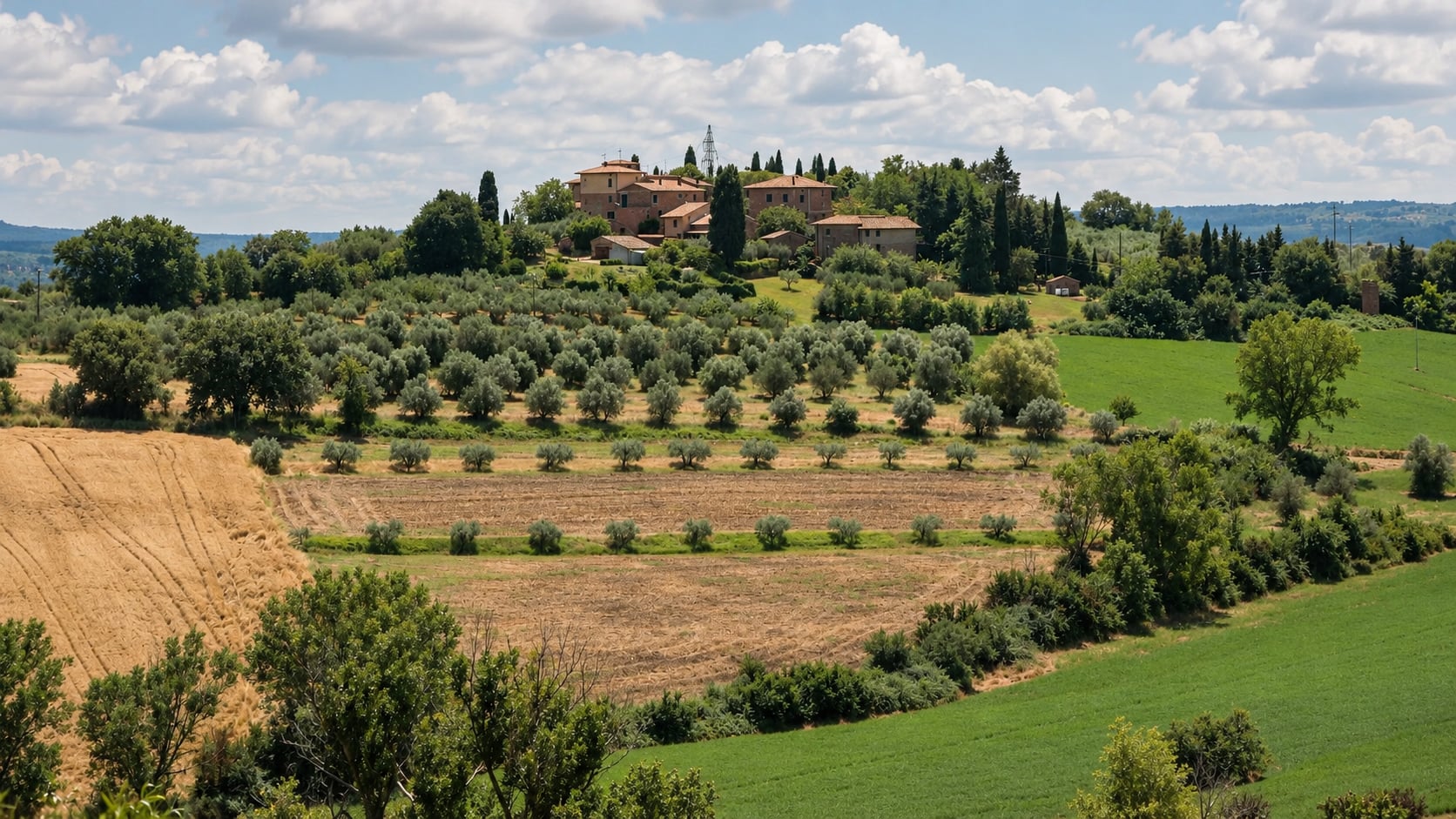
That spread is part of the charm. Baschi rewards the traveller who likes to read a landscape in layers: stone lanes first, then a medieval castle village, then a Roman workshop district, then the broad green water of the Tiber valley.
From Etruscan hollow to the Italian state
The town sits at about 165 metres above sea level among hollows and basins along the Tiber, and its name is traced to the Latin vasculum, a little basin. The local account calls it probably Etruscan in origin, with abundant Roman-era traces.
From the eleventh century Baschi lived as a free commune, and it was dominated by the powerful Ghibelline lordship of the Baschi family. The story turns civic in 1860, when Baschi voted, together with Orvieto and Todi, to join the new Italian state.
I Buchi and the Palazzo Municipale
The old heart of Baschi is known as I Buchi, a compact medieval nucleus of small houses and narrow lanes. It is best explored on foot and without a plan, the way you would drift through a village in the Orvieto hills.
The Palazzo Municipale anchors the centre. Its medieval core dates from around 1200, and Renaissance additions were made under Ranuccio dei Baschi around 1500, when the palace served as the seat of a small court with domains stretching from the Teverina to Orbetello. The council chamber keeps original door jambs, and the palace also houses the town's archaeological museum.
San Nicolò
The parish church of San Nicolò is built of local sandstone. The municipal account dates the rebuilding from 1576 and credits Ippolito Scalza with the design and roughly ten years of work, with Antonio Carrarino taking over only in the final phase, while the bell tower went up. It is a single hall with two chapels.
The interior is Tuscan in spirit, with a coffered ceiling, and Scalza drew inspiration from Florentine models, notably the work of Simone Pollaiolo. The Blessed Sacrament chapel holds a triptych of 1440 by Giovanni di Paolo showing the Madonna, Saint Nicholas and another saint.
This is a working parish, documented from 1562 and still part of the Diocese of Orvieto-Todi. Visit the way you would any living church: quietly, and around services rather than through them.
Civitella del Lago and the Ovoteca
Civitella del Lago is the most atmospheric of Baschi's outlying villages, a small castle settlement with two medieval entrances. One is the Guardiola, also called the Portella, dated to the early 1500s. Palazzo degli Atti was built by Venturino and Diomede degli Atti after Charles VIII marched through, and it has grand halls and monumental staircases. The Arco di Diomede leads into a medieval courtyard carved with the Atti coat of arms, Medici references and the face of Diomede himself.
Then comes the delightful surprise. The Museo Ovoteca on Piazza Mazzini collects painted and sculpted eggs made by professionals, amateurs and students for the Ovo Pinto competition, which dates from 1982. It is a playful, very Umbrian counterpoint to all that stone.
The Antiquarium
The Antiquarium Museo Archeologico di Baschi fills the ground and basement levels of the municipal palace on Piazza del Comune, where it has been since 2000. Its territorial collection spans finds from the thirteenth century BCE to the sixth century CE, with Scoppieto at the centre of the main floor.
The museum also keeps La Marroca, a Renaissance sandstone mask of unknown origin that once decorated the spout of a fountain. It is a small, characterful object, and a good reminder that in towns like this the best museum pieces are often the ones with a story nobody quite knows.
Scoppieto: a Roman pottery district
Scoppieto is the archaeological highlight of the municipality and a real hidden gem. The Ministry of Culture describes a plateau with a sanctuary phase beginning in the fourth century BCE and a pottery workshop from the end of the first century BCE, followed by later housing. About 2,000 square metres have been uncovered.
The local history explains why it matters. Scoppieto was a production settlement for fine terra sigillata of the early imperial age, where the potters Lucius Plotidius Por() and Lucius Plotidius Zosimus ran a workshop described as active until about AD 70 to 80. Excavation began in September 1995 and uncovered eight rooms in two parallel sectors, with a furnace and settling basins.
The finds are equally evocative. They include terra sigillata, lamps and bricks, along with potters' workstations, settling basins, wheels and braziers. Stamped signatures and Mediterranean distribution tie the site to organised Roman ceramic production and long-distance trade. It is a fascinating place to picture Roman tableware being made.
Lago di Corbara and the Tiber
West of the hill town the landscape opens onto Lago di Corbara, an artificial reservoir on the Tiber, with its dam about three kilometres from the Paglia confluence. The regional data give about 207 million cubic metres of capacity, 10.5 square kilometres of surface and a maximum depth of 51 metres.
The reservoir belongs to the Tiber River Park, about 7,925 hectares along roughly 50 kilometres of river across seven municipalities including Baschi. The park takes in the Corbara and Alviano lakes, the Forello Gorge and the Pasquarella valley.
On the river stands the Convent of Sant'Angelo di Pantanelli, a bequest of the Baschi family. The municipal account says it sheltered Jacopone da Todi, the poet of the Stabat Mater, and Saint Bernardino of Siena. Tradition dates the foundation to 1216, with Saint Francis himself taking part, and the site keeps the grotto where he is said to have prayed and stayed, and a rock on the Tiber where he is said to have preached to the fish. A fresco of about 1400 found in 1973 on the high altar shows a crucifixion with Saint Francis.
In the Forello gorge, on the road towards Todi, the hermitage of the Pasquarella was founded in the eleventh century and rebuilt in 1880 by Don Giuseppe Bernardi.
Protected valleys and gorges
The Tiber country around Baschi carries several European protections. Lago di Corbara and Gola del Forello are both special areas of conservation shared with Orvieto. Valle Pasquarella lies in Baschi, and the municipality is among six that share the bird protection area of Valle del Tevere: Laghi di Corbara - Alviano.
Olive oil and wine
Baschi sits inside two protected food and wine geographies. Its olive oil falls within the Colli Orvietani mention of the Umbria DOP oil.
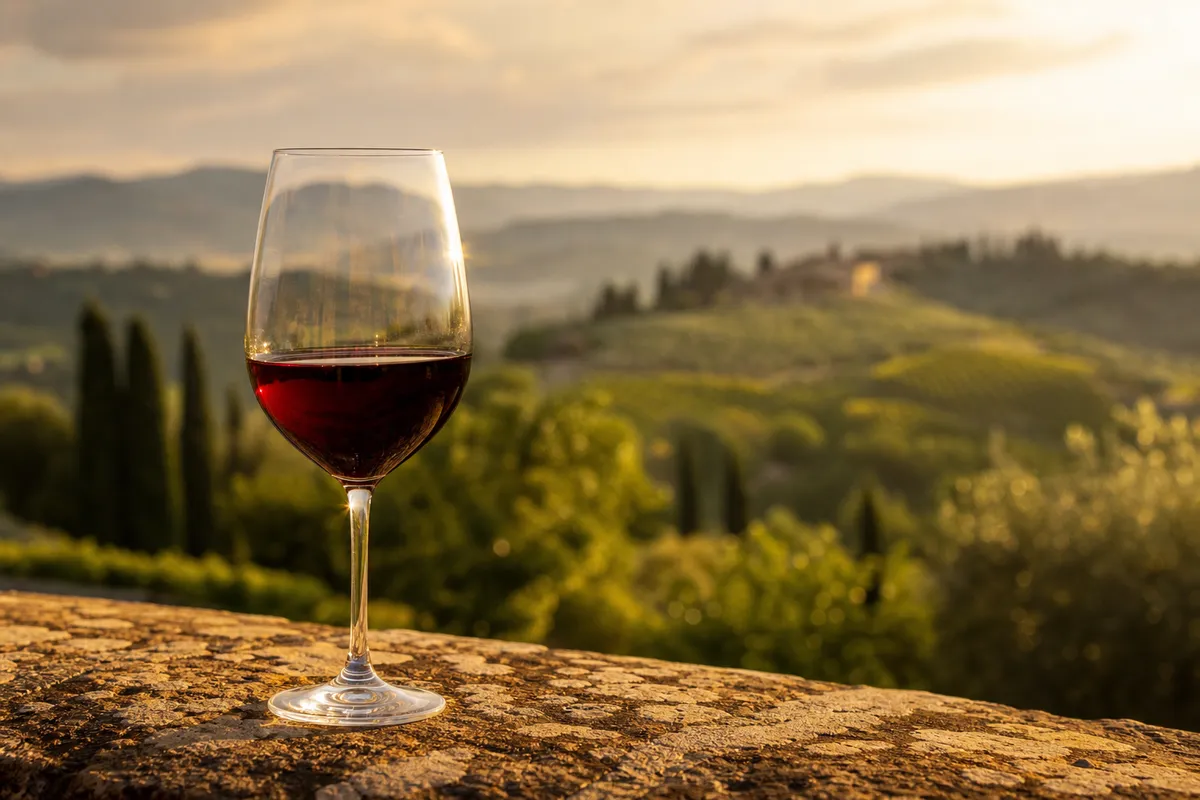
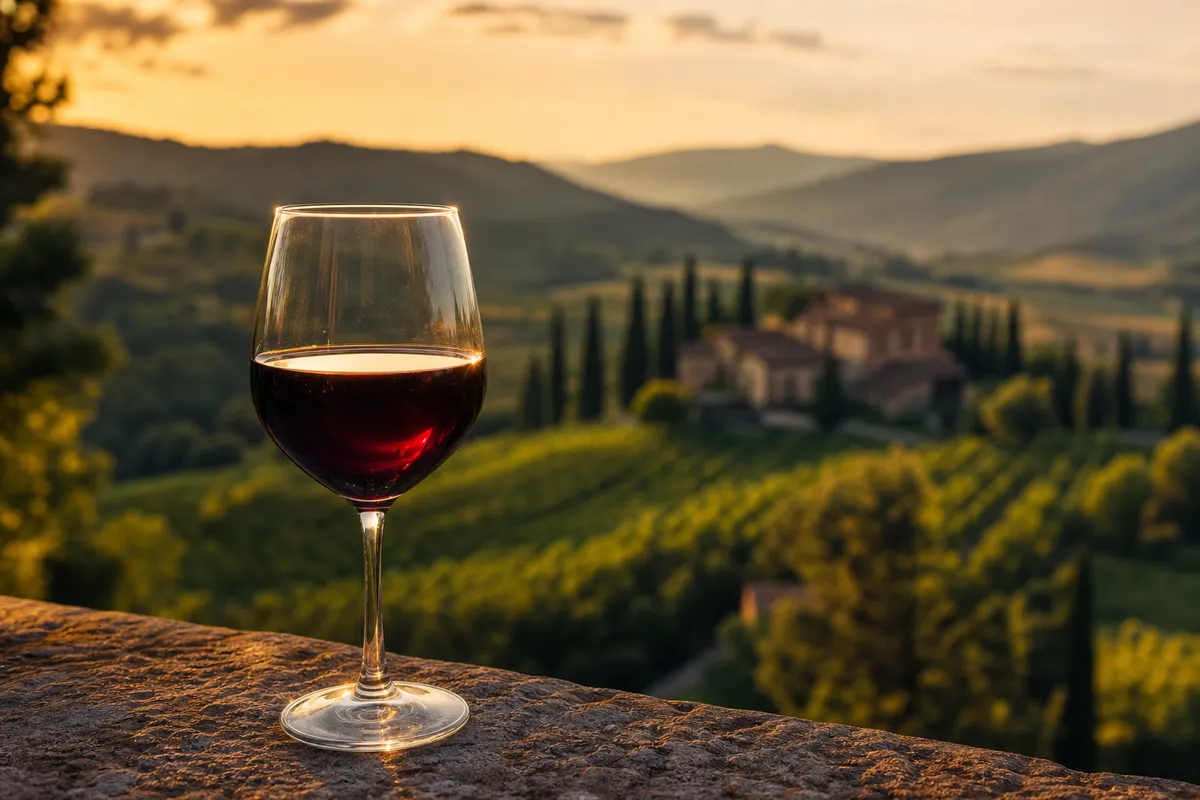
Its wine is the Lago di Corbara DOC. The entire municipality lies inside the grape-growing zone, along with a defined part of Orvieto. Look for the Corbara label when you taste in this part of Umbria.
Reading Baschi from hill town to river
Baschi makes most sense as a sequence of landscapes. Begin in the close lanes of I Buchi, where the scale is domestic and the municipal palace gathers civic history and archaeology. San Nicolò adds the rhythm of a living parish.
Scoppieto supplies the bridge between local ground and the wider Mediterranean. Its pottery works, stamped wares and evidence of distribution show that this quiet corner of Umbria took part in organised Roman manufacture and trade. Civitella del Lago changes the register with its gateways, its medieval court and the playful Ovoteca. Farther west, the Tiber and Lago di Corbara replace stone lanes with broad water, wooded slopes and protected habitats.
That progression gives Baschi unusual range: intimate streets in the morning, Roman archaeology at midday and the open Tiber landscape toward evening. Give it a full day and let the distances between places be part of the story.
More of Umbria

A letter from Italy, once a month.
The places, tables and makers we found worth your time. One email, no noise.
One letter a month. Unsubscribe at any time. We never share your address.