

Acquasparta in brief
Acquasparta is a municipality in the Province of Terni. Municipal planning treats the capoluogo as the historic centre together with the surrounding urban and peri-urban areas, and an approved 2024 technical report names nine frazioni: Casigliano, Castel del Monte, Configni, Firenzuola, Macerino, Portaria, Rosaro, Selvarelle and Scoppio. The structural plan adds a second vocabulary of minor centres, including L'Eremita, Colle Cedio, Cisterna, Colle Campo and Case Legai.
The municipality presents the capoluogo as a medieval-looking settlement with surviving wall fabric and Porta Vecchia, and its structural plan preserves the historic centre as a distinct part of the capoluogo.
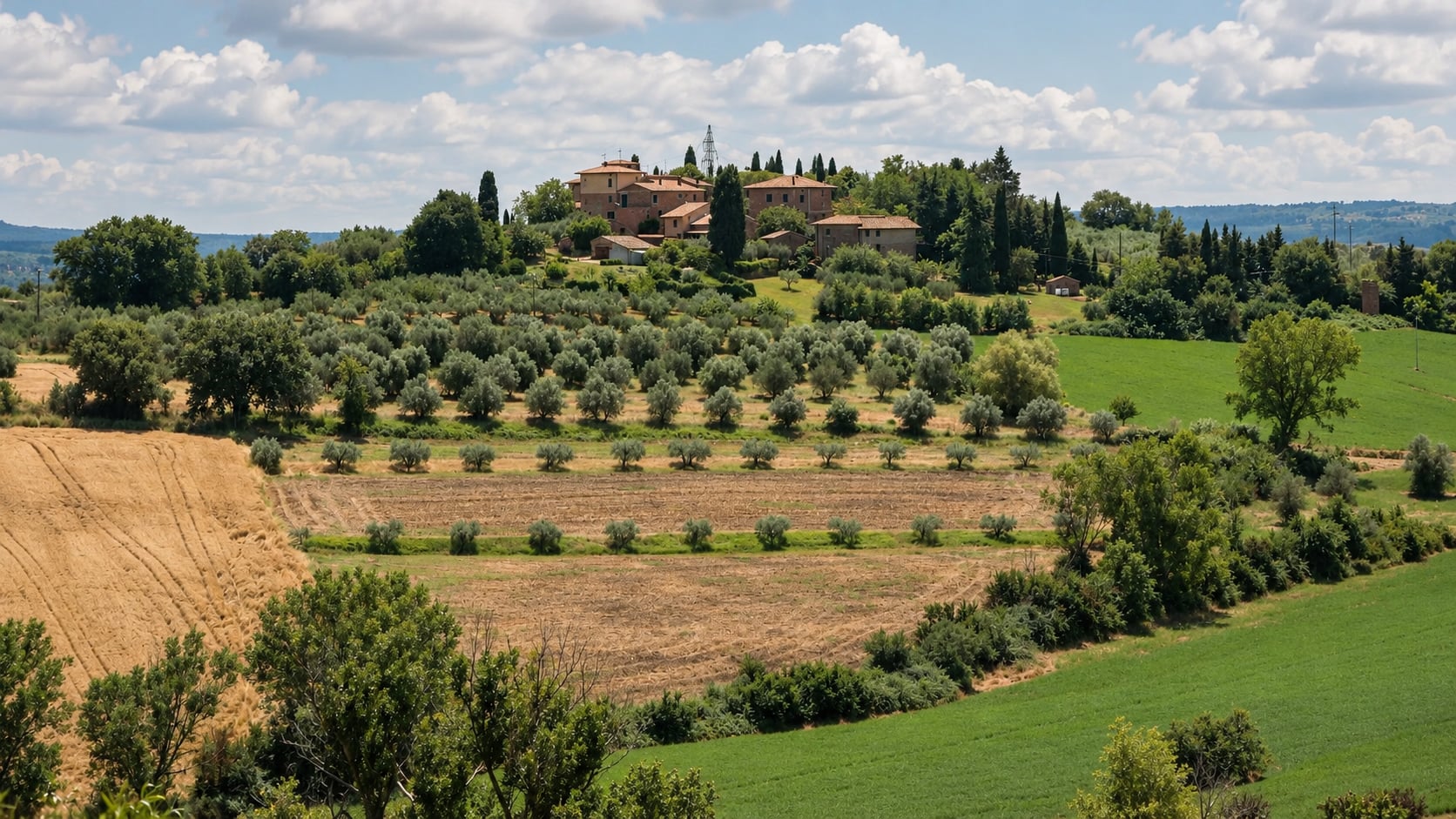
The best way to understand Acquasparta is through several connected layers. The first is the capoluogo, with Palazzo Cesi, Piazza Federico Cesi, Porta Vecchia and the churches. The second is the scientific history of Federico Cesi, the Accademia dei Lincei and Galileo. The third is the wider territory, with fortified frazioni, mineral-water landscapes, the Naia valley and the Monti Martani. Carsulae and Ponte Fonnaia are worth a trip of their own, but they belong to neighbouring municipalities.
Acquasparta sits at about 318 metres in the valley of the Naia, a tributary of the Tiber, and its name goes back to the Roman ad Aquas Partas; the Amerino spring, a bicarbonate-calcic mineral water, rises nearby. SIUSA records that Emperor Otto I granted the lands to Count Arnolfo, whose descendants, the Bentivenga, held the territory until Todi's dominion around 1233.
In the Middle Ages it was a strong castle, first subject to Todi, until Pope Urban VI transferred it in 1387 to Catalano degli Atti. In 1489 Pope Innocent VIII declared it a terra franca by brief, freeing it from Todi, and in 1860 it joined the Province of Umbria in unified Italy.
Acquasparta's best-known medieval son is Matteo d'Acquasparta, born here around 1240. He became minister general of the Franciscans in 1287 and a cardinal in 1288, worked as a papal peacemaker in Florence around 1300, earned a mention in Dante's Paradiso, and died in Rome in 1302.
The capoluogo and its frazioni
The capoluogo is the municipality's central settlement, not a second municipality, and the nine frazioni of the 2024 technical report spread out from it across the hills and valleys of the territory.
The Cesi years shaped the town. In 1538 Pope Paul III had Acquasparta pass to Pier Luigi Farnese, who exchanged it for the possessions of Bartolomeo d'Alviano's daughter, which brought the lordship to the Cesi; in 1588 Sixtus V made it a duchy, with Federico Cesi, father of the Lincei founder, as its first duke. The family's titles also included the marquisate of Monticelli (1572) and the principality of Sant'Angelo and San Polo (1613). Between the medieval castle, the ducal court and the scientific academy, the town packs several eras into a small space.
Around 1500, caught up in the factional struggles of Todi, Acquasparta was assaulted and taken by Altobello da Chiaravalle. Pope Alexander VI answered by sending an army under the best captains of fortune of the day, which destroyed the castle, captured Altobello and reunited the town with the Terre Arnolfe. Acquasparta reached its greatest splendour under Federico II, son of the first duke and founder of the Lincei, and was then struck by the plague of 1630, the year of his death, and by the earthquake of 1703, which devastated much of the central Apennines.
The wider world reached it too. In 1798 a municipality of Acquasparta was constituted under that of Spoleto. After the fall of Napoleon direct papal rule returned, and Pius VII's motu proprio of 6 July 1816 classed Acquasparta as a baronial place of the district government of Terni, in the Delegation of Spoleto. In 1827 Leo XII's reform made it a podesteria under the governor of Terni, an arrangement that lasted until the unification of Italy, and in 1927, when the Province of Umbria was abolished, Acquasparta was assigned to the new Province of Terni.
Palazzo Cesi
Palazzo Cesi is a sixteenth-century Cesi residence in the centre of Acquasparta. The regional and Lincei accounts say the enlargement project began in 1561 with Guidetto Guidetti and continued under Giovan Domenico Bianchi, with completion around 1579; Treccani singles out its grand loggiaed courtyard.
The interior is a layered decorative system. The piano nobile carries dynastic and martial imagery, Cesi arms, coffered timber ceilings and the Lincei lynx emblem. Ground-floor rooms draw on mythological material, especially Ovid's Metamorphoses.
Federico Cesi, the Lincei and Galileo
Born in Rome on 26 February 1585, Federico Cesi founded the Accademia dei Lincei in 1603, at the age of eighteen, in his own residence, with Johannes van Heeck, Anastasio de Filiis and Francesco Stelluti. After an early period of family opposition, the founders resumed meetings in the Acquasparta palace. From 1618 Palazzo Cesi became Federico's residence and an official seat of the academy.
Museo Galileo's chronology places Galileo at Acquasparta as Federico Cesi's guest from 8 to 21 April 1624, and the Lincei account identifies Palazzo Cesi as the residence in which he stayed.
Federico Cesi died of acute fevers at Acquasparta on 1 August 1630 and was buried in the family chapel. In 1800 Federico IX, the last direct descendant of the family, gave up its rights over these lands, keeping only the title, and direct papal rule followed.
Churches and artworks
BeWeB registers the Parish of Santi Stefano e Cecilia at Acquasparta, alongside Santa Cecilia and the town's other sacred buildings and confraternal foundations.
Santa Cecilia retains a twelfth-century apse, a Cesi chapel commissioned in 1581 by Isabella Liviani Cesi and seven canvases dated broadly from the late sixteenth to the later eighteenth century.
San Francesco stands outside the walls and dates to a 1294 commission by Cardinal Matteo Bentivenga d'Acquasparta. The regional account distinguishes the church from the remains of its cloister and convent, and mentions a Madonna della Stella, a Saint Francis canvas described as a copy and a fourteenth-century wooden Crucifix.
A 1762 oil painting of Saints Cecilia and Valerian crowned by an angel is catalogued by the national ICCD as belonging to Acquasparta.
The church of the Madonna del Giglio faces the Porta Vecchia, which once gave access to the town, and dates from the seventeenth century; many of the frescoes inside are visible, some of them well preserved.
The Chiesa del Sacramento was built in 1684 in the contrada of Piazza Vecchia for the Società del Santissimo Sacramento. Square in plan, it had a timber truss roof until the mid-nineteenth century, and inside is a piece of Roman mosaic from the ancient city of Carsulae.
Roman traces and neighbouring sites
The municipal archaeological planning report describes diffuse finds and ancient remains in situ along the Via Flaminia corridor, near Carsulae, across the Monti Martani connection and in the hills toward Massa Martana and Todi. It describes a landscape of archaeological sensitivity, not a single archaeological park or visitor route.
Carsulae, the great Roman site just beyond the municipality, has its official address in the municipality of Terni. It is a rewarding nearby visit and gives context to the Roman material in Acquasparta's hills.
Ponte Fonnaia is labelled by Umbria Tourism as Massa Martana, so it too is a nearby trip rather than part of Acquasparta.
Monti Martani and the Naia valley
Regional landscape mapping places Acquasparta within the FN 6 Monti Martani identity system, which emphasizes the mountain chain, woodland and a linked thermal-town and water landscape that includes Acquasparta and Fonte Amerino. Municipal planning divides the territory into mountain, plain and hill zones and describes the Naia valley between the Martani system and the travertine hills.
Scoppio, Macerino, Portaria and the upland connections add another kind of depth: historic abandonment, fortification, transhumance and mountain landscape.
Water heritage
Water is central to Acquasparta's civic identity, geology and modern industry. Regional records associate the municipality with Amerino, Fabia, Fonte Aura and Grazia Sorgenti di Acquasparta, and UmbriaGeo treats Acquasparta and Fonte Amerino as part of the Monti Martani water and thermal-town landscape.
Festa del Rinascimento
The Festa del Rinascimento sets the contrade San Cristoforo, Porta Vecchia and Il Ghetto against one another, with programming in Piazza Federico Cesi, Palazzo Cesi and the contrada taverne. It gives Acquasparta a living, public way to interpret Cesi and Lincei history.
Olive oil and wine
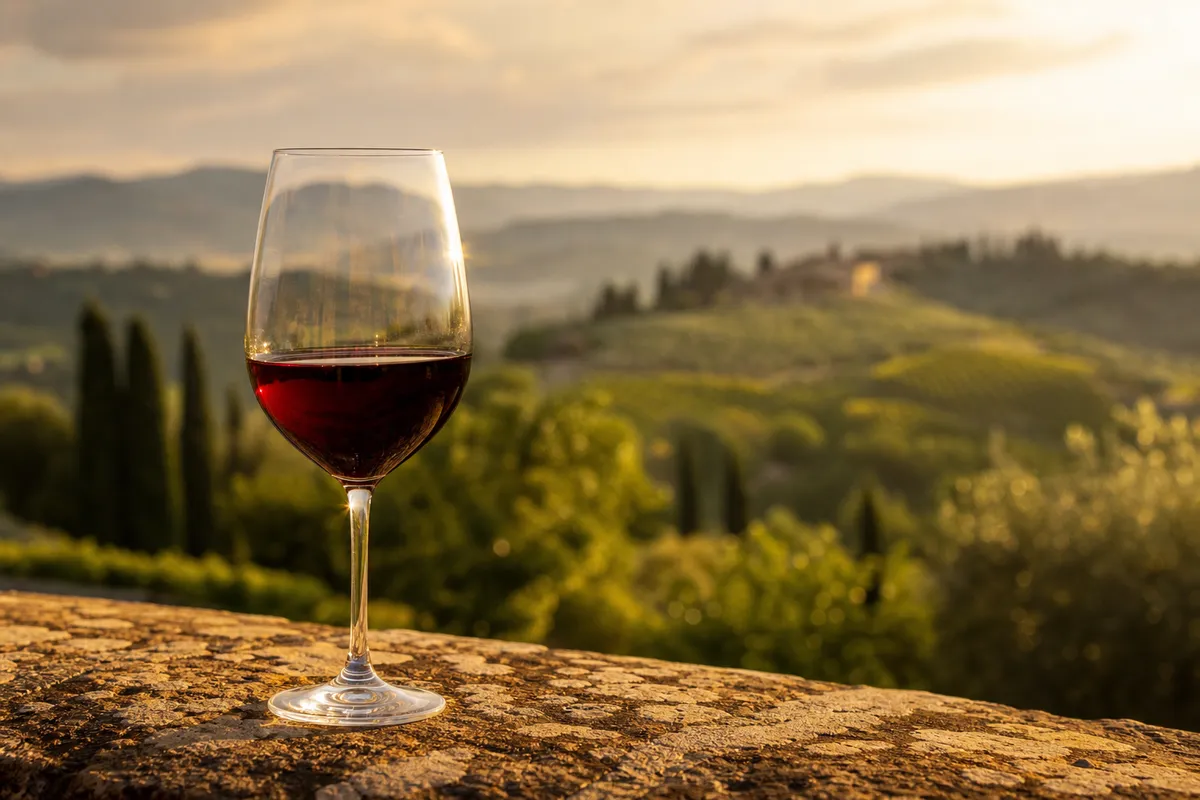
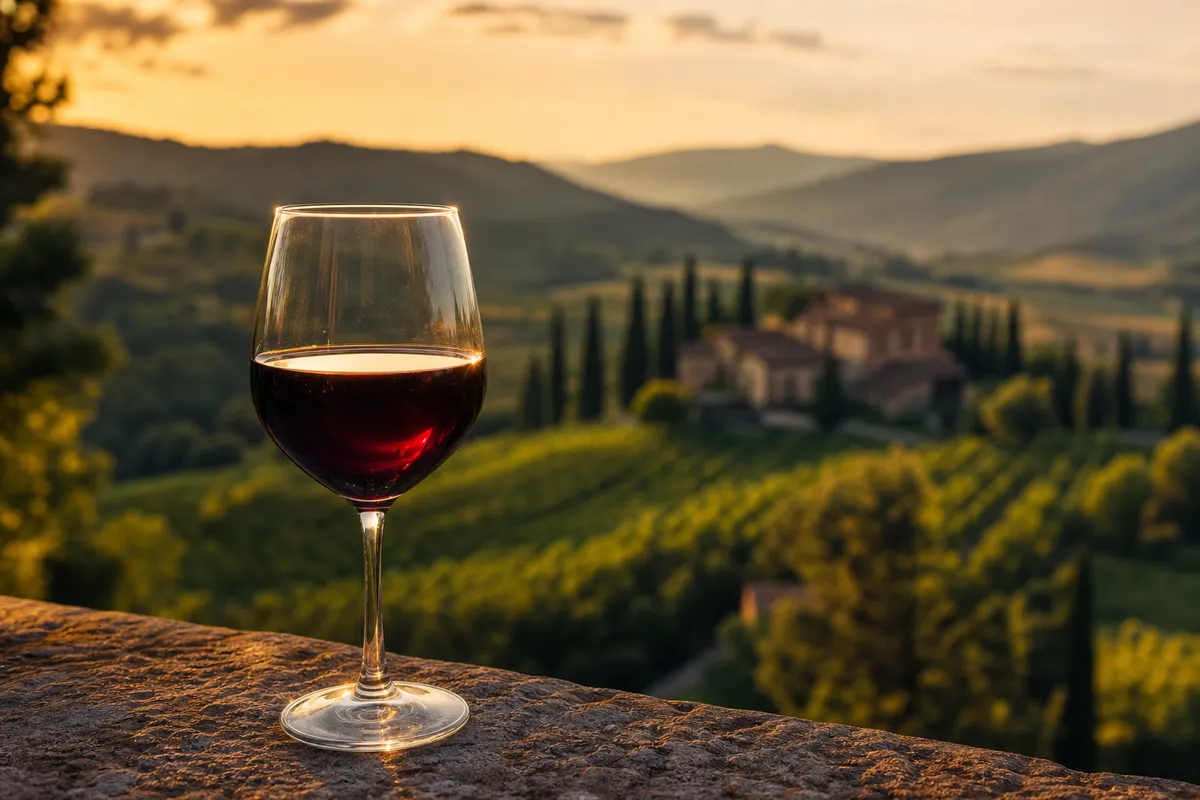
Acquasparta lies inside two protected production zones. The Umbria DOP olive-oil specification includes the whole municipality in the Colli Martani geographical mention.
The Colli Martani DOC specification also includes Acquasparta in its grape-production area.
More of Umbria
A letter from Italy, once a month.
The places, tables and makers we found worth your time. One email, no noise.
One letter a month. Unsubscribe at any time. We never share your address.