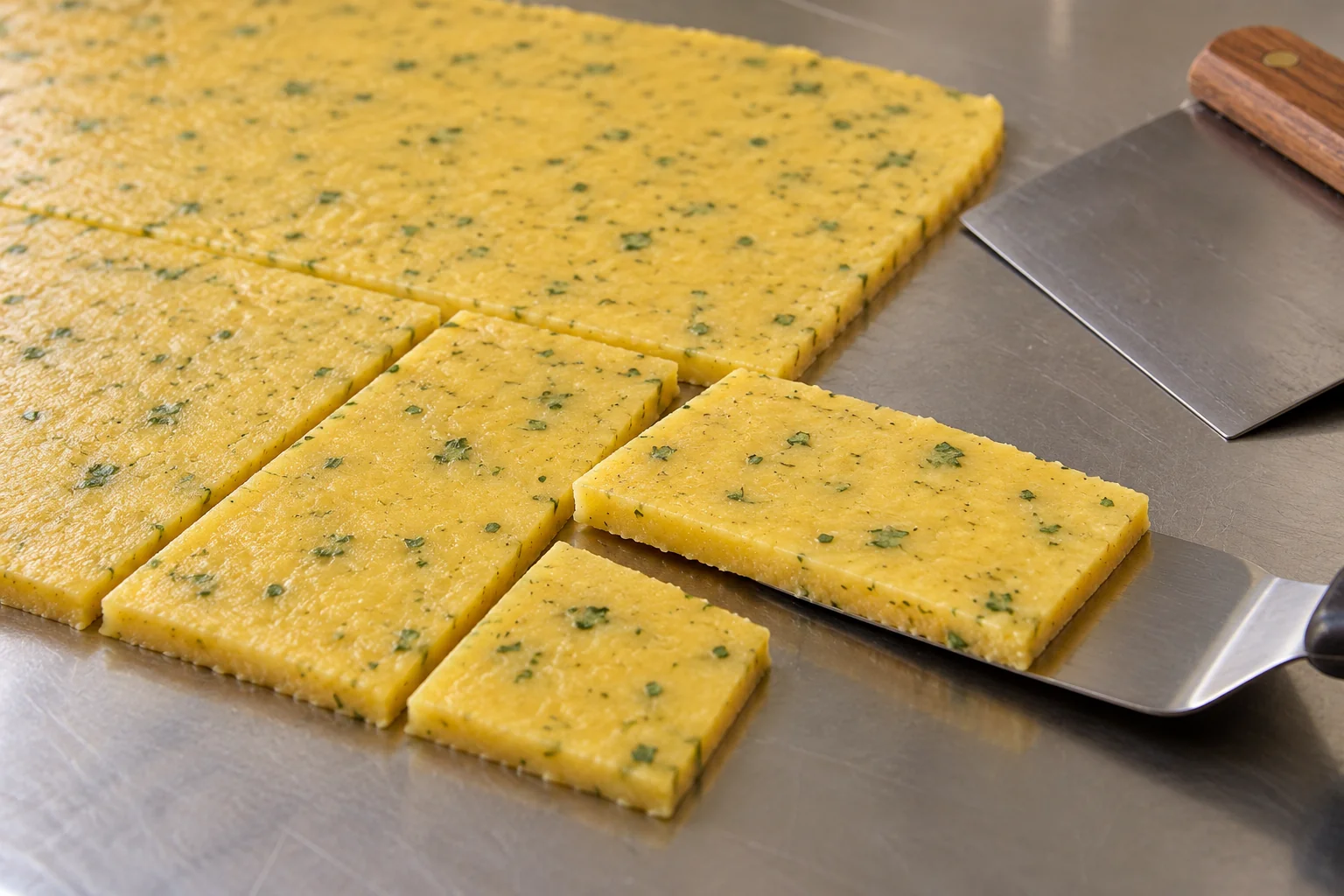
Spread the hot paste in small sections before it firms. An even 4–5 mm thickness gives the panelle a tender center without leaving a heavy, doughy middle.
Make ahead Cook and spread the paste ahead, then let it cool fully. Cover and refrigerate the cut panelle if you are not frying them soon; fry close to serving.
Panelle
Prep 20 min · Cook 55 min · Rest 30 min · Serves 4 · Difficulty Medium
Method
Lightly oil the two trays with 10 ml of the olive oil. Put the chickpea flour and salt in the saucepan. Whisk in the water gradually, starting with enough to make a smooth paste, then adding the rest without leaving lumps.Lightly oil the two trays with 2 tsp of the olive oil. Put the chickpea flour and salt in the saucepan. Whisk in the water gradually, starting with enough to make a smooth paste, then adding the rest without leaving lumps.
Set over low to medium-low heat and cook, stirring continuously with a sturdy spoon, for about 30 minutes. The mixture should become very thick and smooth and pull away from the sides of the pan. Stir in the parsley and remove from the heat.Set over low to medium-low heat and cook, stirring continuously with a sturdy spoon, for about 30 minutes. The mixture should become very thick and smooth and pull away from the sides of the pan. Stir in the parsley and remove from the heat.
Working in small portions, spread the hot paste over the trays to a thickness of 4–5 mm. Smooth it quickly with the spatula. Leave for about 30 minutes, until fully cool and firm enough to lift without tearing.Working in small portions, spread the hot paste over the trays to a thickness of ¼–¼ in. Smooth it quickly with the spatula. Leave for about 30 minutes, until fully cool and firm enough to lift without tearing.
Trim the edges and cut rectangles about 5 × 10 cm. You should have about 20 panelle; fry the trimmings separately rather than kneading them back into the cooked paste.Trim the edges and cut rectangles about 2 × 4 in. You should have about 20 panelle; fry the trimmings separately rather than kneading them back into the cooked paste.
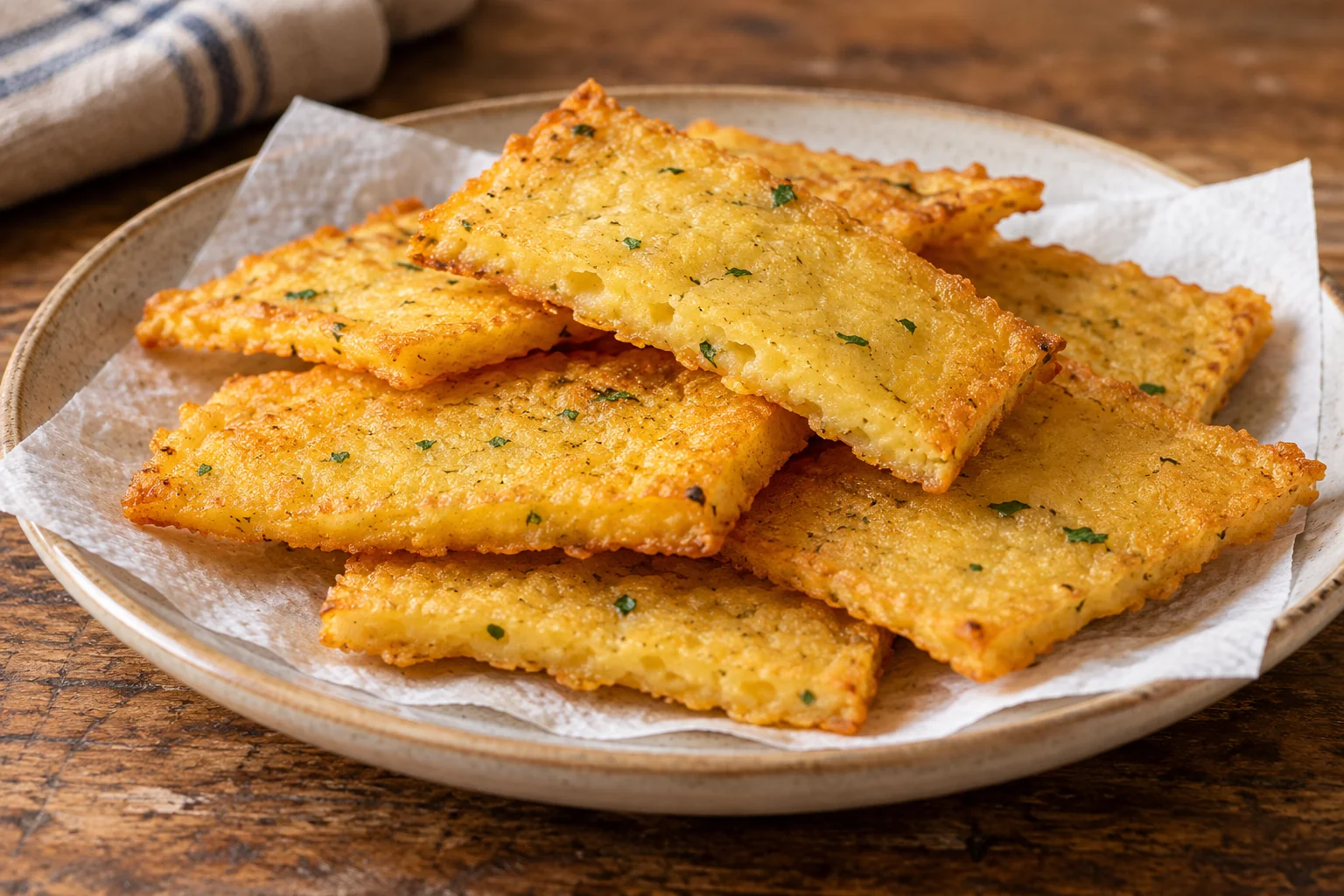
Heat the remaining 1 liter of oil in the deep pan to about 175°C. Fry no more than four panelle at a time for about 3 minutes, turning carefully, until both faces are golden. Let the oil return to temperature between batches.Heat the remaining 4¼ cups of oil in the deep pan to about 350°F. Fry no more than four panelle at a time for about 3 minutes, turning carefully, until both faces are golden. Let the oil return to temperature between batches.
Lift out with a slotted spoon, drain on paper towels and serve immediately. Continue frying the remaining panelle in the same way.Lift out with a slotted spoon, drain on paper towels and serve immediately. Continue frying the remaining panelle in the same way.