Drain the ricotta overnight and keep it cold. Roll the shells thinly, seal the overlap carefully and let them cool completely before filling.
Make ahead Drain the ricotta in the refrigerator for 8 hours before starting. The total includes this, 30 minutes of dough resting and about 20 minutes for the shells to cool. Keep shells and filling separate until serving.
Sicilian cannoli
Prep 1 hr · Cook 25 min · Rest 8 hr 50 min · Yield 16 cannoli · Difficulty Medium
Method
Put the ricotta in a sieve over a bowl, cover and refrigerate for 8 hours. Discard the whey and weigh 500 g drained ricotta. Keep it refrigerated while making the shells.Put the ricotta in a sieve over a bowl, cover and refrigerate for 8 hours. Discard the whey and weigh 1 lb drained ricotta. Keep it refrigerated while making the shells.
Mix the 150 g flour, shell sugar and cocoa. Rub in the softened lard. Separate the egg; set aside 1 teaspoon of white for sealing. Add the yolk, the remaining white and the Marsala. Knead for about 5 minutes until you have a firm, smooth dough. Cover and rest for 30 minutes.Mix the 5½ oz flour, shell sugar and cocoa. Rub in the softened lard. Separate the egg; set aside 1 teaspoon of white for sealing. Add the yolk, the remaining white and the Marsala. Knead for about 5 minutes until you have a firm, smooth dough. Cover and rest for 30 minutes.
Push the drained ricotta through a fine sieve with a spatula. Fold in the filling sugar, vanilla and chopped chocolate. Do not whip or blend. Cover and return to the refrigerator.Push the drained ricotta through a fine sieve with a spatula. Fold in the filling sugar, vanilla and chopped chocolate. Do not whip or blend. Cover and return to the refrigerator.
Divide the dough into 16 pieces. Keep them covered and roll one at a time on a lightly floured surface into a thin oval, about 1.5 mm thick and roughly 12 × 10 cm. Use the food-safe paper template as a guide, trimming only if necessary. Keep the rolled pieces covered so they do not dry.Divide the dough into 16 pieces. Keep them covered and roll one at a time on a lightly floured surface into a thin oval, about 1.5 mm thick and roughly 4¾ × 4 in. Use the food-safe paper template as a guide, trimming only if necessary. Keep the rolled pieces covered so they do not dry.
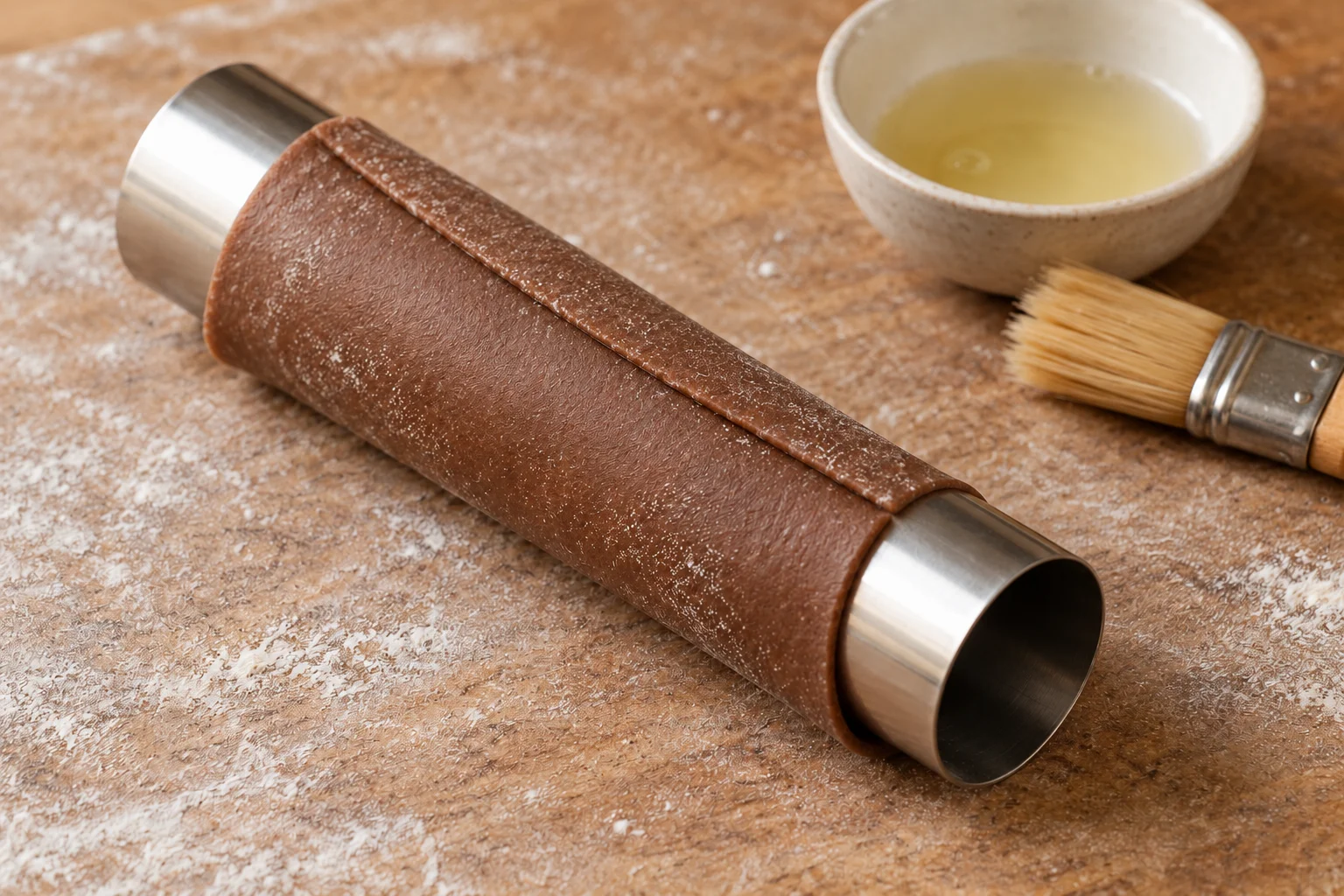
Wrap each oval loosely around a metal cannoli tube, overlapping the two edges by about 5 mm. Brush a little reserved egg white onto one overlapping edge only, then press to seal. Keep the egg white off the metal so the shell will release. Do not pinch the openings closed.Wrap each oval loosely around a metal cannoli tube, overlapping the two edges by about ¼ in. Brush a little reserved egg white onto one overlapping edge only, then press to seal. Keep the egg white off the metal so the shell will release. Do not pinch the openings closed.
Heat the frying oil in a deep saucepan to 170°C. The pan should be no more than half full and the oil deep enough to cover the shells. Lower in two or three tubes at a time with tongs. Fry for about 2–3 minutes, turning carefully, until the shells are blistered, crisp and evenly browned. Keep the oil close to 170°C between batches.Heat the frying oil in a deep saucepan to 350°F. The pan should be no more than half full and the oil deep enough to cover the shells. Lower in two or three tubes at a time with tongs. Fry for about 2–3 minutes, turning carefully, until the shells are blistered, crisp and evenly browned. Keep the oil close to 350°F between batches.
Lift the tubes onto absorbent paper or a rack. Let each shell cool until the tube can be handled safely, then ease the metal out without squeezing the pastry. Let the shells cool completely, about 20 minutes, before filling. Repeat with the remaining dough.Lift the tubes onto absorbent paper or a rack. Let each shell cool until the tube can be handled safely, then ease the metal out without squeezing the pastry. Let the shells cool completely, about 20 minutes, before filling. Repeat with the remaining dough.
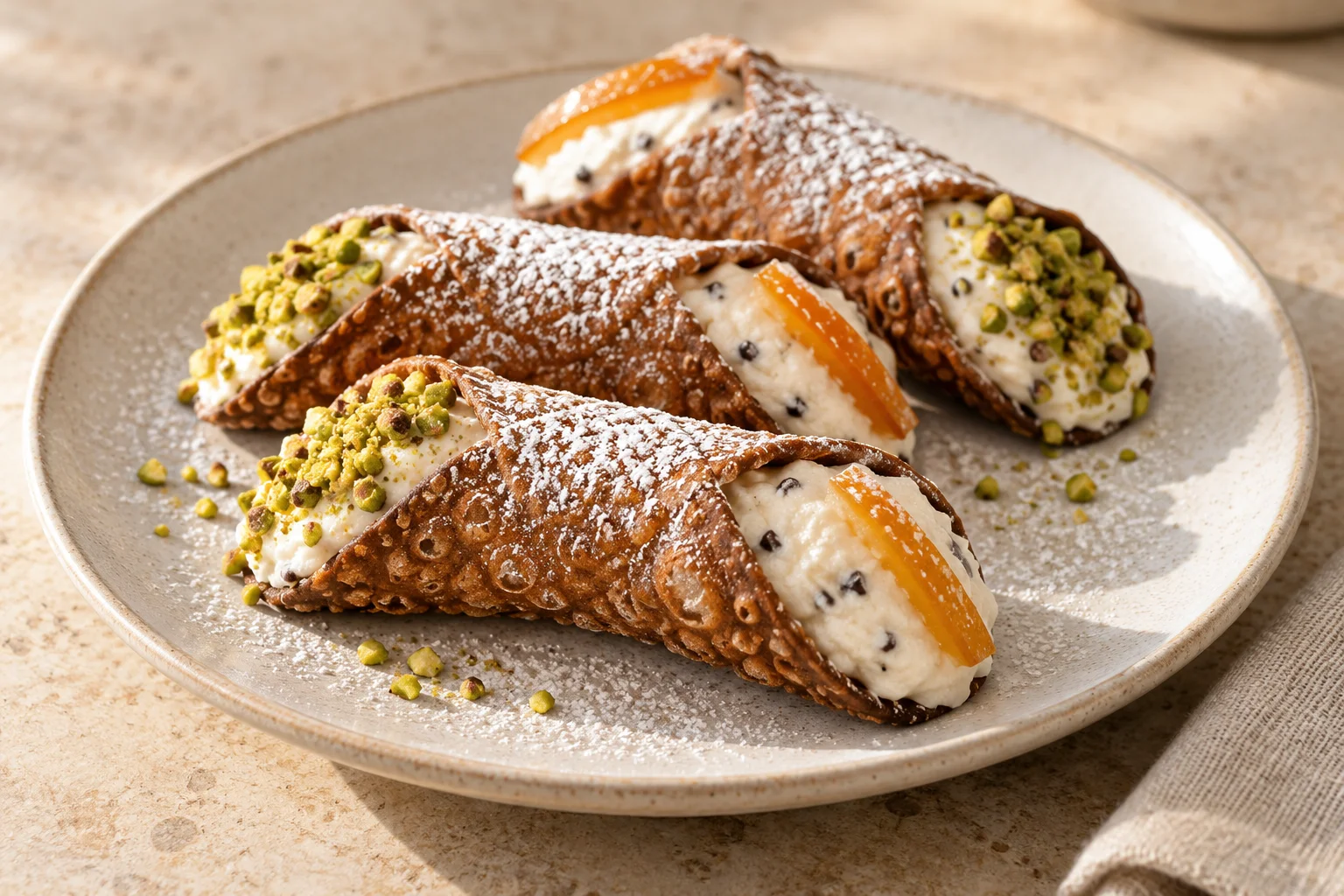
Just before serving, pipe ricotta cream into the completely cool shells from both ends. Add a strip of candied orange at one end and chopped pistachios at the other. Dust lightly with powdered sugar and serve straight away.Just before serving, pipe ricotta cream into the completely cool shells from both ends. Add a strip of candied orange at one end and chopped pistachios at the other. Dust lightly with powdered sugar and serve straight away.