Skip to content
Positano's pastel houses stacked above the sea on the Amalfi Coast

Seven Days on the Amalfi Coast and Around Naples

Naples and its archaeological museum for two days, Pompeii on the way south, then four days from Amalfi: the cathedral, Ravello, the Path of the Gods down to Positano and the fjord of Furore.

Seven days that cover the best of the Bay of Naples and the Amalfi Coast without a car. Two nights in Naples give you its pizza, its archaeological museum and a historic centre like no other, then Pompeii on the way south. The coast comes from a single base in Amalfi: the cathedral, Ravello's gardens, the Path of the Gods down to Positano, and a last slow morning at the fjord of Furore. Buses, boats and your own feet do the rest.

Day by day

Spaccanapoli, the chapel and the cathedral

Day 1 · all on foot

Morning
Begin at the Cappella Sansevero, a small chapel near Piazza San Domenico Maggiore, where Giuseppe Sanmartino's Veiled Christ lies under a marble shroud so fine it seems wet. Entry is limited, so book it ahead. Raimondo di Sangro, the seventh Prince of Sansevero, planned the sculptures: Corradini's Modesty and Queirolo's Disillusionment are the other stars, and anatomical figures wait in the chamber below. Then step out onto Spaccanapoli, the straight street that follows the old Greek and Roman grid.
Afternoon
Follow Spaccanapoli east along Via San Biagio dei Librai (west of the chapel it is Via Benedetto Croce) and turn into Via San Gregorio Armeno, the lane of the nativity-scene workshops. Then walk to the cathedral on Via Duomo. Its neo-Gothic façade dates from 1905, but the interest is inside: the Treasury Chapel of San Gennaro and the basilica of Santa Restituta, said to hold the oldest baptistery in the West. Notice how the streets keep to the ancient plan: this is Greek Neapolis, still in use.
Evening
Walk back along Via dei Tribunali, the old main street of the grid and the street of the historic pizzerie. Pizza here is a craft: in 2017 UNESCO added the art of the Neapolitan pizzaiuolo, the pizza maker, to its list of intangible heritage. Order a marinara (tomato, garlic, oregano) or a margherita, the two classics, and let the lanes carry you afterwards. The historic centre is liveliest after dark.

Where to eat. Neapolitans drink coffee at the bar, standing, and quickly. For lunch, a pastry such as a sfogliatella (a flaky shell-shaped pastry filled with ricotta) from a pasticceria near the cathedral keeps you moving. Save your appetite for the pizza.

The archaeological museum and the bay

Day 2 · on foot, with one metro ride

Morning
Give the morning to the Naples National Archaeological Museum before tomorrow’s visit to Pompeii. Take Metro Line 1 to Museo. Buy a general admission ticket through the museum’s ticket page, which also has its own guided visits. On your own, start with the Farnese Hercules and Bull, then look for the frescoes and objects from the Vesuvian towns. The Battle of Issus mosaic from the House of the Faun belongs to this museum. Check the gallery-opening schedule before you go, particularly for the mosaics and the Secret Cabinet. The museum normally closes on Tuesdays.
Afternoon
Head to Piazza del Plebiscito. On one side stands the Royal Palace, begun in 1600 for the Spanish viceroy, with statues of Naples' rulers, from Roger II to Victor Emmanuel II, in niches along the façade. Go in for the grand staircase and the state rooms. Next door is the Teatro di San Carlo, the opera house. Keep the afternoon unhurried, with a coffee on the square, before the walk down to the sea.
Evening
Walk to Castel dell'Ovo, the oldest castle in Naples, on the tufa islet of Megaride, where the story of Greek Parthenope, the first Naples, begins. Cross the causeway to Borgo Marinari, the little marina below it, and watch the light change over Vesuvius across the bay. The name comes from the castle's egg-like shape, or from the legend that Virgil hid a magic egg in its foundations, depending on who is telling the story.

Where to eat. Dinner at Borgo Marinari is the obvious seafood choice, with restaurants along the little marina below the castle. For a more local table, the trattorie of Chiaia and of the Quartieri Spagnoli, behind the Plebiscito, serve Neapolitan pasta and fried seafood.

Pompeii and the road to Amalfi

Day 3 · train, then bus

Morning
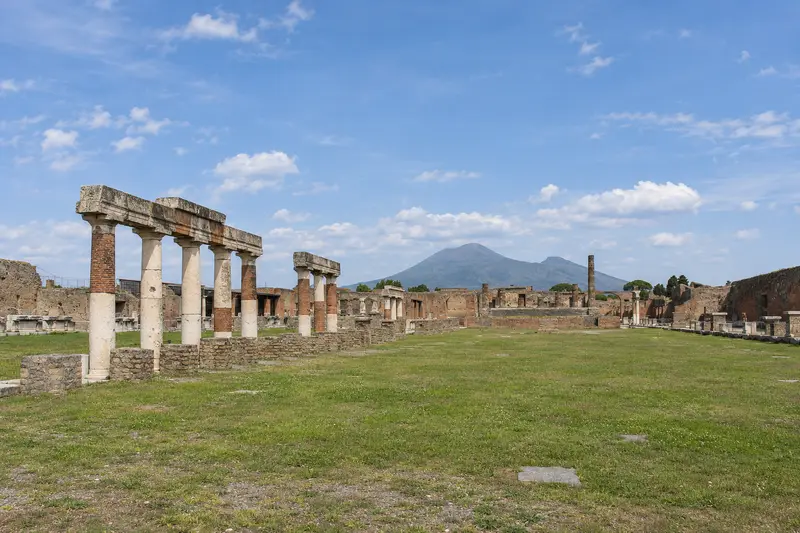
Take the Circumvesuviana towards Sorrento from Napoli Garibaldi and get off at Pompei Scavi–Villa dei Misteri, a short walk from Porta Marina. Buy a Pompeii Express ticket in your name in advance through the archaeological park’s ticket page and bring photo ID. Express covers the ancient city. Pompeii Plus also covers the suburban villas, including the Villa of the Mysteries. From Porta Marina, start at the Forum and the Stabian Baths, then choose a few houses as you go. Check the park’s map and opening list for the House of the Faun, the House of the Vettii and the other houses you want to see.
Afternoon
If you have time, carry on east to the amphitheatre, built around 70 BC. Leave time to walk back to Pompei Scavi–Villa dei Misteri and take the same train line on to Sorrento. The SITA bus from Sorrento goes along the coast through Positano to Amalfi. Check the bus timetable before you leave Naples, and buy your bus ticket before boarding.
Evening
Arrive in Amalfi and drop your bags. Piazza Duomo is the evening's meeting place: climb the cathedral steps as the lights come on, and sit down with a drink. Amalfi was one of the four great maritime republics, rival to Genoa, Pisa and Venice, and the lanes behind the square still feel like a port town. Dinner here can be unhurried; the next day starts gently.

Where to eat. Keep lunch light, a panino from a bar by the station. In Amalfi, try scialatielli (thick fresh pasta ribbons) with seafood, and anything made with the local lemons, which carry protected IGP status as Limone Costa d'Amalfi.

Amalfi's cathedral and the valley of paper

Day 4 · on foot, gentle

Morning
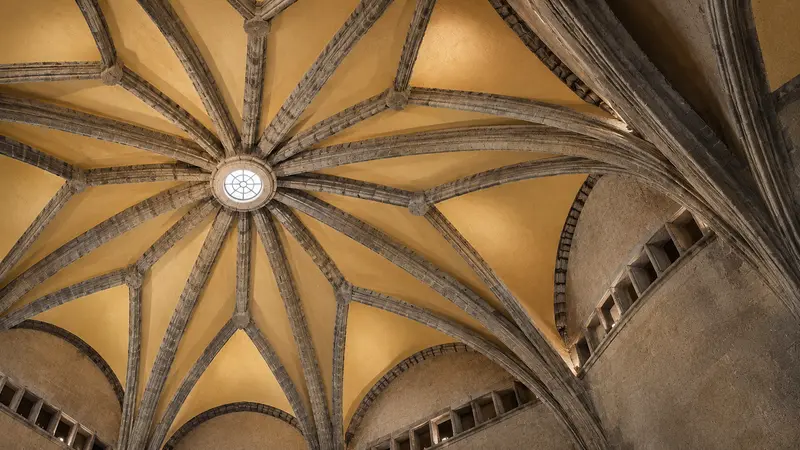
Start at the foot of the cathedral stairs in Piazza Duomo. Look up at the striped façade, then go up to the atrium for the bronze doors. Buy the monument ticket at the Chiostro del Paradiso entrance. It covers the cloister, the diocesan museum in the Basilica del Crocifisso and the crypt of St Andrew. Check visiting hours around services. From the north side of the cloister you can see the bell tower above the interlaced arches.
Afternoon
From Piazza Duomo, follow the main street uphill and continue to the Paper Museum at Via delle Cartiere 23. The museum occupies a former mill. Buy admission at its bookshop on the day, or use the museum’s site at least 48 hours ahead. There’s a standard ticket and a guided papermaking experience. Check the dated Italian schedule for winter hours. For a shorter visit, turn back at the museum and return to Piazza Duomo and the waterfront. For the longer Valle delle Ferriere hike, set aside a separate half day. Take the bus towards Ravello and check which departures serve Pontone. Start there in Piazza San Giovanni and follow CAI 323a to the ironworks ruins, then the upper stretch of trail 325 towards the reserve. Check current trail conditions and the return bus before you leave Amalfi. The reserve entrance requires a ticket and a reservation through the Comune di Scala.
Evening
Back in town, pass the medieval Arsenale by the waterfront before returning to Piazza Duomo. Have an aperitivo in the lanes behind the square. If you’ve walked in the valley, leave the cathedral steps for the morning and finish by the water.

Where to eat. Lunch in the lanes behind Piazza Duomo is simple and good: grilled fish or a plate of pasta, and a coffee standing at a bar on the square. Carry water if you walk up the valley.

Ravello's gardens and the way down to Atrani

Day 5 · bus up, steps down

Morning
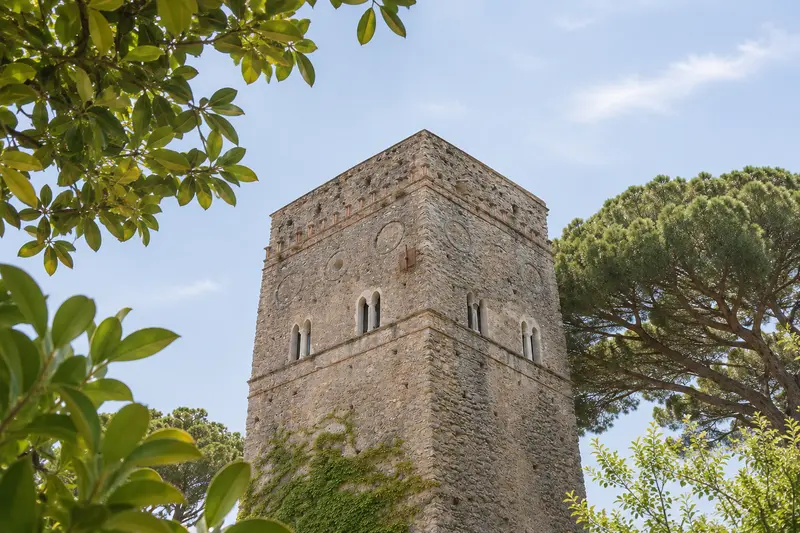
Take the bus up the valley to Ravello, a town on a plateau high above the sea that grew under the Republic of Amalfi. Piazza Duomo is the centre. Villa Rufolo faces the cathedral: a medieval merchant's house with an Arab-Norman cloister, a tower you can climb and terraced gardens over the Gulf of Salerno. Richard Wagner visited in 1880 and saw here the magic garden of Klingsor from Parsifal, which is why the Ravello Festival, held in the lower garden, began as a Wagner festival.
Afternoon
Walk to Villa Cimbrone along Via San Francesco and Via Santa Chiara. Cars cannot reach it, so the approach is a pleasant lane with some climbing and stone paving. The English banker Ernest Beckett bought it in 1904 and made its gardens. The Terrace of Infinity is a belvedere over the Gulf of Salerno, and a plaque records the secret stay of Greta Garbo and Leopold Stokowski in 1938. On the way back, step into the cathedral: the relic of San Pantaleone's blood is said to liquefy each 27 July.
Evening
Walk down to Atrani on the old paths: behind Santa Maria a Gradillo, stairs descend through the Valle del Dragone, past the ruins of old mills, pasta works and paper mills, to a village of alleys and steps. It is the smallest municipality in Italy by area. In its small square stands San Salvatore de' Birecto, where the dukes of Amalfi were crowned; M. C. Escher drew the village in his Metamorphosis II. Wear sturdy shoes: it is steep.

Where to eat. Lunch in the lanes off Piazza Duomo in Ravello: simple pasta and local vegetables. For dinner, a trattoria on the little square of Atrani, beside the sea, then the short walk or the bus back to Amalfi.

The Path of the Gods and Positano

Day 6 · a real walk, then a boat

Morning
Take the SITA bus from Amalfi towards Agerola and get off at Bomerano. From Piazza Paolo Capasso, follow CAI trail 327 past the Grotta del Biscotto to Nocelle. Allow about two hours for the 5.3 km walk, plus stops. The trail goes downhill overall, with rocky stretches and exposed slopes. At Colle La Serra, the right fork, 327a, is less exposed and rejoins the main trail. Check the trail status before setting out and bring water and shoes with grip.
Afternoon
From Nocelle, take the local bus down to Positano. The long stairway from Nocelle leads to the coast road at Arienzo, east of the centre, if you prefer to descend on foot. In town, look into Santa Maria Assunta for its icon of the Black Madonna. Beneath the church, the MAR preserves the painted rooms of a Roman villa.
Evening
Stay for the late light on the houses above Spiaggia Grande. Check the last ferry to Amalfi before you settle in for dinner. Take the SITA bus back if boats are out of season or aren’t running that day.

Where to eat. Carry snacks and water for the trail, as places to buy them are few. After the walk, eat in Positano: fresh fish or pasta at a table above the beach, and a lemon granita to cool down.

The fjord of Furore and a slow last day

Day 7 · bus, then at your own pace

Morning
From Amalfi, take a SITA Sud bus along the coast towards Positano. Before boarding, ask for the Fiordo di Furore stop at the bridge and check the return to Amalfi. The village of Furore is higher up the hillside. Check the Comune’s notices before leaving and follow the signs at the bridge. If the stairway is open, it leads down to the small cove and the old fishing houses where Roberto Rossellini filmed part of L’amore with Anna Magnani.
Afternoon
If the cove steps are closed, stay in Amalfi. Walk up Via delle Cartiere to the Museo della Carta if you missed it earlier and it’s open, or spend the morning around the cathedral and its cloister. For the last afternoon, take the lanes behind the Duomo and stop for a coffee before one more look at the harbour.
Evening
Have a last dinner in Amalfi and leave the following morning. For a train from Salerno, check the ferry for your date and look for an arrival at Piazza della Concordia, a short walk from the station. Allow extra transfer time from Molo Manfredi. If there is no suitable sailing, take the SITA Sud 5120 bus via Maiori and allow for coast-road traffic before your train.

Where to eat. A last plate of scialatielli with seafood, or a simple grilled fish by the water, with a lemon sorbet to end. Ask for the local white wine of the coast.

If you have another day

An eighth day gives you the chance to add a second ancient city, an island, or a Greek temple.

Herculaneum and Vesuvius
Herculaneum, a smaller town than Pompeii, was buried deep by the pyroclastic flows of Vesuvius, which preserved carbonised wood, furniture and upper floors. Reach it by the Circumvesuviana at Ercolano Scavi. From there, a shuttle climbs Vesuvius, the volcano that did it, to walk to the crater rim.
Capri
The island of Capri, in the Gulf of Naples, is a boat ride from Sorrento, Naples or in season from the coast towns. See the Blue Grotto by small boat, the Faraglioni stacks, the Piazzetta and the Monte Solaro chairlift above Anacapri.
Paestum
South of Salerno, Paestum was the Greek colony of Poseidonia. Three Doric temples stand in the open, dating from the sixth and fifth centuries BC, and the archaeological museum holds the painted Tomb of the Diver. A day that is calmer and quieter than Pompeii.

Where to stay

Verified hotels, city by city.

Naples

Naples

  • Neocore
  • Grand Hotel Parker's
  • Grand Hotel Vesuvio
  • Grand Hotel Santa Lucia
Check dates: Naples
Pompeii

Pompeii

  • Hotel Maiuri Pompei
  • Maison De luxe
  • Grand Hotel Royal Pompei
  • Pompeii Ruins B&B
Check dates: Pompeii
Ravello

Ravello

  • Caruso
  • Villa Cimbrone
  • Palazzo Avino
  • Garden Ravello Hotel
Check dates: Ravello

Booking through these links may earn Italia Magnifica a commission, at no cost to you.

Where to eat

Verified tables in the cities on this route.

Naples

Naples

  • La Locanda del MonaconeA friendly neighbourhood trattoria in the Rione Sanità serving Neapolitan land and sea dishes, with meatballs arriving in a copper pan.
  • Osteria Gentile NapoliA small osteria in the Rione Sanità run by two brothers, for market-led Neapolitan cooking, hand-rolled paccheri and a Campanian wine list.
  • Antonio SorbilloOne of the Sorbillo-name pizzerias on Via dei Tribunali, for classic Neapolitan pizza a few doors from Gino Sorbillo's flagship, with gluten-free options too.
  • La Locanda Gesù VecchioA locanda in the alleys of the centro storico, for traditional Neapolitan dishes made with seasonal ingredients and a wide-ranging wine list.
All tables: Naples
Pompeii

Pompeii

  • Il Maradona Della PizzaA Maradona-themed neighbourhood pizzeria for soft, straightforward pizzas, its walls covered in photographs of Diego.
  • Ristorante Spinelli BistrotA family-run bistrot on Piazza Bartolo Longo with a polished interior, for baguettes, cured meats and cheeses, fried bites and Campanian dishes.
  • Kalma RestaurantA Mediterranean restaurant in Pompei with à la carte and tasting menus, blending local tradition with exotic touches, for an unhurried evening meal.
  • Bistrot Fratelli CannavacciuoloA family-run seafood restaurant on Via Roma in Pompei, for shellfish pasta, fish soup and the grilled catch, with outdoor seating.
All tables: Pompeii
Ravello

Ravello

  • Sea view pizzaA pizzeria just outside Ravello's main square, with outdoor tables overlooking the coast towards Minori, for pizza at sunset.
  • Ristorante "Bella Vista Sul Mare"The restaurant of Hotel Bonadies on Piazza Fontana Moresca, with outdoor tables and sea views, for regional Italian cooking in the middle of Ravello.
  • Giardini CalceA pizzeria and Campanian restaurant attached to a small guesthouse near the cathedral square, with covered outdoor seating for wood-fired pizza.
All tables: Ravello

Getting around

Naples is a walking city, with Line 1 of the metro for the museum. For Pompeii, the Circumvesuviana train from Napoli Garibaldi is the sensible choice, and the same line takes you on to Sorrento. On the coast, you do not need a car: SITA buses run along the coast road between Sorrento, Positano, Amalfi and beyond, and the Ravello and Agerola buses leave from Amalfi. Boats link Amalfi and Positano mainly from spring to autumn, so keep the bus as the fallback. Buy bus tickets at a tabacchi or bar before boarding. If you drive, remember Naples's limited-traffic zones (ZTL) and the narrow coast road.

Sources and citations (23)
  1. MANN · Hours, admission and guided visits
  2. MANN · Gallery openings
  3. Pompeii Archaeological Park · Tickets and entrances
  4. Pompeii Archaeological Park · Map and guide
  5. Pompeii Archaeological Park · Buildings open to visit
  6. EAV · Naples–Sorrento train timetable
  7. SITA Sud · Amalfi Coast bus timetables
  8. Travelmar · Amalfi Coast ferry timetable
  9. CAI Monti Lattari · Path of the Gods, trail 327
  10. Museo Cappella Sansevero
  11. Alta Via dei Monti Lattari: da Ravello ad Atrani
  12. SITA Sud · Amalfi–Positano–Sorrento buses
  13. Italia.it · Furore and the bridge stop
  14. Fiordo di Furore · Cove and stairway access
  15. Amalfi Paper Museum · Visitor information
  16. Travelmar · Salerno piers and railway station
  17. SITA Sud · Bus 5120 to Salerno
  18. Visit Amalfi · Cathedral complex, cloister and crypt
  19. UNESCO Amalfi Coast · Cathedral visitor entrance
  20. Museo della Carta · Current hours and papermaking tickets
  21. CAI Monti Lattari · Pontone to the ironworks ruins
  22. CAI Monti Lattari · Trail 325 and notices
  23. Carabinieri Biodiversità · Reserve entry and reservations

Plan the rest

A letter from Italy, once a month.

Each month: one story, two recipes, an ingredient and a wine of the month, places worth the trip, and the month’s calendar.

One letter a month. Unsubscribe at any time. We never share your address. Choose your desks