

All the monuments, city by city
The landmarks and masterpieces worth planning a day around.
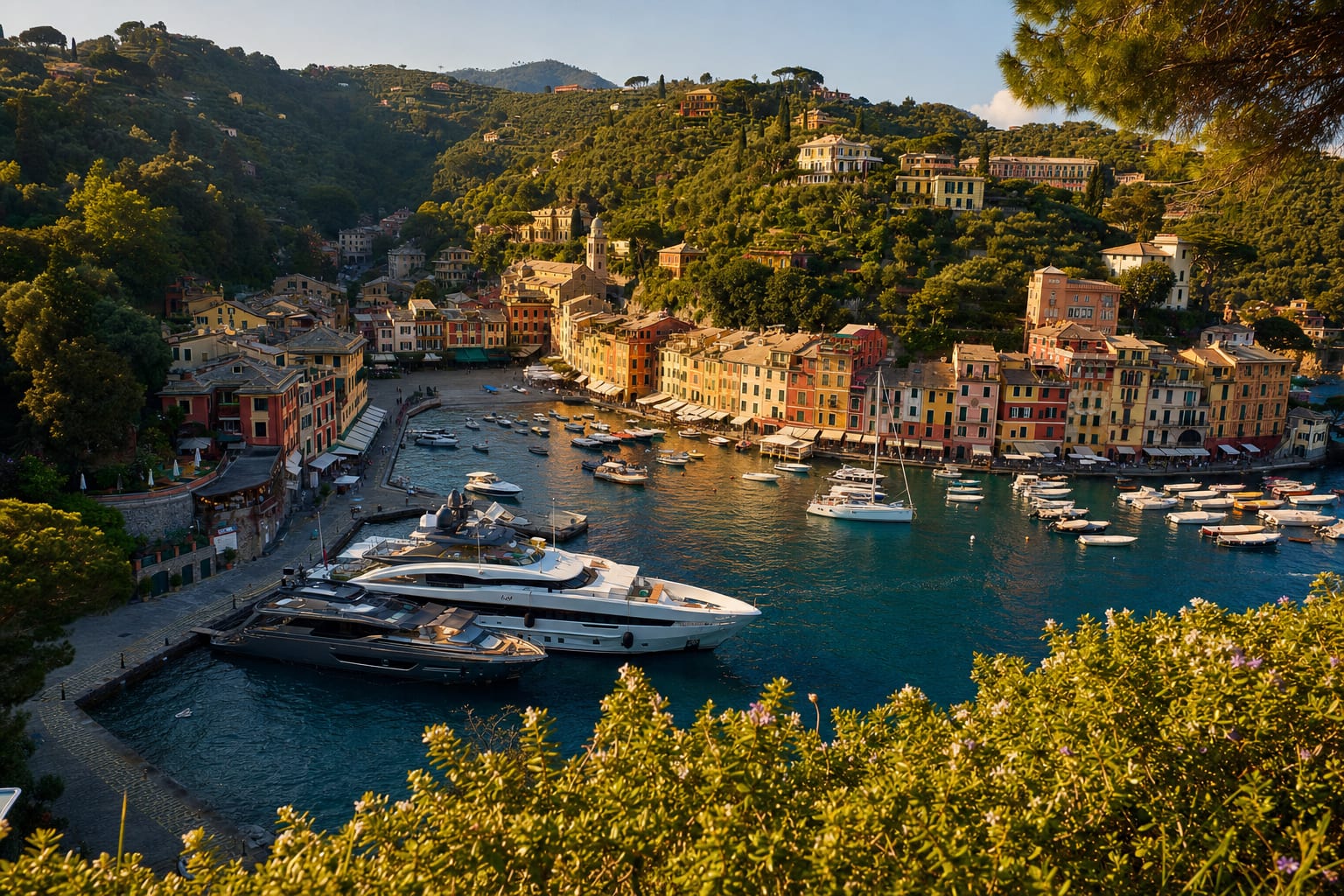 PortofinoPortofinoThe half-moon harbor, Castello Brown, painted facades, the coastal path to San Fruttuoso AbbeyPortofino's little half moon harbor has been photographed so often that it can feel unreal in person, yet the village behind the postcard is a real fishing settlement with roots the local historical record ties to the ancient Portus Delphini, a Roman-era anchorage named for dolphins once common in these waters. Its pastel houses, restored after wartime damage, crowd a natural inlet that the Republic of Genoa fortified in 1554, part of a long medieval and early modern history tangled up with nearby Rapallo and the Benedictine abbey at San Fruttuoso around the headland. Above the harbor, Castello Brown looks down from a garden terrace once owned by a British diplomat, and a footpath continues past the church of San Giorgio out to a lighthouse at the promontory's tip. Formal protection of the whole headland began in the 1930s, and the water offshore is now a marine protected area shared with Camogli and Santa Margherita Ligure.Plan the visit
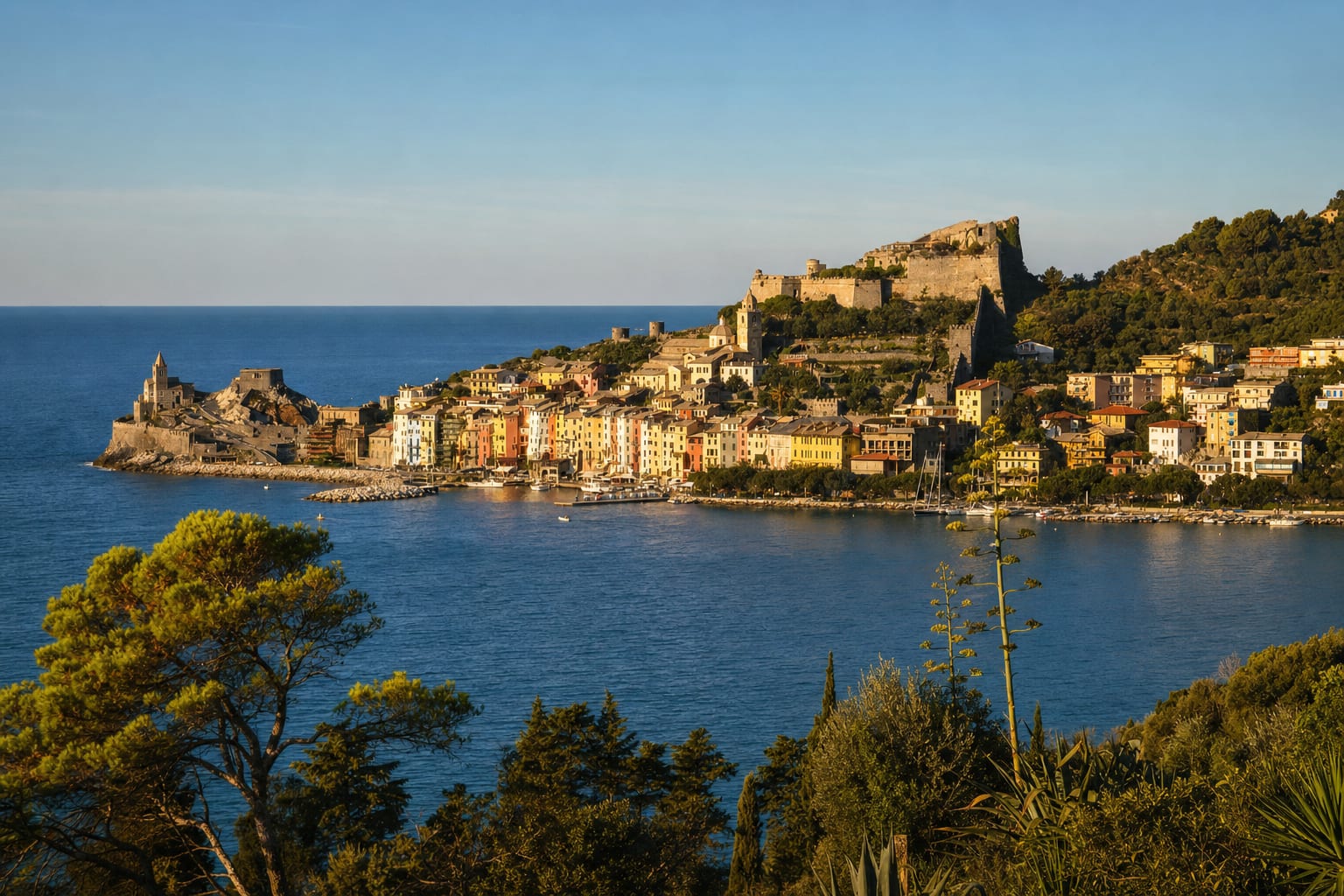 PortovenerePortovenereSan Pietro's cliffside church, Byron's Grotto, striped Genoese houses, boat access to Palmaria islandPortovenere sits at the eastern tip of a wider UNESCO cultural landscape it shares with Cinque Terre and the islands of Palmaria, Tino and Tinetto, its tightly packed waterfront houses in tall, narrow stripes of color climbing straight up from the harbor. UNESCO records the settlement as a Roman-era commercial and cultural center, and its compact medieval form still funnels visitors along a single main street toward the black and white striped church of San Pietro, perched dramatically on the rocky point at the village's tip. The poet Lord Byron reportedly swam from near here across the gulf to visit Shelley in Lerici, and the sea cave below San Pietro still carries his name. Palmaria, the largest of the three offshore islands, holds early monastic remains and can be reached by a short boat ride, adding a quieter counterpoint to the busy harborfront.
 Cinque TerreCinque TerreFive cliff villages, terraced vineyards, the Via dell'Amore coastal path, train-linked covesCinque Terre is the collective name for five villages, Monterosso, Vernazza, Corniglia, Manarola and Riomaggiore, strung along a stretch of Ligurian coast too steep for almost anything except the terraced vineyards and olive groves that generations of hand labor carved into it, one dry stone wall at a time. UNESCO protects the whole stretch not for any single monument but for that sustained human adaptation to brutal terrain, along with the wider landscape shared with Portovenere and the offshore islands of Palmaria, Tino and Tinetto. A local train links all five villages, an easier connection than the coastal footpaths that link them on foot, some sections of which, like the Via dell'Amore between Riomaggiore and Manarola, can require a paid trekking card and a timed booking. Corniglia alone sits inland atop a cliff with no direct sea access, reached by a long staircase or a shuttle bus, which keeps it the quietest of the five even in peak season.
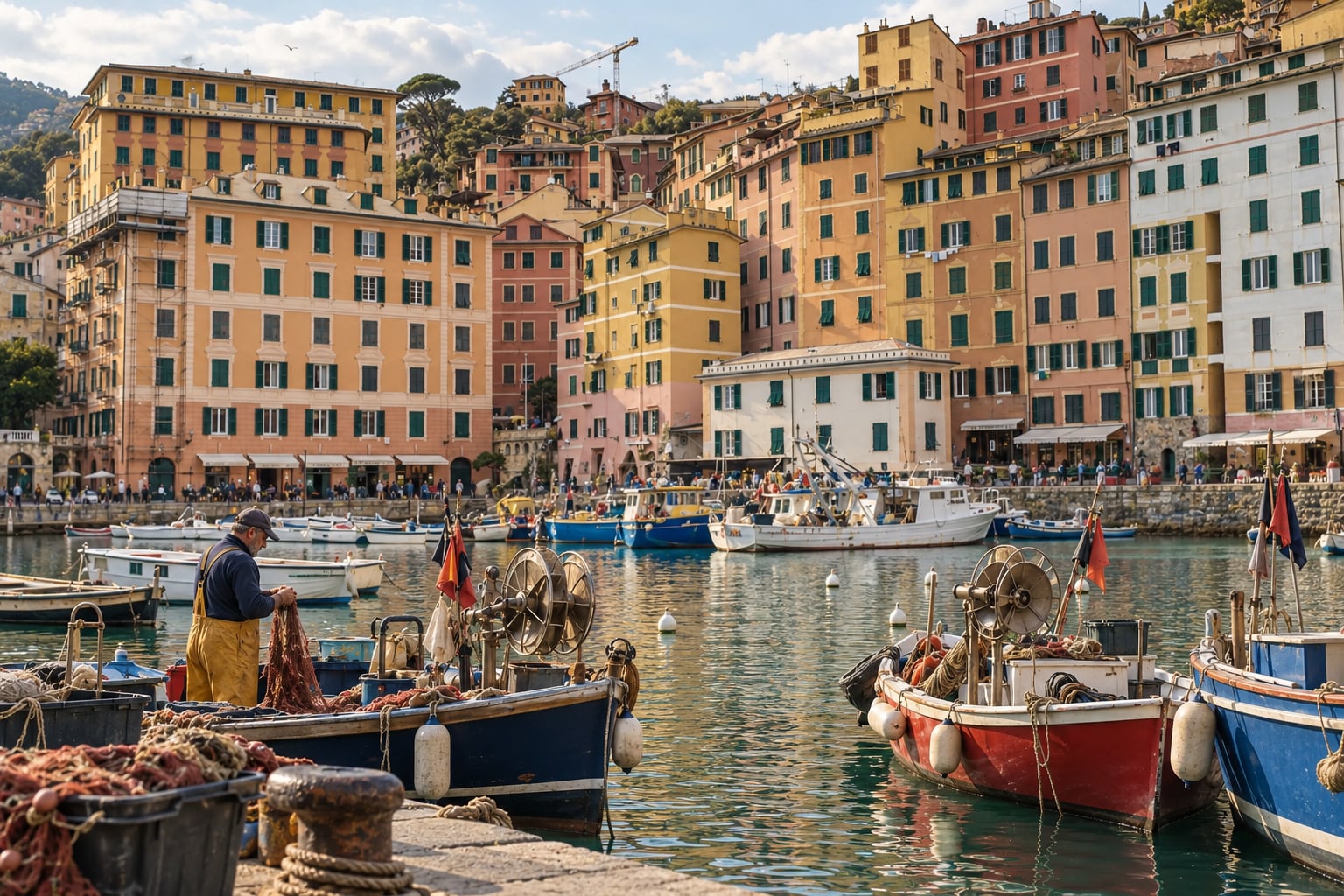
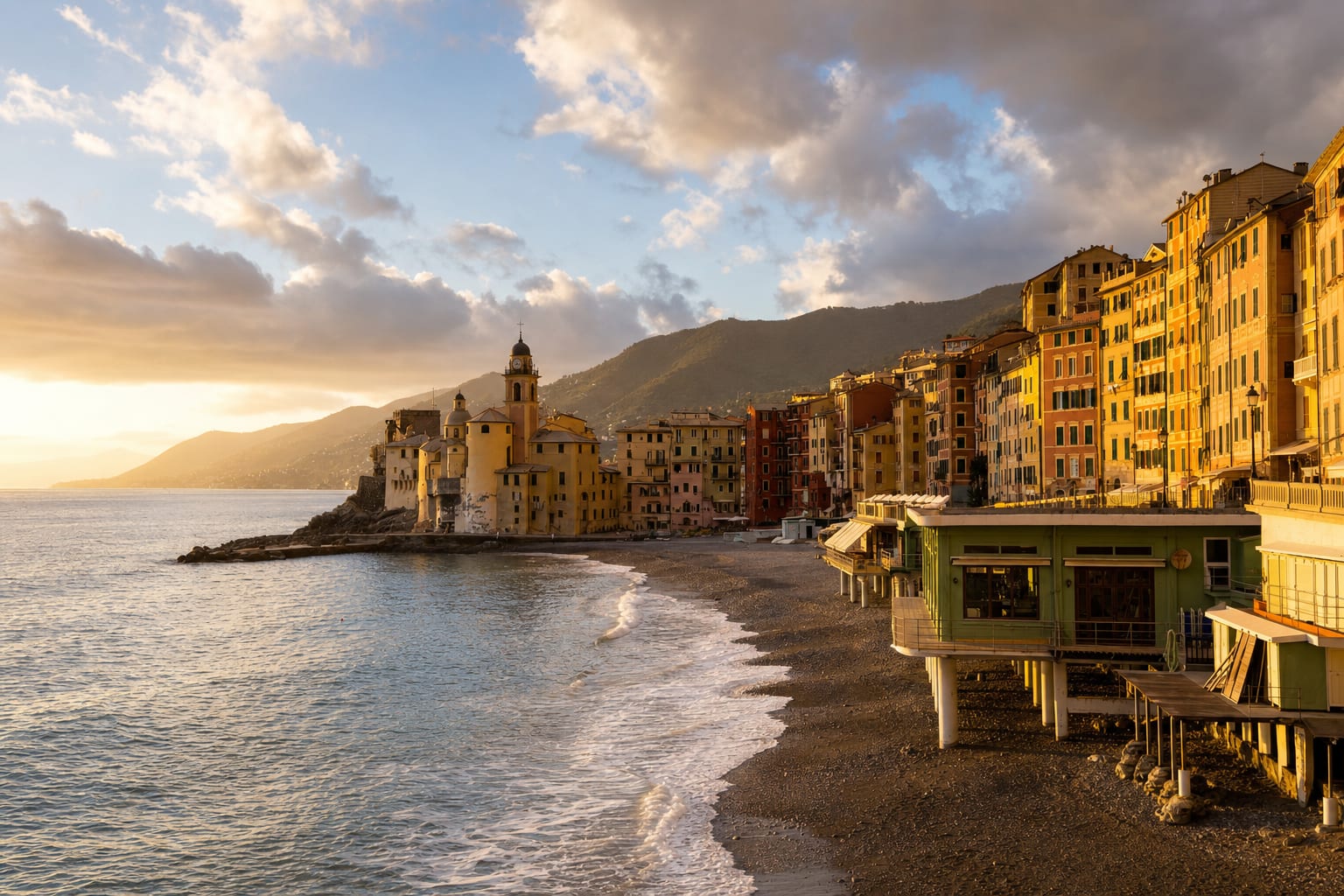 CamogliCamogliPainted seafront houses, Sagra del Pesce, harbor, path to San FruttuosoCamogli packs its seafront into six- and seven-story buildings painted with trompe l’oeil windows, balconies and architectural details, a Ligurian housepainting tradition that let modest families fake the grandeur of carved stone. The name is often explained as a contraction of casa mogli, house of wives, a nod to the seafaring men who left for long stretches. In the Late Middle Ages the town flourished as a seaport, earning the nickname city of a thousand white sails. That maritime pride peaks every May at the Sagra del Pesce, when fish is fried for thousands in a pan reportedly about four meters across on the harborfront. The Basilica of Santa Maria Assunta faces the port, and a coastal path leads to the Abbey of San Fruttuoso.
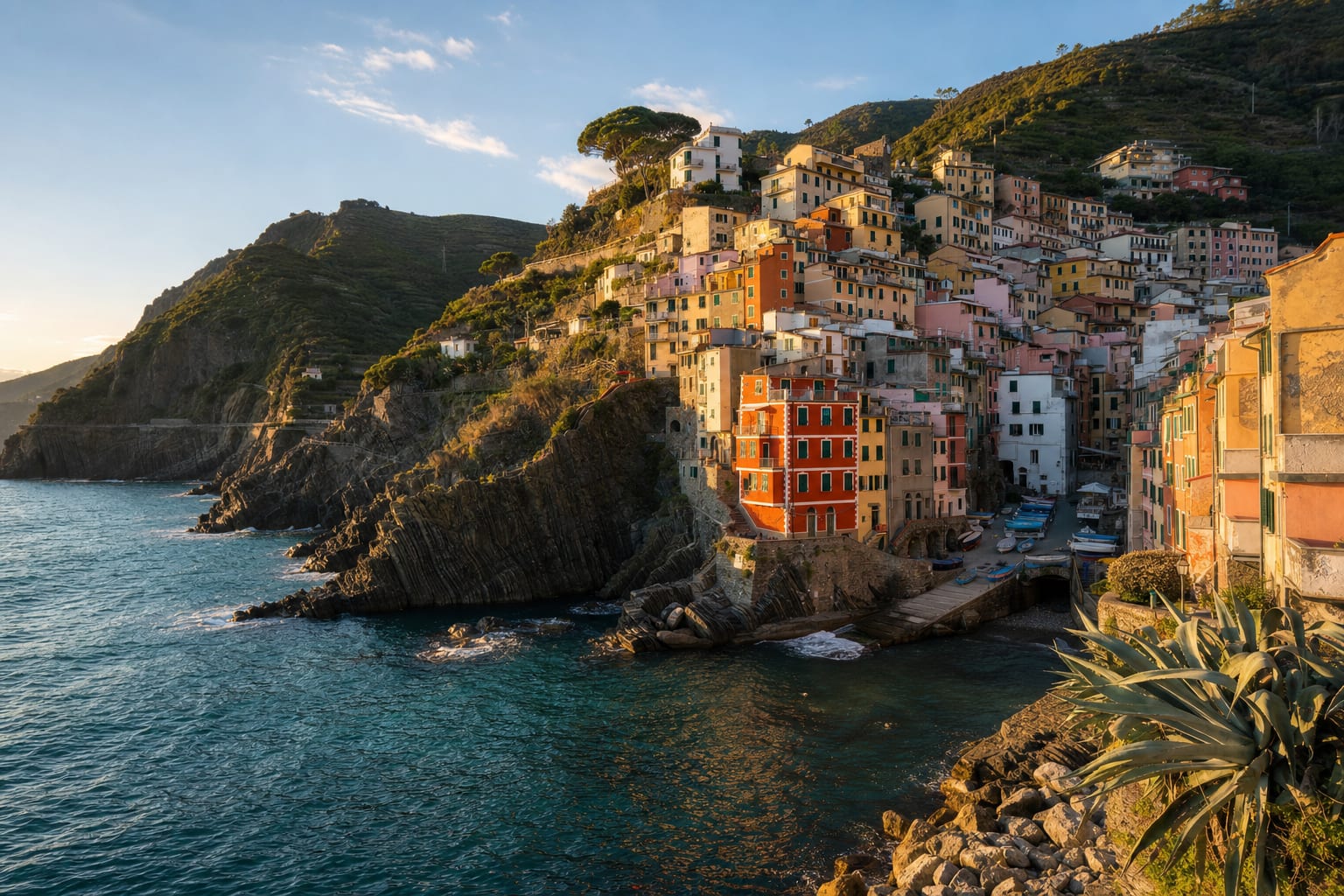 RiomaggioreUNESCORiomaggioreThe slipway marina, the Via dell'Amore trailhead, tower houses lit at night, first of the five villagesRiomaggiore is the southernmost of the five Cinque Terre villages, its tall, tightly packed houses pouring down a narrow ravine toward a small slipway harbor where fishing boats are still hauled up onto the pavement each evening rather than moored in open water. The village's main street runs directly along the line of the old stream bed, covered over long ago, and side alleys called carruggi climb steeply between houses painted in the same warm ochres and pinks found throughout the Cinque Terre. At the harbor's edge, the trailhead for the Via dell'Amore begins, a cliffside path cut in the 1920s originally to connect quarry and rail workers between Riomaggiore and Manarola, later reimagined and renamed for the couples who walked it. After dark, the tower houses along the ravine light up in a way that has made Riomaggiore's harbor one of the most photographed nighttime views on this stretch of coast.
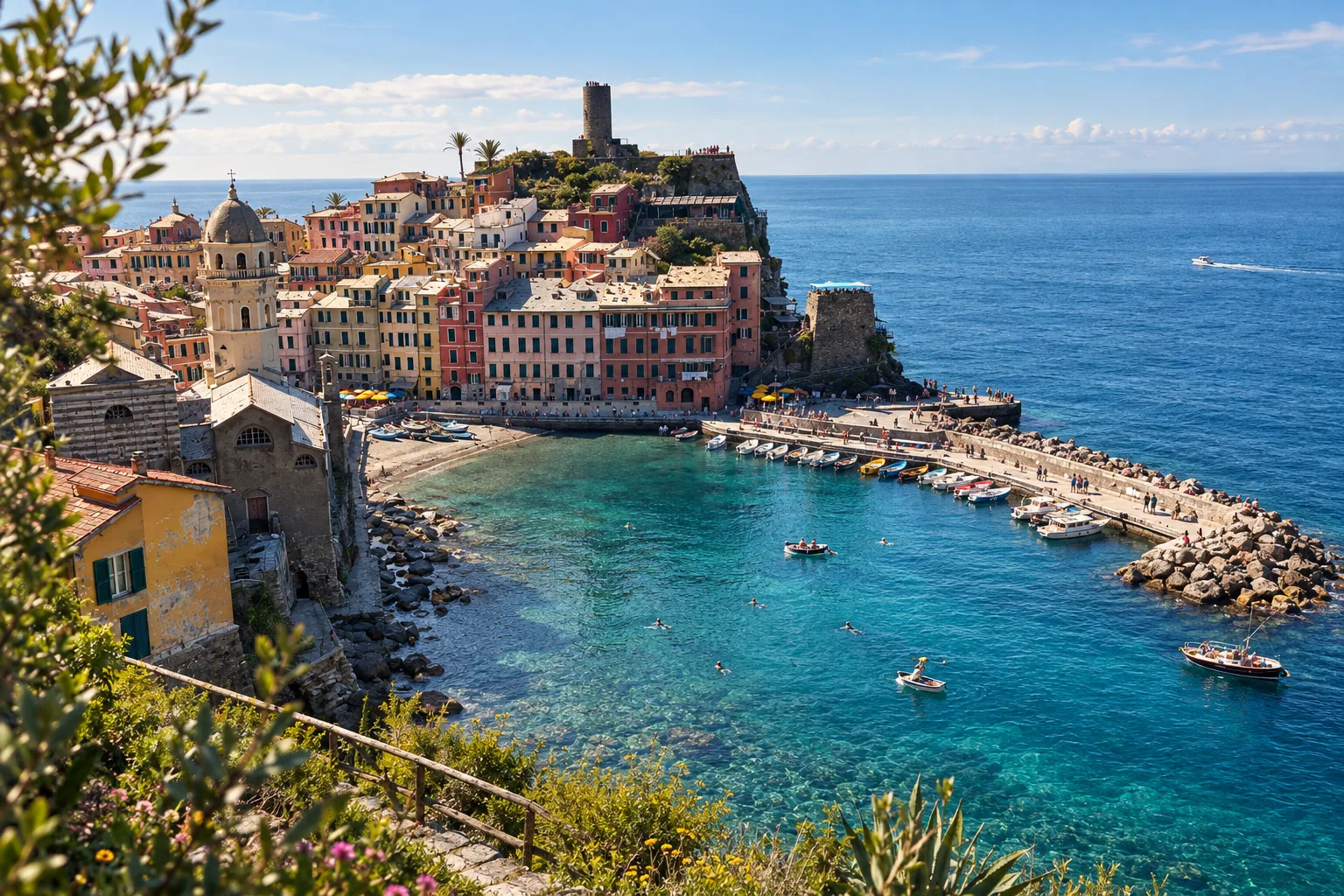
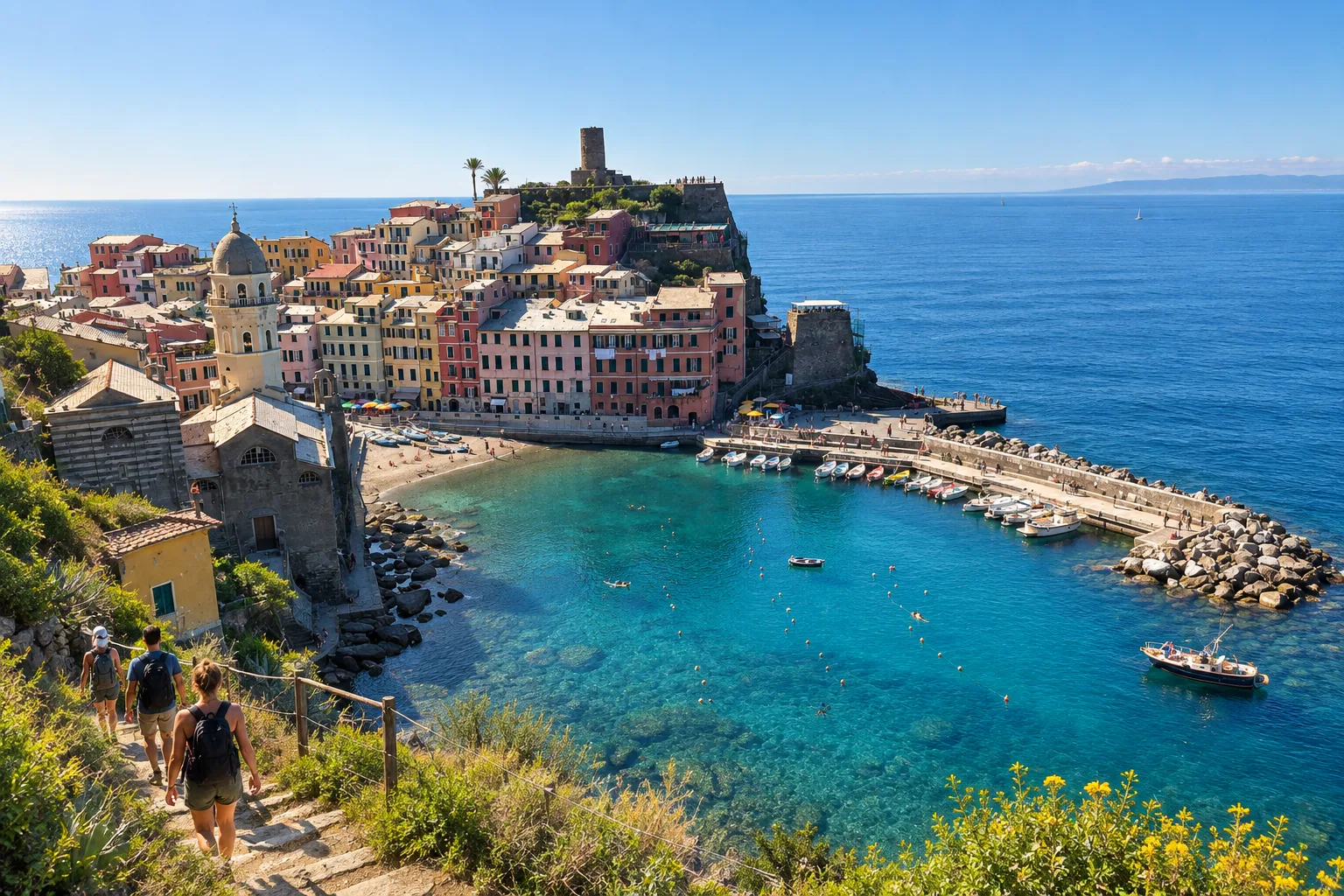 VernazzaUNESCOVernazzaIts natural harbor piazza, the Doria Castle tower, Santa Margherita's waterfront church, colorful tower housesVernazza folds around the only natural harbor in the Cinque Terre, a small crescent of protected water that made it historically the most important of the five villages for trade and defense long before tourism arrived. Its piazza opens directly onto the water, ringed by tall houses and the harborfront church of Santa Margherita di Antiochia, built low with its foundations nearly touching the sea, an arrangement unusual even among these already waterfront villages. Above the harbor, the ruined Doria Castle and its watchtower recall centuries when Genoese and pirate fleets both had reason to fight over this stretch of coast; the tower still offers one of the better views back down onto the village roofs and the piazza below. A devastating flash flood in 2011 buried much of the village under mud and debris, and the fact that Vernazza looks entirely restored today reflects years of careful, deliberate rebuilding rather than a place untouched by disaster.
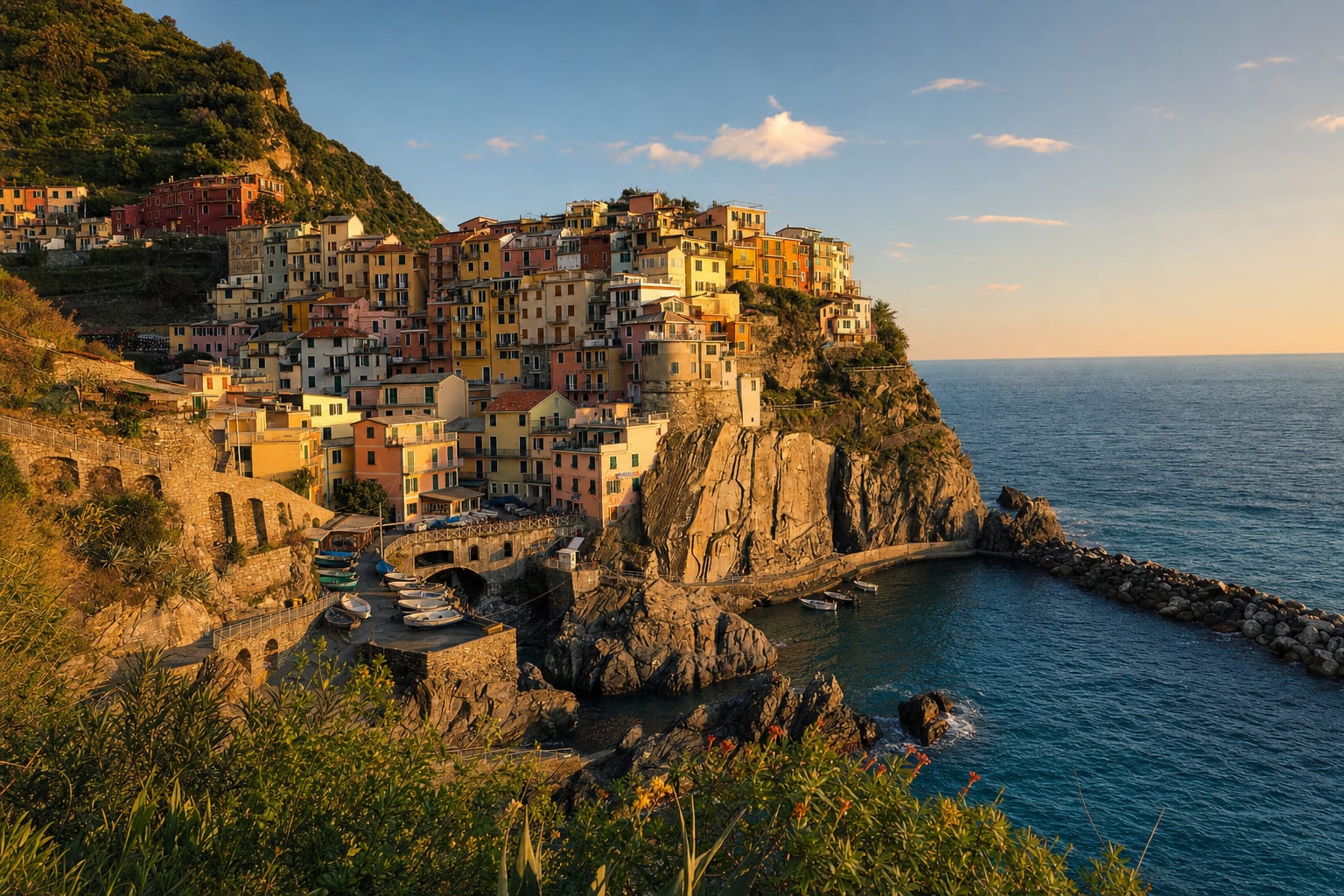 ManarolaUNESCOManarolaTower houses over the cove, the classic Cinque Terre sunset view, Sciacchetra vineyards, cliffside swimmingManarola may be the oldest of the five Cinque Terre villages: the cornerstone of its church, San Lorenzo, is dated 1338, and the town's own name likely descends from the Latin magna rota, "great wheel," a reference to the mill wheel that once turned in the village. Its tall, narrow tower houses stack directly above a small rocky inlet where local fishermen still keep boats and where swimmers dive straight off the concrete slipway into deep water. The local wine, Sciacchetra, a sweet passito made from grapes dried on racks after harvest, comes from the steep terraced vineyards climbing the hills immediately above the houses, worked the same way for generations because no other method suits slopes this severe. The view that has come to represent the entire Cinque Terre in guidebooks and postcards, the tower houses seen from the headland footpath toward Corniglia at dusk, is simply Manarola looking back at itself from the trail above.
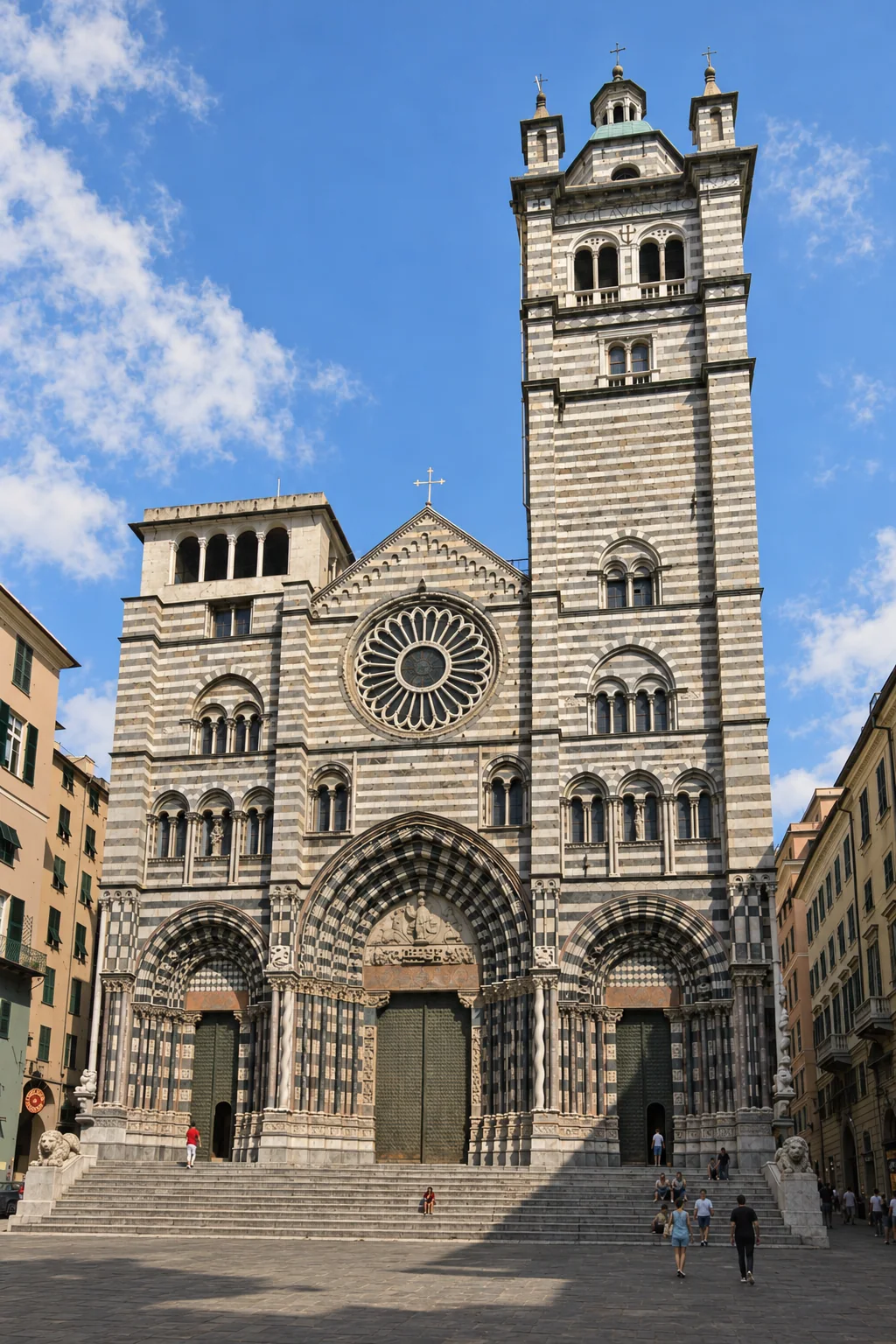 GenoaGenoa CathedralIts striped Gothic west front, surviving Romanesque portals and the chapel of Genoa’s patron saint.<p>Pope Gelasius II consecrated San Lorenzo in 1118, before its façade was complete. An earlier church stood on this site by the early sixth century, but the oldest building phase still visible is Romanesque. The lower west front belongs to an unfinished Gothic transformation begun in the early thirteenth century and influenced by northern France: white, red, pink and green marbles sit alongside black stone. Look upward to see how later generations changed the design; the right bell tower was completed in 1522. Inside, the side aisles retain the springings of arches from a larger rebuilding that was never finished.</p><p>A fire in 1296 damaged the colonnades and capitals. The Romanesque side portals of San Giovanni and San Gottardo survived into the later building. In the left aisle, the Chapel of Saint John the Baptist was begun in 1450; its marble front dates to the middle of the fifteenth century and its interior to the early sixteenth. It holds ashes venerated as those of Genoa’s patron saint. In the right nave, an exact replica recalls an unexploded shell fired by the British fleet in 1941.</p><p>The separate Treasury Museum below the church occupies medieval crypt rooms adapted by Franco Albini in 1956. Reliquaries, objects connected with the Baptist and historic liturgical works give this a different focus from the cathedral itself. Its Sacro Catino is a shallow green-glass dish once believed to be emerald and associated by tradition with the Holy Grail. The city catalogue proposes ancient Syrian manufacture, while acknowledging that the date is disputed. To place San Lorenzo within the surrounding historic centre, continue into <a href="/en/regions/liguria/genoa">our Genoa city guide</a>.</p>
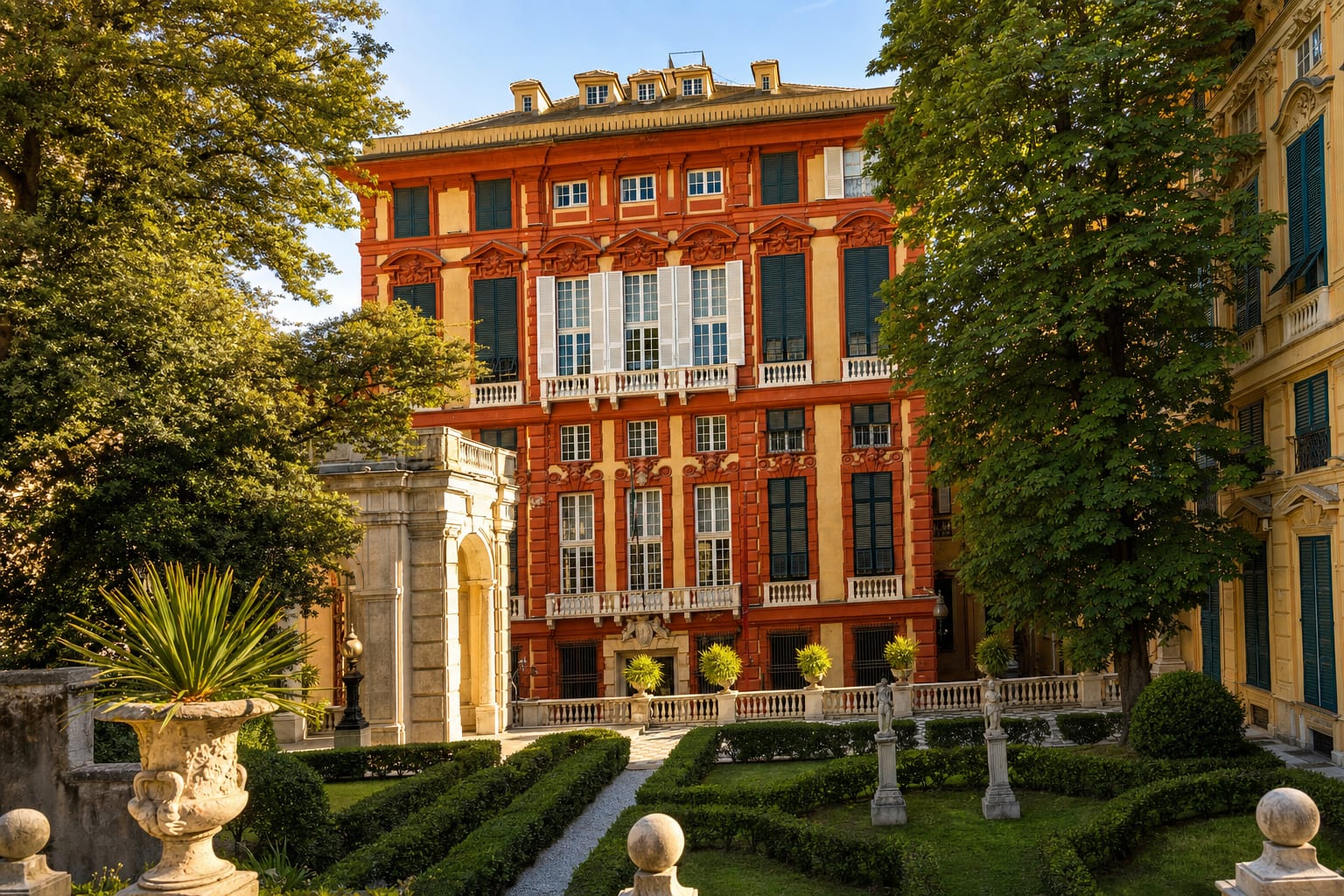 GenoaUNESCOPalazzi dei RolliStrada Nuova palaces, lottery of noble lodging, Palazzo Rosso, Paganini's violin, Rolli DaysIn 1576 the Genoese Republic began listing its finest private palaces in the rolli, official rosters from which the state assigned lodging by lottery to visiting popes, kings and ambassadors, so that grand hospitality became a civic duty. The best of them stand along Via Garibaldi, the Strada Nuova, and its neighbors Via Balbi and Via Cairoli, and UNESCO inscribed 42 of these palaces and streets in 2006. Most remain private, but three open as the Strada Nuova Museums: Palazzo Rosso, a preserved noble house; Palazzo Bianco, the gallery with Flemish and Spanish paintings; and Palazzo Doria-Tursi, where Paganini's violin is kept. On the special Rolli Days, many private palaces open their gilded halls to the public.
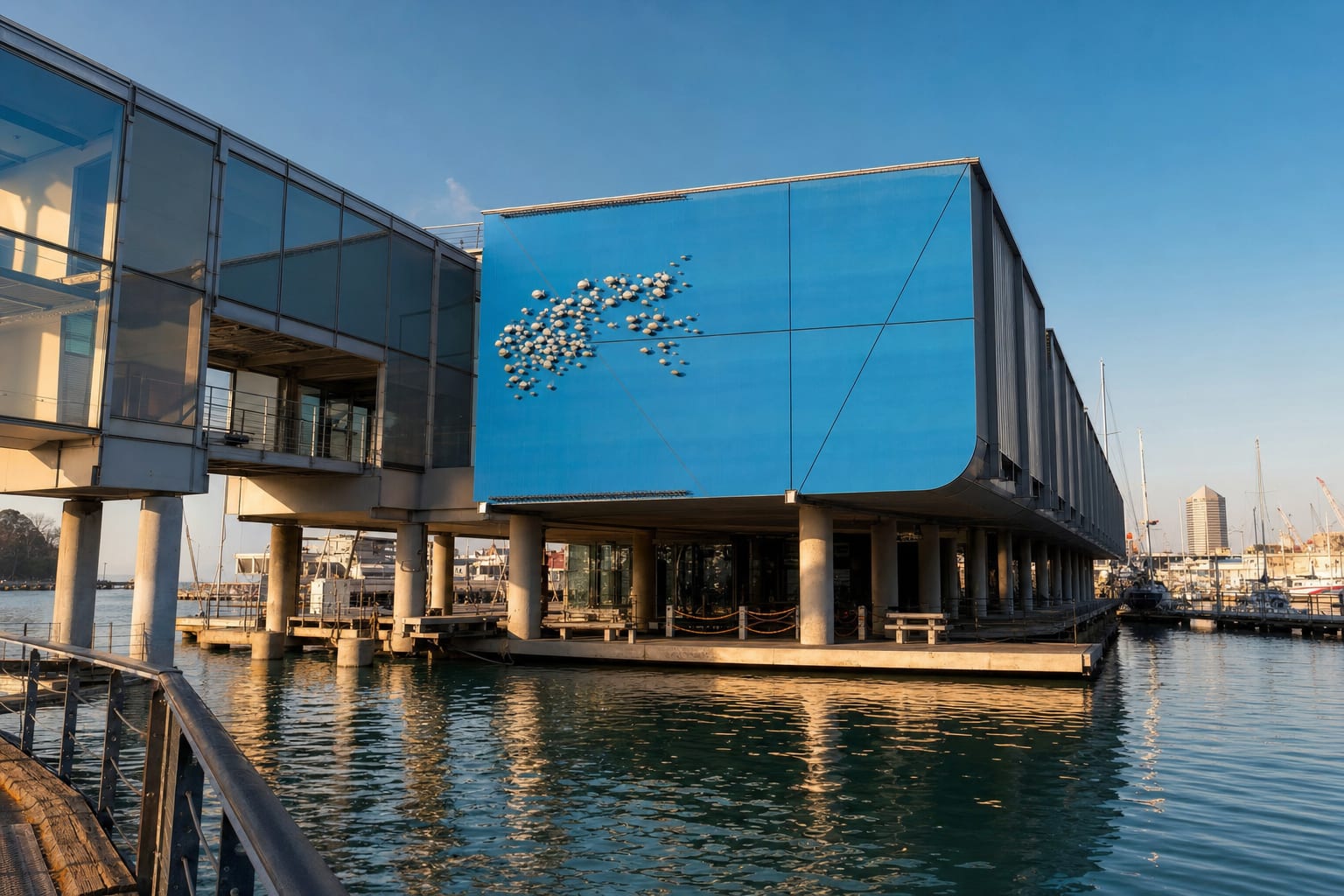 GenoaAquarium of GenoaRenzo Piano design, 400 species, dolphins, sharks, penguins, Porto AnticoRenzo Piano and Peter Chermayeff designed the Aquarium of Genoa as the centerpiece of the port’s redevelopment for the 1992 Columbus celebrations, and it remains one of Europe’s largest. Some 400 species live across 12,000 square meters of exhibition space, from sharks and seals to penguins and a dolphin habitat. The rooms move you through the world’s waters, from the Mediterranean and the Red Sea to the Amazon and the polar seas, in tanks that are as much theatre as science. It stands on the old harbor, the Porto Antico, and you can add the Biosphere, the Bigo panoramic lift and the Children’s City in a single visit. Families use it in every weather.
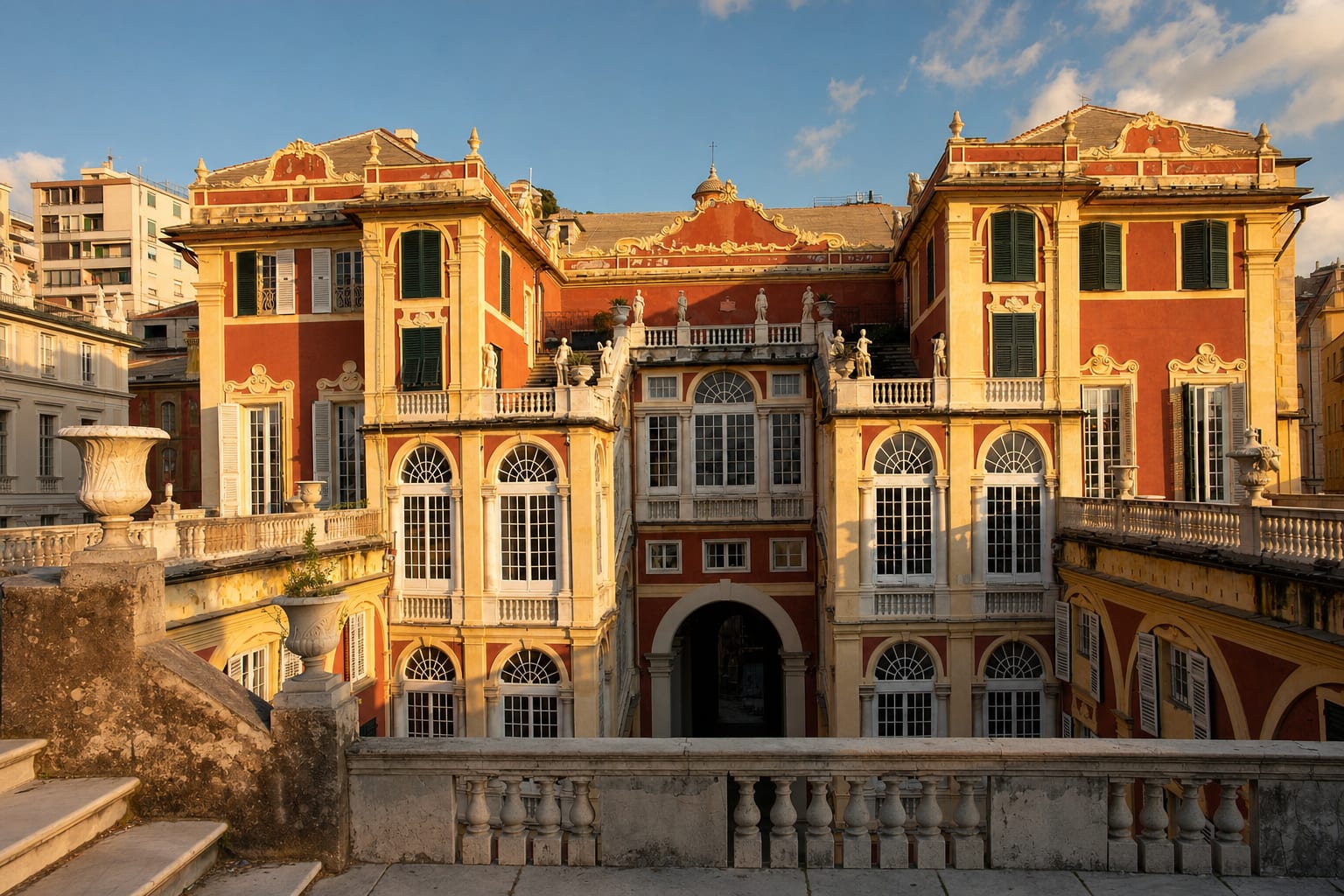 GenoaUNESCORoyal Palace of GenoaHall of mirrors by Domenico Parodi, Van Dyck portraits, Balbi and Durazzo decoration, harbor terraceThe Balbi family built this palace between 1643 and 1650 to show off their banking fortune, and when the Durazzo family bought it in 1677 they added the flourishes that survive today: gilded stucco, an atrium framed to catch the harbor view, and a hall of mirrors by Domenico Parodi that answers Versailles on a Genoese scale. The House of Savoy took it over in 1824 and used it as an official royal residence, and it opened as a state museum in 1919. Portraits by Van Dyck, who spent years painting Genoa's merchant aristocracy, still hang where the Durazzo and Savoy families placed them, and the terrace out back still looks straight down to the working port.
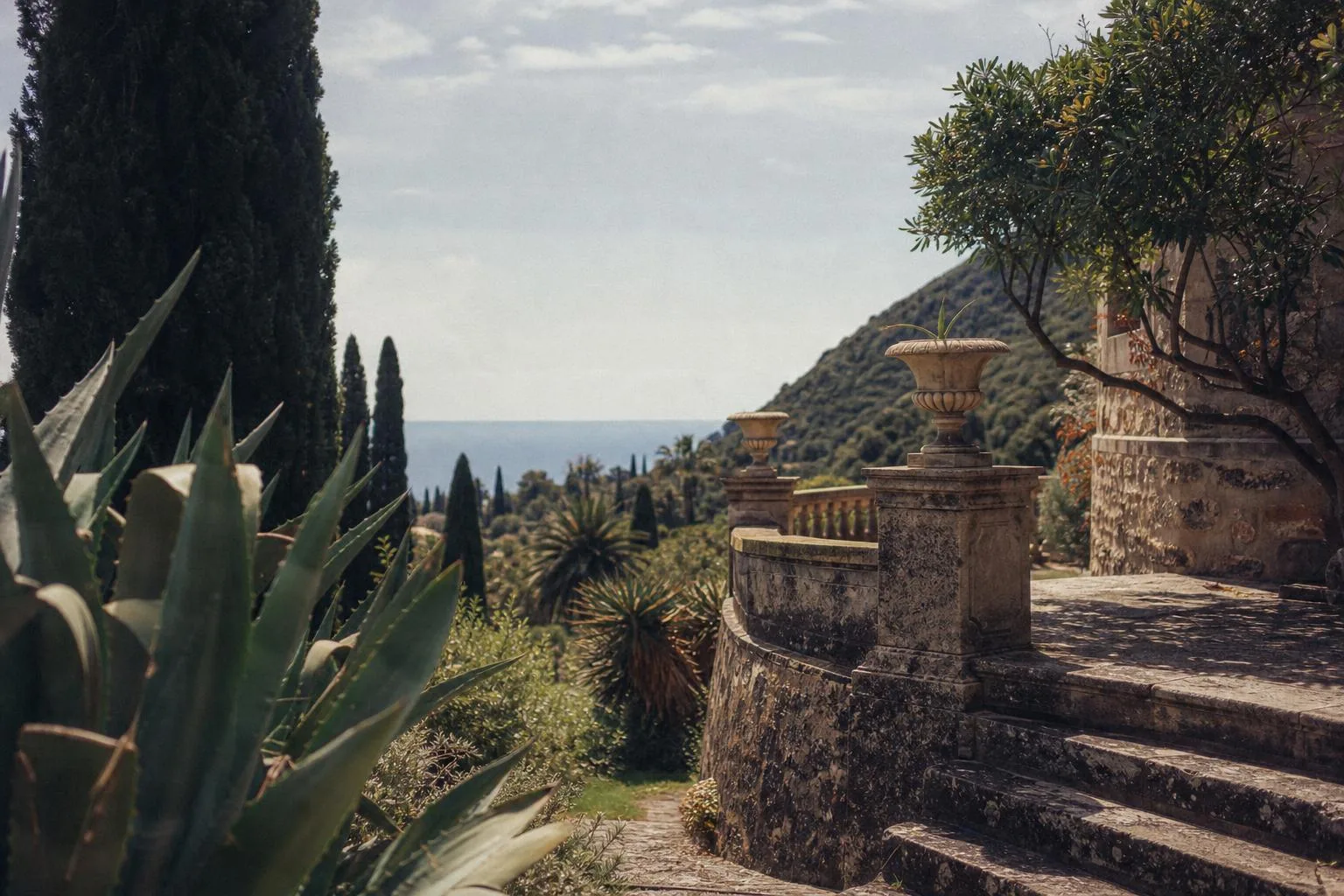 BordigheraHidden GemHanbury Botanical Gardens1867 Hanbury acclimatization garden, 2,500 plant species, La Mortola terraces, University of Genoa research stationThomas Hanbury bought the La Mortola promontory in 1867, right where the Riviera meets the French border, and set out to build one of Europe's great acclimatization gardens, a place to test plants from six continents against a nearly frost-free Mediterranean winter. His brother Daniel, a botanist, helped shape the early plant collection, and across eighteen hectares of terraced slopes the garden now holds roughly 2,500 species and varieties, from Mexican agaves to Australian eucalyptus, planted alongside olive groves and umbrella pines already old when Hanbury arrived. The University of Genoa has run the site since 1987, as both a public garden and a research station. Paths switchback down toward the sea, past a short stretch of Roman-era road and a nineteenth-century villa, so the walk down doubles as a lesson in plant geography. Regularly ranked among Italy's finest gardens, it rewards an unhurried morning or afternoon.
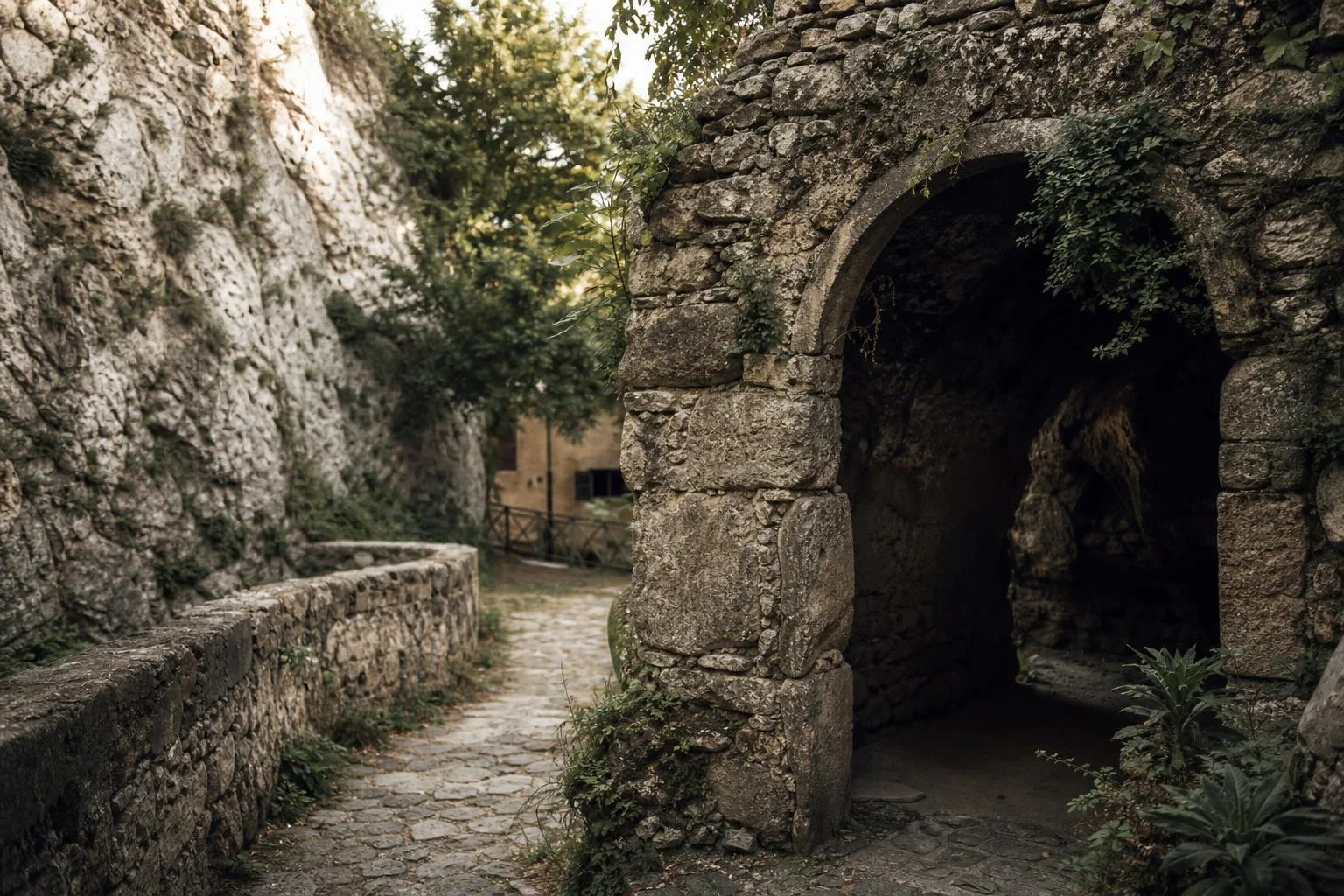 AlassioHidden GemToirano CavesGrotta della Bàsura, prehistoric footprints, cave bear ‘cemetery’, Hall of MysteriesThe Toirano caves are a prehistoric sanctuary in the hills of the Val Varatella, in the Ligurian back country. A guided visit runs through two connected caves, Grotta della Bàsura and Grotta di Santa Lucia Inferiore, along about 1,300 meters of path. Here you meet stalactites, stalagmites and pearly mammillary formations, but the real draw is human. In the Sala dei Misteri, hand, foot and knee prints of Homo sapiens survive from more than 12,000 years ago, and another chamber holds cave bear bones some 30,000 years old, the ‘bear cemetery’. The temperature stays near 16 degrees with high humidity, so a light layer helps. Your ticket also covers the Ethnographic Museum of Val Varatella.
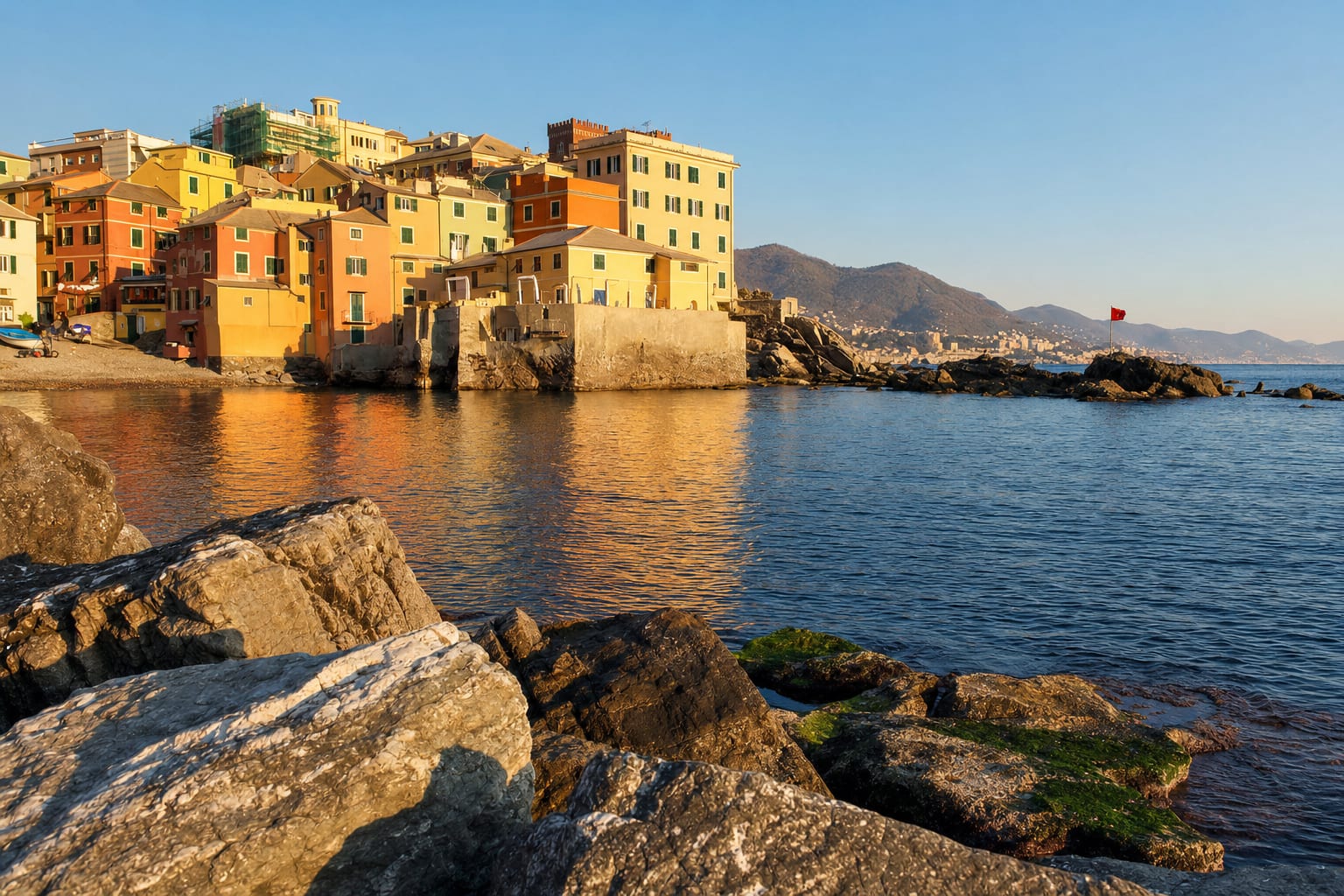 GenoaBoccadasseFishing hamlet inside Genoa, pebble cove, pastel houses, gelato at sunsetBoccadasse is a fishing hamlet that survived inside the city of Genoa: a pocket pebble beach, pastel houses stacked around it, and small boats pulled up on the stones. The name probably comes from Bocca d'Asse, the Genoese for mouth of the donkey, after the shape of the bay; legend says Spanish fishermen settled here around the year 1000. It joined Genoa in 1873 and kept its character. The parish church of Sant'Antonio da Padova, raised by the fishermen in the early 1700s, is hung with ship models given as thanks. Come at the end of the afternoon, buy a gelato and eat it on the rocks while the light turns the houses orange. The singer Gino Paoli lived here.
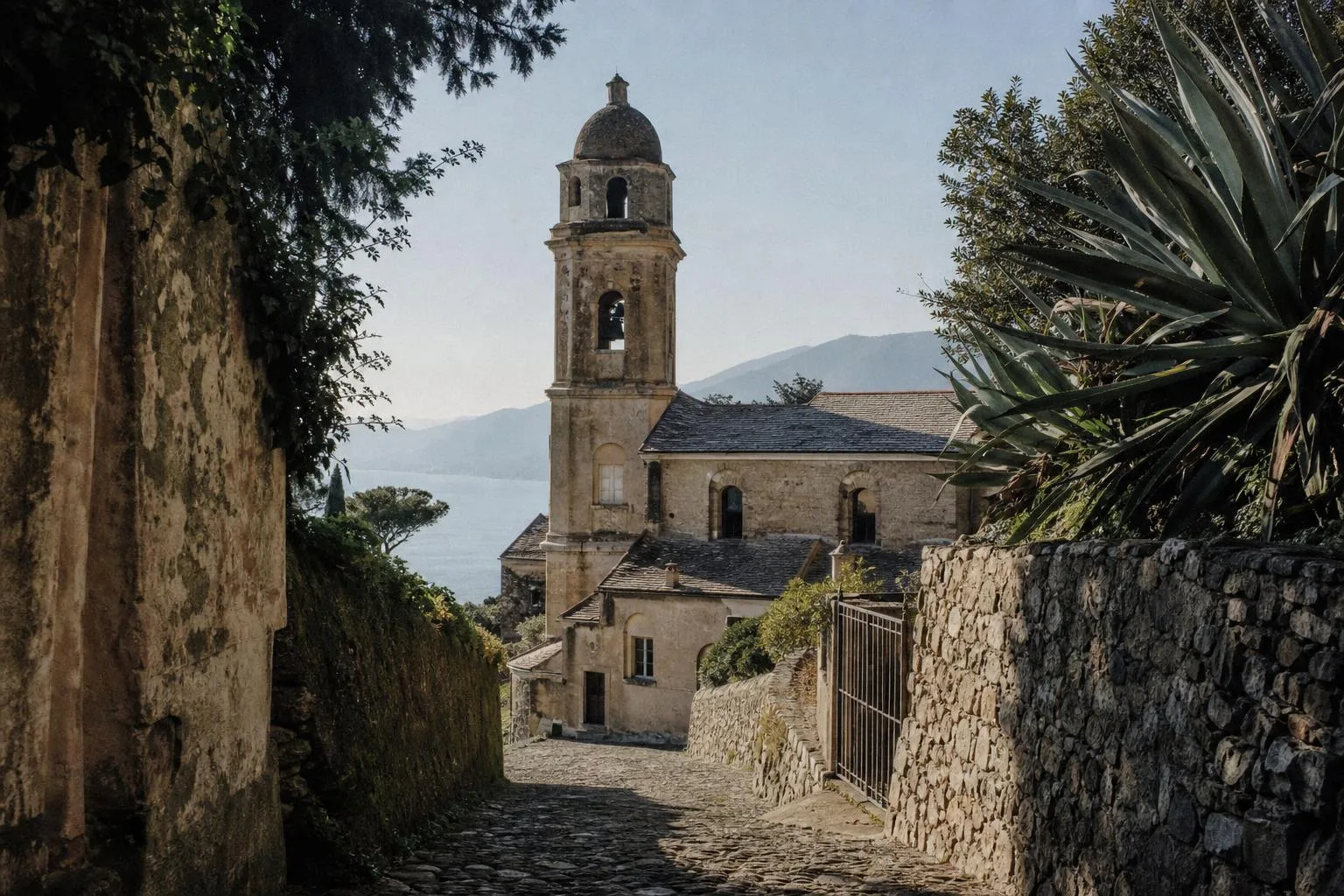 Santa Margherita LigureHidden GemCervara AbbeySeafront Renaissance garden, 1361 abbey, Francis I’s captivity, Saracen towerThe Abbey of San Girolamo della Cervara was founded in 1361 on the shore between Santa Margherita Ligure and Portofino, and passed to the Benedictines of Monte Cassino in the early 1400s. Its walls were fortified against Barbary pirates, and in 1525 Francis I of France was held in the tower for a week after his defeat at Pavia. Today the reason to come is the garden: the only monumental Italian Renaissance garden on the Riviera that opens straight onto the sea, with clipped boxwood parterres, a seventeenth-century marble fountain, citrus trees and wisteria. The abbey is privately owned, so a visit is a guided tour rather than a walk-in ticket.
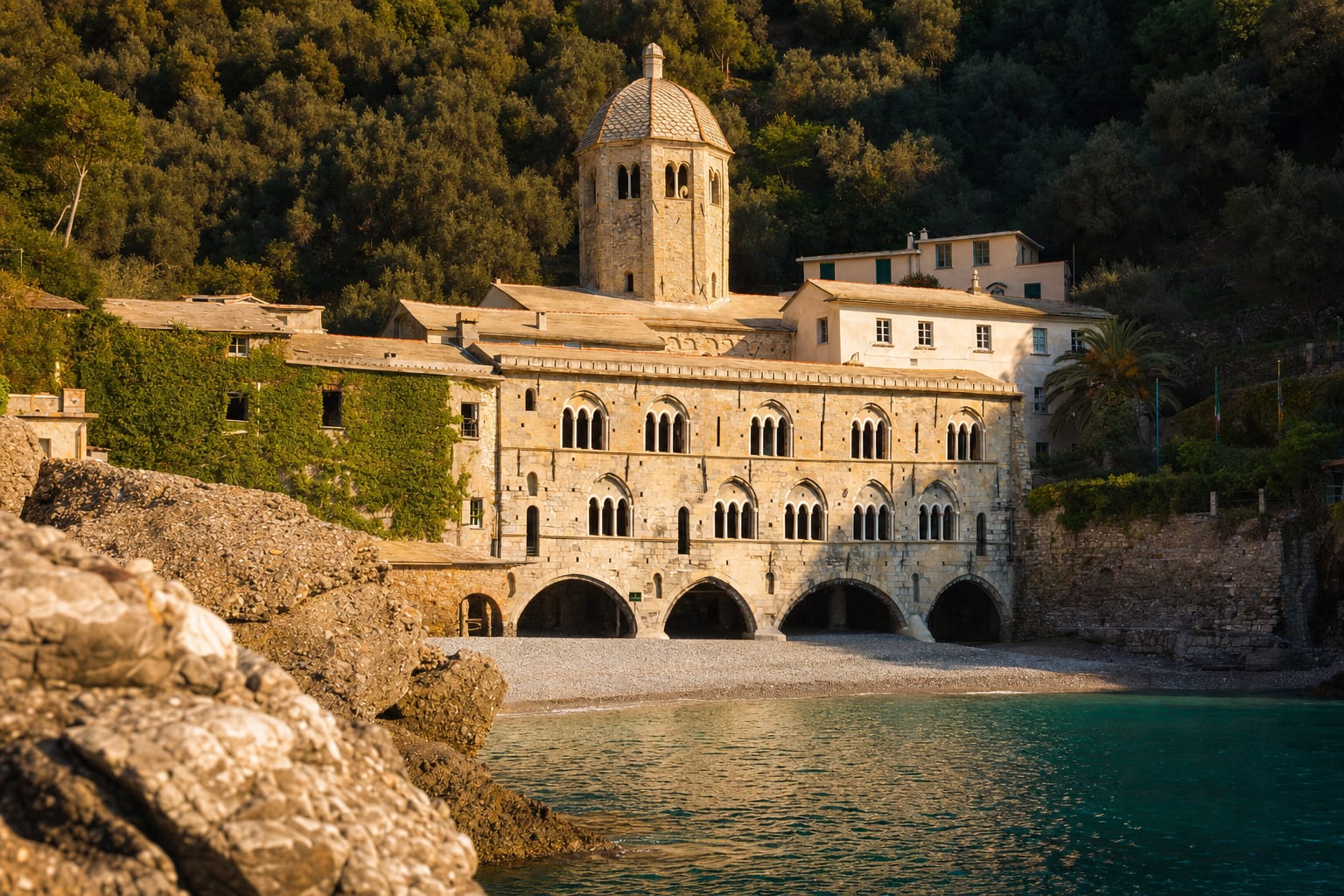 CamogliAbbey of San FruttuosoBoat-only abbey cove, Christ of the Abyss statue, Doria family tombs, FAI-managed siteBenedictine monks raised this abbey directly into a cove on the Portofino headland in the tenth century, choosing a spot reachable only by boat or by a two-hour mule path over the ridge, and it still cannot be reached any other way. Genoese admirals of the Doria family are buried in the crypt, their tombs cut into the rock beneath the cloister. The bell tower and refectory survive largely as rebuilt after a Saracen raid, and the complex now belongs to the FAI, Italy's national trust. Offshore in the protected marine reserve, at a depth of about seventeen meters, a bronze statue of Christ has watched over the bay since 1954, placed to bless divers and sailors and now one of the most photographed underwater sculptures in the Mediterranean.
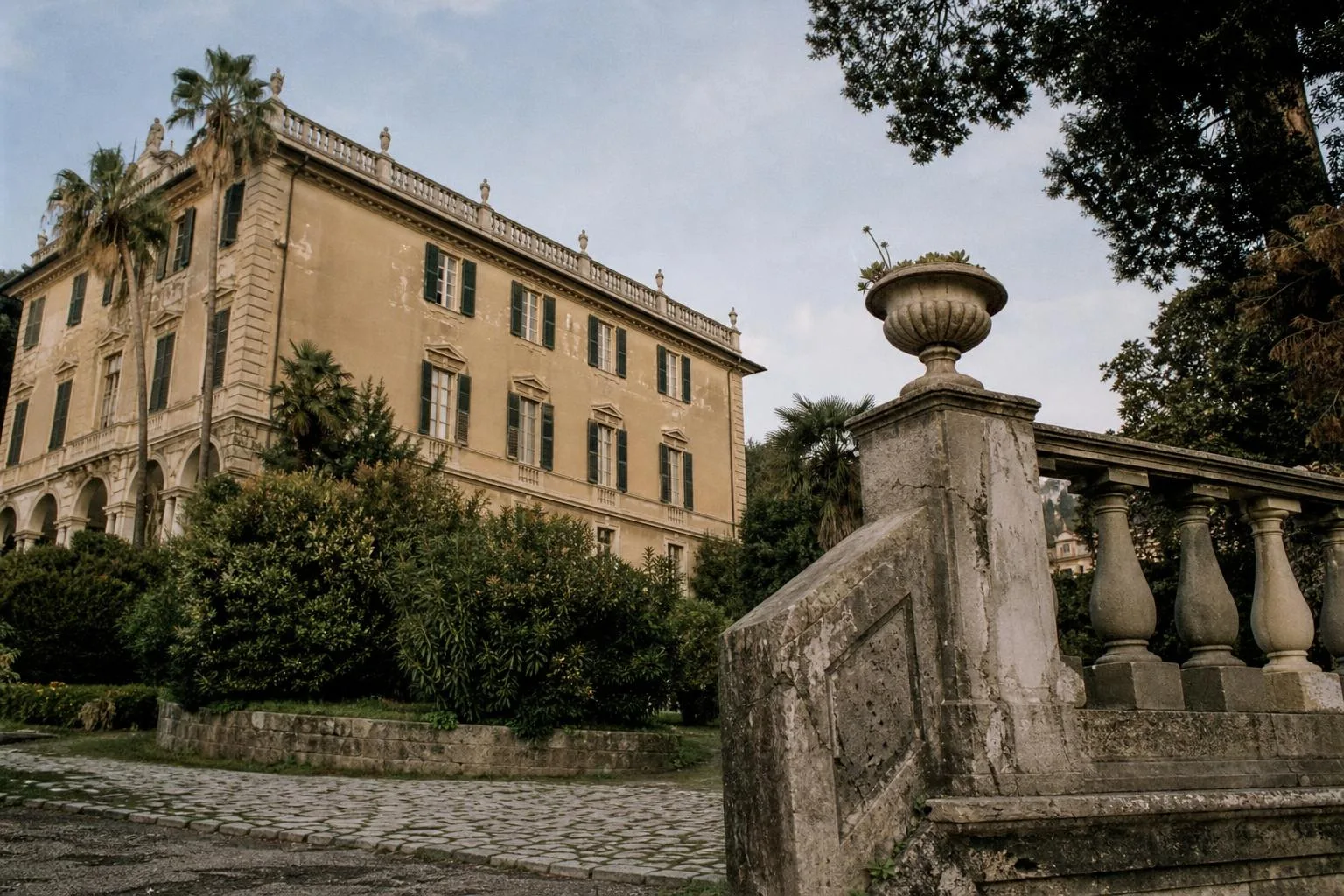 GenoaHidden GemVilla Durazzo-PallaviciniThree-act romantic park, Michele Canzio's design, Museo di Archeologia Ligure, Italy's most beautiful garden (2017)Clelia Durazzo Grimaldi planted a botanical garden here in the late 1700s, but it was her nephew's set designer, Michele Canzio of Genoa's Teatro Carlo Felice, who turned the grounds into theater when he built the park between 1840 and 1846. Canzio staged the ninety-seven-thousand-square-meter park as a drama in three acts, Return to Nature, Memory and Purification, scattering temples, a pagoda, an obelisk and artificial ruins along the paths as scenery for a promenade meant to be walked like a story. The park opened in September 1846 to immediate national fame and was voted Italy's most beautiful garden in 2017. The villa itself, in Genoa's Pegli district beside the railway station, now houses the Museo di Archeologia Ligure.
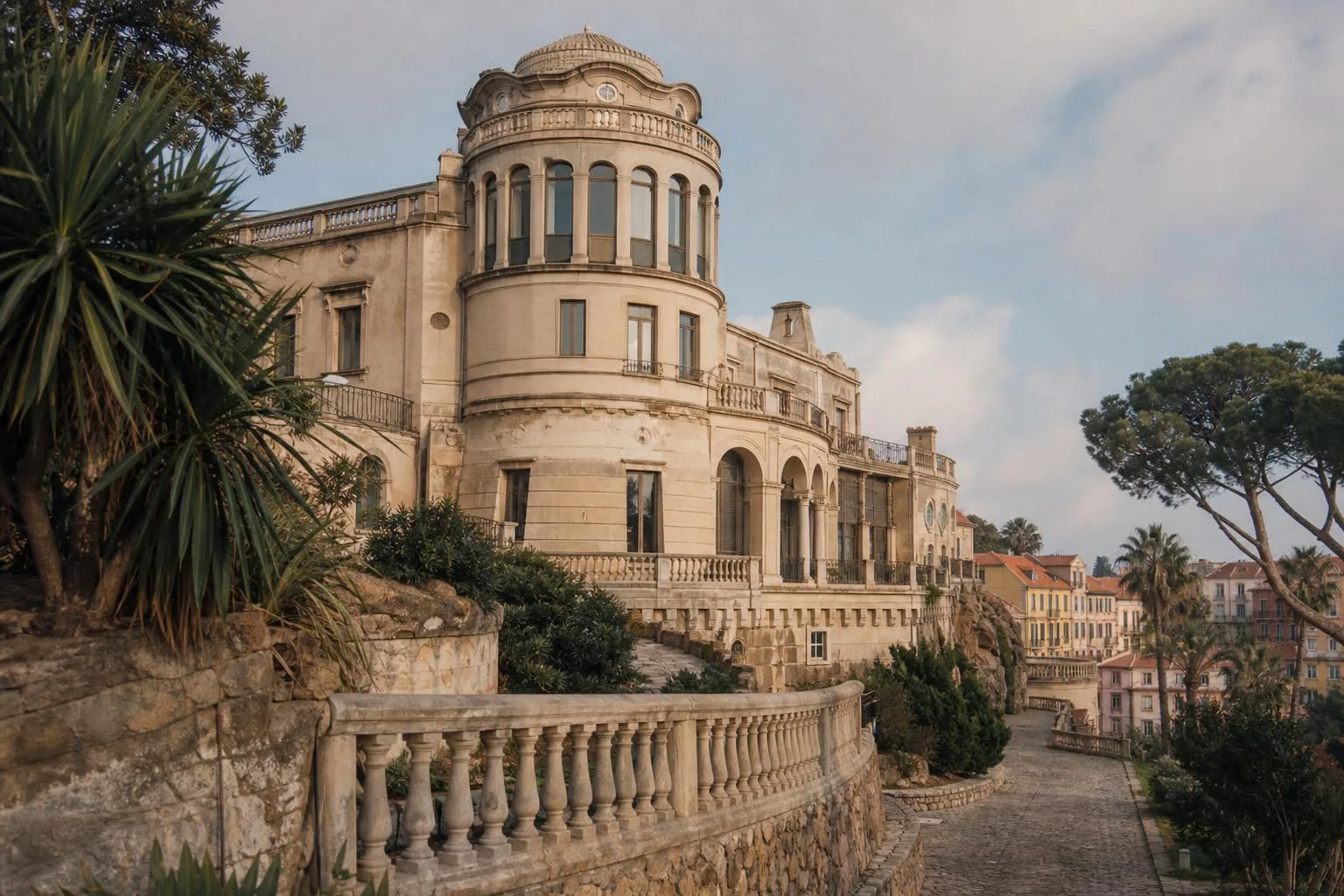 ImperiaHidden GemVilla GrockGrock's personal mansion, Jugendstil-Art Deco interiors, Museo del Clown, 2013 reopeningCharles Adrien Wettach, the Swiss performer known to the world as Grock, was Europe's highest-paid entertainer of his day, and he poured that fortune into a forty-seven-room mansion above Imperia, begun in 1922 and enlarged into its present form by 1930. The villa mixes Jugendstil and Art Deco with Persian, Baroque and Rococo flourishes, all chosen and directed by Grock himself, who first visited the Ligurian coast in 1920 and never stopped adding to the house afterward. It sat closed and largely forgotten after his death in 1959 until restoration returned it to the public on August 20, 2013, as the Museo del Clown, filled with interactive installations, games for children, and Grock's own costumes, instruments and personal effects from a career that took him across every major stage in Europe.
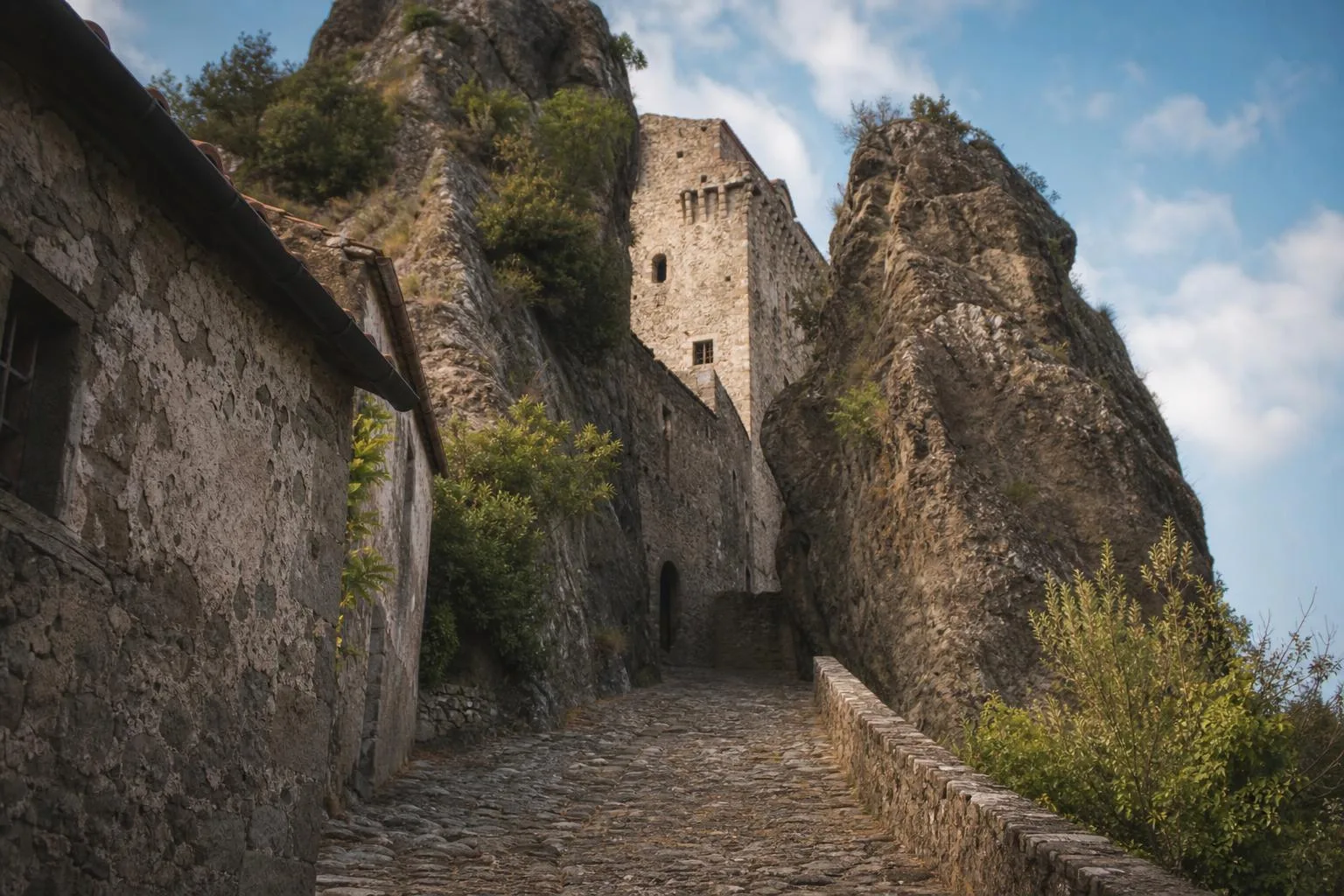 GenoaHidden GemCastello della PietraCastle wedged between rock towers, della Pietra family seat, 1797 burning, Antola Regional ParkWedged so tightly between two natural rock towers that its walls seem to grow out of the stone itself, Castello della Pietra above Vobbia may date to the 1100s, though the earliest solid records place the della Pietra family in possession from 1252 onward. Ownership passed through the Spinola, Adorno and other Genoese noble families over the centuries until French troops, suppressing the region's imperial fiefs in 1797, drove out the castle's last occupants and set it ablaze, leaving it a ruin for nearly two centuries. The Beroldo family donated the abandoned castle to Vobbia's municipality in 1979, and restoration allowed full public access from 1994, now managed by the Parco Naturale Regionale dell'Antola. A forest trail is the only way in, on foot, exactly as it always was.
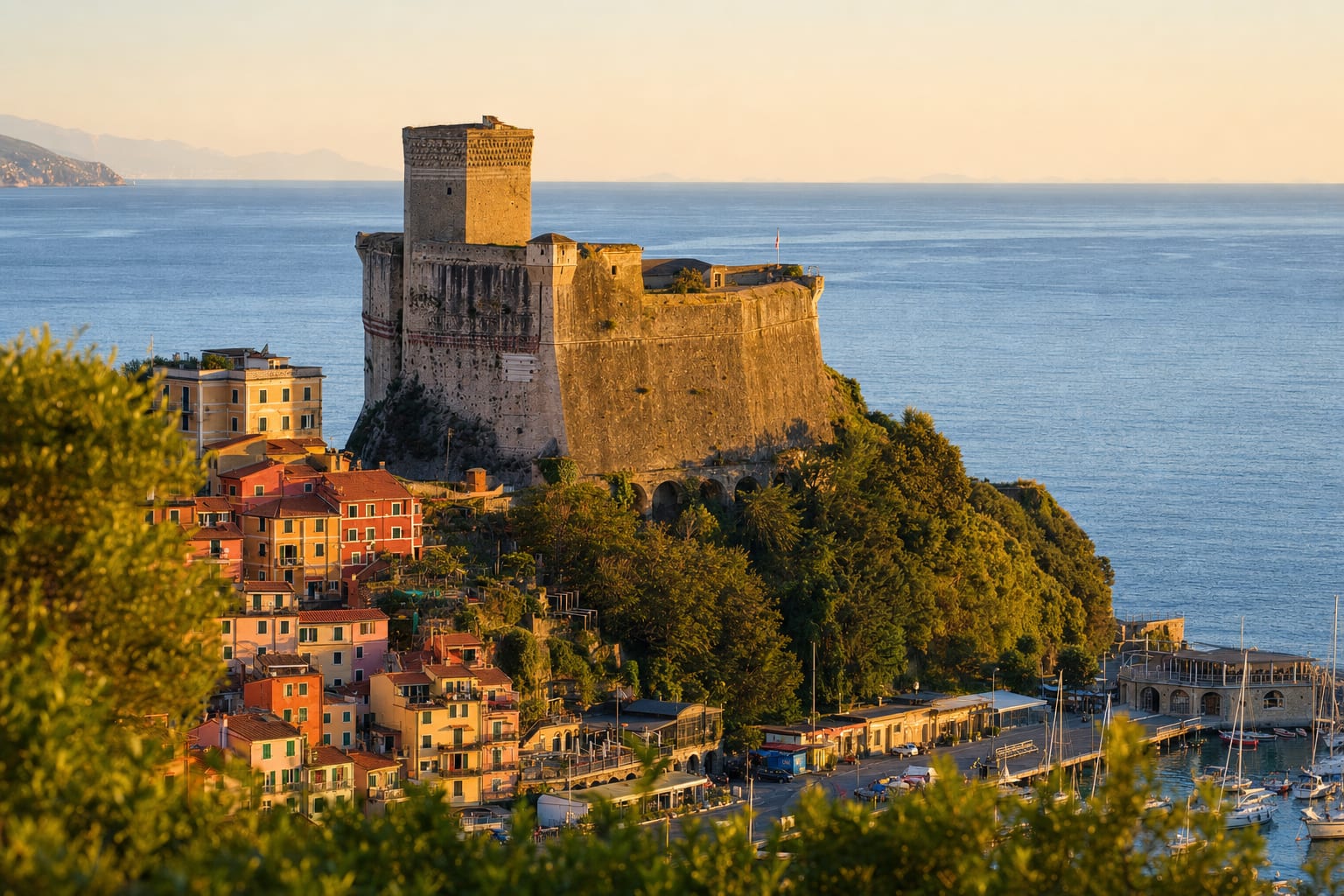 LericiLerici CastleGenoese fortress, Chapel of Santa Anastasia, Gulf of Poets views, art exhibitionsLerici Castle rises on a rock above the harbor of the Gulf of Poets, the natural sea inlet that has drawn Shelley and Byron. Genoa bought Lerici in 1152 and held it against Pisa, which controlled it from 1241 until Genoa retook it in 1256. Its present pentagonal form dates from a rebuild in 1555 by the Genoese Office of San Giorgio. Inside is the Chapel of Santa Anastasia, a small Gothic room in black-and-white stripes of stone typical of Genoese and Pisan work of the thirteenth century. The castle also hosts art exhibitions and, from its battlements and terrace, opens the gulf and the islands of Palmaria and Tino. A lift from the waterfront saves the climb.
Tours worth booking in Liguria
Compared by our editors, across providers.
Booking through these links may earn Italia Magnifica a commission, at no cost to you.
- Viator
- 2h
- 4.8★ · 4 reviews
from €290Book this tour- Viator
- 1h
- 5.0★ · 53 reviews
from €30Book this tour- Viator
- 3h
- 5.0★ · 42 reviews
from €1,188Book this tour- Viator
- 2h
- 5.0★ · 15 reviews
from €69Book this tour- Viator
- 2h
- 5.0★ · 7 reviews
from €120Book this tour- Viator
- 1h 30m
- 4.8★ · 81 reviews
from €54Book this tour




City by city
Where the monuments cluster in Liguria.