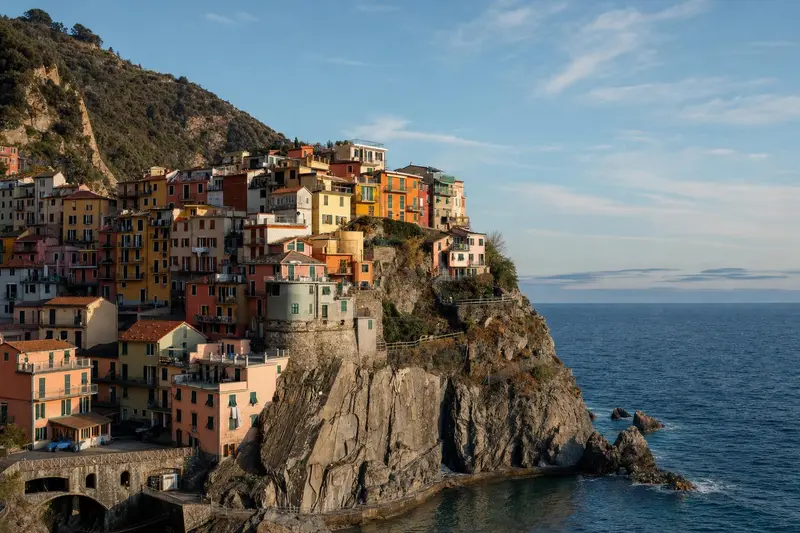
Portovenere’s tower-houses form a compact wall along the harbour. Built as a first defense against attack from the sea, they connect by vaulted stairways to the carruggio, the central lane running from the old entrance to Piazza Spallanzani. The settlement’s commercial history reaches back to Roman times. Today it shares the UNESCO cultural landscape inscribed in 1997 with the Cinque Terre villages and three offshore islands.
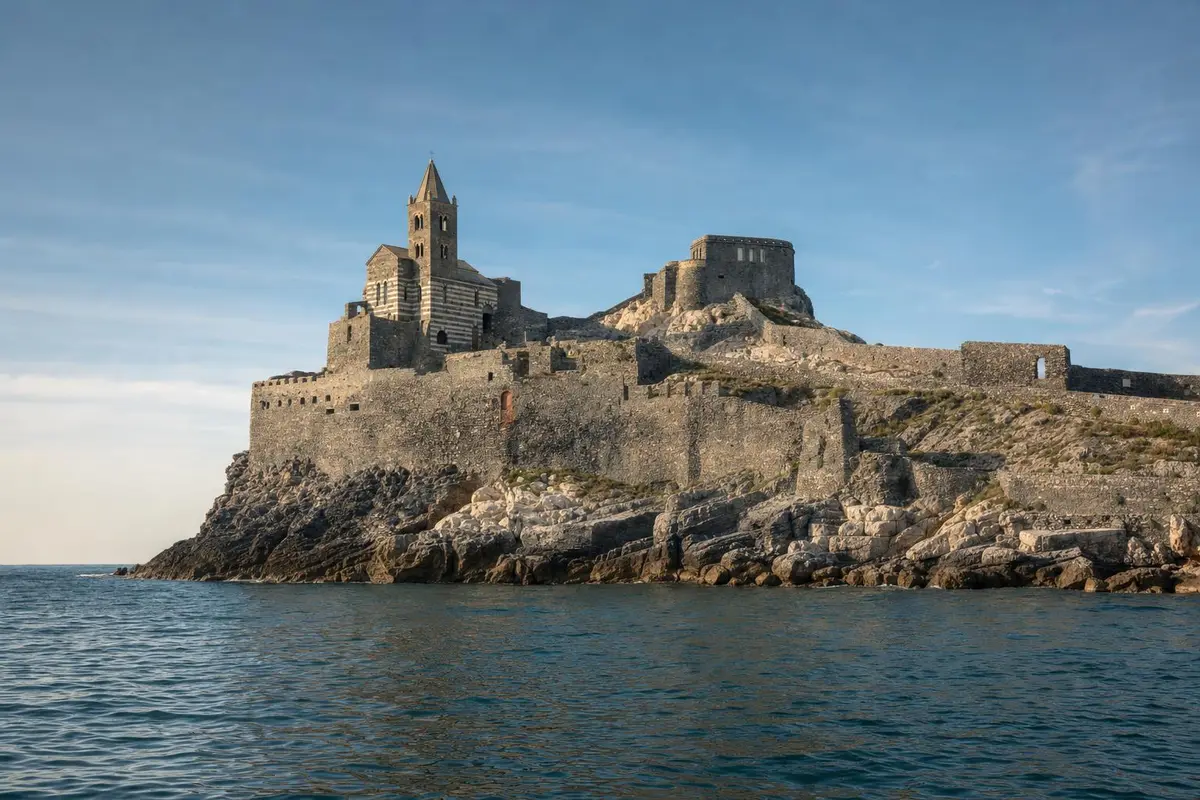
San Pietro marks the seaward end of the walk, beside Piazza Spallanzani. From the carruggio, other stairs climb to San Lorenzo in the upper village. Work on that Romanesque parish church began in 1116, and it was consecrated in 1130. Its Madonna Bianca image remains a focus of local devotion: on 17 August, the annual procession carries the image through the village, stopping in the square below San Pietro amid torchlight and devotional singing.
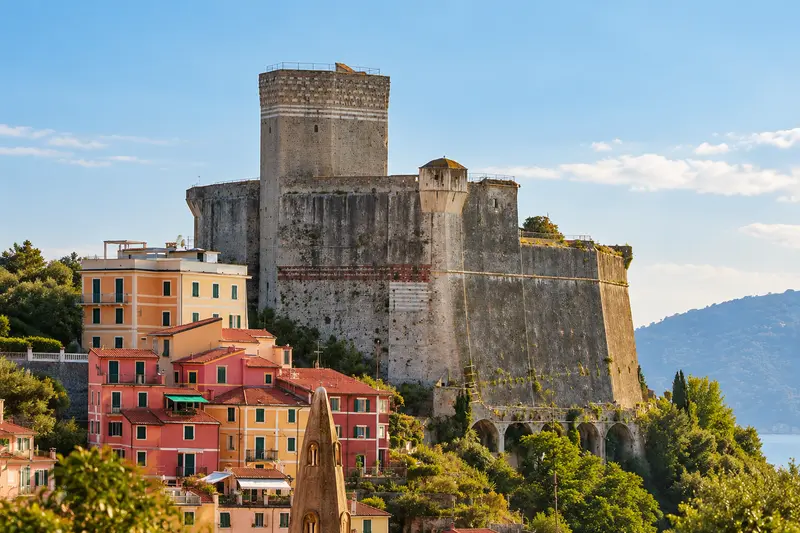
Castello Doria rises above the houses on a rocky promontory. Its near-pentagonal outline is interrupted by a southern bastion projecting toward the sea. Inside, stone stairs connect successive levels: a pillared hall with cross vaults, the Captain’s House above it and the upper defensive walk. The building’s layered spaces make the climb a different encounter with Portovenere from the close waterfront lane.
Palmaria, Tino and Tinetto lie offshore, within the same UNESCO property. The park documents an eleventh-century monastery on Tino and early Christian and monastic remains on little Tinetto. Back beside San Pietro, the cove known as Byron’s Grotto carries a more elusive story: the poet’s supposed swim across the gulf to Lerici belongs to disputed local tradition. For more of the region’s coastal and inland landmarks, explore our guide to places in Liguria.