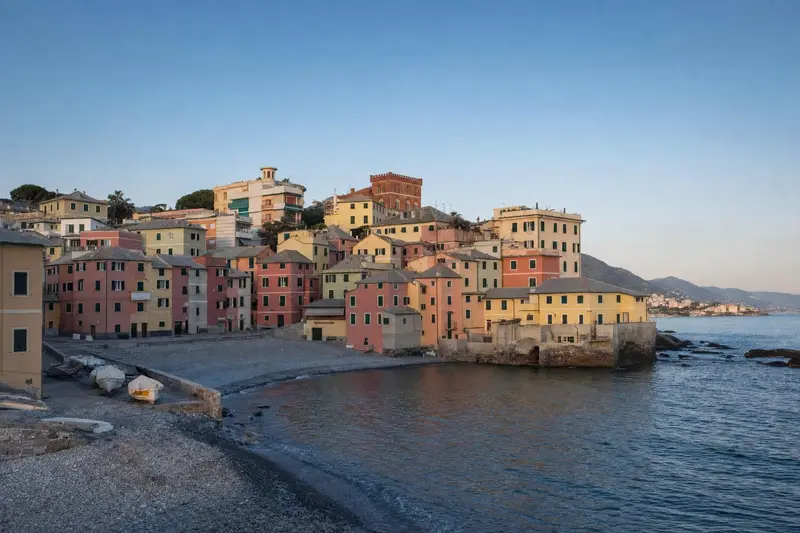
Portofino gathers around a sheltered bay on the eastern Ligurian coast. Painted façades and fishing boats give the harbour its intimate scale, while ferries and yachts arrive beneath the slopes of the promontory. The Comune’s historical account records the ancient harbour-name Portus Delphini in connection with Pliny and a third-century maritime itinerary, but leaves the settlement’s earliest origins uncertain. For a wider sense of the region’s coast and hinterland, continue with our Liguria travel guide.
Above the piazzetta, a medieval Genoese fortress looks over the harbour. Genoa reworked its defenses in the mid-sixteenth century under the engineer Gian Maria Olgiati, with the castle’s extension works continuing from a 1542 commission through 1557. Its later name recalls Montague Yeats Brown, the English consul in Genoa who bought the fortress in 1867 and reshaped it as a residence. The Municipality acquired the building in 1961, and its terraces still open onto the curve of the bay.
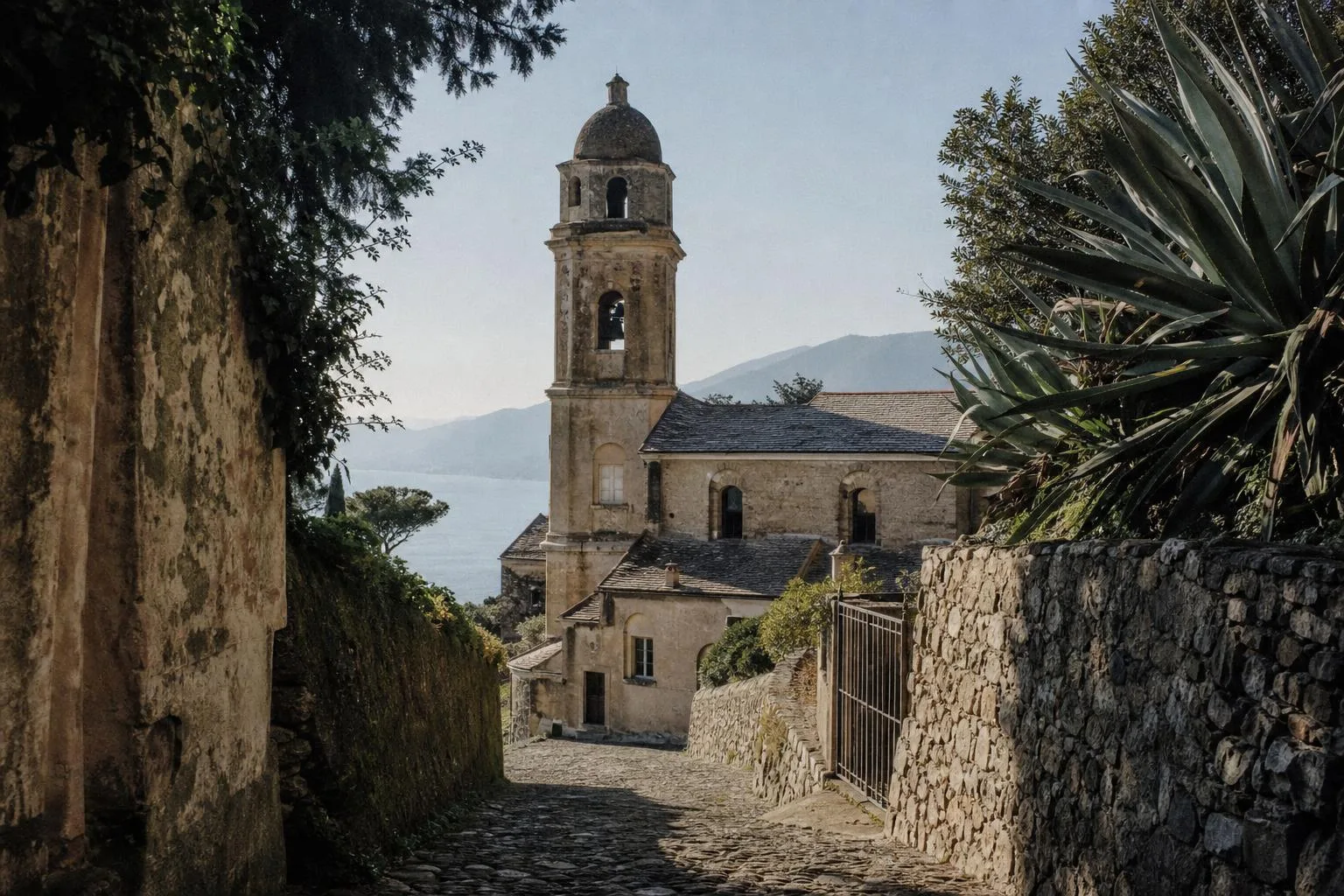
A rising lane leads from the piazzetta to the church of San Giorgio, then continues past Castello Brown toward the far end of the headland. The church, first built in 1154, holds relics of Saint George in a shrine cut into the local puddingstone beneath its main altar. Beyond the castle, the route reaches a viewpoint just below the lighthouse, where pine and Mediterranean scrub edge the sea. Allow about half an hour for the outward walk, at a pace that suits the climb.
Portofino rewards a slower circuit between water and hillside: the harbour first, then the church and castle above it, followed by the open view from the lighthouse path. If you are extending your journey along the coast, our guide to the Cinque Terre villages explores another stretch of Liguria.