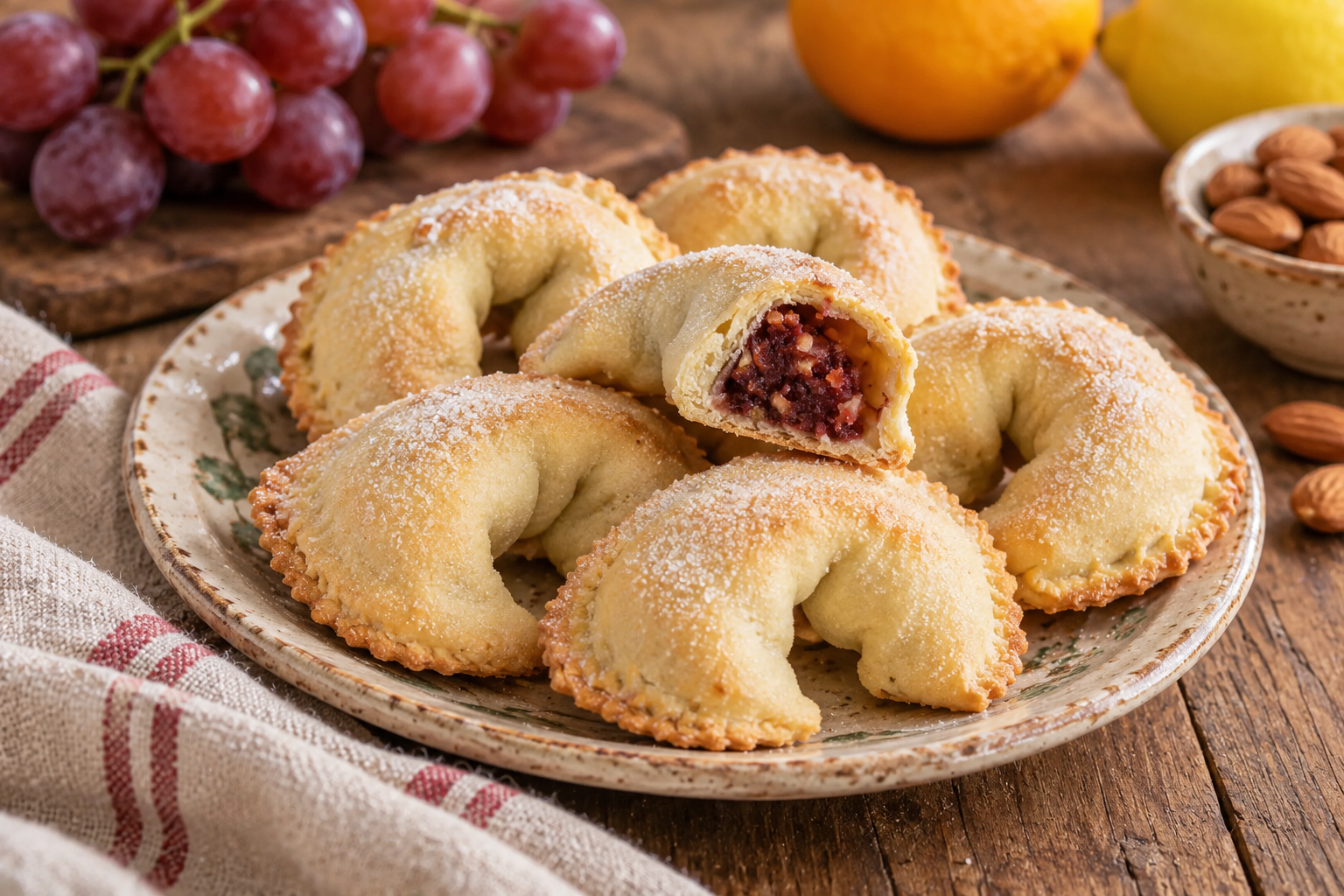
Use thick grape jam and cooked grape must. The filling must hold a small mound without releasing liquid.
Make ahead Make the filling while the dough rests; allow the baked pastries to cool before serving.
Piccillati with grape jam
Prep 55 min · Cook 1 hr · Rest 50 min · Yield 24 pastries (12 servings per batch) · Difficulty Medium
Method
Mix the flour, baking powder, sugar and salt. Add the 75 g egg, oil, wine and anise liqueur. Knead just until smooth and firm, cover and rest for 30 minutes. Reserve the dusting flour for rolling.Mix the flour, baking powder, sugar and salt. Add the 2¾ oz egg, oil, wine and anise liqueur. Knead just until smooth and firm, cover and rest for 30 minutes. Reserve the dusting flour for rolling.
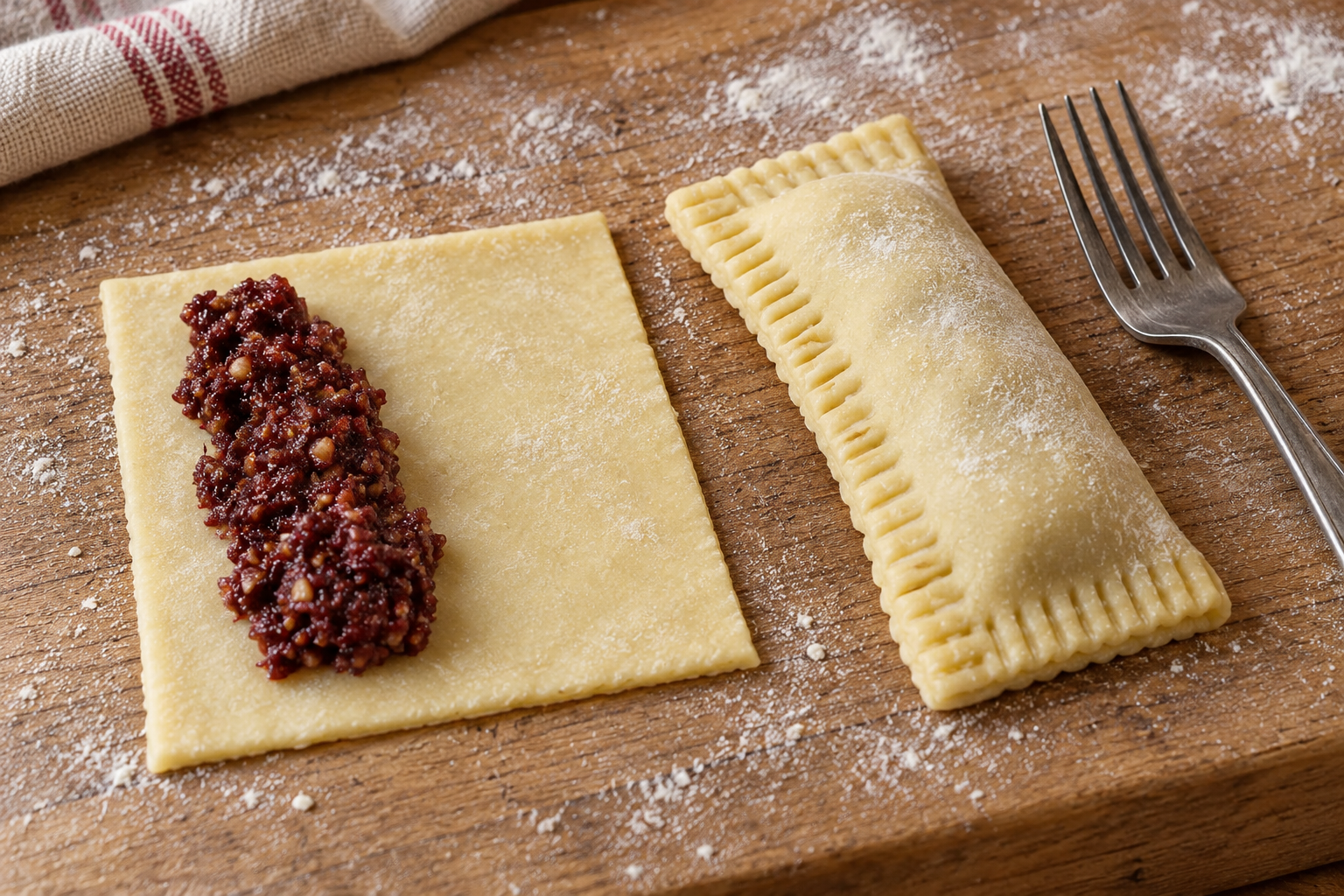
Mix the jam, cooked must, almonds, breadcrumbs and zest. Leave for 15 minutes during the dough rest. A teaspoonful should hold its shape without a liquid rim; if the jam is loose, drain it before weighing rather than filling the pastry with a runny mixture.Mix the jam, cooked must, almonds, breadcrumbs and zest. Leave for 15 minutes during the dough rest. A teaspoonful should hold its shape without a liquid rim; if the jam is loose, drain it before weighing rather than filling the pastry with a runny mixture.
Heat a conventional oven to 180°C. Line both trays. Roll the dough to about 3 mm, dusting sparingly, and cut 24 squares about 10 cm wide; gather and reroll trimmings once. Divide any small remaining filling evenly between the pieces.Heat a conventional oven to 350°F. Line both trays. Roll the dough to about 3 mm, dusting sparingly, and cut 24 squares about 4 in wide; gather and reroll trimmings once. Divide any small remaining filling evenly between the pieces.
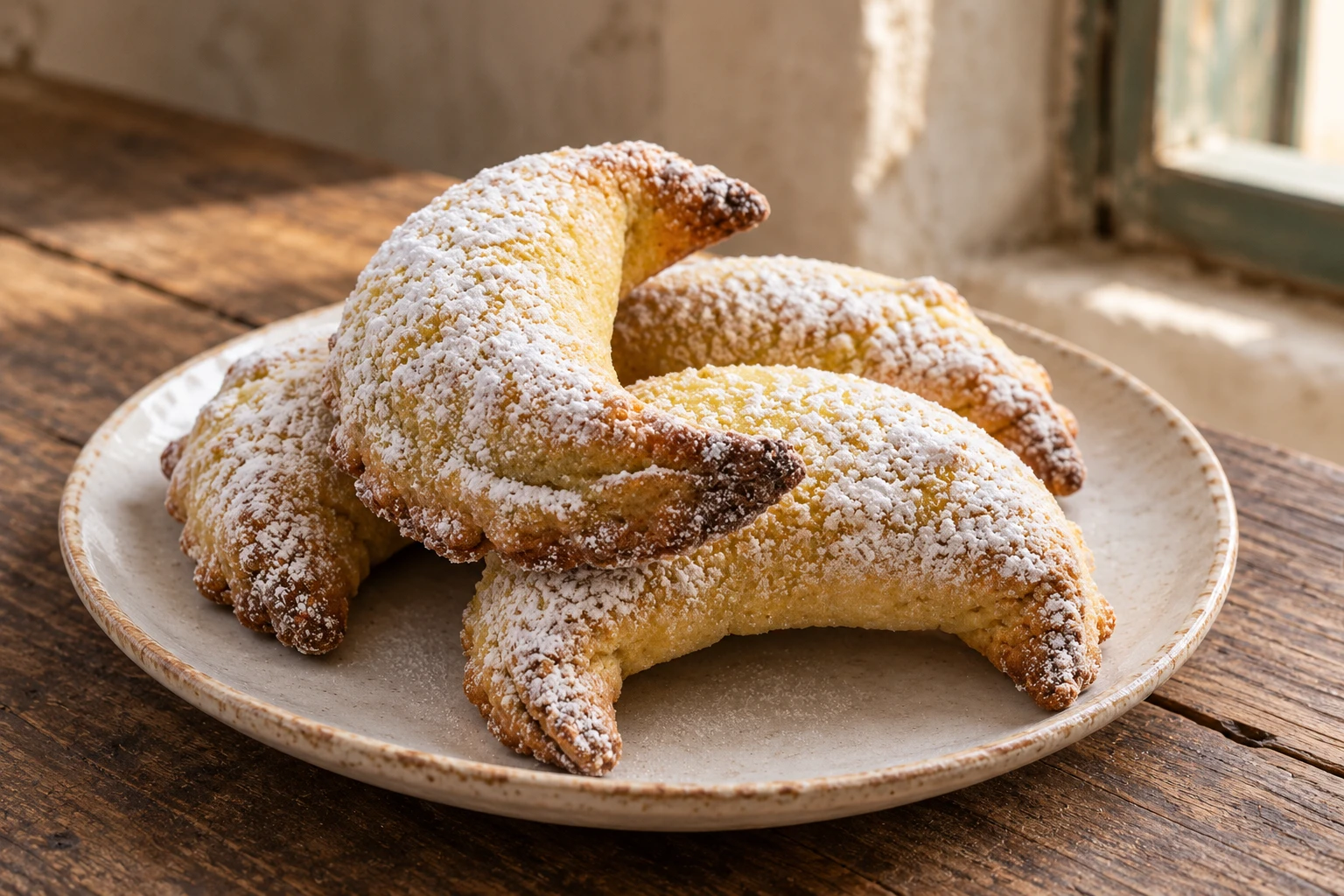
Place about 15 g filling on one half of each square, leaving a clear 1.5 cm border. Fold into a rectangle, press out trapped air and seal the edges firmly with a fork. Curve the sealed pastry slightly into a collar shape without opening the seam. Set 12 on each tray with space between them.Place about ½ oz filling on one half of each square, leaving a clear ½ in border. Fold into a rectangle, press out trapped air and seal the edges firmly with a fork. Curve the sealed pastry slightly into a collar shape without opening the seam. Set 12 on each tray with space between them.
Brush with the remaining beaten egg and sprinkle with the finishing sugar. Bake one tray at a time for about 30 minutes each, until golden and dry underneath. Cool for at least 20 minutes before eating: the filling stays hot after the pastry surface cools.Brush with the remaining beaten egg and sprinkle with the finishing sugar. Bake one tray at a time for about 30 minutes each, until golden and dry underneath. Cool for at least 20 minutes before eating: the filling stays hot after the pastry surface cools.