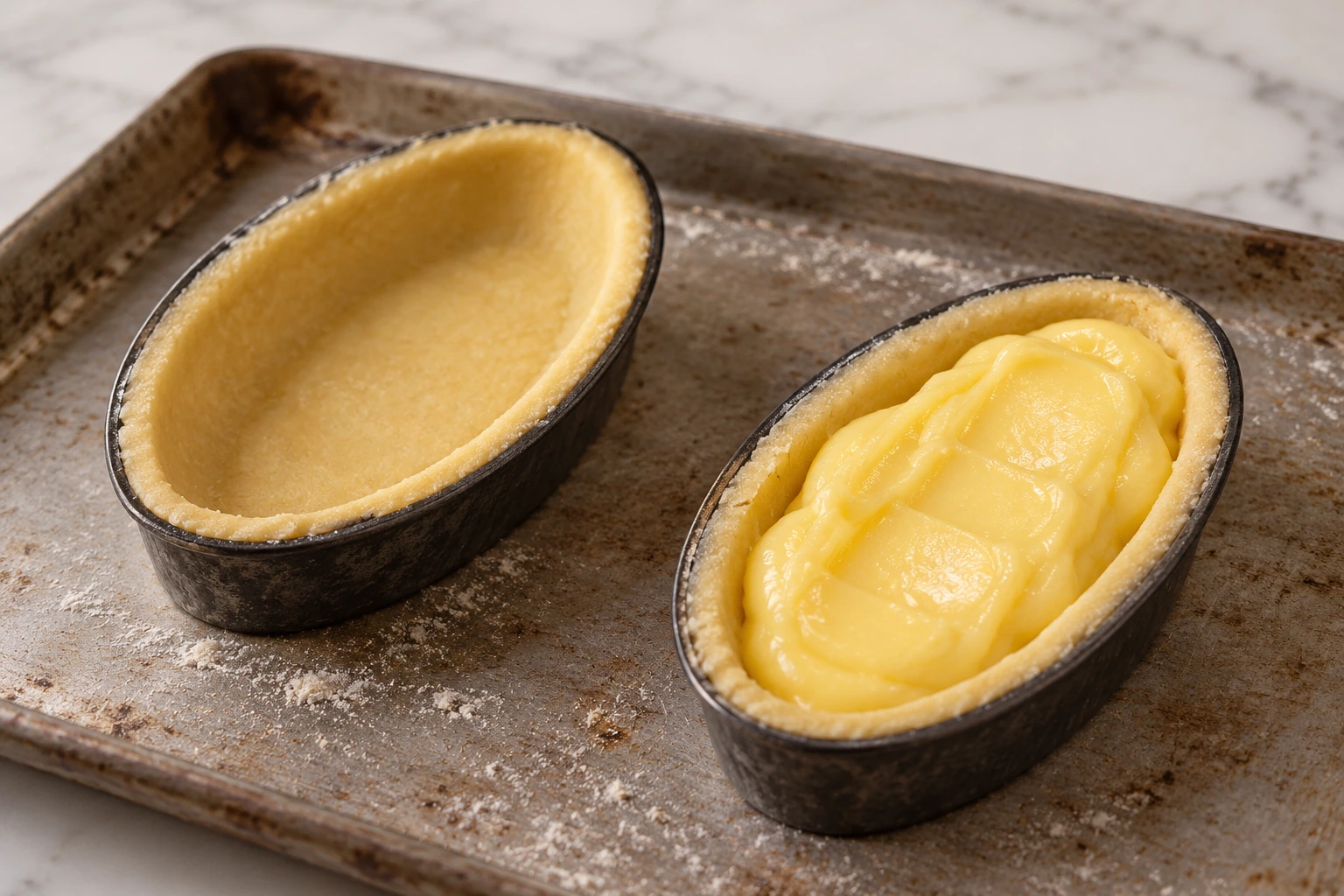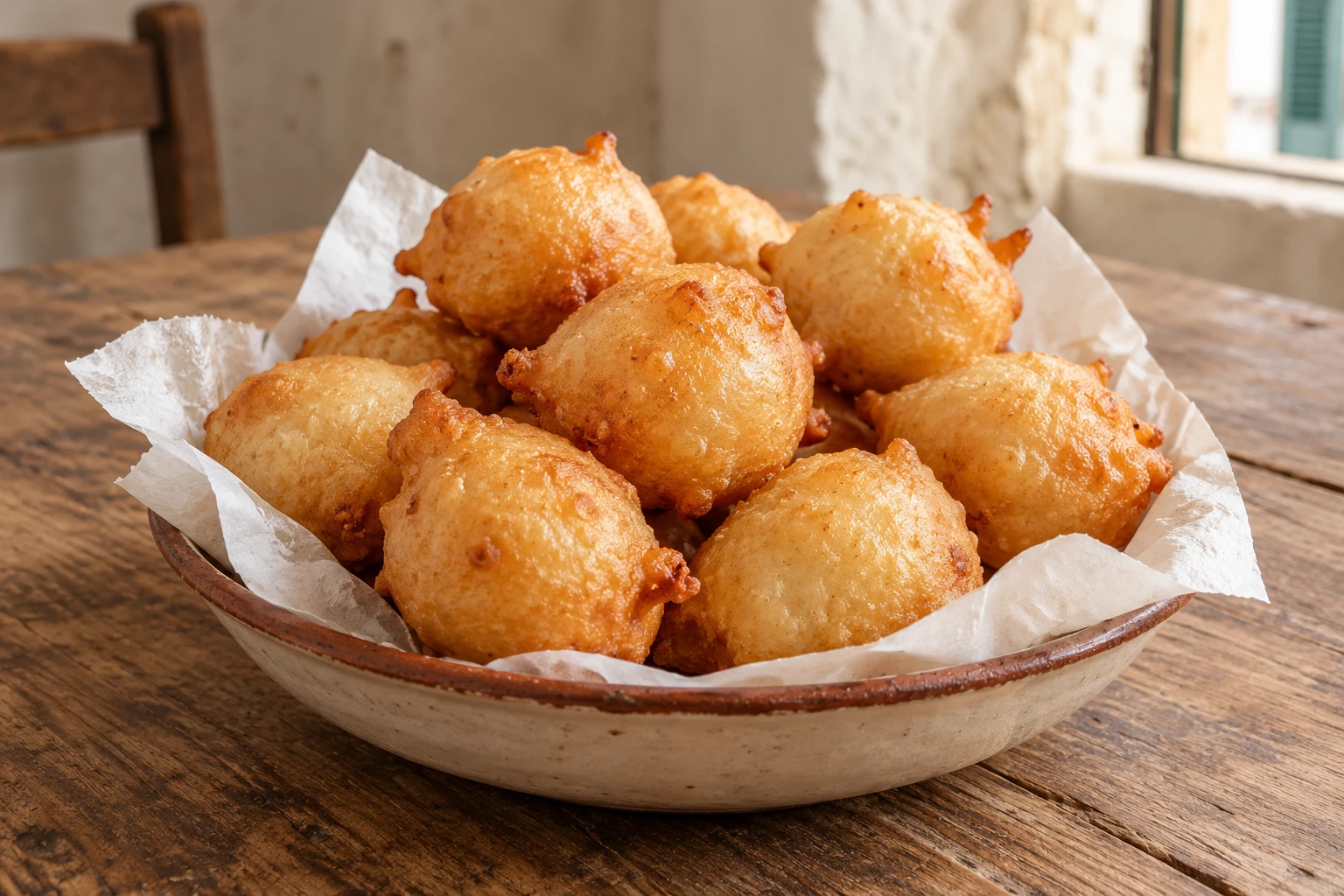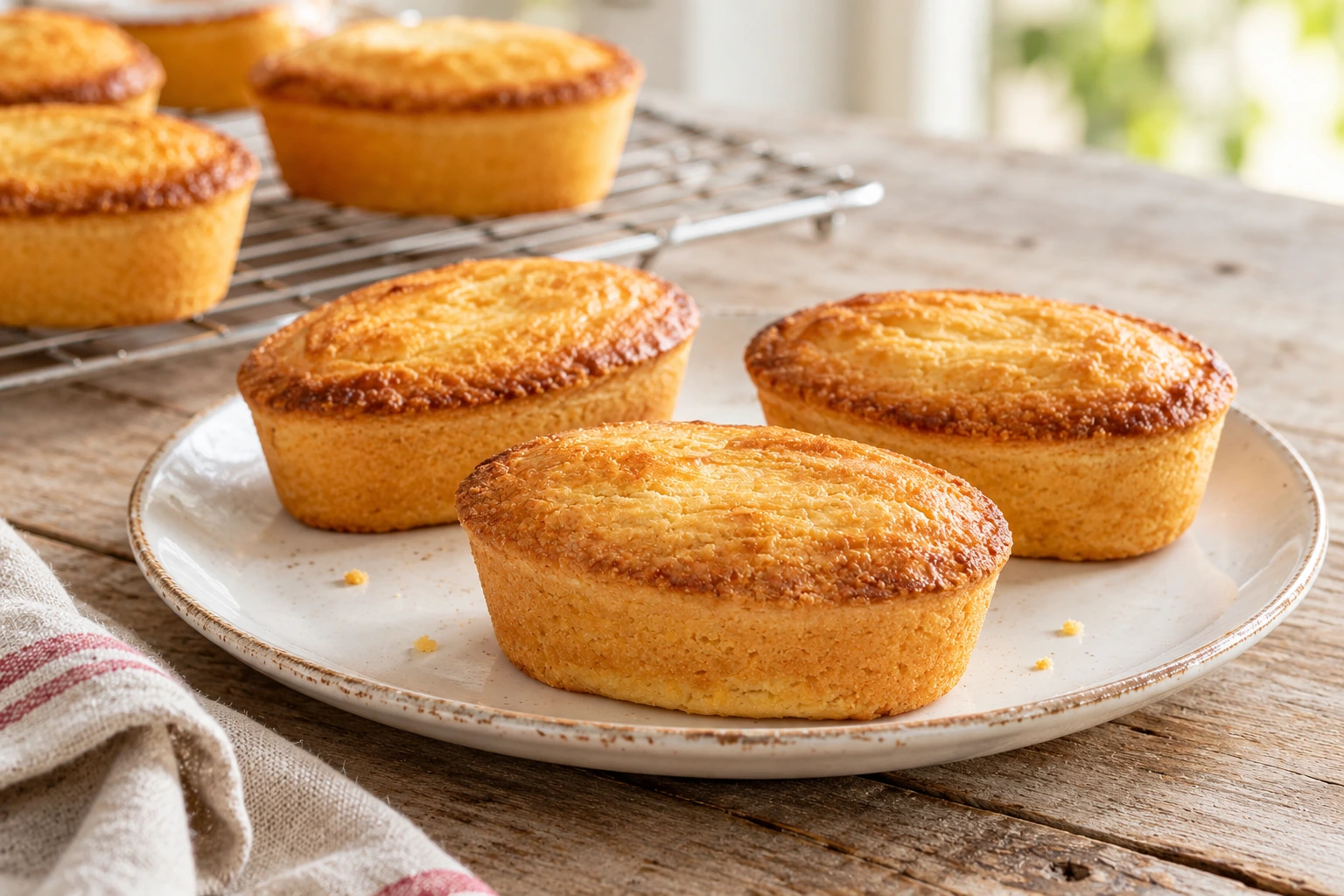
Fill the shells with cold, thick custard and leave a clean edge for sealing.
Make ahead Make the pastry and custard the day before and refrigerate them separately. Keep the custard covered in a shallow container. Refrigerate baked pasticciotti within 2 hours and eat within 2 days. If the room is above 32°C, refrigerate within 1 hour.
Pasticciotto
Prep 1 hr · Cook 40 min · Rest 1 hr 40 min · Yield 12 pasticciotti · Difficulty Medium
Method
Split the vanilla pods and scrape out the seeds. Rub 250 g of the lard into 500 g of the flour, then mix in 200 g of the sugar, the salt, baker’s ammonia, the whole eggs and half the vanilla seeds. Work only until a dough forms. Flatten, wrap and refrigerate for at least 1 hour.Split the vanilla pods and scrape out the seeds. Rub 9 oz of the lard into 1 lb of the flour, then mix in 7 oz of the sugar, the salt, baker’s ammonia, the whole eggs and half the vanilla seeds. Work only until a dough forms. Flatten, wrap and refrigerate for at least 1 hour.
While the pastry chills, heat 500 g of the milk with the remaining vanilla seeds and the emptied pods until steaming. Whisk 90 g of the yolks with 150 g of the sugar and the cornstarch. Gradually whisk in the hot milk, discarding the pods, then return to the saucepan. Stir over medium heat until the cream thickens and bubbles gently; whisk for another minute. Allow about 10 minutes for heating and cooking.While the pastry chills, heat 1 lb of the milk with the remaining vanilla seeds and the emptied pods until steaming. Whisk 3¼ oz of the yolks with 5½ oz of the sugar and the cornstarch. Gradually whisk in the hot milk, discarding the pods, then return to the saucepan. Stir over medium heat until the cream thickens and bubbles gently; whisk for another minute. Allow about 10 minutes for heating and cooking.
Spread the custard in a shallow container and cover its surface with food-contact wrap. Set the container over ice water, then refrigerate promptly until cold and thick, allowing about 1 hour. Keep it refrigerated while preparing the shells.Spread the custard in a shallow container and cover its surface with food-contact wrap. Set the container over ice water, then refrigerate promptly until cold and thick, allowing about 1 hour. Keep it refrigerated while preparing the shells.
Grease the molds with the remaining lard. Roll the pastry about 5 mm thick, using the reserved flour sparingly. Line the molds without stretching the dough. Rework the trimmings briefly to cut oval lids. Fill each shell with about 60 g of cold custard, keeping the cream below the rim and leaving the sealing edge clean. Keep any surplus custard refrigerated.Grease the molds with the remaining lard. Roll the pastry about ¼ in thick, using the reserved flour sparingly. Line the molds without stretching the dough. Rework the trimmings briefly to cut oval lids. Fill each shell with about 2 oz of cold custard, keeping the cream below the rim and leaving the sealing edge clean. Keep any surplus custard refrigerated.
Cover with the pastry lids and press the edges together, then trim level with the molds. Refrigerate the filled pastries for 20 minutes. Heat the oven to 170°C fan. Beat the remaining 36 g of yolks with the remaining 30 g of milk and brush a thin layer over the lids.Cover with the pastry lids and press the edges together, then trim level with the molds. Refrigerate the filled pastries for 20 minutes. Heat the oven to 350°F fan. Beat the remaining 1¼ oz of yolks with the remaining 1 oz of milk and brush a thin layer over the lids.
Set the molds on the baking sheet and bake for 25–30 minutes, until the lids and edges are well browned and the pastry is cooked through. Leave space between molds and bake in batches if needed, keeping unbaked pastries refrigerated. Let the pasticciotti stand for 20 minutes, then carefully lift them onto a rack. Serve warm; refrigerate those being kept for later within 2 hours.Set the molds on the baking sheet and bake for 25–30 minutes, until the lids and edges are well browned and the pastry is cooked through. Leave space between molds and bake in batches if needed, keeping unbaked pastries refrigerated. Let the pasticciotti stand for 20 minutes, then carefully lift them onto a rack. Serve warm; refrigerate those being kept for later within 2 hours.