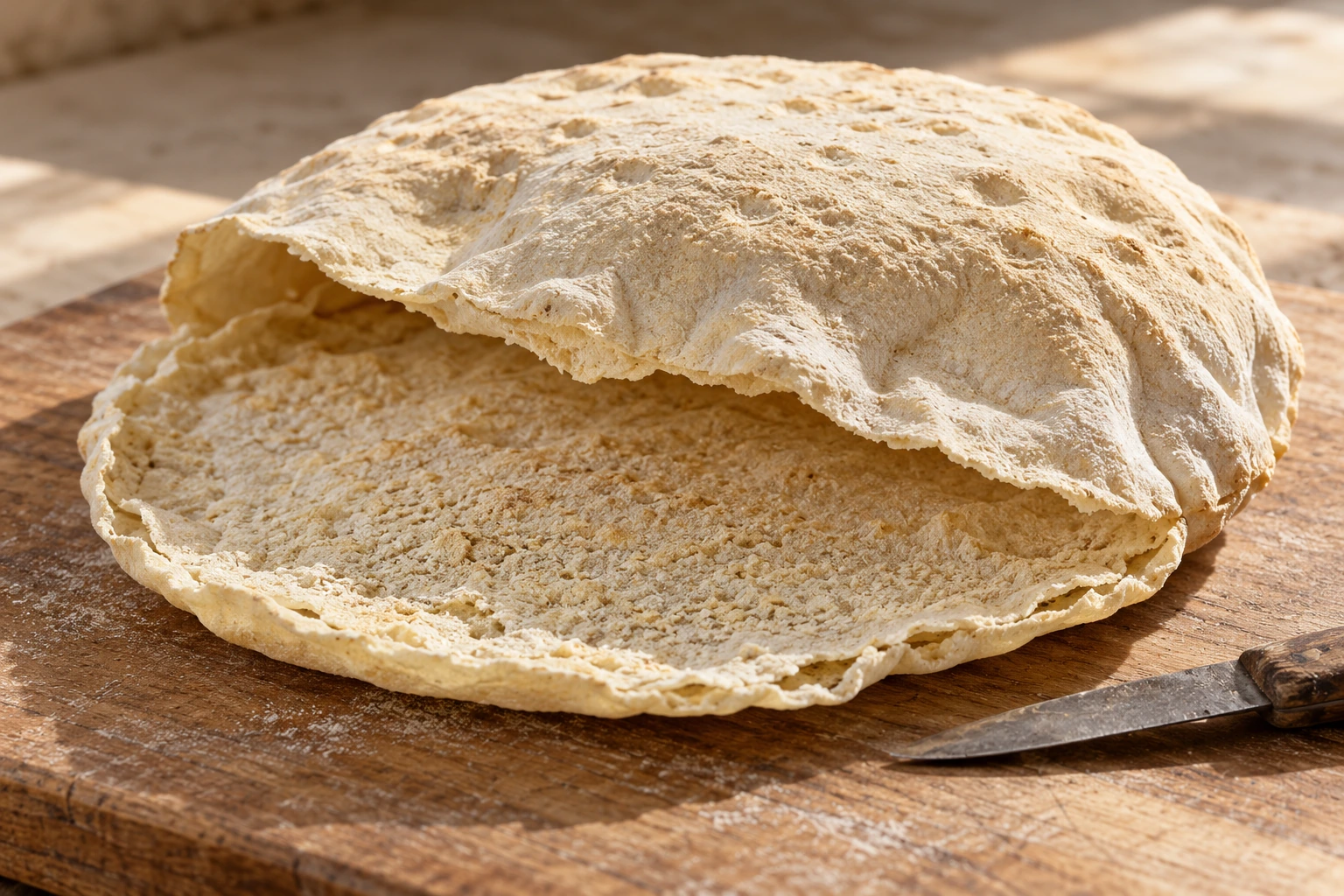
Roll evenly and keep the surface intact: trapped steam needs a continuous skin to inflate the bread.
Make ahead Cool the sheets completely before sealing in an airtight container. Keep them dry; a brief return to the oven refreshes sheets that have softened.
Pane carasau
Prep 35 min · Cook 45 min · Rest 2 hr 15 min · Yield 6 pairs of sheets · Difficulty Hard
Method
Dissolve the yeast in the water. Work in 500 g semolina, then the salt, and knead until smooth and elastic. Cover in a bowl and let rise for about 45 minutes.Dissolve the yeast in the water. Work in 1 lb semolina, then the salt, and knead until smooth and elastic. Cover in a bowl and let rise for about 45 minutes.
Divide the dough into 6 pieces, about 127 g each. Round, cover with a cloth and rest for 30 minutes. Put the stone, steel or inverted baking sheet in the oven and preheat at its highest conventional setting, at least 250°C, for 45 minutes.Divide the dough into 6 pieces, about 4½ oz each. Round, cover with a cloth and rest for 30 minutes. Put the stone, steel or inverted baking sheet in the oven and preheat at its highest conventional setting, at least 475°F, for 45 minutes.
Use the reserved 20 g semolina sparingly on the work surface and cloths. Roll each ball into an even round about 28 cm across and 1.5–2 mm thick. Keep the rounds separate under clean cloths for about 30 minutes. Avoid folds or tears when transferring them.Use the reserved ¾ oz semolina sparingly on the work surface and cloths. Roll each ball into an even round about 11 in across and 1.5–2 mm thick. Keep the rounds separate under clean cloths for about 30 minutes. Avoid folds or tears when transferring them.
Bake one round at a time on the hot surface. Allow about 2–4 minutes for it to inflate into a large pocket; remove while still pale and pliable. Wearing oven gloves, set it on a stable board, keep clear of escaping steam and carefully cut around the edge with a long knife to separate the two sheets. Stack the warm sheets under a baking sheet with light pressure to keep them flat. Repeat with the other rounds.Bake one round at a time on the hot surface. Allow about 2–4 minutes for it to inflate into a large pocket; remove while still pale and pliable. Wearing oven gloves, set it on a stable board, keep clear of escaping steam and carefully cut around the edge with a long knife to separate the two sheets. Stack the warm sheets under a baking sheet with light pressure to keep them flat. Repeat with the other rounds.
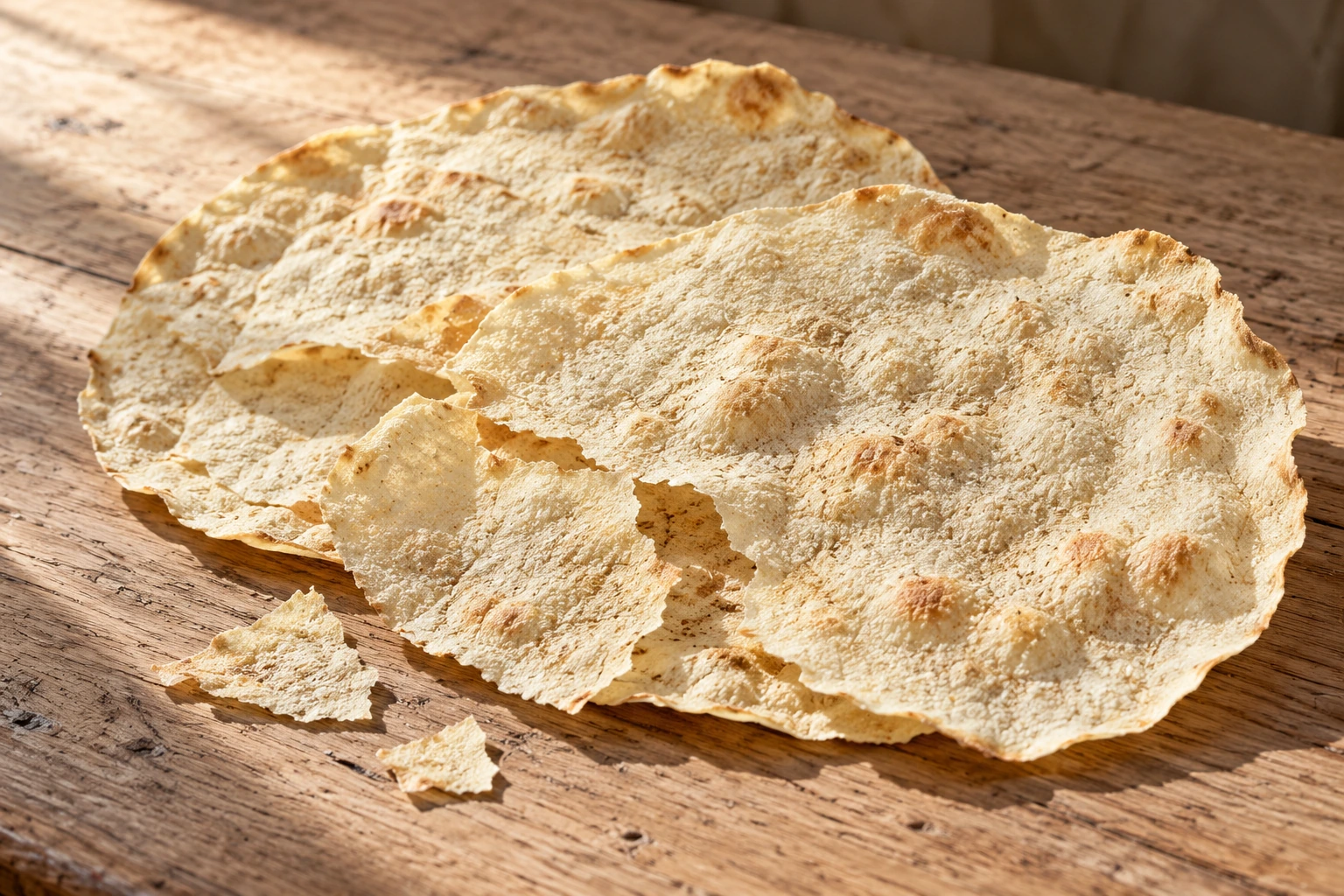
Return each sheet to the hot oven for about 1–2 minutes, until dry, crisp and lightly golden; watch closely. Stack and press lightly again while warm, then spread on racks to cool for about 30 minutes. The base batch needs about 45 minutes of serial oven time. For larger quantities, make more rounds of the same size and allow extra baking passes.Return each sheet to the hot oven for about 1–2 minutes, until dry, crisp and lightly golden; watch closely. Stack and press lightly again while warm, then spread on racks to cool for about 30 minutes. The base batch needs about 45 minutes of serial oven time. For larger quantities, make more rounds of the same size and allow extra baking passes.