Use room-temperature eggs and softened lard. Leave enough room in the tin for the dough to double before baking.
Make ahead Bake the day before serving and let cool completely before cutting. Wrap the cooled loaf well.
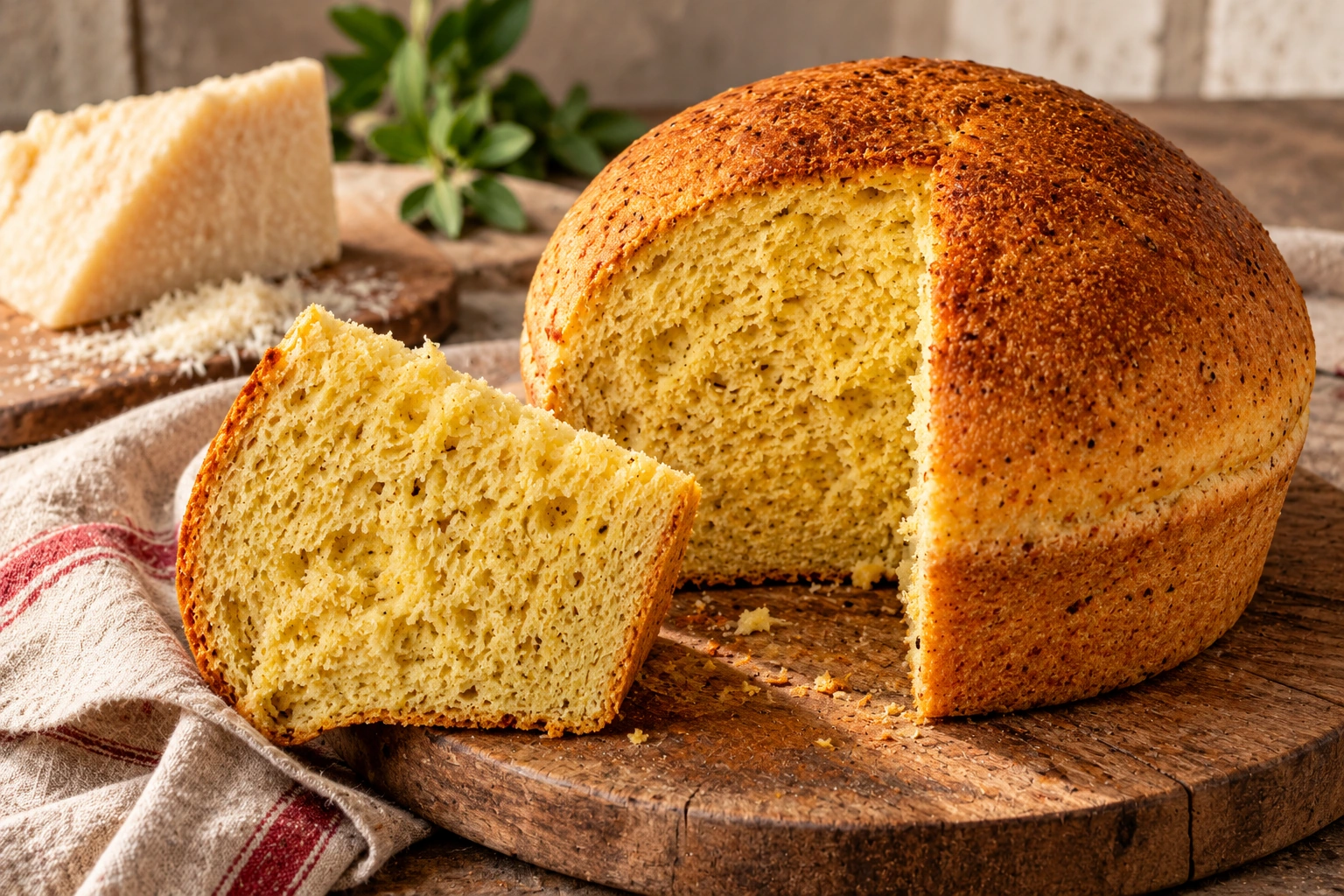
Crescia di Pasqua marchigiana
Prep 30 min · Cook 50 min · Rest 4 hr · Yield 12 slices · Difficulty Medium
Method
Crumble the yeast into the lukewarm milk and stir to disperse it. Mix 500 g flour with the grated cheeses. Add the eggs, yeast mixture, 75 g oil and softened lard. Knead until the dough comes together, then add the salt and pepper and continue for 8–10 minutes until elastic.Crumble the yeast into the lukewarm milk and stir to disperse it. Mix 1 lb flour with the grated cheeses. Add the eggs, yeast mixture, 2¾ oz oil and softened lard. Knead until the dough comes together, then add the salt and pepper and continue for 8–10 minutes until elastic.
Use the reserved flour sparingly to round the dough into a smooth ball with the seam underneath. Grease the tin with part of the remaining oil. Set the dough inside without filling more than half the tin. For a smaller quantity choose a narrower tin; divide a larger quantity between several tins, keeping the same starting dough depth.Use the reserved flour sparingly to round the dough into a smooth ball with the seam underneath. Grease the tin with part of the remaining oil. Set the dough inside without filling more than half the tin. For a smaller quantity choose a narrower tin; divide a larger quantity between several tins, keeping the same starting dough depth.
Brush the surface with the remaining oil, cover loosely and let rise in a draft-free warm place until doubled, about 2–3 hours. Leave the cover clear of the rising dough.Brush the surface with the remaining oil, cover loosely and let rise in a draft-free warm place until doubled, about 2–3 hours. Leave the cover clear of the rising dough.
Heat the conventional oven to 180°C. Bake on the lower-middle shelf for about 45–50 minutes. Cover loosely with foil if the top colors too quickly. The loaf should be well risen and a skewer pushed into the center should emerge without wet dough.Heat the conventional oven to 350°F. Bake on the lower-middle shelf for about 45–50 minutes. Cover loosely with foil if the top colors too quickly. The loaf should be well risen and a skewer pushed into the center should emerge without wet dough.
Rest in the tin for 10 minutes, then unmold onto a rack. Cool completely, allowing about 1 hour overall, before cutting. Keep the loaf upright as it cools.Rest in the tin for 10 minutes, then unmold onto a rack. Cool completely, allowing about 1 hour overall, before cutting. Keep the loaf upright as it cools.