
Skip to content
Italia Magnifica

Parmigiano Reggiano

Parmigiano Reggiano

Italy's most celebrated hard cheese, produced in Emilia-Romagna and Lombardy.

Photograph · Parmigiano Reggiano

The story

What you're tasting

Parmigiano Reggiano DOP is Italy's most celebrated hard cheese, produced exclusively in the provinces of Parma, Reggio Emilia, Modena, Bologna (west of the Reno River), and Mantua (east of the Po River). Aged for a minimum of 12 months (often 24-36 months or longer), this cheese develops complex nutty, savory, and fruity flavors with a granular, crystalline texture that makes it ideal for grating over pasta, risotto, and soups, or enjoying as a table cheese.

Parmigiano Reggiano embodies over eight centuries of Emilian cheesemaking tradition, with production methods that have remained essentially unchanged since the 13th century, when Benedictine and Cistercian monks in the Po Valley developed techniques for creating large, long-aging wheels that could sustain communities through winter months. The cheese's name derives from the two principal cities of its production zone—Parma and Reggio Emilia—though the tradition extends across a carefully defined geographic area that includes parts of five provinces. Historical records from the 1200s document the production of large cheese wheels in the region, with the techniques refined over generations to create what would become one of the world's most celebrated cheeses. The cheese gained recognition beyond the region during the Renaissance, when it became a prized commodity in Italian courts and was exported to other European markets. The 17th and 18th centuries saw the establishment of the first formal production regulations, with local authorities creating rules to protect quality and prevent fraud. The modern DOP (Denominazione di Origine Protetta) designation, established in 1996, codified centuries of tradition, protecting not just the name but the entire production method, from the specific breeds of cattle (Reggiana, Bianca Modenese, and Bruna) to the feeding requirements (local hay and feed) to the aging protocols. Today, Parmigiano Reggiano stands as a symbol of Italian artisanal excellence, with over 300 dairies producing approximately 3.5 million wheels annually, each wheel bearing the distinctive pin-dot markings that authenticate its origin and guarantee its quality.
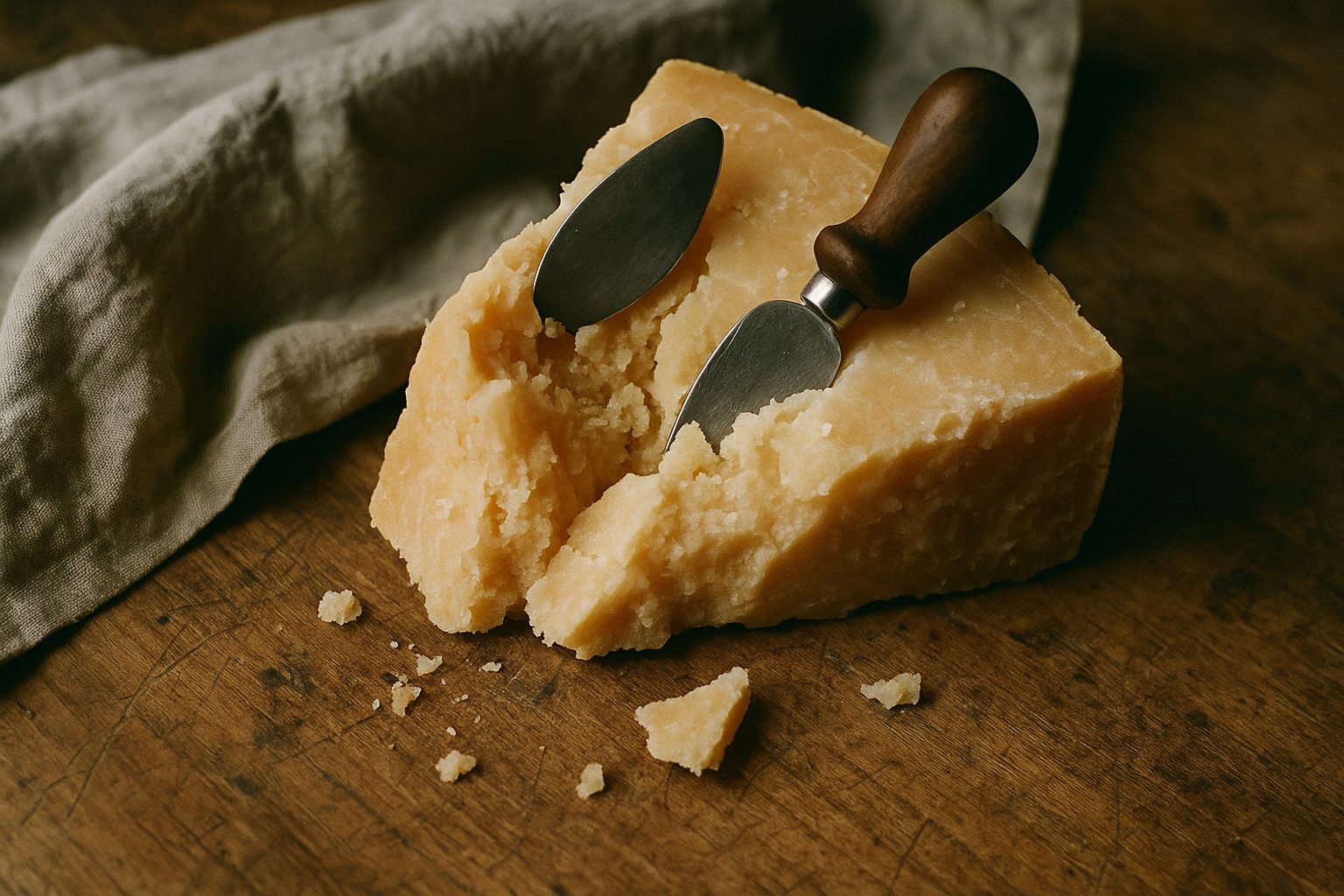
A jagged broken chunk of Parmigiano Reggiano with its almond knife

Know it

Before you buy

Say it
pahr-mee-JAH-noh reh-JOH-noh
Tasting
Rich, nutty, and savory with crystalline texture. Complex flavors develop with age: 12-month is mild and fruity, 24-month is balanced and nutty, 36-month is intensely savory with umami depth. Granular texture with calcium lactate crystals.
Milk
Cow (Reggiana, Bianca Modenese, Bruna)
Texture
hard
Aging
12-36+ months
How to buy
Look for the DOP seal and pin-dot rind markings. Check the age (12, 24, or 36 months). Buy from reputable cheesemongers who can verify authenticity. Whole wheels are marked with production date.
Spot the fakes
Verify the DOP seal and pin-dot markings on the rind. Check for proper texture—should be granular, not rubbery. Beware of generic "Parmesan" without DOP designation. Authentic Parmigiano Reggiano always has the pin-dot rind markings.
Keep it
Unopened: 12-36+ months. After opening: 3-4 weeks if properly stored.

The making

How it's made

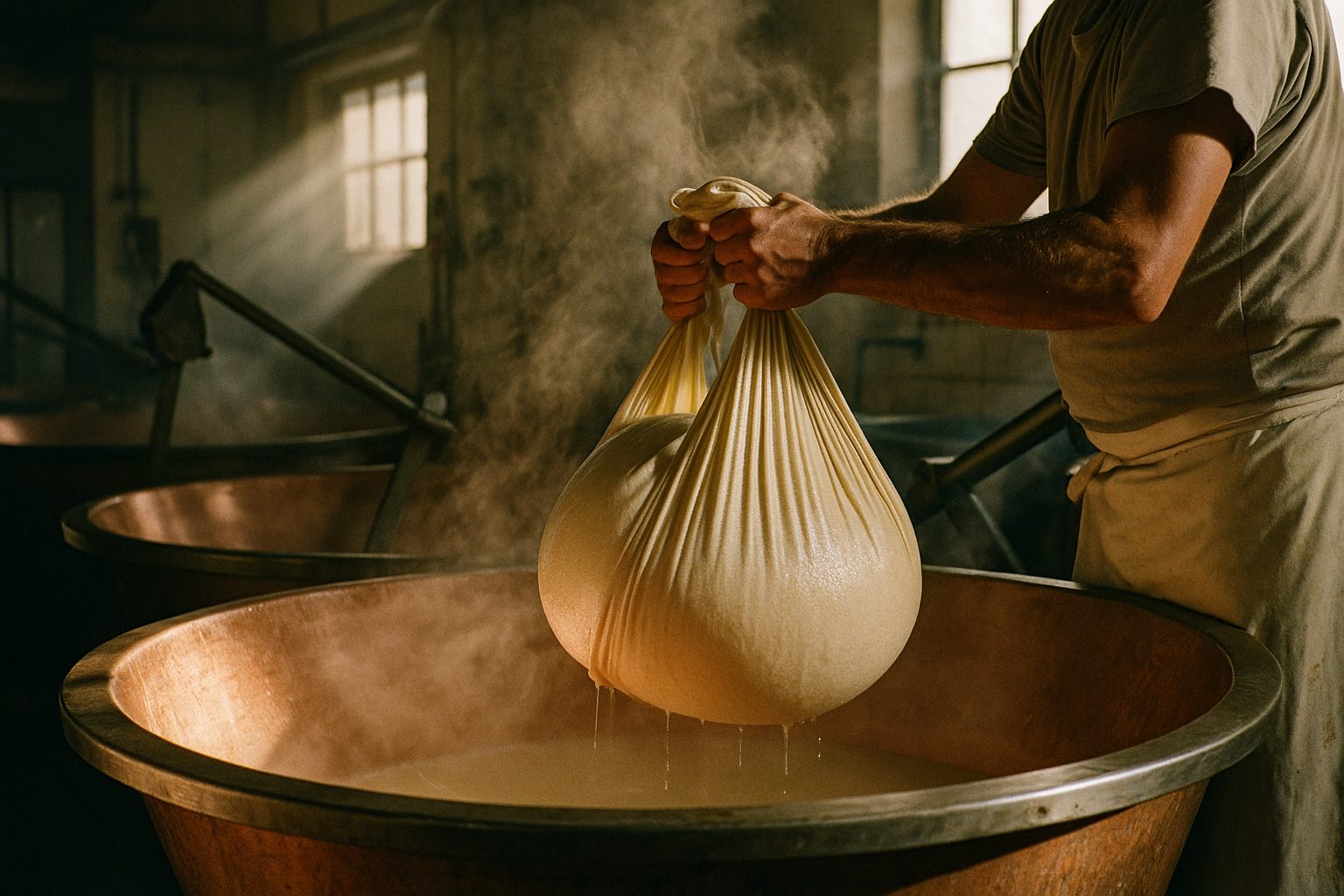
Parmigiano Reggiano production follows methods refined over eight centuries, beginning with fresh, partially skimmed milk from cows that graze on local hay and feed from the designated production zone. The milk from the evening milking is left to rest overnight in shallow pans, allowing the cream to rise naturally—this cream is then removed to make butter, leaving partially skimmed milk that will be combined with the following morning's whole milk. The two milks are combined in traditional copper cauldrons (caldaie), each holding approximately 1,100 liters, where they are heated and coagulated using natural calf rennet. The curd is cut into tiny granules (the size of rice grains) using a traditional tool called a spino, then heated to 55°C while being continuously stirred, a process that expels whey and creates the dense, granular texture characteristic of Parmigiano Reggiano. The curd mass is then lifted from the whey using a large linen cloth and divided into two portions, each forming a single wheel. The wheels are placed in circular molds (fascera) that imprint the distinctive pin-dot markings and the words "PARMIGIANO-REGGIANO" around the rind. After a few days, the wheels are immersed in a saturated brine solution for approximately 20-25 days, where they absorb salt and begin to form the characteristic hard rind. The cheeses are then transferred to aging rooms (cantine) where they mature for a minimum of 12 months, though most are aged 24 months, with premium examples aged 36 months or longer. During aging, the cheeses are regularly turned, brushed, and monitored, with the rind developing a hard, golden-brown exterior while the interior gradually loses moisture and develops complex flavors through enzymatic breakdown. The extended aging creates calcium lactate crystals that provide textural interest and concentrated flavor, while the protein breakdown creates the umami-rich, savory profile that makes Parmigiano Reggiano ideal for grating. Each wheel is tested by expert graders (battitori) who tap the cheese with small hammers, listening for the characteristic sound that indicates proper aging and quality. Wheels that pass inspection receive the DOP seal and pin-dot markings, while those that don't meet standards are sold without the protected designation. The finest examples—particularly those aged 36 months or longer—develop incredible complexity, with flavors ranging from nutty and fruity to intensely savory, creating a cheese that is both a culinary ingredient and a gastronomic experience.

Parmigiano Reggiano is essential to Emilian cuisine, used in everything from traditional tortellini to modern risottos. It is often called "the king of cheeses" and is a cornerstone of Italian gastronomy.

Hauling Parmigiano curd from the copper cauldron in muslin at dawn

Where it's from

The land behind it

  1. RegionEmilia-Romagna