

Skip to content

Martina Franca

Martina Franca

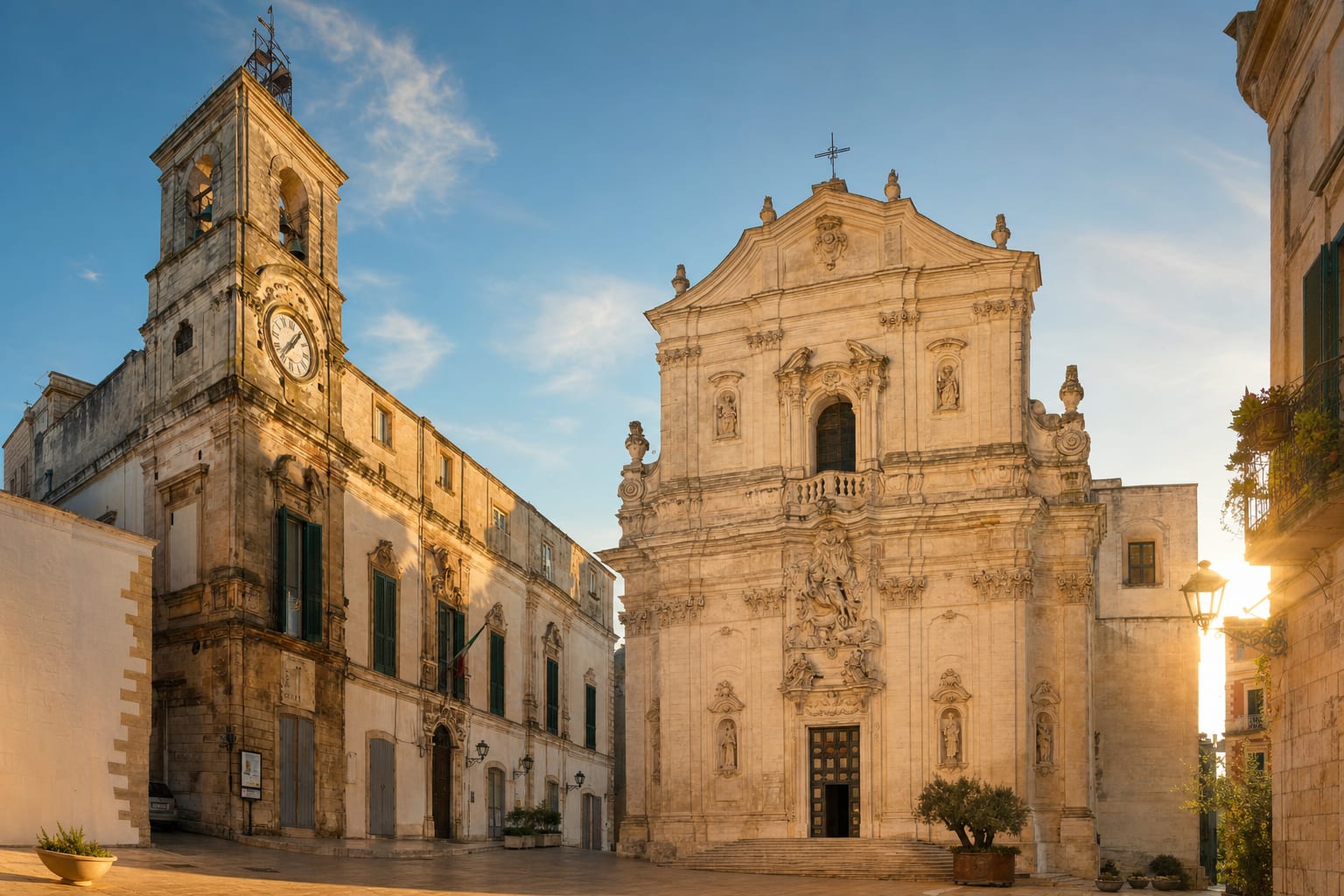
Valle d'Itria Baroque, wrought-iron balconies, Ducal Palace, festival of opera.

Photograph · Martina Franca

At a glance

Martina Franca facts that matter

Names, makers, dates, and context before the story opens up.

What it isDistrict
WhereMartina Franca, Puglia
Known forValle d'Itria Baroque, wrought-iron balconies, Ducal Palace, festival of opera

The story

What you're looking at

The Valle d'Itria's capital trades trulli for Baroque, its white lanes hung with wrought-iron balconies and scrolled portals. Summer brings the Festival della Valle d'Itria, opera rarities in the Ducal Palace courtyard.

Verified details

Each statement below is linked to the record or institution that supports it.

Martina Franca's historic centre is a living urban area, not a single Baroque monument. The municipality calls it the city's oldest area and maintains a permanent forum linking residents and civic administration in decisions that concern it. Palazzo Ducale, the Basilica di San Martino and MUBA are related but distinct places.1,2

The municipal historical account places a documented medieval settlement layer within a small portion of today's core, in the Montedoro and Curdunnidde quarters. It cites a 1260 document for Castrum Martinae and records that the Casale della Franca Martina received institutional recognition in 1310. These are anchors for the district's history, not a claim that every surviving building is medieval.3

The core's power architecture is layered. Municipal history says Raimondello del Balzo Orsini's 1388 tower, identified as a castrum novum in contrast to the older settlement, was demolished in 1668 to make way for Palazzo Ducale. Palazzo Ducale therefore belongs to the district's later transformation rather than being its original medieval castle preserved intact.3

The white appearance is a managed characteristic, not a blanket statement about every façade. A 2024 municipal notice records Ordinance 19, requiring lime-white repainting for certain private buildings in the eighteenth- and nineteenth-century zones while excluding stone or artistic elements and pre-existing historicised non-white colours. It is historical evidence of the 2024 measure, not a statement of a current obligation.4

The municipal building regulation treats Zone A, the historic centre, as a fabric whose façade composition, historic-artistic value and characteristic typology must be safeguarded. Modest façade changes are allowed only to restore historic character and require a binding opinion from the competent Soprintendenza. The framework protects continuity without proving that all fabric is original or visually uniform.5

Sources and citations (5)
  1. Comune di Martina FrancaCentro storicoCompetencesRead source
  2. Comune di Martina FrancaMUBA - Museo della Basilica di San MartinoDescriptionRead source
  3. Comune di Martina FrancaStoria di Martina FrancaHistorical accountRead source
  4. Comune di Martina FrancaImmobili del centro storico da ritinteggiare a calceDescription, lines 75-80Read source
  5. Comune di Martina FrancaRegolamento Edilizio ComunaleZone A façade provisions, pp. 108-109Read source

Plan your visit

Before you go

Booking
Walk-up friendly

Find it

Where to find Martina Franca

Get directionsGoogle MapsApple Maps