

All the monuments, city by city
The landmarks and masterpieces worth planning a day around.
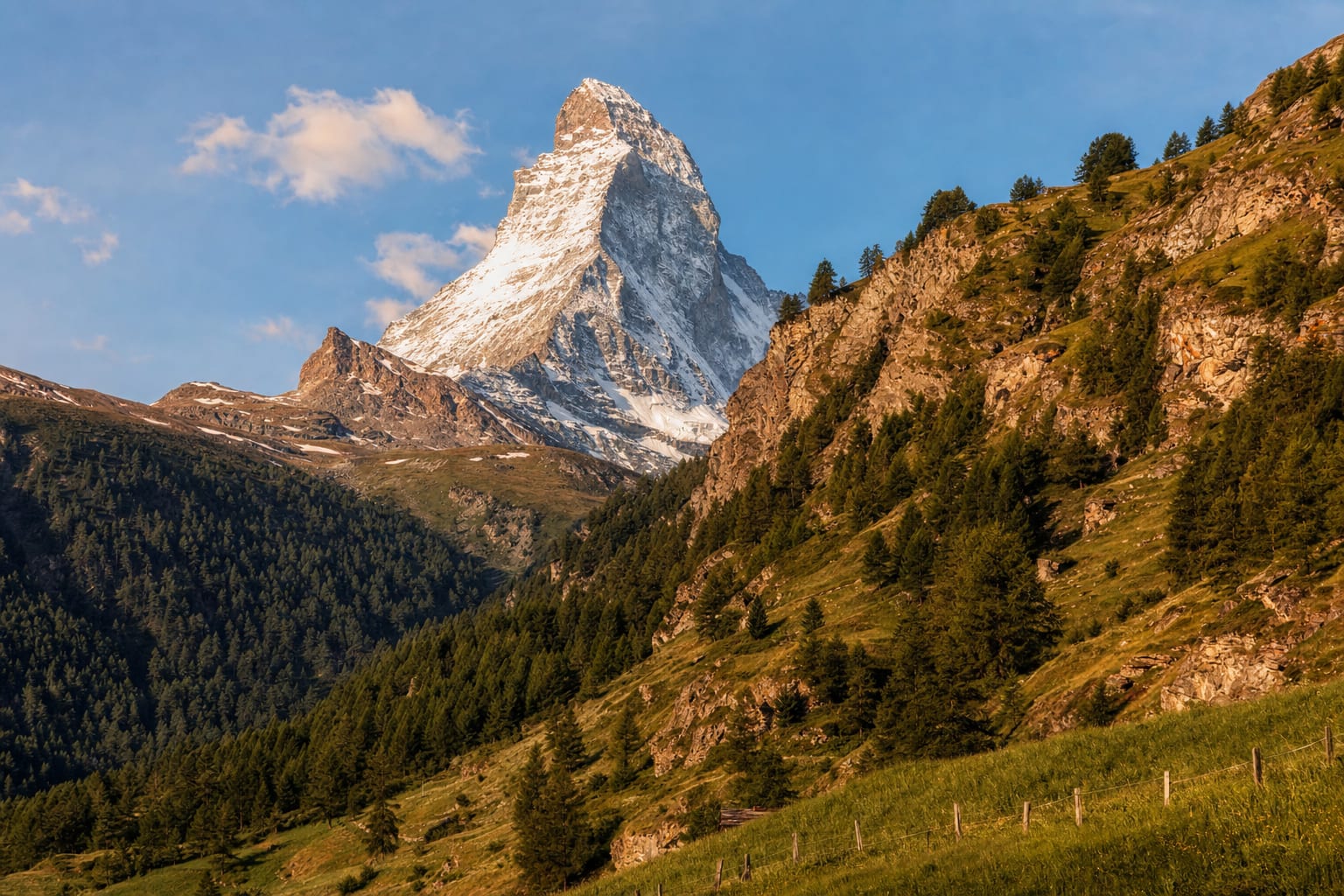 Breuil-CerviniaMatterhornThe pyramid peak, glacier skiing at Plateau Rosa, the Italy-Switzerland cable car linkThe Matterhorn rises 4,478 meters on the border between Italy and Switzerland, its isolated pyramid visible from villages on both sides long before you reach them. On the Italian slope, Breuil-Cervinia sits directly beneath the mountain's 1,350 meter south face and runs as a year round resort, with lifts climbing toward the Plateau Rosa glacier, one of Europe's few places to ski in August. Edward Whymper's British team made the first ascent from the Swiss side on 14 July 1865, a climb that ended in a fatal fall on the descent; three days later, Italian guide Jean-Antoine Carrel led his own team up the harder Italian ridge to make the second ascent and restore local pride. A cable car across the Theodul Pass links the Italian and Swiss lift systems directly, so it is possible to ski or ride between both countries in a single day.Plan the visit
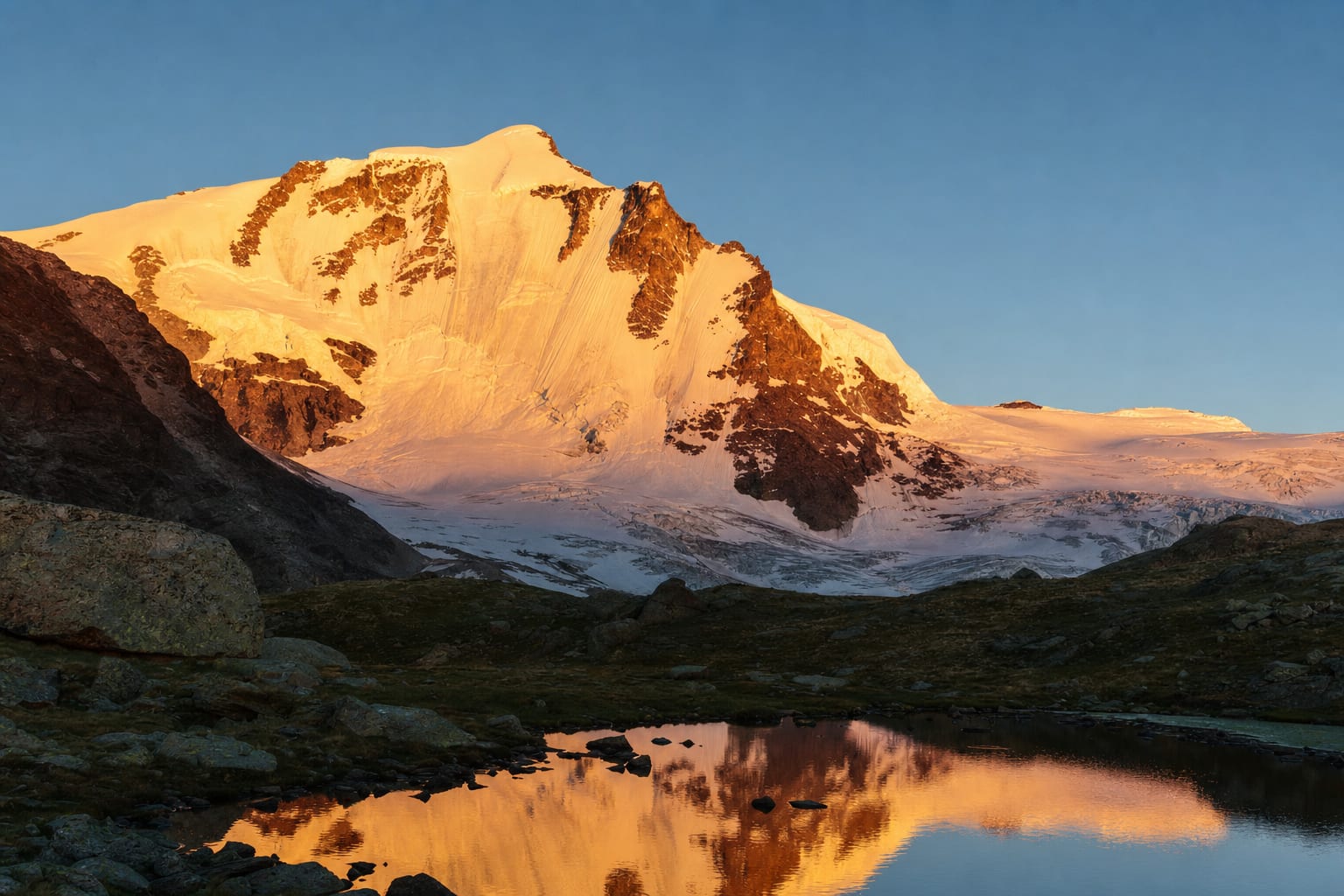 CogneGran Paradiso National ParkItaly's first national park, Alpine ibex herds, Cogne valleys, the only 4,000-meter summit entirely on Italian soilKing Victor Emmanuel II declared this stretch of the Graian Alps his personal hunting reserve in 1856, specifically to protect the Alpine ibex, which by then had been hunted down to perhaps 60 surviving animals across the entire range, prized for supposed medicinal properties in charms cut from a small bone near the ibex heart. His grandson Victor Emmanuel III donated the land to the Italian state in 1922, making it, at just shy of its centenary, Italy's oldest national park, and the same paths the royal guards once cut to move between hunting stations now form part of 724 kilometers of marked trails. From the village of Cogne, the most popular base on the park's Aosta Valley side, trails climb through larch forest toward alpine meadows where ibex still graze in view of hikers, beneath Gran Paradiso itself, at 4,061 meters the only summit entirely on Italian soil to clear 4,000 meters.
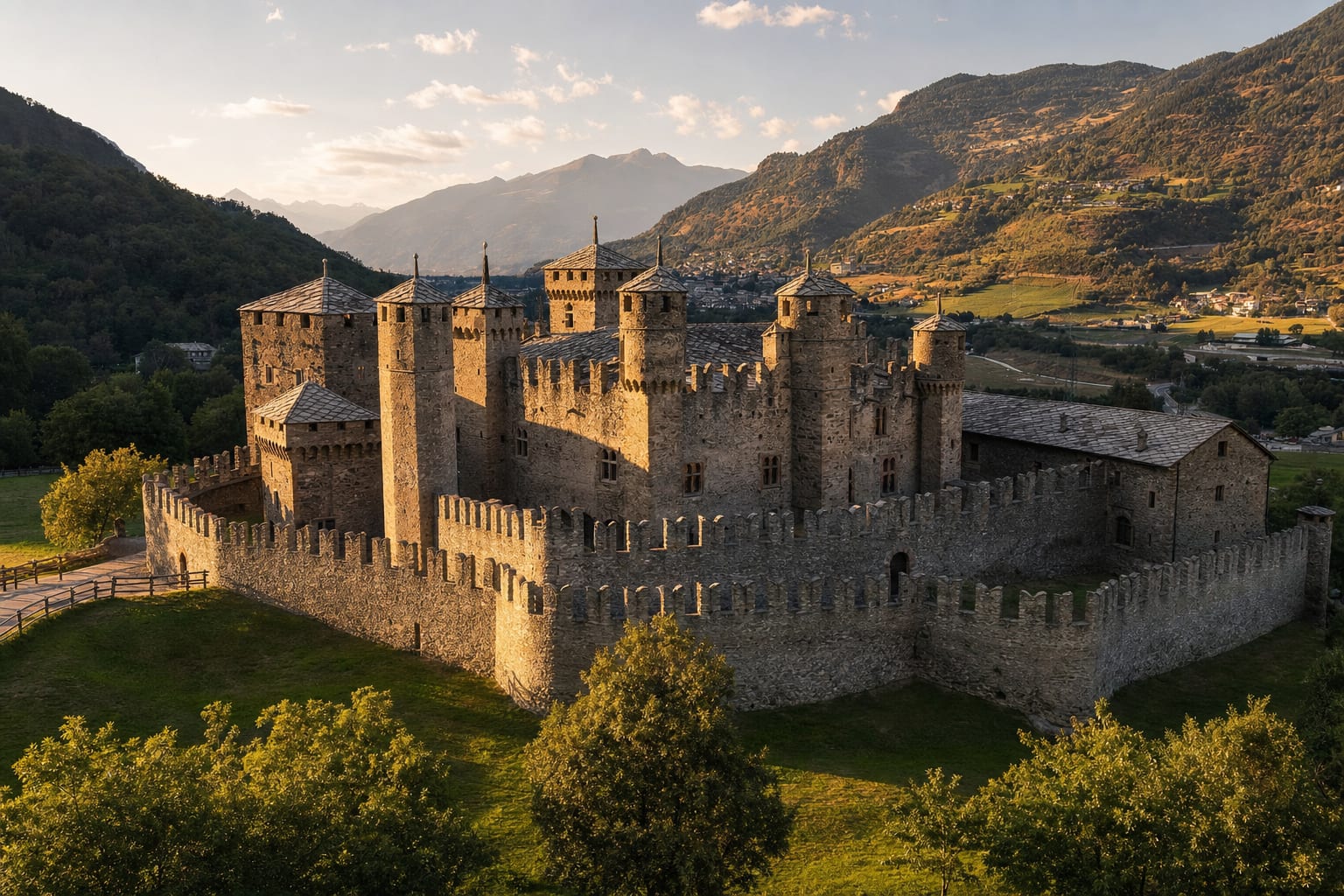 FénisFénis CastleDouble crenellated walls, semicircular staircase, Jaquerio frescoes, Challant familyFénis looks like a castle from a picture book, with double crenellated walls, a ring of towers and a courtyard that seems to belong in a much softer age. It was built mostly between 1320 and 1421 for the Challant family, first by Aimone around 1340 and then by his son Boniface I after 1392, who added the courtyard with its semicircular stone staircase. It was a lordly home rather than a fortress. Painters of Giacomo Jaquerio’s circle covered the walls with International Gothic frescoes, including a Saint George and the Madonna della Misericordia in the chapel. After decades as a farmhouse, it was bought for the State in 1895 by Alfredo d’Andrade, who restored it.
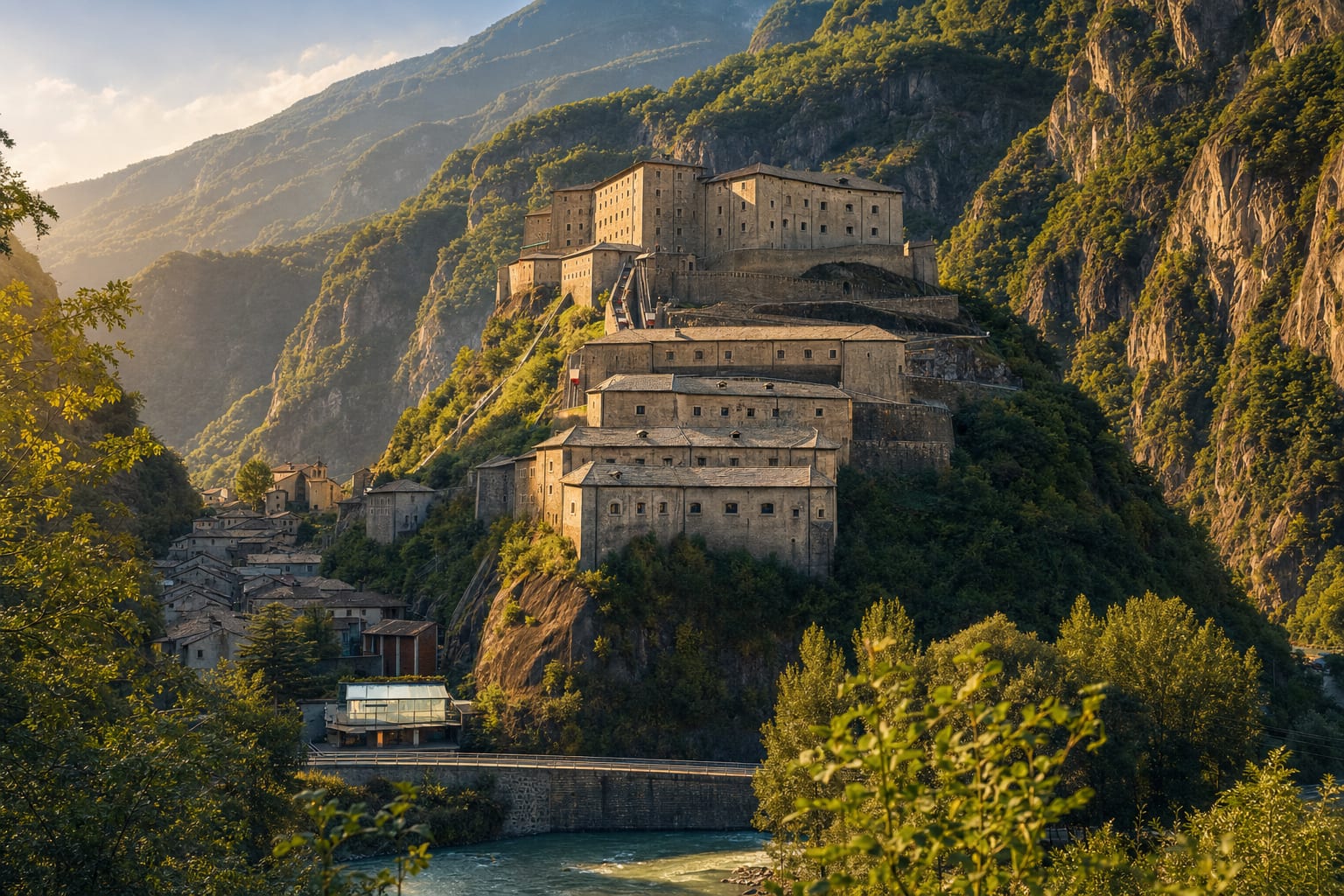 BardForte di BardFortress that delayed Napoleon, Museo delle Alpi, glass lifts, Savoy military engineeringForte di Bard sits on a rocky spur above the Dora Baltea, guarding the narrow gorge where Aosta Valley opens toward Piedmont. In May 1800 a garrison of 400 Austrian and Piedmontese soldiers held up Napoleon’s army of some 40,000 for about two weeks; he later ordered the fortress destroyed. The Savoy rebuilt it between 1830 and 1838 under the engineer Antonio Francesco Olivero, and it served as a military prison until the 1970s. It reopened in 2006 as a cultural center. Inside are the Museo delle Alpi and exhibitions, and you climb from the old village on glass lifts. The walls give a long view up the valley.
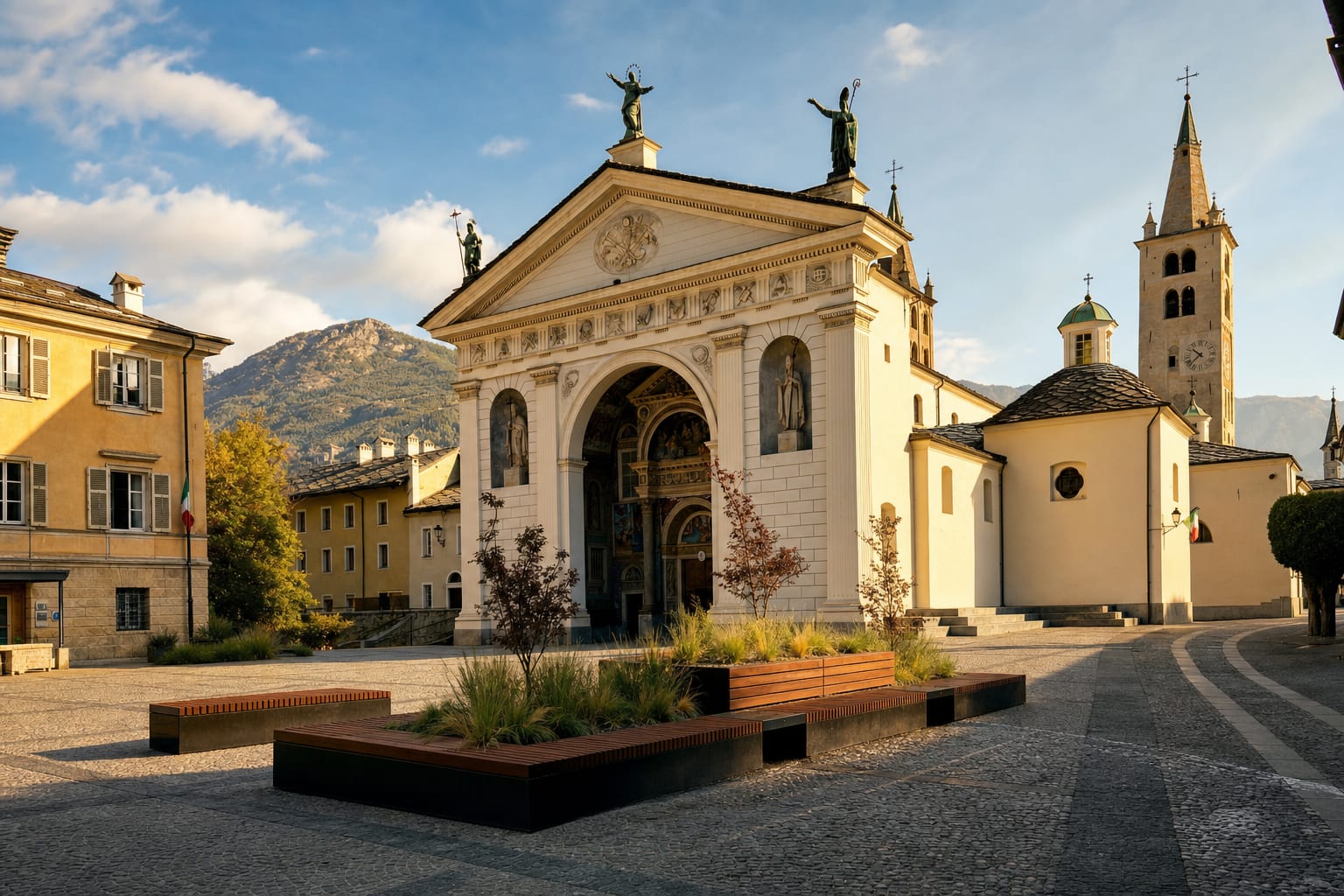 AostaAosta CathedralEleventh-century frescoes rediscovered in 1979, layered choir mosaics, Saint Grat's reliquary, neoclassical facadeBehind a neoclassical front finished in 1848, Aosta's cathedral hides one of the Alps' most layered interiors. An atelier working around the mid-eleventh century frescoed the nave for the diocese; the paintings vanished under later renovations and were rediscovered only in 1979, opened to visitors in 2000, and are viewed today by climbing into the roof space above the current ceiling. The choir floor carries two mosaics from different centuries: a Cycle of the Months from the late twelfth century, showing Christ as Lord of time surrounded by the year's twelve labors, and an early thirteenth century mosaic of real and imaginary animals. A separate treasury museum, open weekend afternoons, keeps a reliquary of Saint Grat, illuminated manuscripts and the monumental tombs sculptor Stefano Mossettaz carved for the church. The building has been a national monument since 1940.
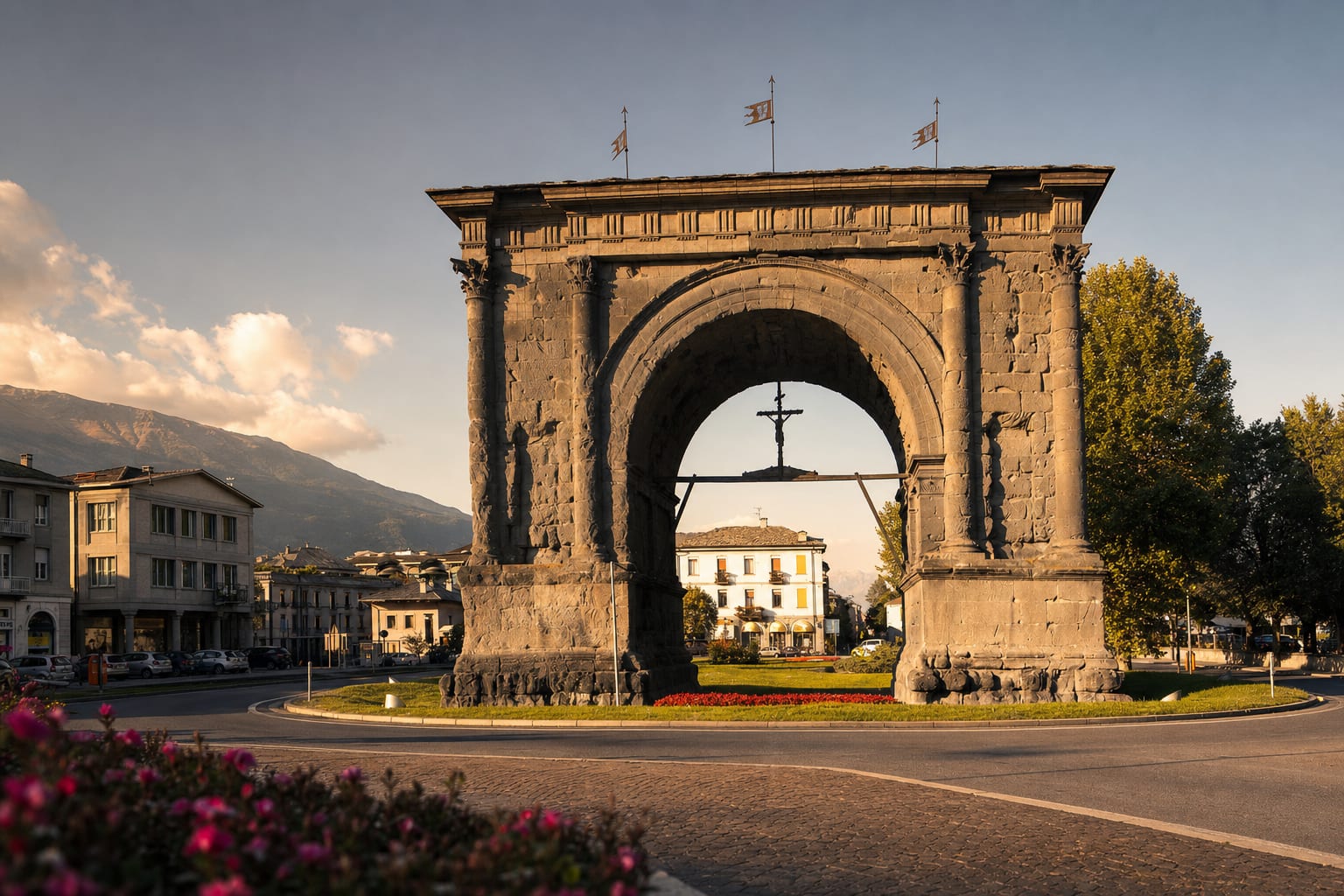 AostaArch of AugustusArch of 25 BC, entrance to Augusta Praetoria, Saint-Voult crucifixThe Arch of Augustus stands at the eastern entrance of Aosta, built in 25 BC after Rome defeated the Salassi and founded the colony of Augusta Praetoria. For two thousand years it has watched over the road into town, in line with the Porta Praetoria and the Roman bridge across the Buthier. Locals called it Saint-Voult, after a crucifix hung beneath the keystone; the one you see now dates from 1980 and replaced a fifteenth-century cross that is kept in the cathedral treasury museum. A restoration in 1913 and 1914 gave the arch its present look. It is a monument to see from the street, on foot, at any time, and it costs nothing.
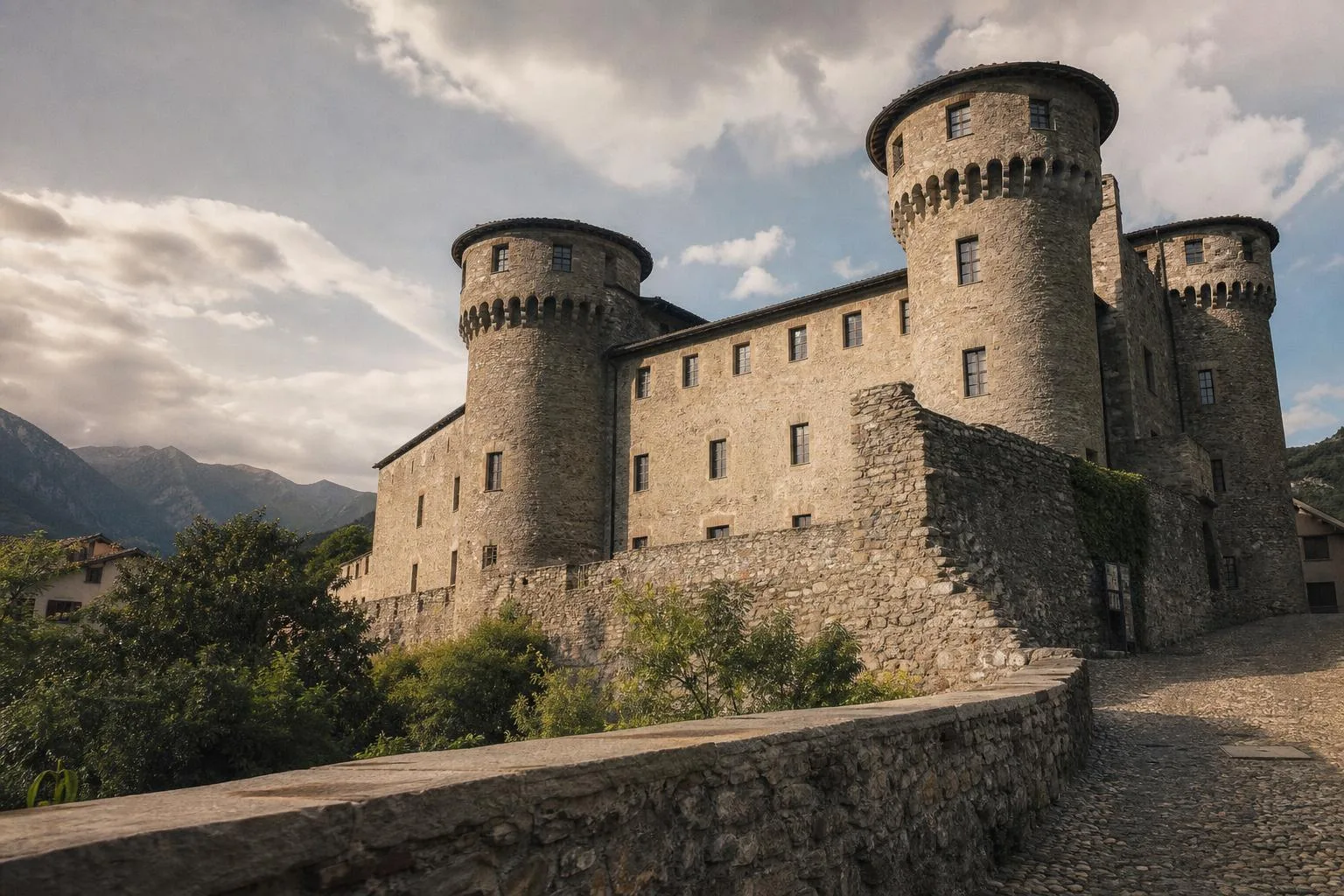 AymavillesHidden GemAymavilles CastleFour round corner towers, 18th-century residence, attic timber roof, Cogne valley gatewayAymavilles Castle guards the entrance to the Cogne Valley with four round corner towers that the Challant family added in the early fifteenth century, when they rebuilt an older fortress. In the eighteenth century it was refashioned into an elegant residence, and today it is a museum on four levels. Inside are painted decorations from the nineteenth century, exhibits from the Académie Saint-Anselme collection and, in the attic, the fifteenth-century timber roof structure, visible from below. The site reopened to the public in 2022 after a long restoration. It is one of the more scenic castles in the Aosta Valley, set just off the road to Cogne, and easy to combine with other regional castles on the Culture Card.
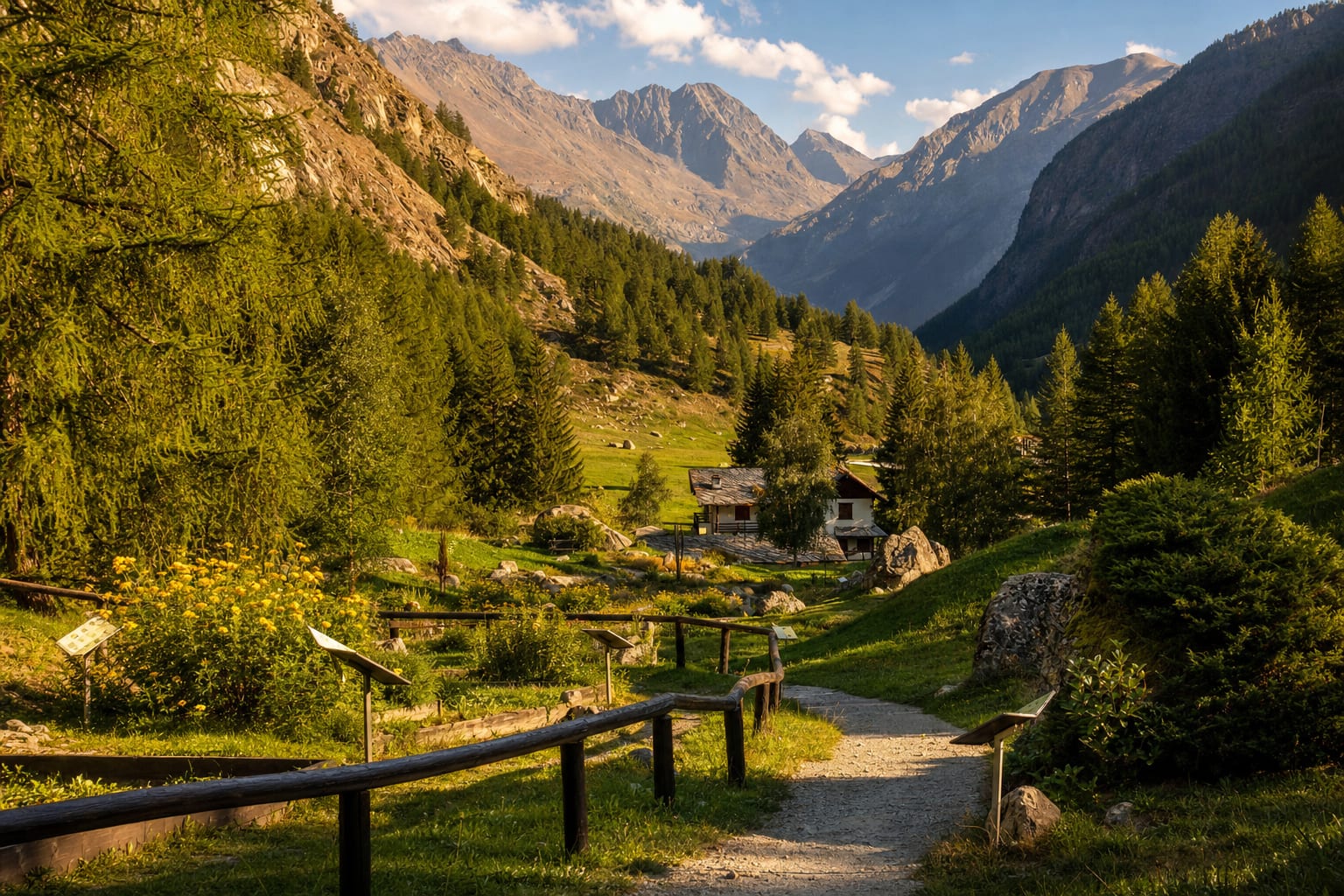 CogneHidden GemParadisia Alpine Botanical Garden1,000+ alpine species, mountain habitats, Gran Paradiso views, mid-summer floweringParadisia grows in Valnontey, a side valley of Cogne at 1,700 meters, inside the Gran Paradiso National Park. Founded in 1955 as the park’s alpine garden, it recreates natural mountain habitats across about 10,000 square meters and holds more than a thousand species, with rockeries, a lichen exhibit, a butterfly garden and a bed of medicinal plants. The Gran Paradiso massif frames the beds, and flowering peaks from mid-June to mid-July, when the rockeries turn into the Alps in miniature. It is a short, easy visit that pairs well with a walk further up the valley.
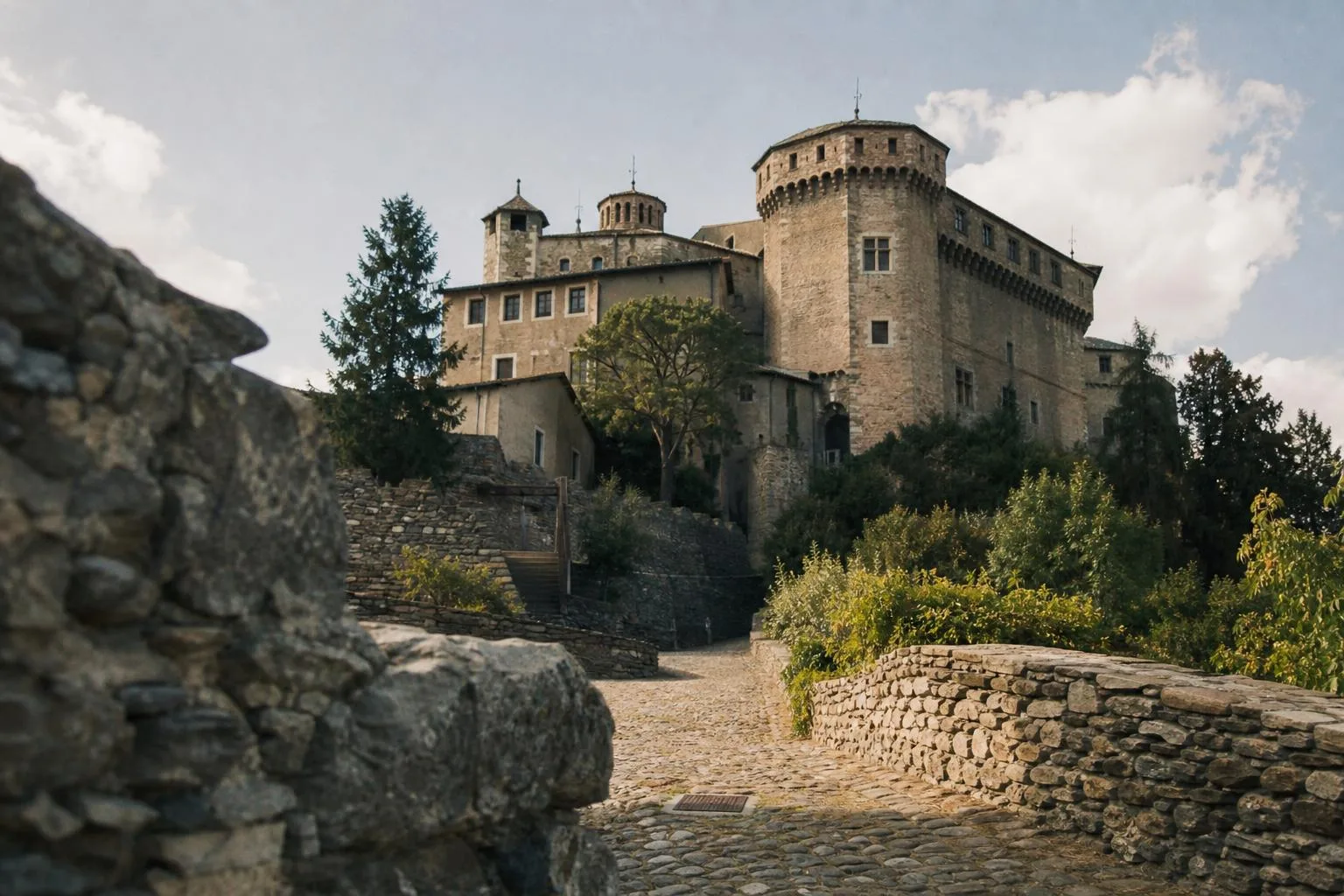 SarreHidden GemSarre CastleSavoy royal hunting lodge, hall of horns, ibex trophies, period furnishingsSarre Castle looks medieval, with a tall crenellated central tower and mullioned windows, but its story is royal. Documented from the thirteenth century and rebuilt in 1708, it was bought in 1869 by Victor Emmanuel II, who made it the base for his hunts in the nearby Gran Paradiso reserve, raising the tower and adding stables. His successor Umberto I added the hall of horns, its walls covered with ibex and chamois trophies. The Italian state bought the castle in 1972, and the Aosta Valley Region opened it as a museum in 1989. Furniture, paintings and personal objects show how the Savoy hunting parties lived.
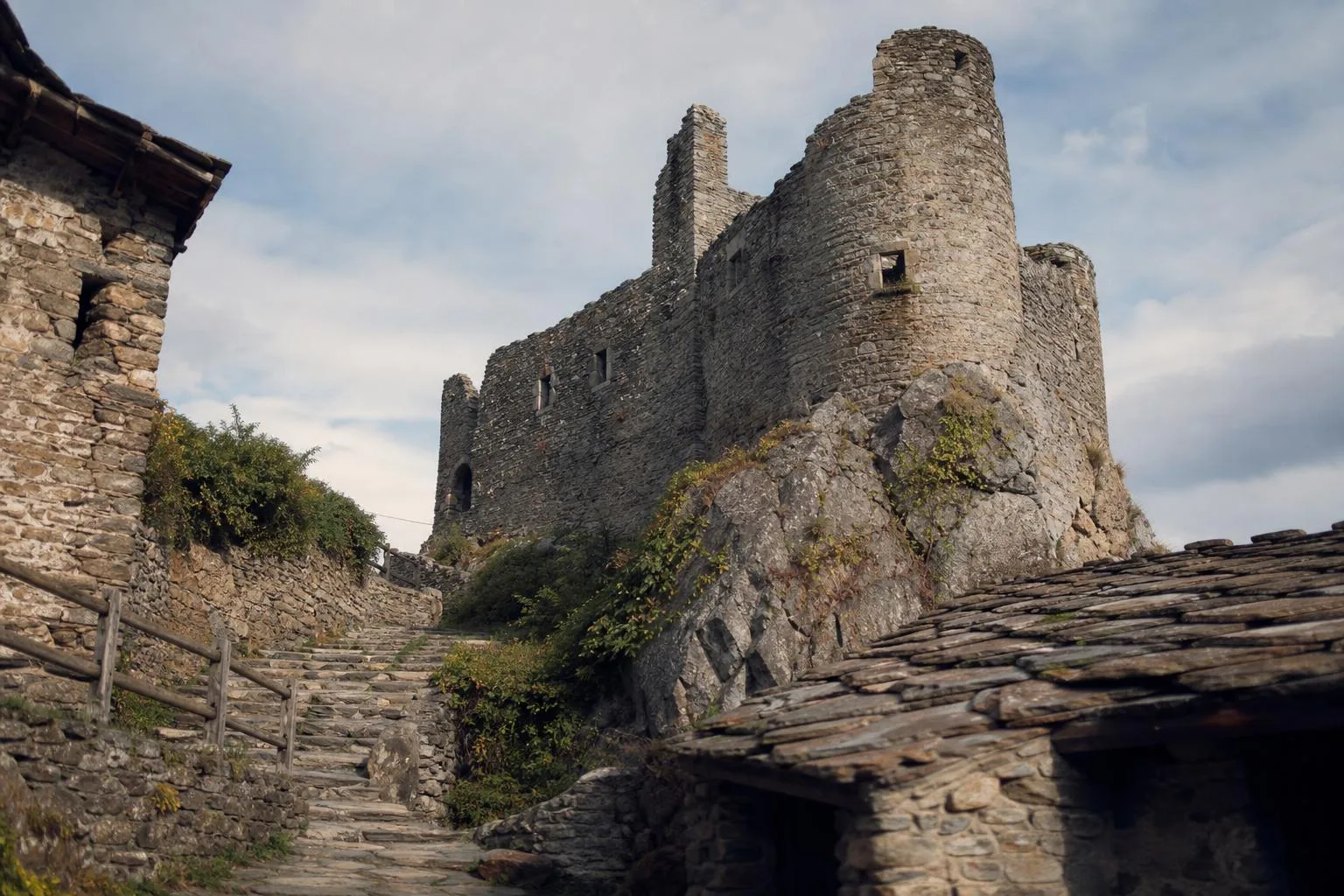 VilleneuveHidden GemChâtel-Argent1275 cylindrical keep, Jacques de Saint-Georges design, Romanesque chapel, rock-cut access stairA cylindrical keep sixteen meters high still crowns this rocky spur above the Dora Baltea, built in 1275 for Count Peter II of Savoy by the master military architect Jacques de Saint-Georges, who designed castles across Savoy and Wales alike. Triple walls once let the fortress garrison as many as two thousand men, controlling the valley route into Aosta. People had already fortified this outcrop far earlier: Salassi tribes and then Romans held the spur before the Savoy counts arrived. Below the keep, the Chapel of Santa Colomba keeps its Romanesque decoration from around 1050 to 1070. A rock-cut staircase climbs from Villeneuve to the ruins, and the Fondation Grand-Paradis organizes the only guided visits.
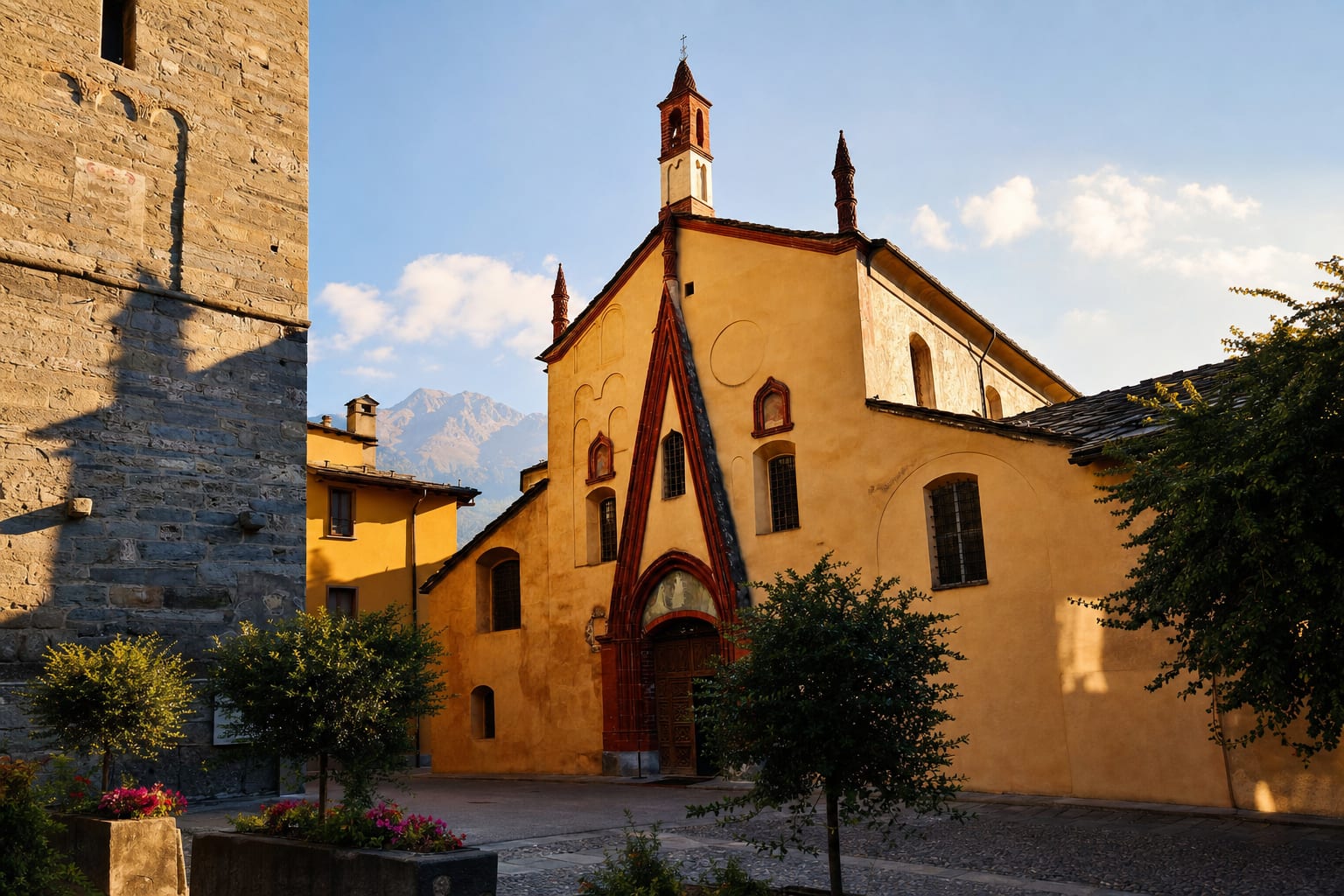 AostaCollegiate Church of Sant'OrsoRomanesque cloister capitals, hidden Ottonian frescoes, 1589 great bell, medieval priory complexA thousand years of Valdostan art gather around the Romanesque cloister of the priory of Sant'Orso in Aosta, where thirty-seven of an original fifty-two marble capitals survive, carved with biblical scenes and grotesque beasts and coated long ago in a translucent, ash-flecked sealant that darkened them into their present bronze color. Bishop Anselmo I rebuilt the church on an early Christian foundation between 994 and 1026, and later centuries added Gothic vaulting and a 44-meter bell tower whose largest bell, cast in France in 1589 and weighing nearly 2,800 kilograms, remains the biggest in the Aosta Valley. Rare Ottonian frescoes, painted before the Romanesque rebuilding, survive hidden in the attic space above the nave vaults, reachable only on specific guided visits.
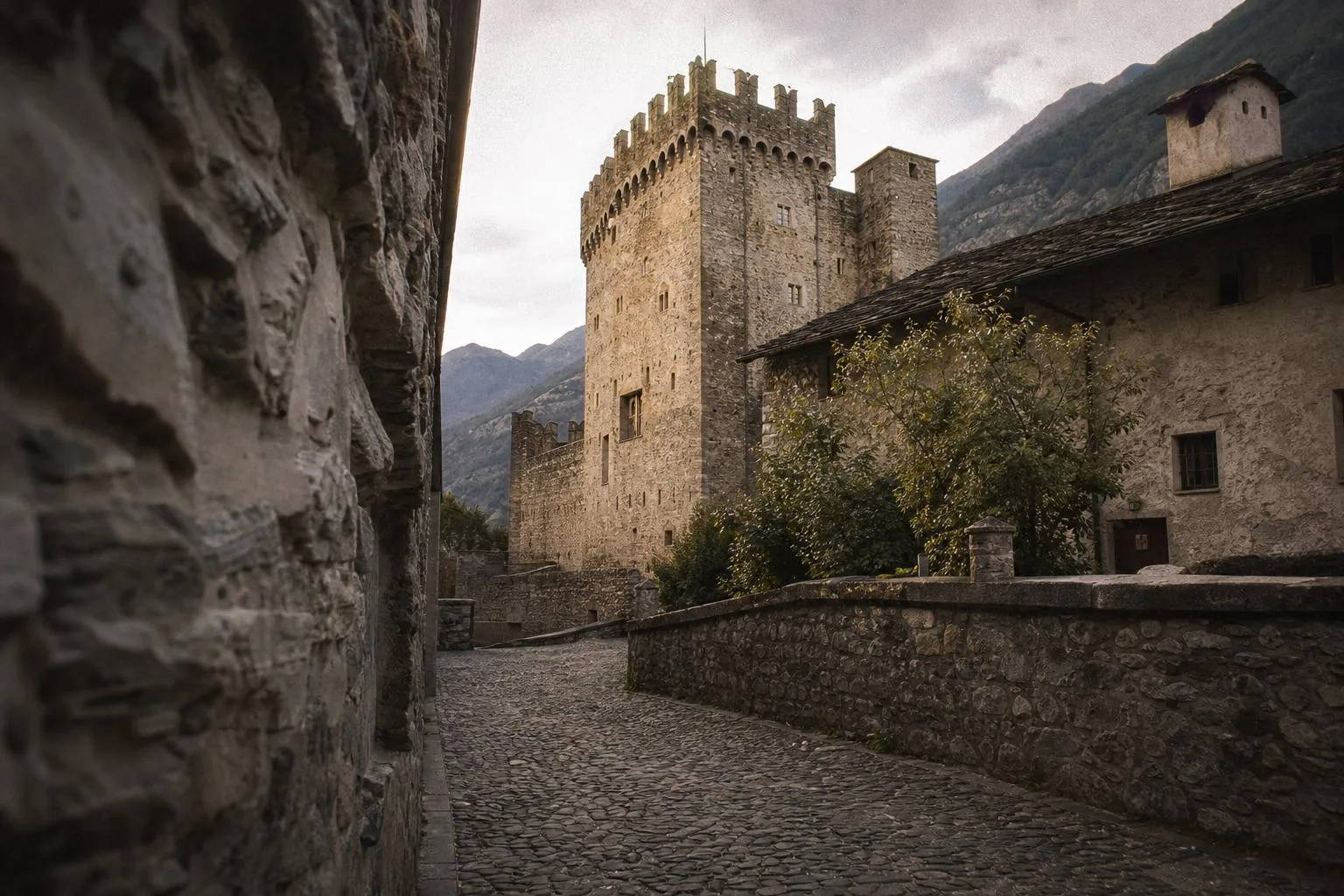 Saint-PierreHidden GemSarriod de la Tour CastleHall of Heads ceiling, 171 carved corbels, Sarriod family seat, Fragmenta Picta exhibitionThe Sarriod family, minor Aosta Valley nobility, held this castle from the tenth or twelfth century until the family line died out in 1923, after which the Aosta Valley region acquired it in 1970 and opened it to the public in 2003. Its centerpiece is the Sala delle Teste, the Hall of Heads, whose carved wooden ceiling from around 1430 bristles with 171 figures: nobles in period dress, grotesque faces, fantastical animals and carnival-like characters crowded along the beams. Frescoes spanning the thirteenth to fifteenth centuries survive elsewhere in the castle, including rare early Gothic work, and an exhibition called Fragmenta Picta displays painted fragments recovered from a nearby excavation.
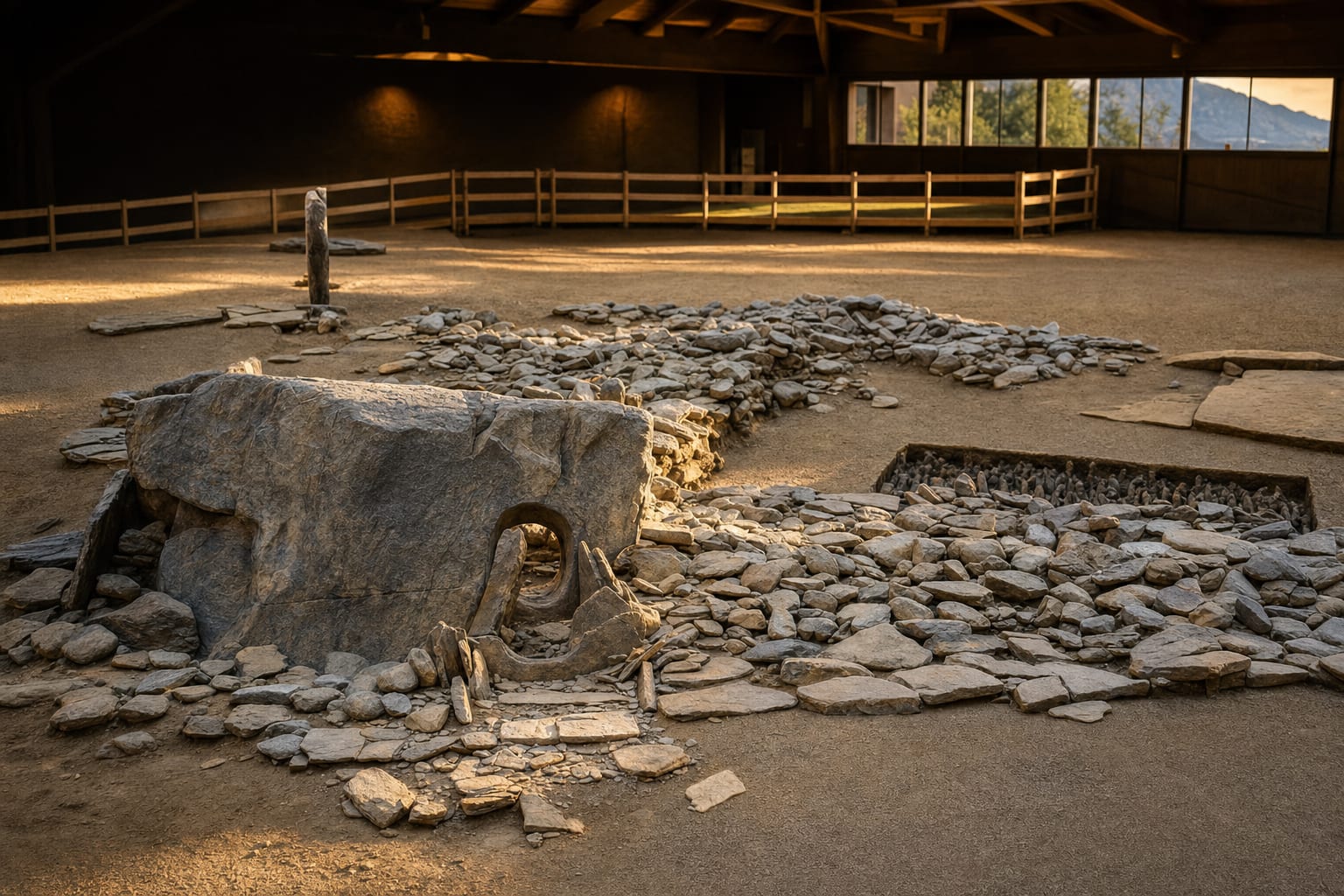 AostaHidden GemAosta Megalithic AreaNeolithic anthropomorphic stelae, six-millennia continuous use, glass-floor museum, 1969 discoveryConstruction workers found this ritual landscape six meters below street level in 1969, and archaeologists have since traced continuous use from the fifth millennium BC through the medieval period, one of the longest sequences of sacred use anywhere in the Alps. Carved anthropomorphic stelae, plowing furrows left by Neolithic rituals, dolmenic and cist burials, and rows of wooden ceremonial posts document six thousand years of changing beliefs on the same ten-thousand-square-meter plot. A museum designed by architect Vittorio Valletti, with a 46.5-meter central nave requiring no interior columns, opened over the site in 2016 and is now called the MegaMuseo. The building lets visitors walk directly above the excavation, looking down through glass floors at stelae still standing where they were planted.
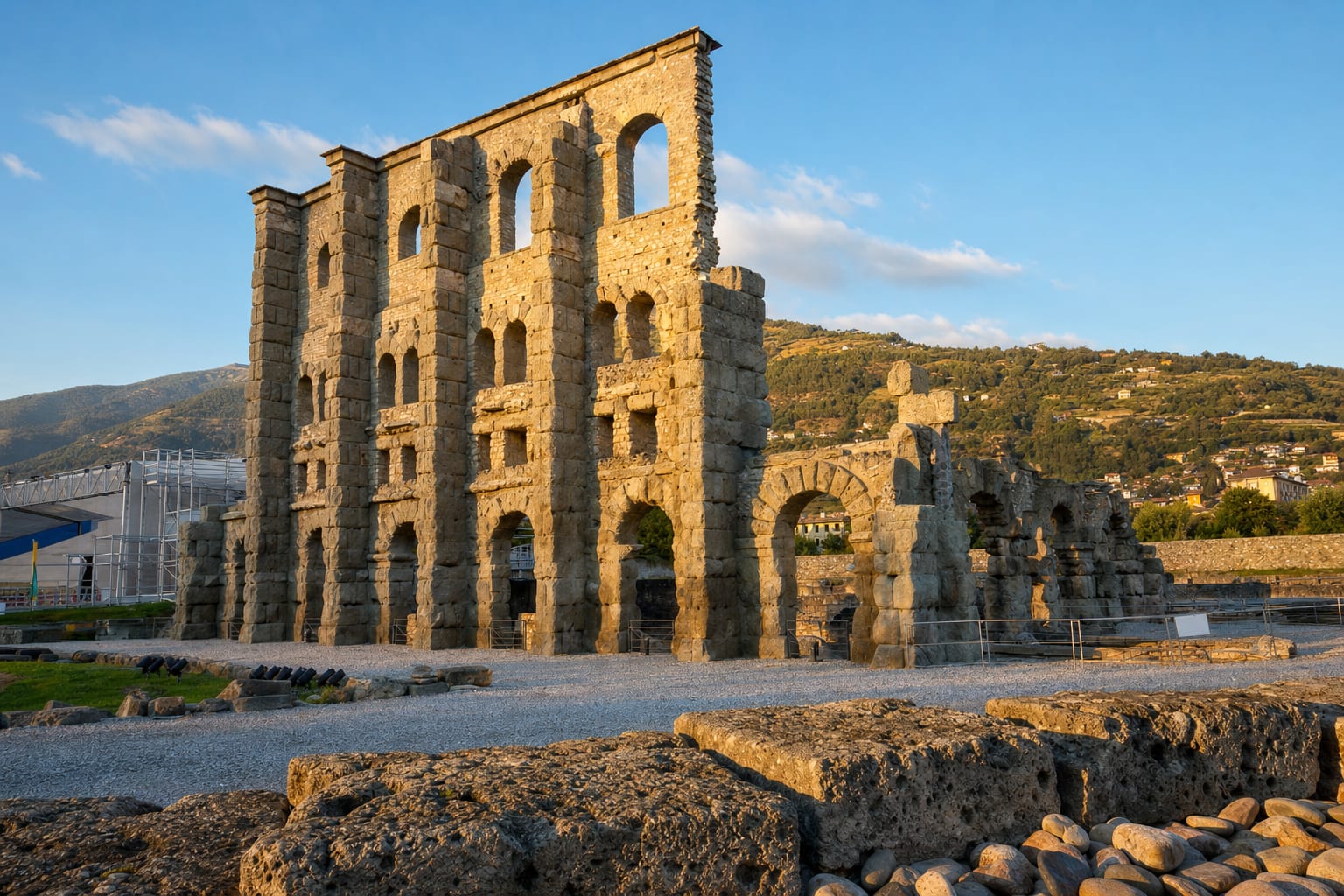 AostaRoman Theatre of Aosta22-meter Augustan stage wall, open-air summer performances, combined Aosta ticketAugustus founded Aosta as a military colony in 25 BCE, and a generation later the town built this theatre, its 22-meter stage wall still standing almost to full height, one of the tallest surviving Roman theatre facades anywhere. The cavea once seated up to four thousand people against a backdrop of actual Alps rather than painted scenery. It still hosts open-air performances in summer, the same use it was built for two thousand years ago, and a combined ticket links it to the town's other Roman sites.
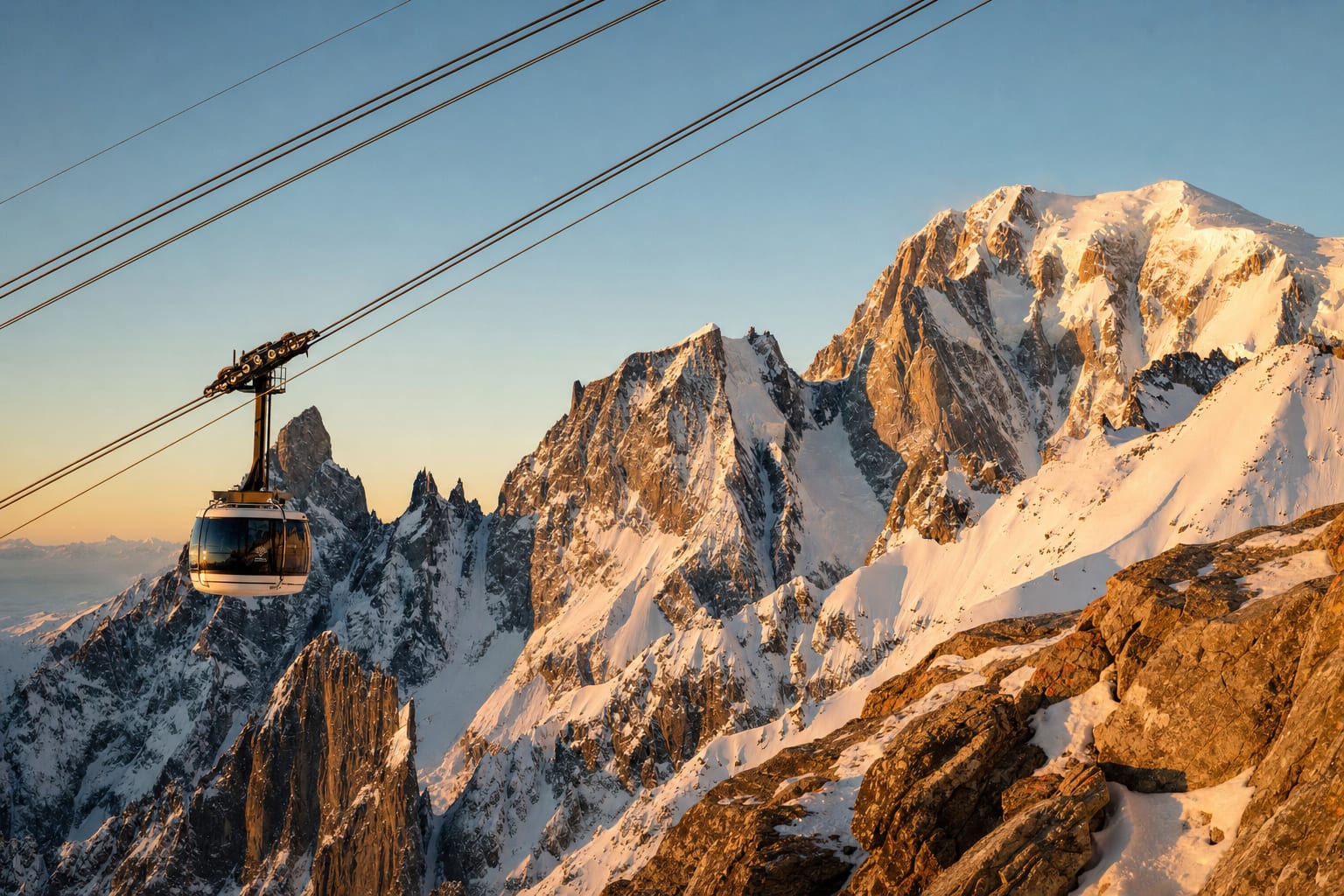 CourmayeurSkyway Monte BiancoRotating cable cars, Punta Helbronner terrace at 3,466m, Mont Blanc glacier panoramas, Europe's highest botanical gardenFrom a base station outside Courmayeur, rotating cable cars spiral upward in three stages to Punta Helbronner at 3,466 meters, turning slowly inside their cabins so every passenger gets the same full-circle view rather than fighting for a window seat. The final approach clears the treeline entirely and the glaciers of the Mont Blanc massif fill the horizon at arm's length, close enough to see crevasses without binoculars. At the top, a glass-walled terrace, a small chapel and, in summer, Europe's highest botanical garden reward those willing to handle the altitude and the near-certain cold, whatever the season below.
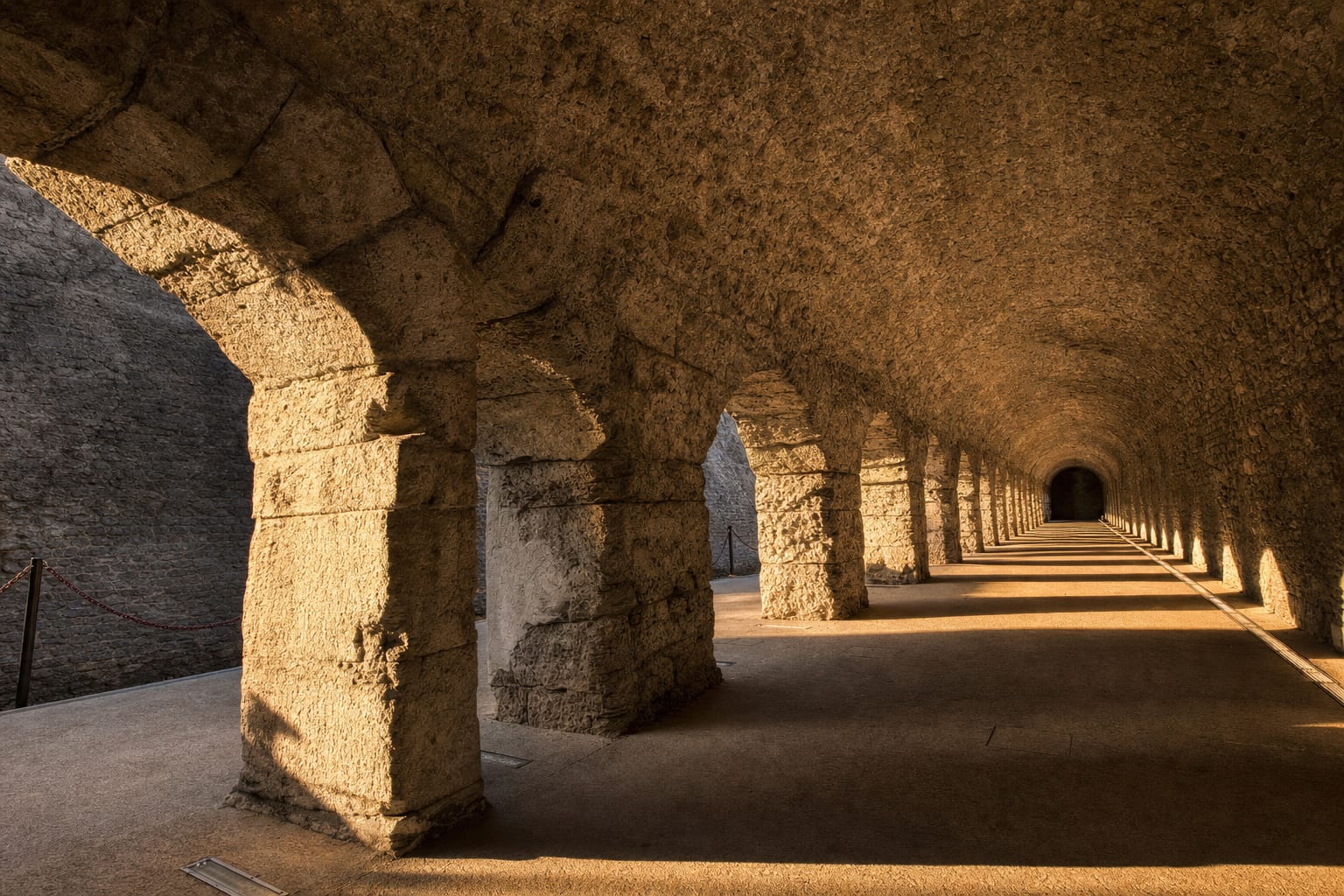 AostaRoman CryptoporticusUnderground horseshoe gallery, forum-leveling engineering, double colonnade atmosphere, over 100 meters intactBeneath what was once the forum of Augusta Praetoria, a horseshoe of vaulted, double-arcaded galleries runs for more than a hundred meters, built not as a hiding place but as an engineering fix: the sacred terrace above needed leveling, and the Romans solved it by building a basement rather than trucking in fill. The double row of arches, still remarkably intact, creates a cool, echoing corridor that is now the closest thing to walking directly through the foundations of the Roman colony's civic heart, more atmospheric than most above-ground ruins precisely because it was never meant to be seen.
Tours worth booking in Aosta Valley
Compared by our editors, across providers.
Booking through these links may earn Italia Magnifica a commission, at no cost to you.
- Viator
- 8h
- 4.6★ · 55 reviews
from €145Book this tour

City by city
Where the monuments cluster in Aosta Valley.