

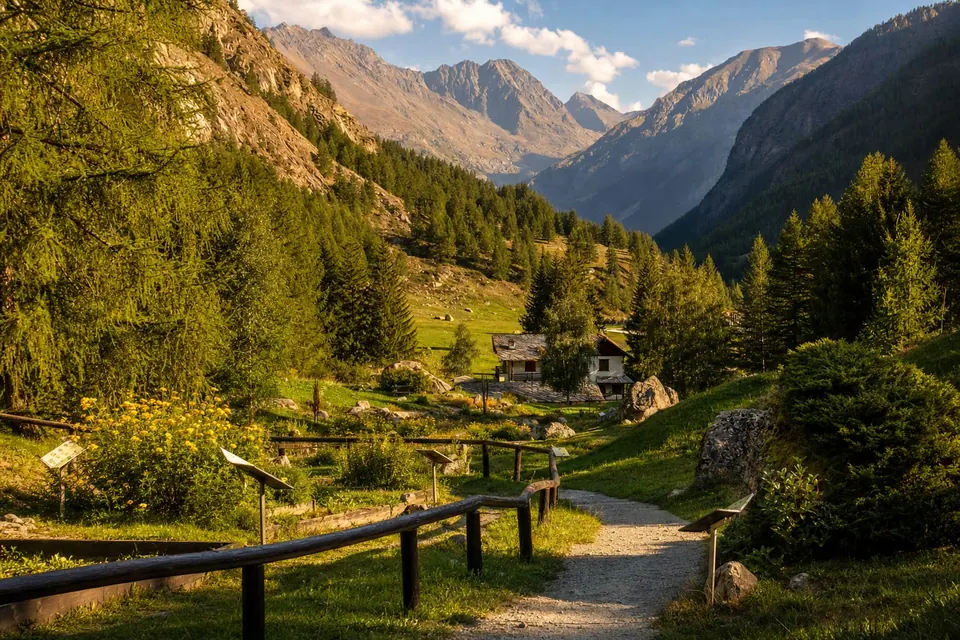
A garden built from small habitats
At about 1,700 metres, the garden uses the hollows and changes in ground level of Valnontey. Start by seeing how planting changes between damp ground and loose stone. The beds recreate habitats such as a bog, a scree slope and dry grassland. A plant that might be hard to pick out on a mountain walk can be studied from the path, with room to compare leaves and flowering habits.
Learn the labels before exploring
Yellow labels mark species found in Italy’s Alps or Apennines. White labels mark plants from other mountain regions and red marks medicinal species. Look for the white-flowered mountain lily, Paradisea liliastrum, which gave the garden its name. The park founded Paradisia in 1955. It is both a place to learn to recognise plants and a collection for research, so use the paths to keep the growing areas intact.
Time the visit for what you want to see
The strongest flowering is usually from mid June to mid July, with the timing shifting from year to year. Give yourself time to look at a few beds rather than trying to identify every specimen. A valley walk afterwards puts the differences in soil, water and exposure back into the landscape.


