Skip to content
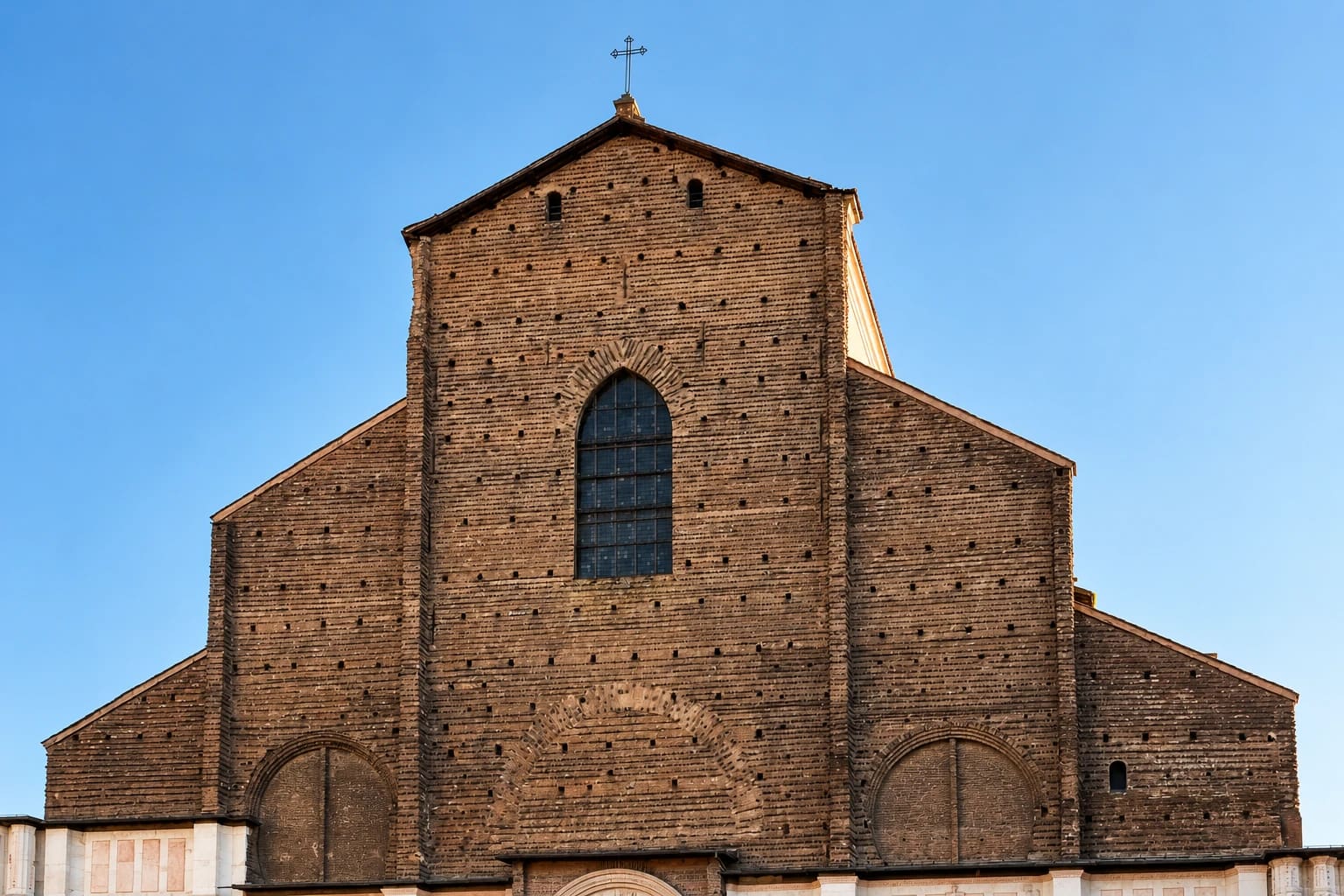
The unfinished brick upper façade of San Petronio on Piazza Maggiore, Bologna

Five Days of Food in Emilia-Romagna

Two days of pasta and porticoes in Bologna, two in Parma including a dairy and a ham producer, and a last day in Modena for the market and the balsamic vinegar.

Emilia-Romagna's best-known foods come from three cities on one old Roman road, the Via Emilia, so you can eat your way along it by train for most of the trip. This plan starts in Bologna with egg pasta and the market lanes of the Quadrilatero, moves to Parma for cured ham, Parmigiano Reggiano and the Romanesque cathedral and baptistery, and ends in Modena with its covered market, its cathedral and the vinegar aged in family attics. Two days include producer visits, each booked ahead.

Day by day

Bologna: the square, the market lanes and the tortellini

Day 1 · on foot, under the porticoes

Morning
Begin in Piazza Maggiore, the city's main square, and cross to the Fountain of Neptune beside it: Giambologna's bronze, commissioned in 1563 and known to Bolognesi as il Gigante, the Giant. Then slip into the Quadrilatero, the grid of lanes just off the square where a medieval market still trades. Via Drapperie and Via Pescherie Vecchie take their names from the cloth and fish sellers who worked here, and the shopfronts now hold fresh pasta, cured meats, cheeses and fruit. Walk it once without buying, to see what is where.
Afternoon
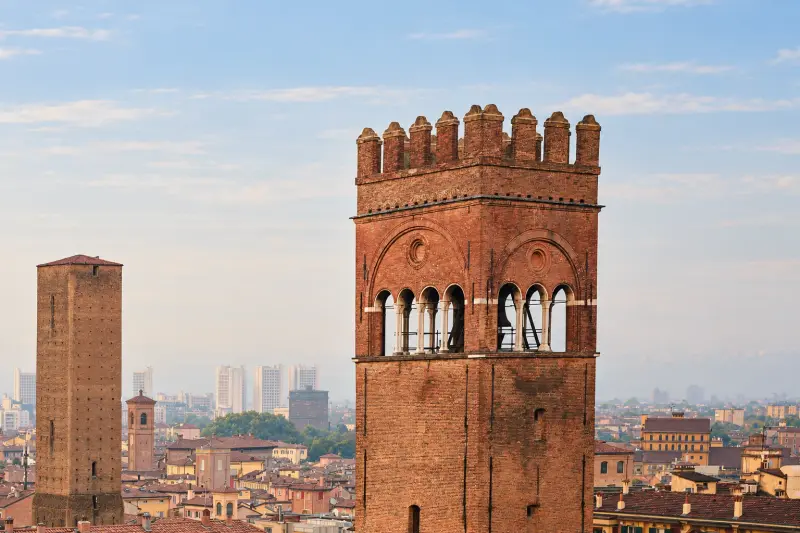
Walk under the arcades to the Two Towers, the Asinelli and the Garisenda, built in the early twelfth century as family status symbols and leaning in plain view; Dante mentions the Garisenda in the Divine Comedy. The porticoes are the point of the afternoon. Twelve stretches of them are on the UNESCO World Heritage list, added in 2021, and the network adds up to some 62 kilometres, about 42 of them in the historic centre, so you walk in shade or out of the rain all the way.
Evening
Dinner is the dish Bologna guards most closely: tortellini in brodo. They are small rings of egg pasta folded around pork loin, raw ham, Bologna mortadella and Parmigiano Reggiano, cooked and served in a clear meat broth. The recipe was deposited with the Bologna Chamber of Commerce in 1974, and the traditional way to eat them is in the broth, with nothing else on the plate. Afterwards, take the passeggiata, the evening stroll, back under the porticoes.

Where to eat. Lunch in the Quadrilatero: a mortadella sandwich, or a board of salumi and cheese with a glass of Lambrusco or Pignoletto, a white from the Bologna hills, at a counter or a small table. For dinner choose a trattoria in the historic centre and order the tortellini as your first course.

Bologna: San Luca and the ragù

Day 2 · up to San Luca, then back to the markets

Morning
Start at Porta Saragozza and follow the portico to Arco del Meloncello, where the hill begins. For the shorter walk, take bus 20 to Meloncello and start climbing there. If you’d rather walk downhill, change from bus 20 at Villa Spada to the 58 up to the sanctuary. Check the 58 timetable before leaving the centre. The San Luca Express also climbs from Piazza Maggiore with an audio guide.
Afternoon
Walk back down the portico to Meloncello, then take the bus or continue along Via Saragozza. At the Quadrilatero, look for cheeses at different ages, whole salumi and dried nests of egg pasta. Stop for a coffee in Piazza Maggiore before dinner.
Evening
Tonight is tagliatelle al ragù. In Bologna the meat sauce goes on tagliatelle, ribbons of egg pasta that hold it, and never on spaghetti: spaghetti bolognese is not a Bolognese dish. The ragù is a slow-cooked sauce of minced beef with pancetta and a base of onion, carrot and celery, and the recipe was deposited at the Chamber of Commerce in 1982 and revised in 2023. Order it as a first course and share a bottle of Lambrusco.

Where to eat. Lunch light after the climb: tortellini in brodo again, or a mortadella roll from a counter in the Quadrilatero. Dinner is the ragù, at a trattoria in the historic centre; ask for tagliatelle al ragù as the first course and keep room for a second.

Parma: the baptistery, the cathedral and the stuffed pasta

Day 3 · a regional train, then on foot

Morning
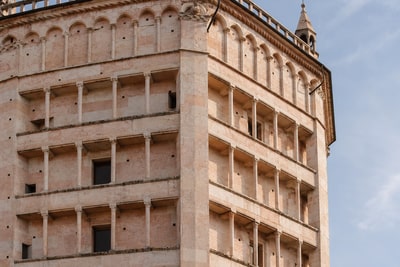
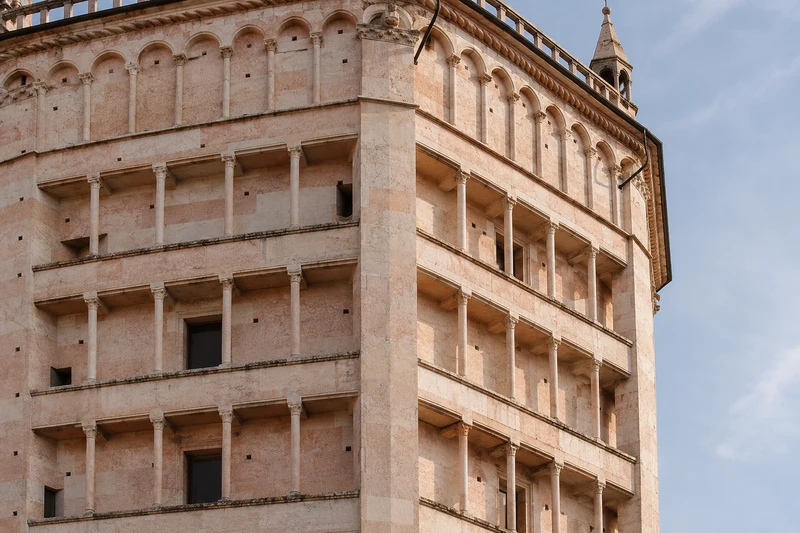
Take a regional train to Parma. From the station, follow Viale Bottego and Strada Garibaldi to Piazzale della Pace, then cross the centre to Piazza Duomo. Buy the pass for the baptistery and Diocesan Museum at the museum entrance in Vicolo del Vescovado. In the pink-marble baptistery, look for the months of the year and the ribs of the painted dome.
Afternoon
The cathedral next door is free for independent visitors. Check its visiting hours around services, then look up to Correggio’s Assumption in the dome and find Antelami’s marble Deposition in the transept. The baptistery pass also covers the Diocesan Museum, so you can visit it after the cathedral. Leave the rest of the afternoon for the food shops around the centre.
Evening
Dinner is Parma's other stuffed pasta: tortelli d'erbetta, squares of egg pasta filled with ricotta and greens, usually chard, and dressed simply with melted butter and Parmigiano Reggiano. Start with salumi, and finish with a short walk through the centre and across Piazza Duomo.

Where to eat. Lunch on torta fritta, a diamond of dough fried in lard and eaten with cured meats such as culatello di Zibello, a PDO salume. Dinner on tortelli d'erbetta, or on anolini in brodo, small stuffed pasta in broth, at one of the trattorie in the historic centre.

The Parmigiano dairy and the ham cellars

Day 4 · producer visits outside Parma

Morning
For an independent visit, use the Parmigiano Reggiano consortium’s booking page to choose a dairy near Parma. Take a morning slot and confirm whether you’ll see the cheesemakers at work. In a working dairy, the previous evening’s milk is skimmed and mixed with the morning milk in copper vats. After cooking, the curd goes into moulds. The wheels then go into brine, followed by at least 12 months on the ageing shelves.
Afternoon
Arrange your own car or driver between the dairy and the ham hills. Book an afternoon visit and tasting directly with Salumificio Conti near Langhirano. Allow time between appointments and check the language before confirming. The visit goes from the salting rooms to the cellars where the hams age. In September, the festival’s Finestre Aperte programme gives you a choice of producers to book.
Evening
Back in Parma, keep the evening light. Anolini in brodo, small stuffed rounds of pasta served in broth, are the Parma counterpart to Bologna's tortellini and appear on the menus of the central trattorie. Follow them with a plate of culatello, and finish with a walk around Piazza Duomo.

Where to eat. Lunch at a trattoria in the hills, where torta fritta with salumi is the usual order and a glass of Lambrusco the usual drink. Dinner in Parma: anolini in brodo and culatello.

Modena: the market, the cathedral and the balsamic vinegar

Day 5 · a short train ride, then on foot

Morning
Take a regional train east on the Via Emilia to Modena and head to the Mercato Albinelli, the covered market opened in 1931 in the Liberty style, with a fountain by Giuseppe Graziosi at its centre. Stalls sell fruit and vegetables, cured meats, cheeses, meat and products typical of the area. Go in the morning and walk the aisles before deciding what to eat. Then stroll through the centre to Piazza Grande.
Afternoon
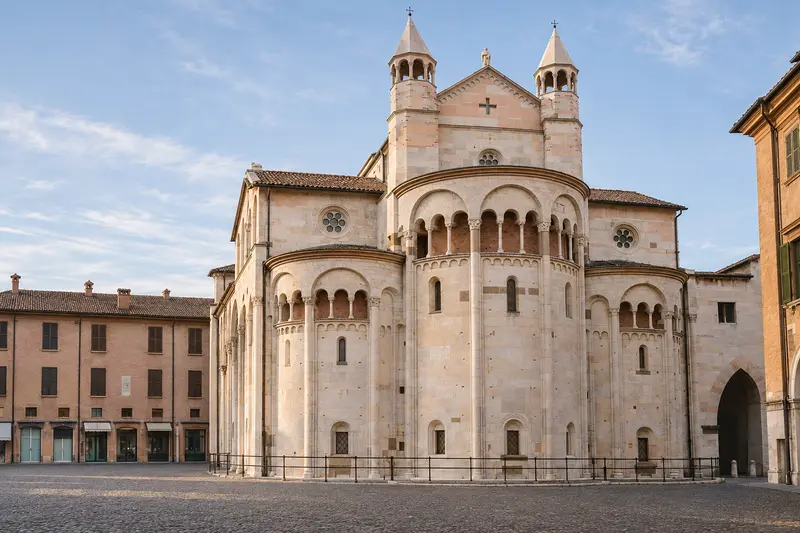
The cathedral, the Ghirlandina tower and Piazza Grande were inscribed together on the UNESCO list in 1997. Lanfranco was the architect and Wiligelmo the sculptor of the cathedral, begun in 1099; look at Wiligelmo's four Genesis reliefs on the facade, running from the creation of Adam and Eve to Noah's Ark. The Ghirlandina, finished in 1319 with its octagonal top, rises beside it. Go inside the cathedral for the Romanesque nave before the day moves on to vinegar.
Evening
For an acetaia you can reach on foot, reserve the Acetaia Comunale through VisitModena. It’s in the attic of Palazzo Comunale on Piazza Grande and opens only for booked guided visits. Check the language and time before planning your afternoon around it. The tasting lets you compare Traditional Balsamic Vinegar of Modena aged for at least 12 years with extravecchio, aged for at least 25. If the municipal visit doesn’t fit your day, book with Casa Giusti in Lesignana and arrange transport there and back.

Where to eat. Lunch in the market: a sandwich, or a plate of salumi and cheese from the stalls. Dinner on gnocco fritto, fried dough eaten with cured meats, or tigelle, small round breads filled with cured meats and cheeses, with a glass of Lambrusco, or on tortellini in brodo, which Modena also claims.

If you have another day

One more day: two cities by regional train from Bologna, or a castle in the ham hills by car.

Ravenna
Eight early Christian monuments, built in the fifth and sixth centuries, are on the UNESCO list (1996). The mosaics of San Vitale, Sant'Apollinare Nuovo and the Mausoleum of Galla Placidia are the reason to go.
Ferrara
A Renaissance city on the UNESCO list (1995): the Castello Estense, Biagio Rossetti's planned northern extension of the city, the Addizione Erculea, and about nine kilometres of walls you can walk or cycle.
Torrechiara
A castle near Langhirano built between 1448 and 1460 by Pier Maria Rossi for Bianca Pellegrini, famous for the Camera d'Oro, a room frescoed with their courtship. A natural pairing with the ham country of day four.

Where to stay

Verified hotels, city by city.

Bologna

Bologna

  • Art Hotel Commercianti
  • Grand Hotel Majestic Già Baglioni
  • Corte Sant'Orsola 4
  • Villa Benni
Check dates: Bologna
Parma

Parma

  • Palazzo Dalla Rosa Prati
  • Glam Parma
  • Villino Di Porporano
  • Bellacorte gentiluogo per viaggiatori
Check dates: Parma
Modena

Modena

  • B&B Le Noci di Feo
  • La Corte Dei Sogni
  • Damhomeitaly
  • Salotto delle Arti
Check dates: Modena

Booking through these links may earn Italia Magnifica a commission, at no cost to you.

Where to eat

Verified tables in the cities on this route.

Bologna

Bologna

  • NettunoA small slice shop a short walk from Piazza Maggiore, selling pizza by the slice and tray, plus panini and piadine.
  • Il Portico di San DonatoA pizzeria near Porta San Donato in Bologna's university quarter that also serves lasagne and filled pasta, with generous portions.
  • MargherìA short Neapolitan-style pizza menu of marinara, margherita and a few classics, in Bologna's Navile district.
  • L'Antica Pizzeria da MicheleNeapolitan-style pizza in Piazza San Martino, built around the simple Margherita and Marinara, with fried bites for sharing.
All tables: Bologna
Parma

Parma

  • L'Antica Pizzeria Da Michele ParmaA branch of the Naples pizzeria that built its name on just two pizzas, margherita and marinara.
  • Pizzeria EntréeA small, intimate pizzeria in Parma known for light, well-risen dough, with fried bites and inventive toppings beyond the classics.
  • ATIPICO osteria modernaA modern take on the Emilian osteria in Parma, for diners who want local cooking in a more contemporary key.
  • I Tri SiochèttA rustic trattoria in the countryside outside Parma, for torta fritta with cured meats, tortelli alle erbette and zuppa inglese in large informal rooms.
All tables: Parma
Modena

Modena

  • Pizzeria Da CarmeloA small Neapolitan pizzeria on Viale Ciro Menotti, known for its fried margherita and pizza al tegamino, where booking ahead is wise.
  • Piccola Osteria ZemiànA small, popular osteria serving Modenese classics with a modern touch, from gnocco fritto with prosciutto to veal meatballs and risotto.
  • L'Antica Pizzeria da Michele ModenaA branch of the Naples pizzeria that built its name on just two pizzas, margherita and marinara.
  • Mi Piace TrattoriaA trattoria in Modena's pedestrian centre near the Duomo, for tigelle with lardo, tortellini and pumpkin risotto in generous portions.
All tables: Modena

A letter from Italy, once a month.

Each month: one story, two recipes, an ingredient and a wine of the month, places worth the trip, and the month’s calendar.

One letter a month. Unsubscribe at any time. We never share your address. Choose your desks