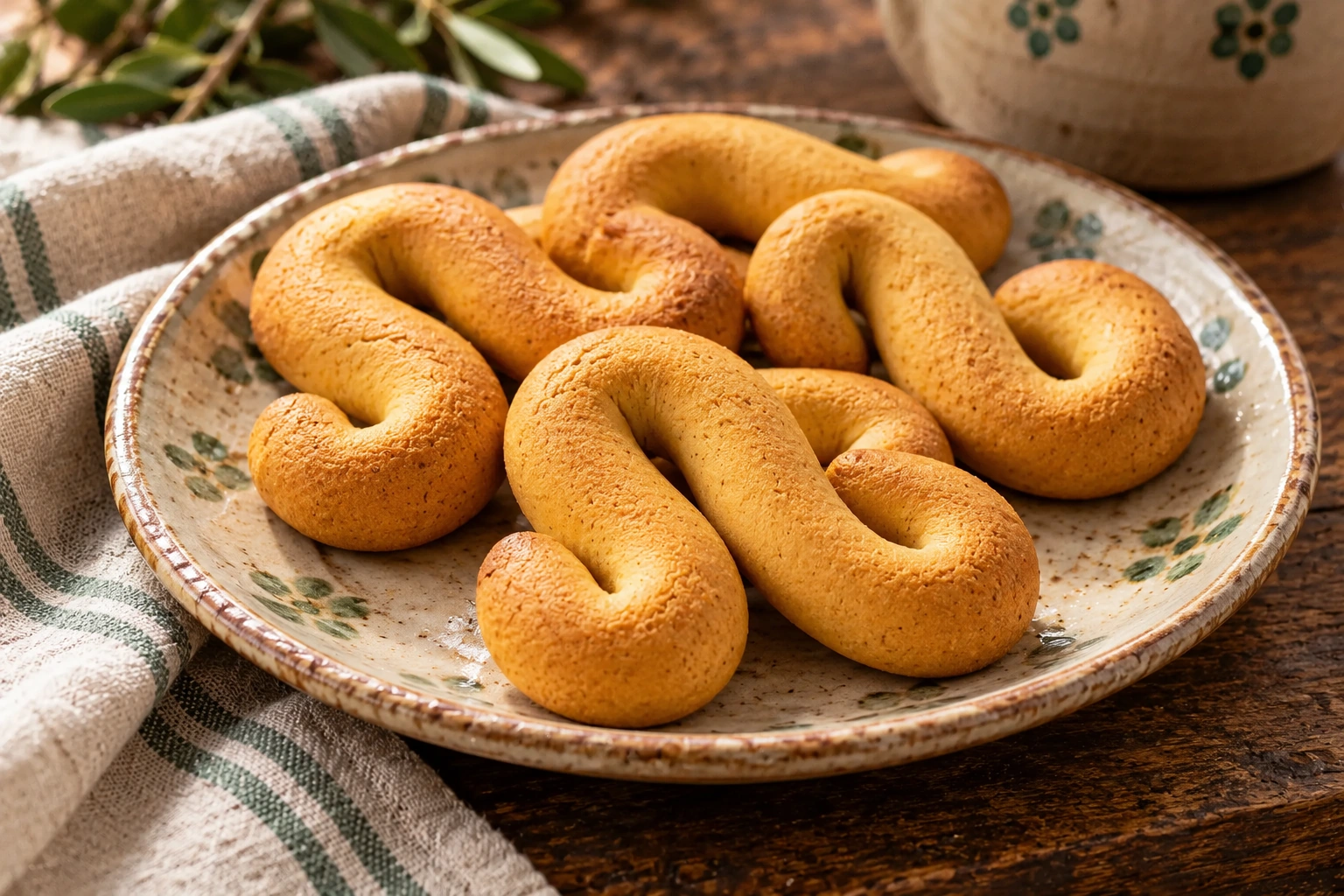
Begin with an active stiff starter and judge both rises by the dough, not the clock alone. Keep the loaf the same size when making more bread.
Make ahead Plan a full day for the starter refresh, two rises, baking and cooling. The timings lengthen if the starter or room is cool.
Pane di Cerchiara, home-oven version
Prep 45 min · Cook 1 hr 15 min · Rest 14 hr · Yield 1 loaf (Cool before slicing.) · Difficulty Hard
Method
Mix the starter seed with the refresh flour and refresh water. Knead into a firm small dough, cover and leave at about 20°C for around 4 hours, until clearly risen and aerated, with a pleasantly tangy aroma. Use an already active starter; allow longer if it has not risen. Weigh out 110 g for the bread and keep the remaining 30 g for another refresh.Mix the starter seed with the refresh flour and refresh water. Knead into a firm small dough, cover and leave at about 70°F for around 4 hours, until clearly risen and aerated, with a pleasantly tangy aroma. Use an already active starter; allow longer if it has not risen. Weigh out 4 oz for the bread and keep the remaining 1 oz for another refresh.
Mix the four final-dough flours. Break the 110 g ripe starter into the final-dough water and add the flours and salt. Knead for about 20 minutes, until cohesive, supple and no longer tearing easily. Keep the dough around 20°C, using cool water and short pauses if necessary.Mix the four final-dough flours. Break the 4 oz ripe starter into the final-dough water and add the flours and salt. Knead for about 20 minutes, until cohesive, supple and no longer tearing easily. Keep the dough around 70°F, using cool water and short pauses if necessary.
Cover with a clean cloth and leave at 19–21°C for about 4 hours, until noticeably expanded and aerated. The dough should feel lighter and retain a gentle fingertip impression rather than springing back tightly. Extend the rise if it is still dense.Cover with a clean cloth and leave at 65–70°F for about 4 hours, until noticeably expanded and aerated. The dough should feel lighter and retain a gentle fingertip impression rather than springing back tightly. Extend the rise if it is still dense.
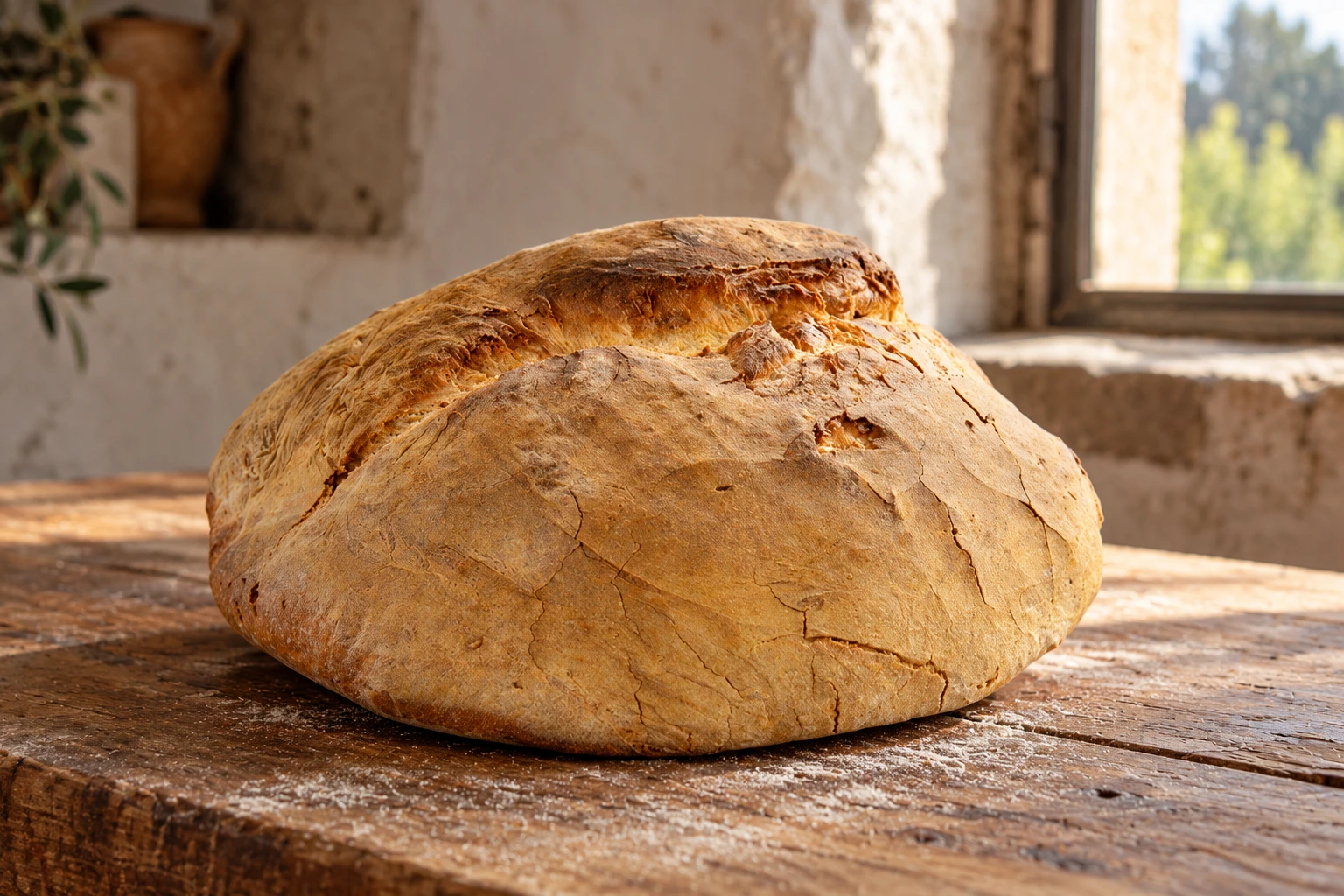
Use a little working flour on the board. Shape a loose round, then fold one side partly over itself to create a raised shoulder rather than a smooth symmetrical dome. Set on a lightly floured cloth, cover and prove for about 2 hours at 19–21°C, until puffy and a shallow indentation recovers slowly. Keep this single loaf about 22–24 cm across.Use a little working flour on the board. Shape a loose round, then fold one side partly over itself to create a raised shoulder rather than a smooth symmetrical dome. Set on a lightly floured cloth, cover and prove for about 2 hours at 65–70°F, until puffy and a shallow indentation recovers slowly. Keep this single loaf about 8¾–9½ in across.
During the final proof, heat a baking stone or heavy tray in a static oven at 250°C for at least 45 minutes. Transfer the loaf gently onto the hot surface with its raised shoulder uppermost. Bake for 15 minutes, then lower to 220°C and continue for about 60 minutes, until the crust is deeply colored and the base is firm and sounds hollow when tapped. Shield the top if it colors too quickly and extend the bake if the base is still soft.During the final proof, heat a baking stone or heavy tray in a static oven at 475°F for at least 45 minutes. Transfer the loaf gently onto the hot surface with its raised shoulder uppermost. Bake for 15 minutes, then lower to 425°F and continue for about 60 minutes, until the crust is deeply colored and the base is firm and sounds hollow when tapped. Shield the top if it colors too quickly and extend the bake if the base is still soft.
Cool completely on a rack for at least 4 hours before slicing. Brush away loose dusting flour. The crumb should have time to settle inside the substantial crust.Cool completely on a rack for at least 4 hours before slicing. Brush away loose dusting flour. The crumb should have time to settle inside the substantial crust.