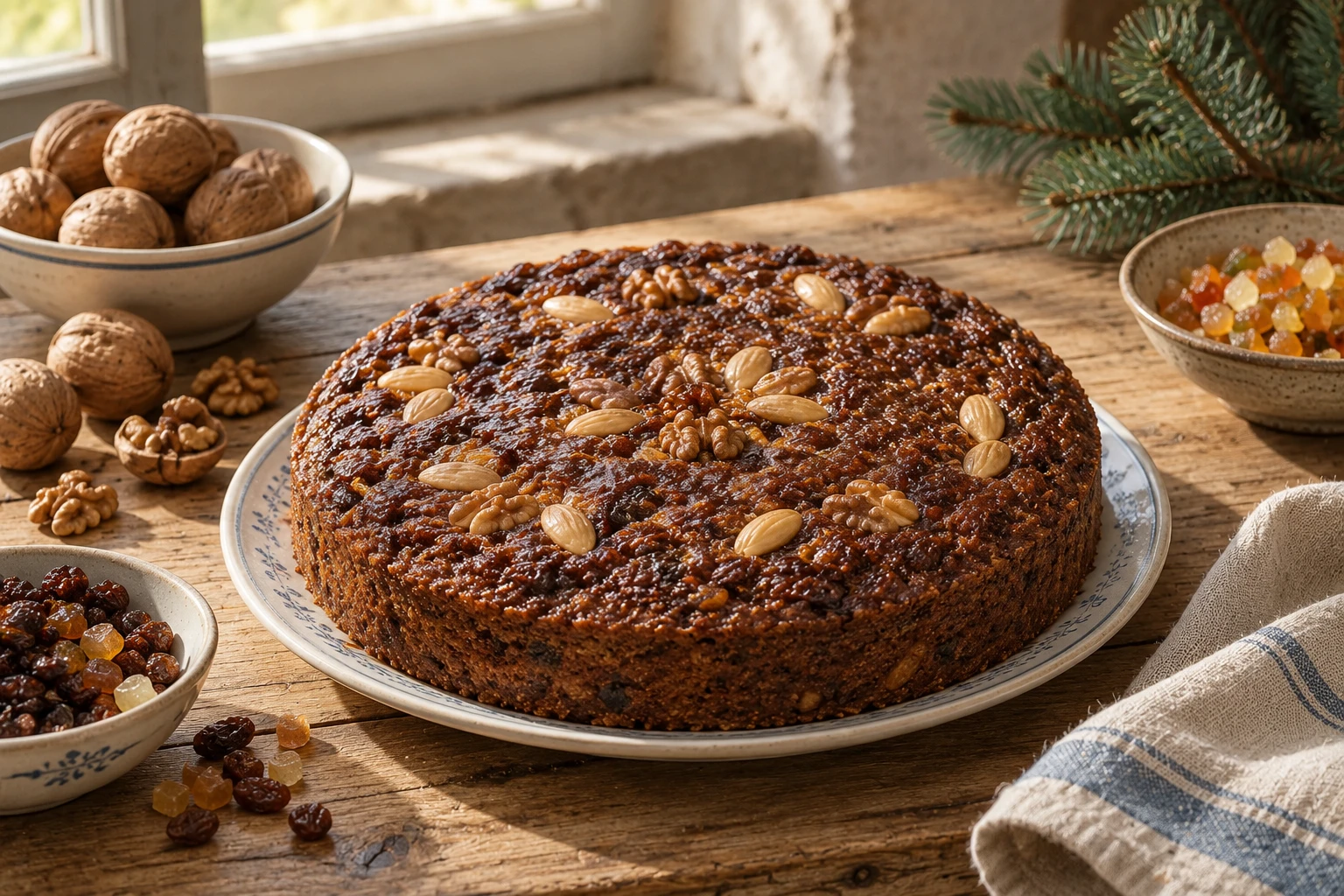
Christmas stollen
- Dough
- Rich, sweet yeast dough with fruit
- Finish
- A white sugar coating
- At the table
- Cut into slices as a Christmas sweet

Raisins, candied citrus and almonds fill this rich Christmas loaf beneath a white coat of icing sugar. In Italy, stollen is baked in Bolzano too.
In South Tyrol, a similar-sounding name can lead to a very different plate.
| Christmas stollen | Sarner Striezel | |
|---|---|---|
| Dough | Rich, sweet yeast dough with fruit | Rye-flour yeast dough |
| Finish | A white sugar coating | Fried bread, served with a filling |
| At the table | Cut into slices as a Christmas sweet | A savoury bread served with Speck |
The sugar is the first thing you see. The cut face reveals a more substantial loaf underneath.
Raisins punctuate a close, rich crumb, with small pieces of candied citrus and almonds between them. The loaf has a low, elongated shape rather than panettone’s tall dome. Its folded surface gives the white coating an uneven ridge, and the sliced edge shows the contrast between sugar, browned crust and golden dough.
Fillings vary. Some stollen have a marzipan centre, while others leave the fruit-and-almond crumb uninterrupted. The presence of marzipan is a choice to check, rather than a feature to assume from the name alone.
A rich yeast dough carries the fruit and nuts through the loaf. In one approach, raisins and almonds are soaked with rum before they join the mixture. The dough is shaped into its characteristic oblong form and baked. Butter and sugar are applied afterwards to build the distinctive white finish.
The exact balance of dough, fruit, almonds and flavourings belongs to the recipe. A marzipan-filled version needs its own shaping method. If making stollen at home, keep to one complete formula and its resting instructions rather than mixing steps from different versions.

Stollen belongs to German Christmas baking and is also made in South Tyrol. Bolzano’s Christmas pastry repertoire includes versions with raisins, candied orange and lemon, almonds and rum. That local presence does not turn it into the same bread as the Sarntal valley’s rye Striezel. When shopping, use the full name and look at the actual bread.
Trentino-Alto AdigeUse a bread knife to cut slices that retain their crumb and a little of the sugar crust. Place them on a plain plate so the fruit and pale coating remain visible. Start with small pieces when sharing a plate with other Christmas sweets. Coffee or unsweetened tea makes a simple accompaniment.
A whole loaf works well for a gift; sliced stollen makes its character clearer on the table. Keep any product information with a gift so the recipient can check its ingredients and date.
Stollen adds a white sugar-coated fruit loaf to the Christmas sweets table. In Bolzano, versions include raisins, candied citrus and almonds; some stollen elsewhere also have marzipan. Serve small slices, then compare it with Trentino’s separate zelten and Milanese panettone. Sarner Striezel is a different savoury rye bread, so keep the two names distinct.
Ask whether the loaf has marzipan, which candied fruits it contains and whether rum or another alcoholic ingredient is used. Read the ingredient list of the particular product. A white sugar coating alone does not tell you what is inside.
For a fruit-led version, look at a cut slice if one is available. For a marzipan version, expect a distinct almond-paste centre. Neither description guarantees the same proportions across different bakers.
Rewrap the loaf after serving and protect it from heat and direct light. Follow the maker’s storage directions and date. Resting and keeping advice from one recipe or packaged stollen should not be applied automatically to every version.
No. Some have a marzipan centre; others contain fruit and almonds without that filling. Check the particular loaf.
No. In the Sarntal valley, Sarner Striezel is a rye-based savoury bread that can be filled with Speck. It is a different product.
Yes. Christmas stollen is also made in Bolzano, in South Tyrol, while its wider Christmas tradition is German.
The places, tables and makers we found worth your time. One email, no noise.
Please enter a valid email address.
One letter a month. Unsubscribe at any time. We never share your address.