

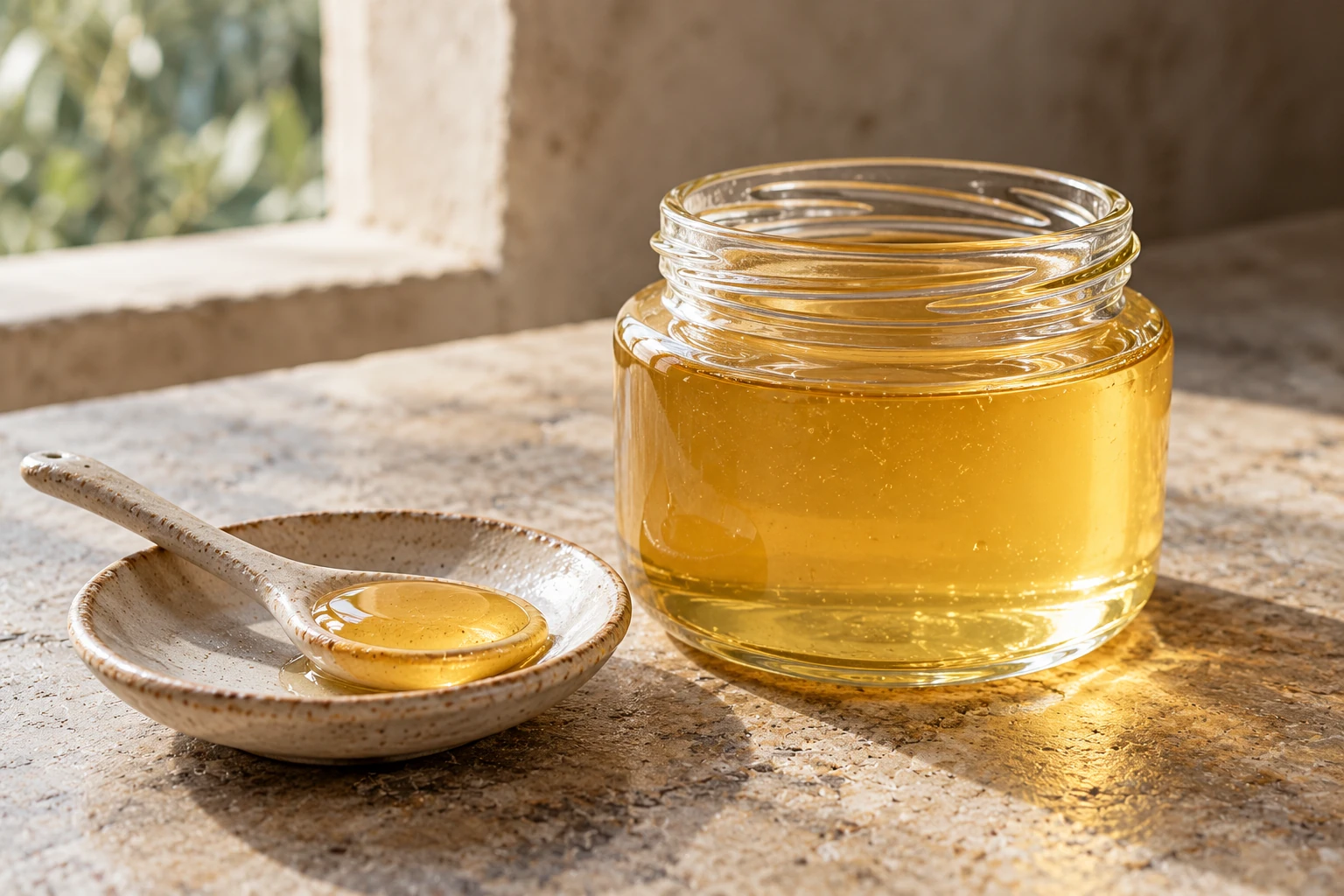
Mild honey
A mild honey brings sweetness to babà dough without a forceful bitter note. Acacia is one suitable choice, with a delicate taste and a clear, fluid appearance.
- Form
- Pure honey, without added syrup.
- Choice
- Acacia is a mild example, not a required variety.
Weigh it into the dough
Weigh the honey directly into the mixing bowl or a small tared container. Scrape the container thoroughly so the amount added matches the recipe. Mix it with the other dough ingredients until there are no sticky streaks.
Keep the honey separate from the sugar and water intended for the soaking syrup. They belong to different stages of the babà, and the honey does not replace the measured syrup ingredients.
Choose the flavor for the dough
Honey joins flour, eggs, butter and fresh yeast in babà dough. Its flavor should sit comfortably beside the rum syrup and apricot finish rather than dominate them. A mild honey gives you that restraint. Acacia honey is a useful example: it is pale, delicate and slow to crystallize. The choice here is about flavor and workable consistency, not a claim that every babà must use one floral variety or one Italian region’s honey.
Let the finish complete the sweetness
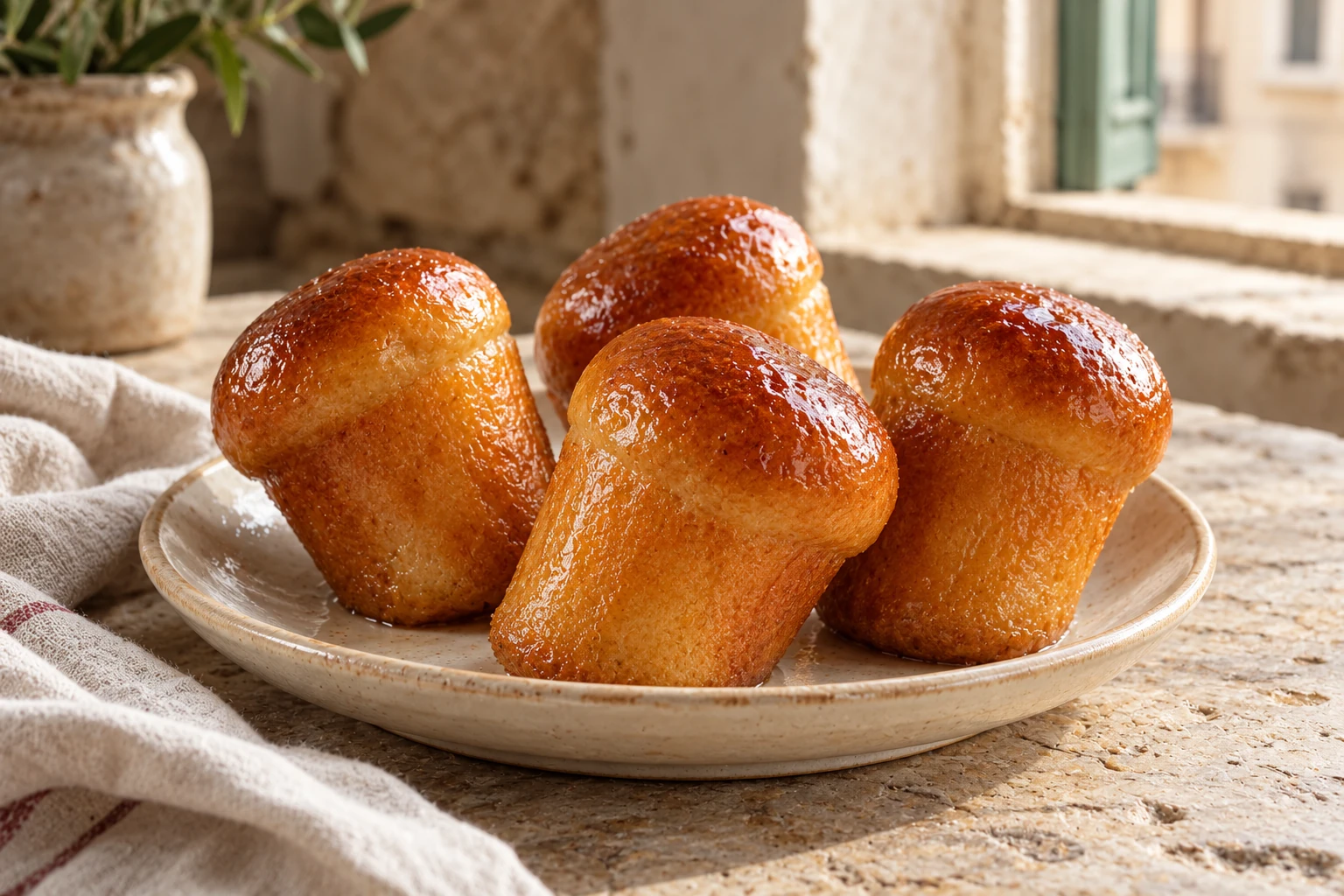
Bake the babà, soak them and finish with the apricot glaze as the recipe directs. The mild honey belongs within the dough; there is no need to pour more over the finished pastries. Let the syrup and thin glaze supply the final moistness and shine.
Read the floral variety and ingredients
Choose plain honey with a mild flavor. Acacia offers a clear starting point when you want a delicate taste. Check the ingredient list and avoid honey-flavored syrups. A strongly bitter honey such as corbezzolo changes the flavor balance and is a separate choice.
Keep the jar clean and closed
Follow the jar’s storage directions and date. Close it after measuring and use a clean, dry spoon so crumbs and water do not enter the honey. Keep the rim clean, especially when weighing small quantities for pastry.
