In this article
The best way into a tradition is curiosity, not a checklist of things every Italian supposedly does. A family meal, a neighbourhood festival and a workshop visit ask different things of a guest. Use these examples to understand what you are joining, then let the people in front of you set the tone.
The shared table: ask about this family’s way
Food traditions involve more than a recipe. The Mediterranean diet’s cultural heritage includes growing, preparing and sharing food, with knowledge passed between generations. That gives you a useful starting question: “Who taught you to make this?” If you are invited to lunch, ask about the time, dietary needs and whether to bring anything. Offer help and follow your host’s lead. A Sunday meal can be a lovely way to spend time together; it is not a compulsory national ritual or a fixed menu every household follows.[1]
Aperitivo and a walk: leave room for conversation
Aperitivo belongs before dinner, but the word does not promise an unlimited buffet. Ask what is included in the price before ordering, especially if you need enough food for a meal. You can join the conversation with a non-alcoholic drink. Afterwards, give yourself time for a walk instead of turning every evening into another booking. Greet a shopkeeper before asking a question, keep doorways clear and ask before photographing someone. These are ways to be a considerate guest, not rules for performing an “authentic” Italian identity.[2]
A sagra is a reason to meet a place
A sagra may grow from a patron saint’s celebration or focus on a harvest or local product. Read the actual programme: a food stall, a religious procession and an evening concert are different experiences, even when they share a weekend. Check the venue, food-service times and how you will get home. Ask which dish is connected to the place and who prepares it. If the meal matters to you, confirm ingredients and availability directly; a familiar dish name does not guarantee the version you know.[3]
Ferragosto and patron saints: check the date twice
Ferragosto falls on 15 August, the national holiday for the Assumption. Towns also celebrate their own patron saints on different dates. A holiday can bring a celebration and a change in everyday services at the same time. Before building a day around a museum, restaurant or bus connection, check that operator’s holiday arrangements. Avoid the two opposite assumptions that everything closes or everything stays open. Keep one flexible alternative, and separate a recurring feast day from the dates of this year’s accompanying events.[2]
Carnevale: look beyond the souvenir mask
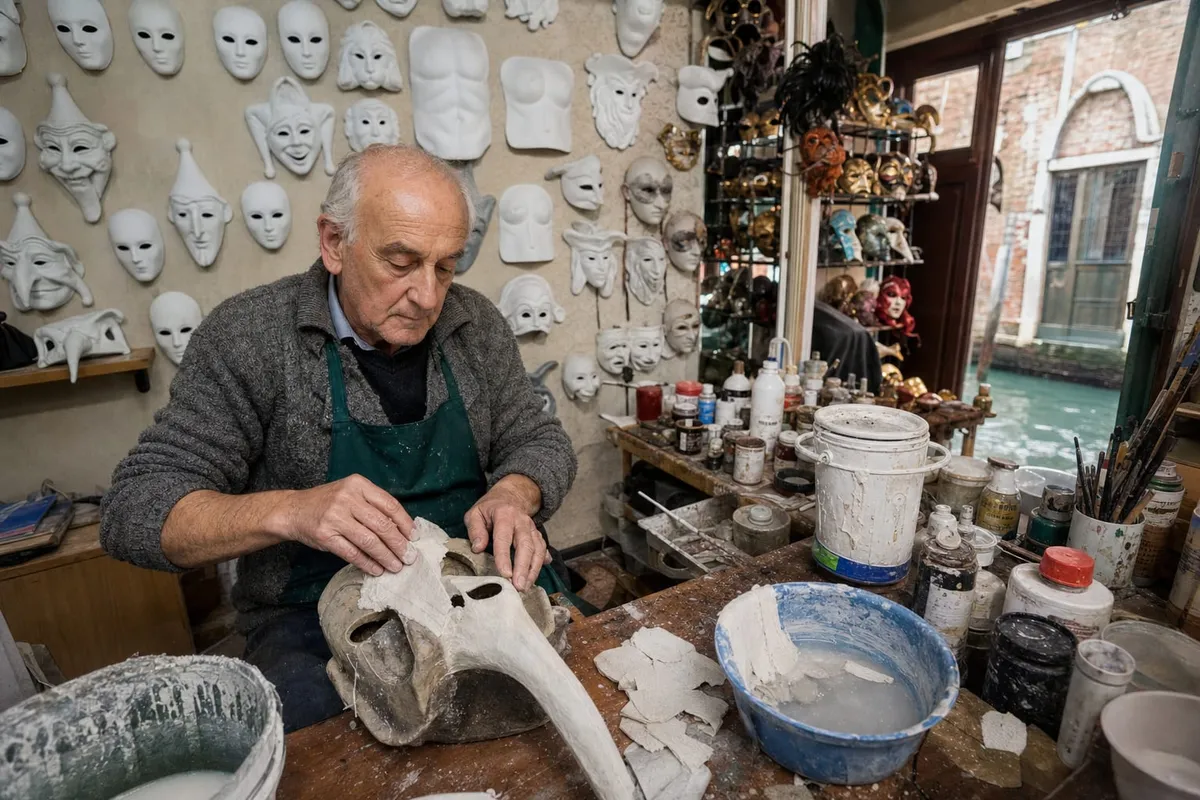
Venice’s mask traditions have their own vocabulary: the bauta is associated with the tabarro, a cloak, rather than simply being any decorated face covering. Learning one name gives you something specific to notice or ask a maker about. For a visit, choose the event first and check its current date, location and ticket rules. Being in the city does not automatically give access to a private ball. Ask permission before photographing a costumed person, and leave space for residents and people moving through the crowd.[4]
A living tradition has people behind it
In Cremona, violin making is learned through specialist teaching and workshop apprenticeship, with musicians part of the conversation. That is a reminder that heritage is also skilled work happening now. If you want to visit a workshop, ask whether visits are offered and arrange one; an open door is not an invitation to interrupt. A good question concerns a material, a tool or a decision the maker has just made. Take that curiosity into your next meal or festival. You do not need to collect every tradition to make one encounter memorable.[5]
Explore our Culture guide for places and experiences, or start with Italian food and cooking.