

The quieter half of Cannaregio begins a couple of canals north of the Strada Nova, where the crowds heading for the Rialto thin out and the fondamente run long and straight beside the water. The Fondamenta degli Ormesini is one of them, lined with bacari, small groceries and ground-floor workshops. Its name is a clue to what this part of the city once did. Ormesini were light silks named after Hormuz, the great trading port at the mouth of the Persian Gulf, and they were woven here. Walk these streets in the afternoon and now and then a workshop window shows you someone in a leather apron pressing strips of torn brown paper into a plaster mould. Open the door and the smell is wheat paste, linseed oil and plaster dust.
Mask making is one of the oldest organised crafts in Venice. The mascareri, as the city called its mask makers, were recognised with their own rules in a statute dated 10 April 1436. They worked for centuries within the painters’ guild and made the faces the city wore through a Carnival that could last for months. The tradition faded with the fall of the Republic in 1797, and it was the revival of the modern Carnevale at the end of the 1970s that brought the workshops back, several of them started by artists and people from the theatre.
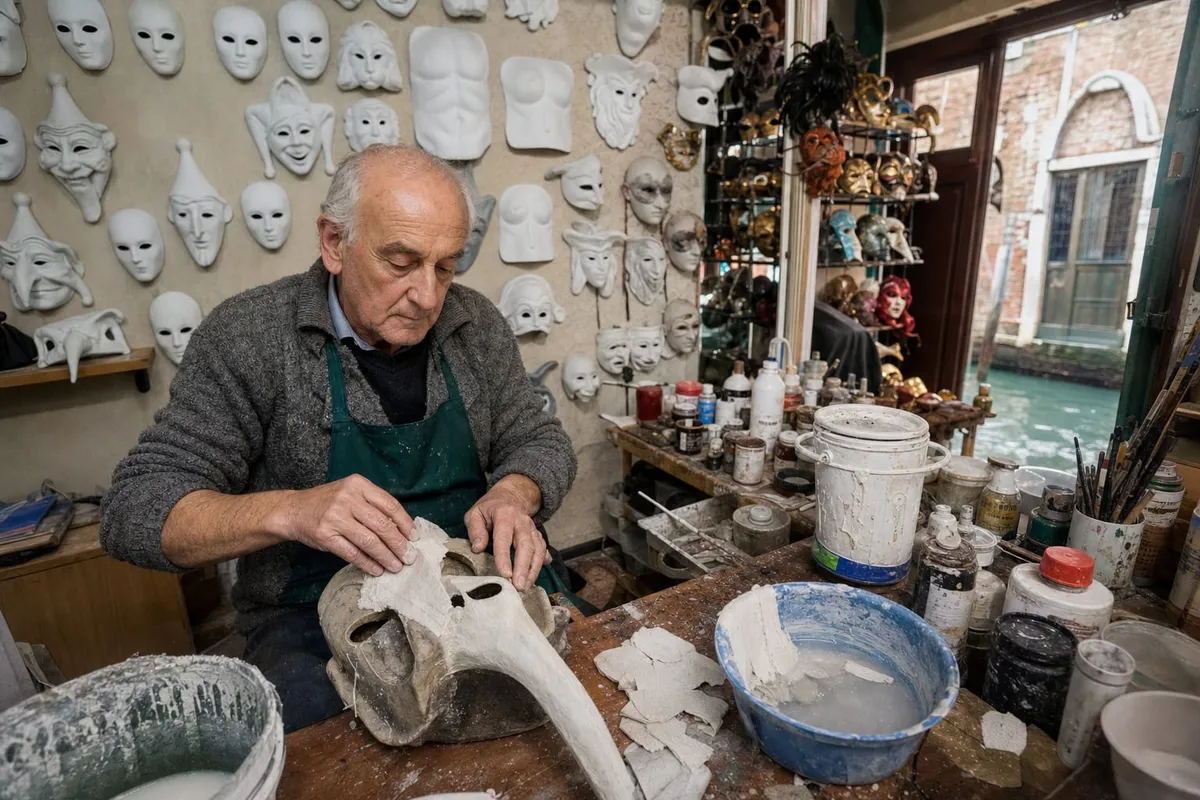
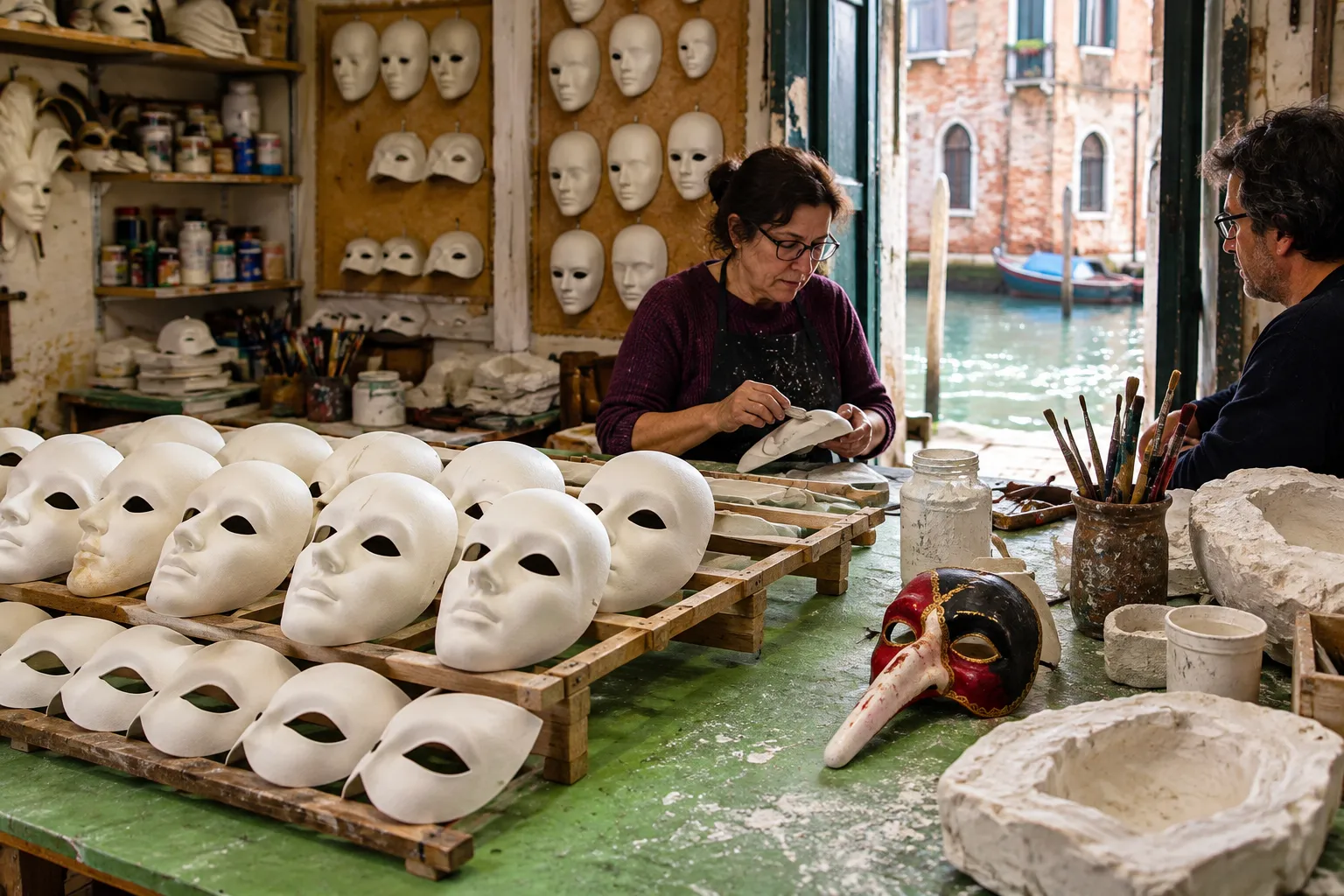
The technique is centuries older than any workshop now open. The maker models a face in clay, takes a negative of it in plaster, and sets the mould face-up on the bench. Strips of paper are torn, never cut, because a torn edge melts into the next layer while a cut one leaves a ridge. They are dipped in a paste of flour and water and pressed into the mould, each layer crossing the one below. A few layers make a light face mask; a heavy character mask that has to survive a stage takes more. Left to dry, the stack comes out of the mould as a stiff, light shell. Then it is trimmed, primed with gesso, sanded, painted and, for a few pieces, gilded.
In Cannaregio nobody watches you work, and for a mask maker that is worth more than foot traffic.
The commedia dell’arte masks are the hardest. Take the Capitano, the swaggering soldier of the old improvised comedy: long pointed nose, painted moustaches, a face built to be read from the back of a theatre. The nose projects so far that paper alone struggles to hold it, so a maker may build it over a light card core fixed into the wet shell and then cover the join with further layers. A heavy nose tips the mask forward on an actor’s face, and the actor’s sightline with it. A mask made for the stage is made for one face: the eye holes are placed for the wearer’s eyes, and careful makers still measure with calipers.
The workshops that last tend to be in the sestieri where the rents are lower and the street is still Venetian. Near San Marco a ground-floor shop costs a great deal, and the way to pay for it is volume: the printed plastic masks and cheap imports that fill the stalls between the Rialto and the Piazza. A maker who works in paper, with a plaster mould on site, sells a modest number of pieces a year to people who know what they are buying, plus commissions from theatres, costume makers and collectors. In Cannaregio nobody watches you work, and for a mask maker that is worth more than foot traffic.
Venice has a real problem with shops that pretend. Masks made elsewhere in plastic are sold in premises that call themselves ateliers, with no bench in sight. The test is simple: ask to see the moulds. A genuine bottega will have plaster moulds, clay models and work in progress on the bench, and the maker will happily show you where the paper goes. Look inside the mask, too. Handmade papier-mâché is slightly irregular on the inside, the torn edges faintly visible, and it weighs almost nothing.
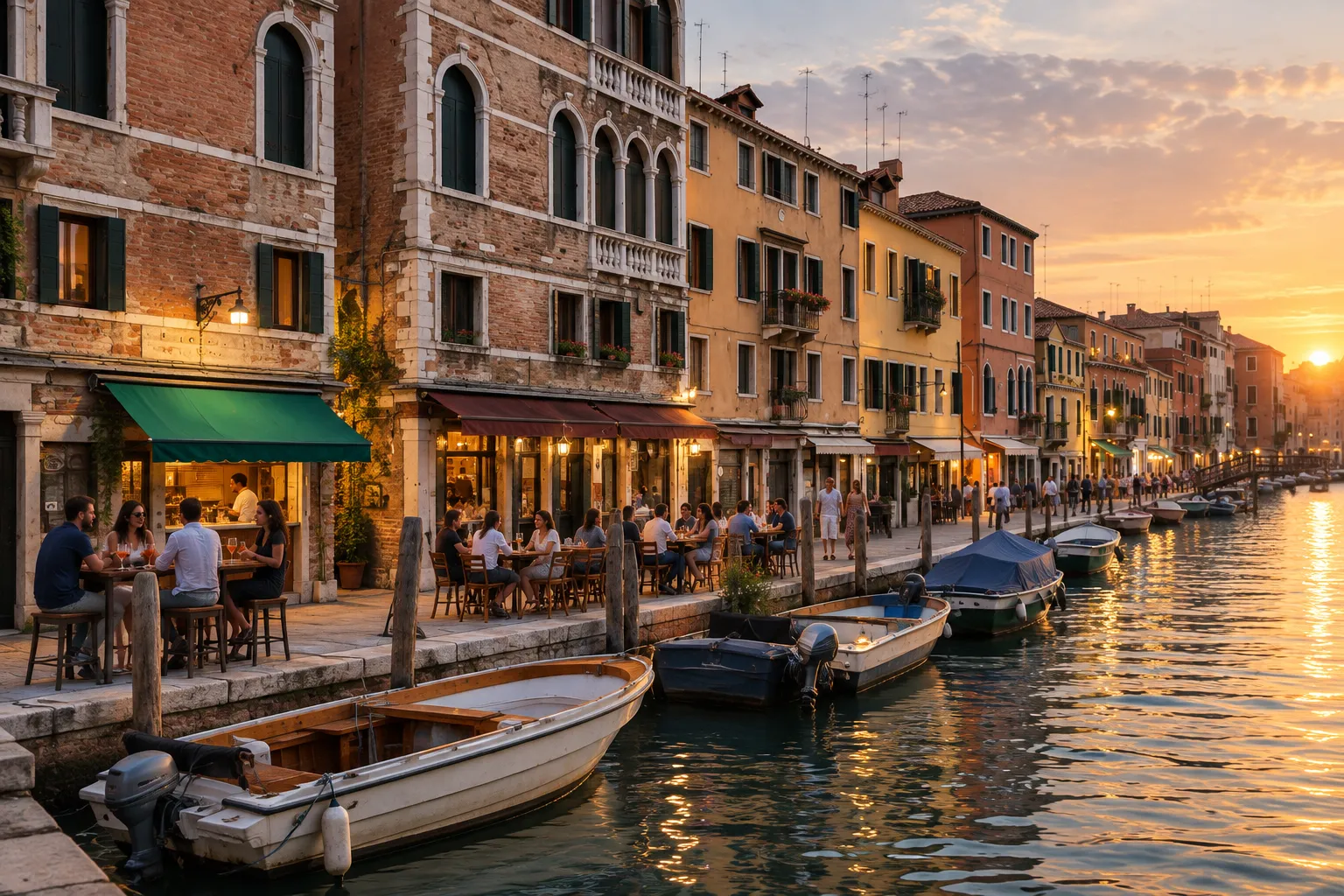
The silk weavers are long gone from the Ormesini, and the fondamenta has changed again in recent years, with bars and wine counters filling up on summer evenings. Cannaregio does what Venice has always done: it changes slowly enough that the people who live in it can change at the same rate.
At the end of an afternoon, a Capitano in progress sits on a bench beside two or three other faces, drying under a cotton cloth. In a few weeks it will be painted, packed in a box and sent to whichever stage ordered it. Tomorrow morning there will be a Pantalone to start.
Sources
- Ormesini: calle, ponte e fondamenta · curiositaveneziane.it
- Fondamenta degli Ormesini · touringclub.it
- Venetian Carnival Masks: A Brief History · lauramorelli.com
- History of Venetian Masks · imagesofvenice.com
- Carnival of Venice · Wikipedia
Comments
No comments yet. Start the conversation.