

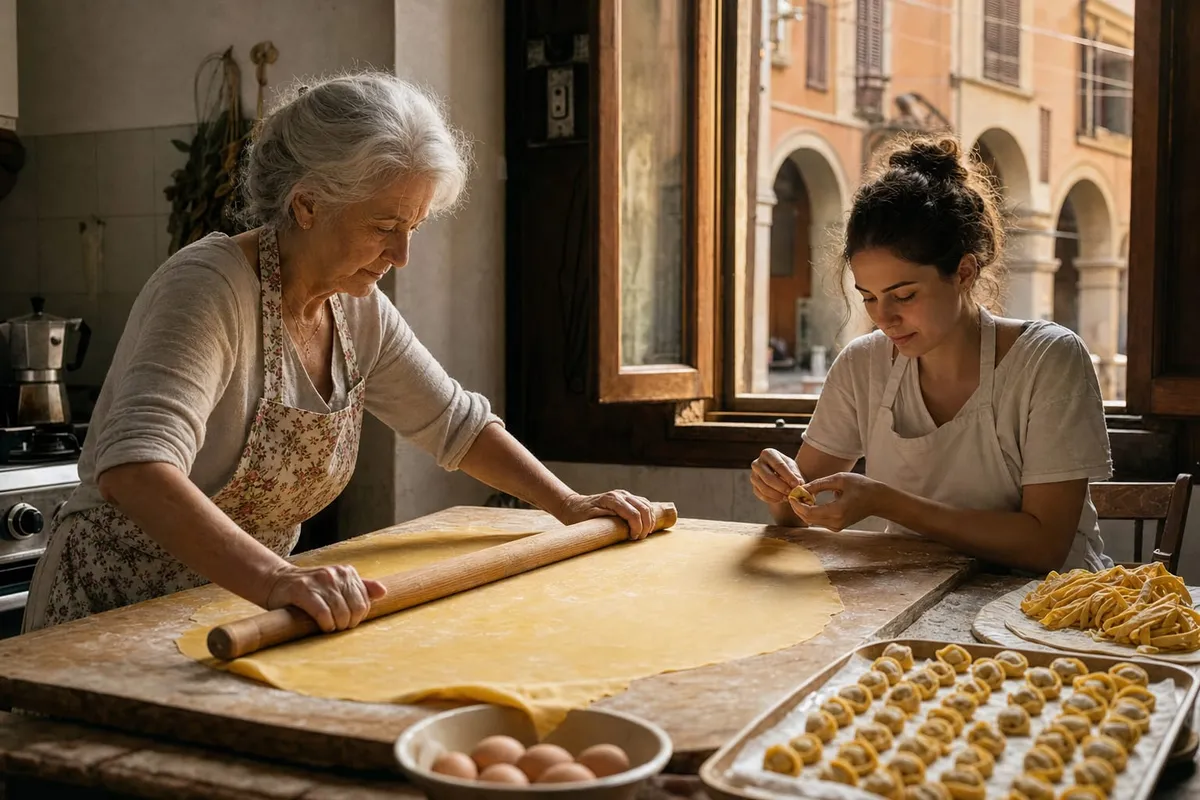
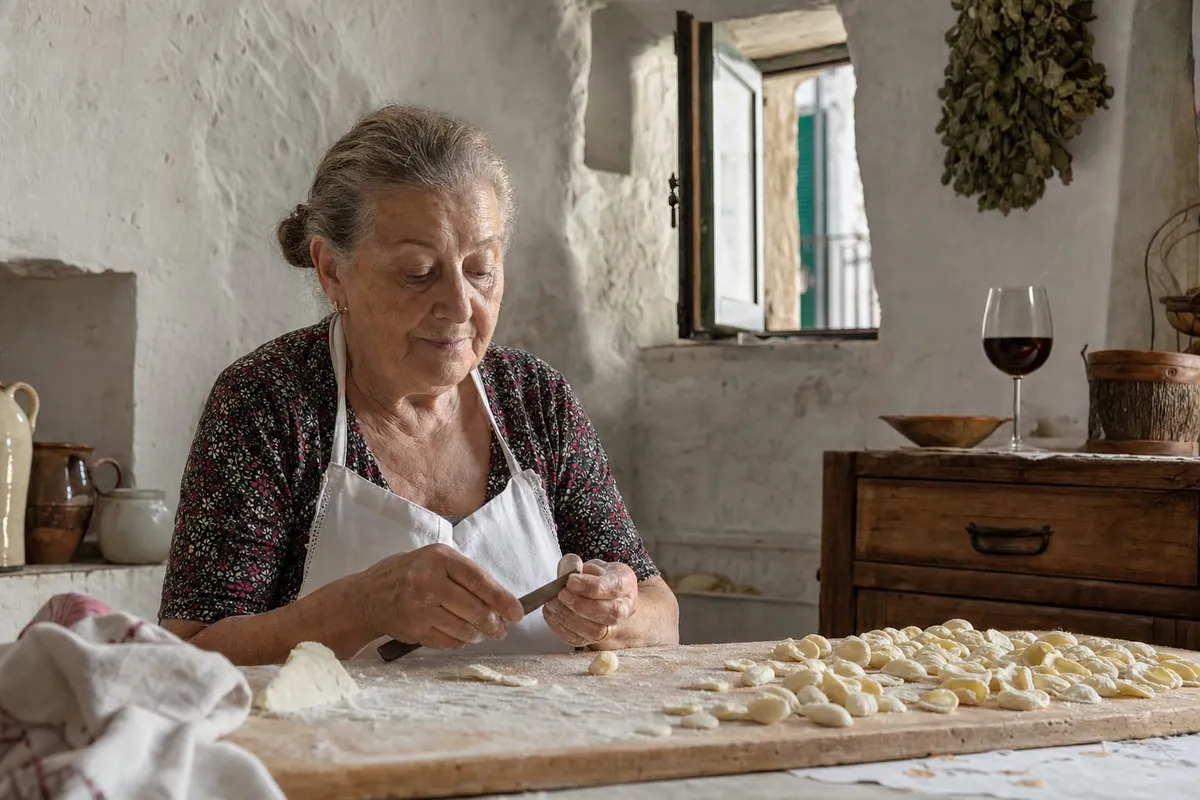
At six in the morning, in the back kitchens of Bologna’s trattorie and the workrooms behind its pasta shops, the day begins with flour, eggs and a rolling pin. The sfoglina (the woman who makes the sfoglia, the sheet of egg pasta) tips a mound of flour onto a wooden board, makes a well, cracks in the eggs and brings them together, first with a fork and then with her hands. After the dough has rested she leans into the mattarello, a long wooden rolling pin close to a metre in length, and turns a pale yellow disc under her forearms. The disc thins, widens, loses its edges. Soon it will be tagliatelle, then tortellini, then whatever the lunch service asks of it. Many of the women who do this best have been doing it since they were children.
Watch for long enough and the hands seem to warm the board itself. Sfogline will tell you that a marble pastry slab is wrong for egg pasta: the cold stiffens the dough, which needs the slight grip and give of wood under a warm palm. An old board has a shallow dip worn into its middle by decades of rolling. Scales are optional. The rule everyone in Bologna knows is one egg to roughly a hundred grams of soft wheat flour, adjusted by feel for the size of the eggs and the humidity of the morning. What cannot be written down is everything else.
That is the part an apprentice learns at the elbow of someone older: how a sfoglia sounds when it is thin enough (a dry whisper as it lifts), how a tortellino is closed so that the filling never escapes in the pot, how to read a dough by touch and smell before pressing it. Rush the sheet and you lose it. The pasta tells you when it is ready; the hand only listens. The Bolognese words for the sheet, sfoglia, and for the woman who makes it, sfoglina, share a root with sfogliare: to leaf through, to turn a page.
The pasta tells you when it is ready; the hand only listens.
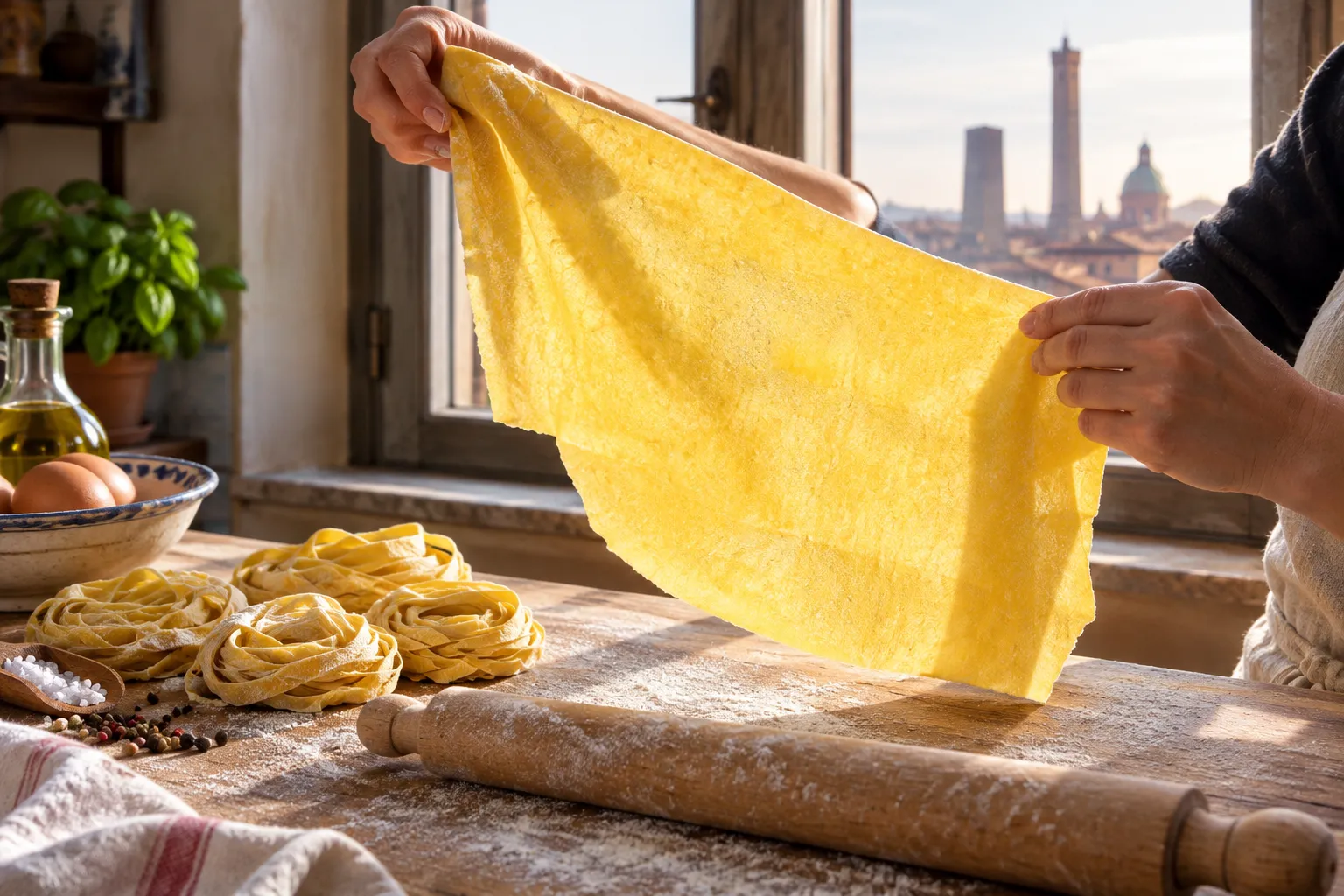
The thickness is the quiet heart of it. A good sfoglia for tagliatelle is so thin that, held up to the window, it lets the light through; the old test is that you should be able to see the grain of the board beneath it. The width is fixed by something close to law. On 16 April 1972 the Accademia Italiana della Cucina deposited a golden tagliatella at Bologna’s Chamber of Commerce: cooked, a proper tagliatella is 8 millimetres wide, which works out to one 12,270th of the height of the Asinelli tower. The filling of the tortellino was deposited there too, on 7 December 1974: pork loin, prosciutto crudo, mortadella, Parmigiano Reggiano, egg and nutmeg, closed in a small square of sfoglia folded around a fingertip. Each shape has the sauce it belongs with. Tagliatelle with ragù (never with anything called spaghetti bolognese abroad). Tortellini in brodo di cappone, capon broth. Tortelloni with butter and sage. Garganelli, the ridged quills rolled on a comb, with a light ragù or with cream and prosciutto. Any sfoglina can recite this grammar the way someone else might recite a rosary.
It is easy to sentimentalise this work. The sfogline themselves are not especially interested in being sentimentalised. What they talk about, if you sit long enough, is arithmetic: fewer women at the board than a generation ago, fewer kitchens willing to pay for the hours, and a craft that is very hard to learn from a video.
The reasons are not mysterious. Restaurants added pasta machines through the second half of the twentieth century, first hand-cranked rollers, later electric sheeters and extruders that turn out kilos of pasta while a sfoglina is still rolling her first sheet. Hand-rolled pasta is slow: what a skilled sfoglina makes in an hour, a machine makes in minutes. Wages did not keep up with the city. The daughters of sfogline went to university; the granddaughters went to Milan. Meanwhile the centro storico filled with visitors looking for a plate they had read about, and many kitchens, pragmatically, served them something close enough. Hand-rolled pasta became, without anyone quite deciding, a boutique.
The pay is part of it, and there is no point pretending otherwise. Rolling pasta by hand is skilled, physical, early-morning work, and in most kitchens it is paid like kitchen work rather than like a craft. The difference between a sfoglina and a machine operator is mostly dignity, and dignity does not pay rent. That gap, more than any lack of interest, is the real threat to the trade.
And then, as sometimes happens in Italy, the decline made the thing visible. Over the past couple of decades, schools have opened in Bologna where sfogline themselves teach: some aimed at visitors who want a morning of tortellini, others at people who want something closer to a professional training. Pasta shops in the centre have put their sfogline in the front window, rolling in full view of the street. Classes draw students from all over the world. And among the people signing up for the longer courses are young Bolognesi who have decided, specifically, that this is what they want to do.
Nobody takes up the mattarello because the craft is disappearing. They take it up because it is still here.
Picture the kind of young Bolognese who ends up at the board. A grandmother who rolled tortellini on Sundays, quite possibly on a marble pastry slab (the wrong surface, an older sfoglina will point out with a small, fond smile). A degree in something else entirely, perhaps in heritage, the kind of intangible culture that UNESCO set out to protect with its 2003 convention. A moment, somewhere in their twenties, of realising that the thing their city is famous for is being held together by a limited number of pairs of hands, and that it might be better to practise it than to write about it. Nobody takes up the mattarello because the craft is disappearing. They take it up because it is still here.
The apprenticeship is unglamorous. The day starts before six. The first weeks are flour, eggs and watching. Tortellini come later, because the shape takes more wrist than shoulder, and until the wrist is trained they come out lopsided and split open in the pot. Tagliatelle come first, because the cut is forgiving. Apprentices practise on their days off, on second-hand boards carried up the stairs of flats in Bolognina or San Donato, and their forearms ache in places they did not know had places.
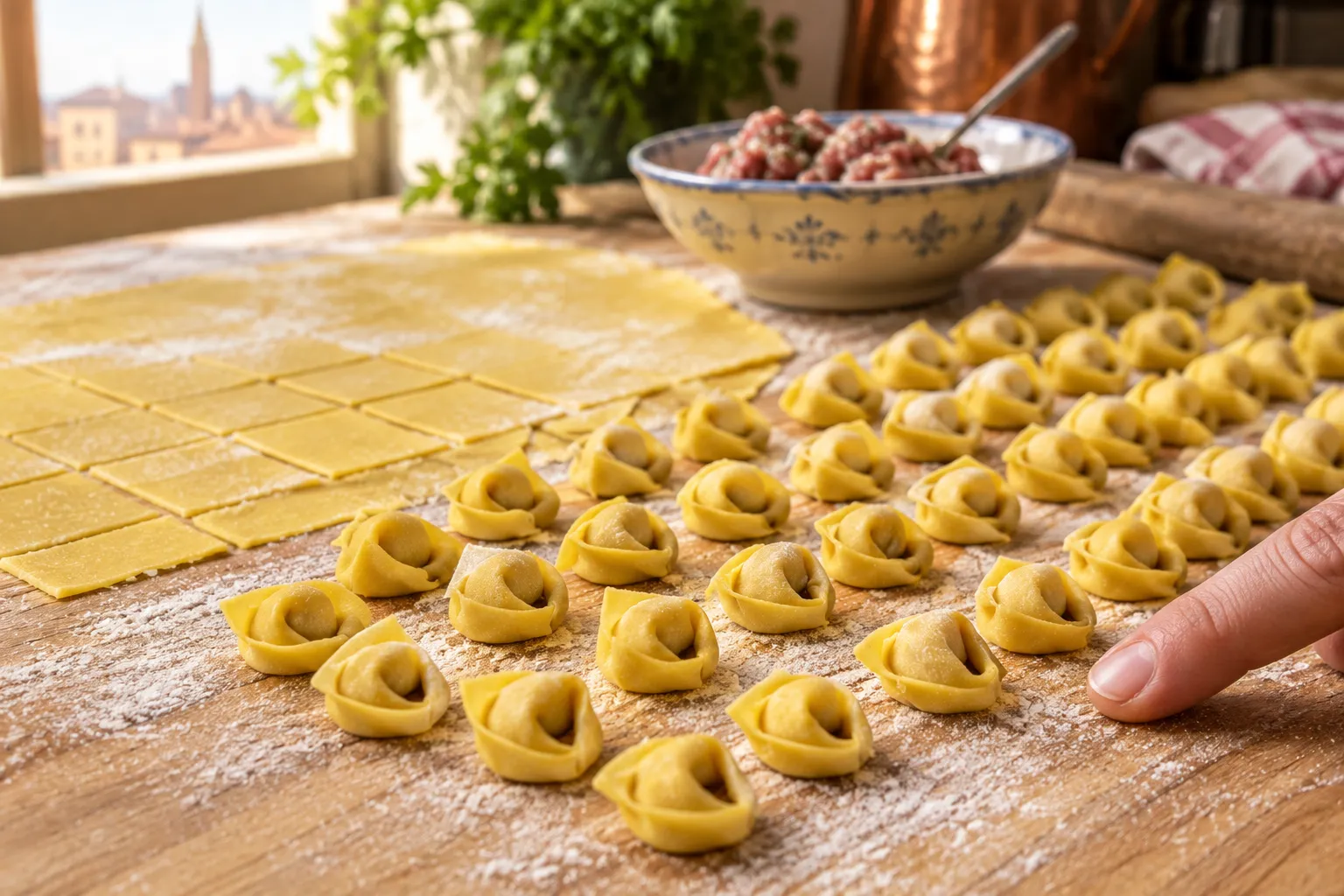
What catches in the throat, watching them at the board, is how little of the work is visible. Someone who orders tortellini in brodo on a Thursday lunchtime sees a small bowl of broth and a dozen pieces of pasta the size of a thumbnail. They do not see that the broth was started the day before from a capon bought at the Mercato delle Erbe, that the filling was mixed and left to rest overnight, that the sheet was rolled at six, and that someone checked each tortellino before it went into the pot.
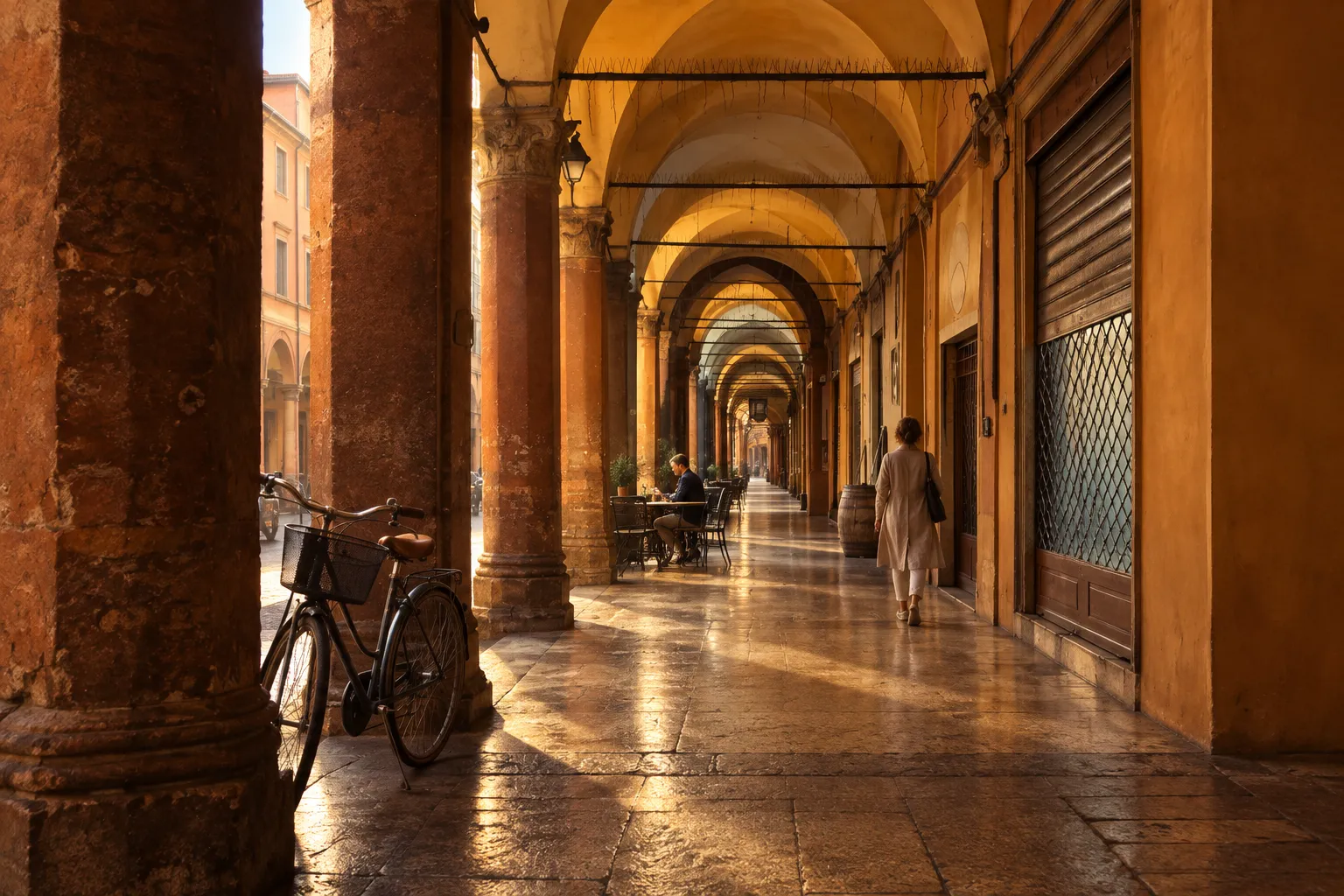
Bologna, unlike many Italian cities, has not turned its craft into a museum. The sfogline still work in kitchens, not behind glass, and the easiest way to see them is simply to walk the centre in the morning. In the lanes of the Quadrilatero, around the Due Torri and along Via Castiglione, pasta shops roll in their front windows, and in trattorie from the centro storico to the Bolognina the pasta on the lunch menu was rolled a few hours earlier. Most sfogline will not mind if you watch, provided you do not loom. They will mind if you ask them to pose.
The other thing they mind is the word tradition, used loosely. The sfogline are not sentimentalists. Flours, eggs, boards and pins have all changed within living memory. The ragù that is now inseparable from tagliatelle in the Bolognese imagination was only deposited as an official recipe by the Accademia Italiana della Cucina on 17 October 1982, and the Accademia updated it in 2023, because home cooking had moved on. When a sfoglina says she does things as they have always been done, what she means, more precisely, is that she does them as she was taught by the woman who taught her, who learned from someone else, in a chain of hands that runs back through the twentieth century to Bolognese kitchens between the wars. The chain is short enough to count and long enough to matter.
At twenty to twelve on a weekday in late May, in a kitchen off Strada Maggiore or anywhere else in the old city, the sfoglina pauses. She wipes her hands on the corner of her apron, looks at the sheet, and nods once. The sfoglia is rolled loosely onto itself and cut across with a long knife into ribbons, which are lifted, shaken out and set down in nests the size of a child’s palm. She walks to the stove to check her broth. She does not think of any of this as heroic. She thinks of it as lunch.
What the sfogline of Bologna are doing, it turns out, is neither preservation nor revival. It is just the thing itself, continuing, on enough boards to be a living craft rather than a rehearsed one. Today’s apprentices will, in a decade, be rolling pasta in kitchens that may not have a name yet. The dough will be soft wheat flour and eggs. The sheet, when it is ready, will let the light through. A different visitor, on a different Thursday, will not see what it took. That, any sfoglina would tell you, is the point.
Sources
- 1972: ricetta e misura della tagliatella bolognese · bibliotecasalaborsa.it
- La tagliatella d’oro di Palazzo della Mercanzia · bolognablog.info
- Depositata la rinnovata ricetta del vero ragù alla bolognese · bo.camcom.gov.it
- Italian Academy of Cuisine registers updated recipe for true ragù alla bolognese · accademiaitalianadellacucina.it
- Accadde oggi nel 1974, la ricetta del ripieno dei tortellini depositata alla Camera di Commercio · bolognatoday.it
- La ricetta depositata · confraternitadeltortellino.it


Comments
No comments yet. Start the conversation.