

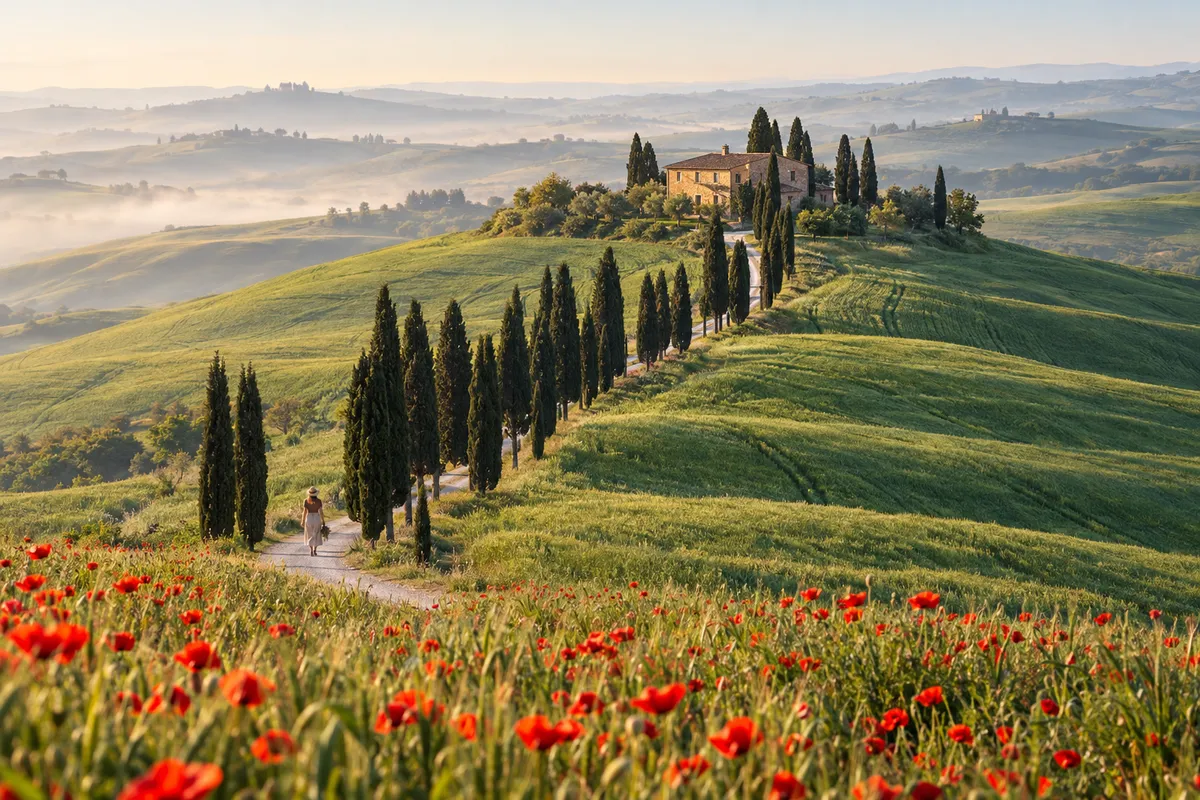
The Val d’Orcia, south of Siena, is one of the few landscapes in Italy that fame has not spoiled. UNESCO listed it in 2004 as a cultural landscape, the countryside that Renaissance painters idealised and that generations of farmers have kept, and it still looks the part: bare clay hills, lone farmhouses on the ridges, lines of cypress along white gravel roads. Part of the reason is that the land is steep and dry and does not bend easily to the wishes of visitors. What follows is a three-day itinerary that treats the valley the way the people who live there do, which is to say slowly, and with a long lunch.
Go in late May or the first half of June. The grass is long and green, the poppies are out, and the summer crowds have not yet arrived in force. August is a different valley: hotter, busier, the light harsher, and many family-run places short-handed while their own families take a holiday. If late spring is impossible, the second-best window is the second half of September, after the heat and before the grape harvest takes over. If July or August is the only option, book dinner early and do your walking in the mornings.
Base yourself for all three nights in one place rather than moving on, ideally an agriturismo on the ridges between Pienza, San Quirico d’Orcia and Monticchiello, a short drive or a long walk from each. The good ones are family-run, with a handful of rooms, a long shared table for dinner a few nights a week, and a vegetable garden that supplies a good part of what the kitchen serves. Book direct where you can: small places generally prefer it, and you will get a straight answer about the gravel road up.
The valley does not reward a schedule. It rewards whoever is willing to be late for the next thing.
Pienza
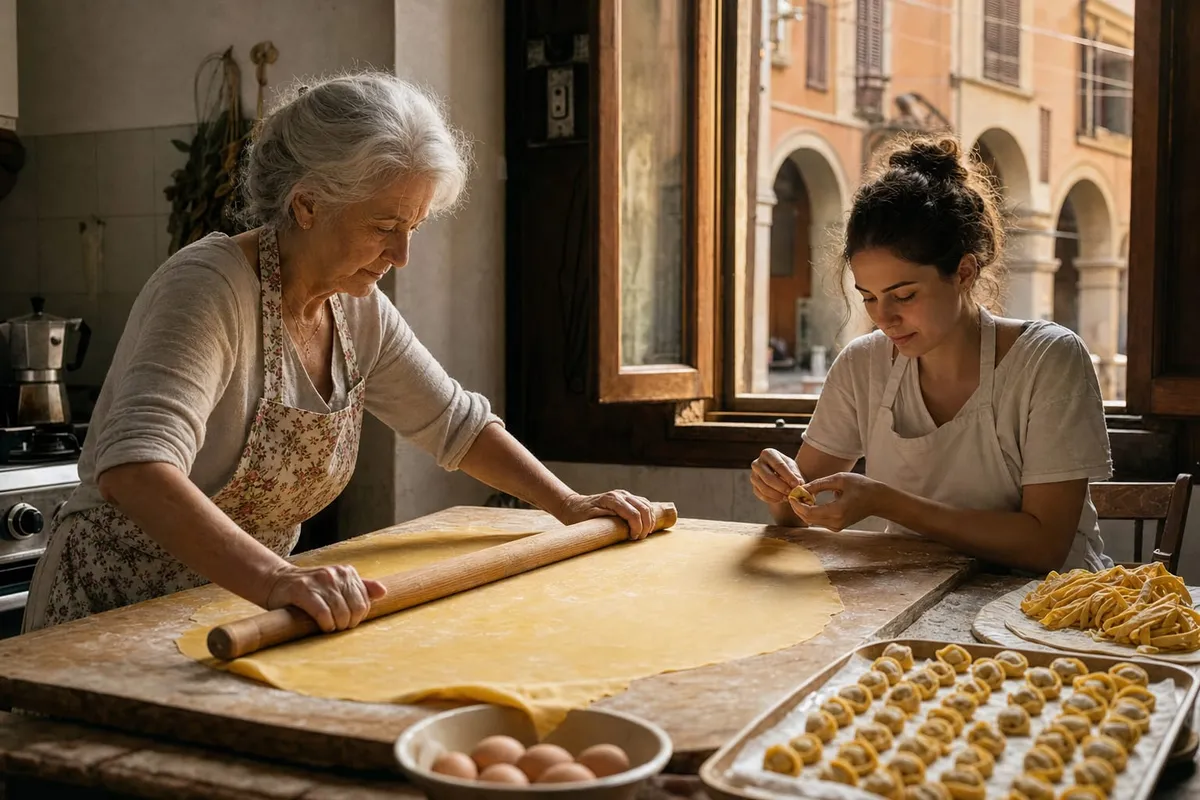
Day one: Pienza. Drop the bags and walk the last kilometre into town on the white road rather than drive. Pienza is the smallest of the three towns and the most deliberate. Pope Pius II, born Enea Silvio Piccolomini in the village that stood here, had it rebuilt between 1459 and 1462 by the architect Bernardo Rossellino as an ideal Renaissance town, and the plan is still legible: cathedral, papal palace and town hall set around one small, perfectly judged square, Piazza Pio II. Go before noon to see the cathedral’s facade in raking light, then walk the lanes along the southern walls for the view down over the valley. Lunch is pici, the thick hand-rolled spaghetti of the Sienese countryside, cacio e pepe or all’aglione, with a garlicky tomato sauce. Afterwards find a bakery for a loaf of pane toscano, made without salt on purpose, to take back. The afternoon light on the stone is the reason painters keep coming.
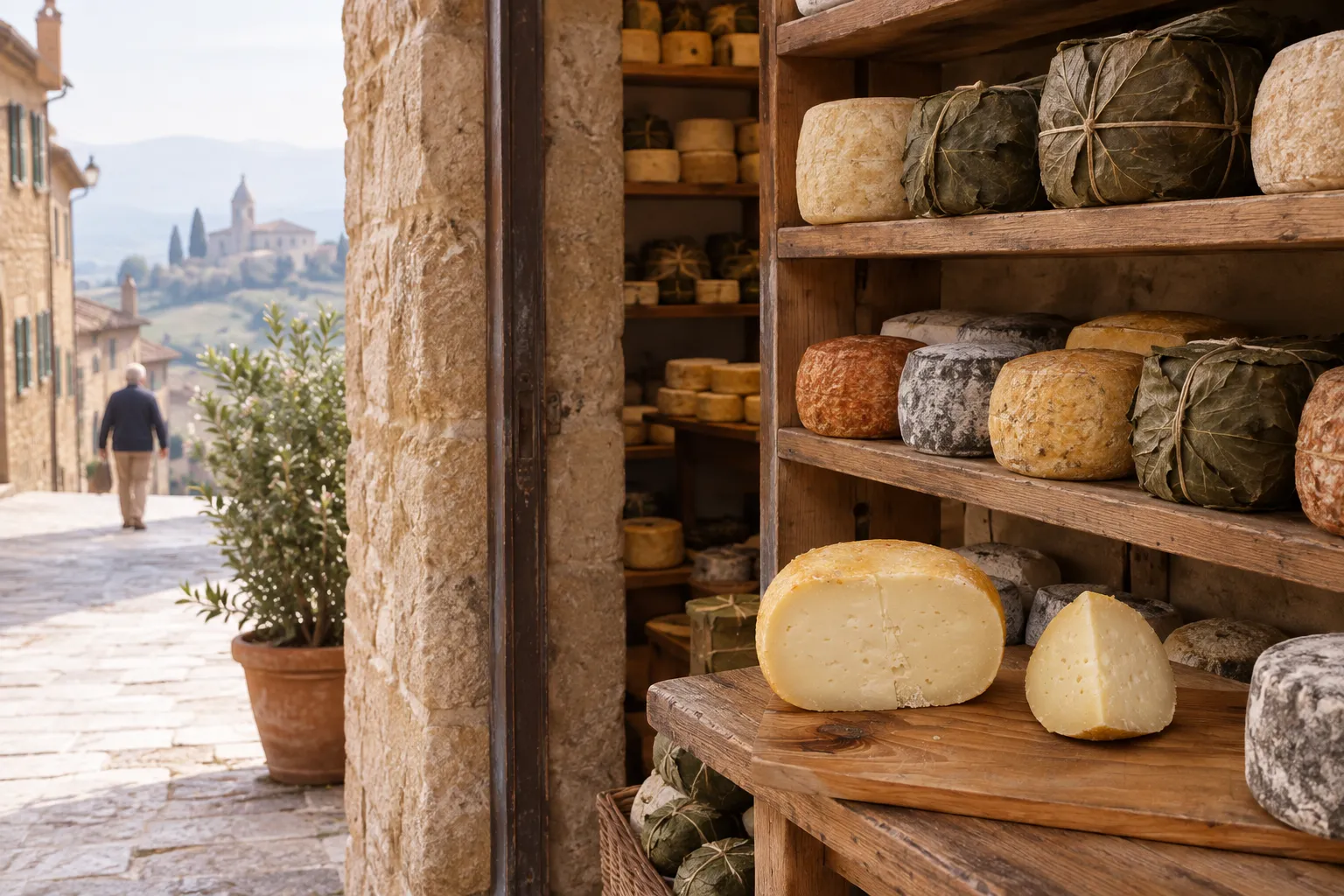
In Pienza, the other errand is cheese. The town has been known for its pecorino for centuries, and its shops sell it at every age: fresco, soft and milky after a few weeks; semi-stagionato, firmer and nuttier; stagionato, aged for months, sometimes under ash, walnut leaves or in barrels. The protected name is Pecorino Toscano DOP, recognised in 1996 and covering the whole region; Pienza’s own cheese sits inside that zone rather than having a DOP of its own. Several producers on the roads out of town sell from the farm and will let you taste the ages side by side. Buy a semi-stagionato. It travels. Dinner: back at the agriturismo, with whatever came out of the garden and a bottle of Rosso di Montalcino, which is tomorrow’s subject.
Montalcino
Day two: Montalcino. It is under an hour’s drive from Pienza by way of San Quirico, but it is the wrong road to take quickly. Leave mid-morning and go by the Abbazia di Sant’Antimo, below Castelnuovo dell’Abate, a twelfth-century Romanesque abbey church in pale stone set alone among olive trees and cypress. Ask locally whether a service is being sung while you are there: chant in that nave is one of the quiet great experiences of Tuscany. Give it forty minutes. Then drive up into Montalcino for a late lunch of pinci (the local spelling of pici) with wild boar ragù and a glass of the local Rosso.
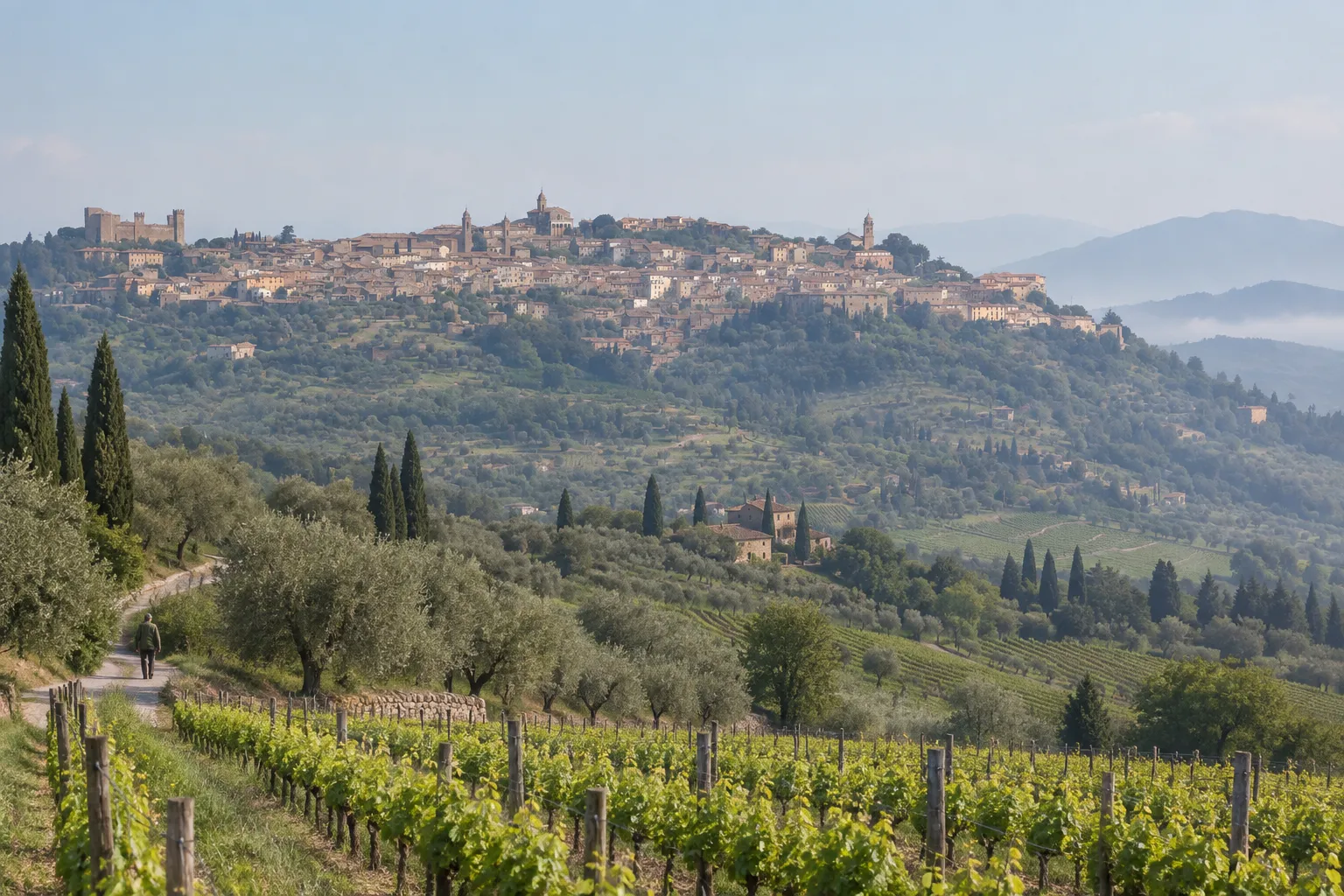
Montalcino is the wine town. Brunello di Montalcino, made entirely from Sangiovese, was developed here in the late nineteenth century by the Biondi Santi family, and in 1980 it became the first Italian wine to be granted DOCG status. A serious visitor should book a morning tasting rather than an afternoon one, and should call ahead: many of the best estates are family-run, open by appointment only, and pour a few wines in their own cellars rather than at a tasting bar. A good tasting will set a Rosso di Montalcino, the younger wine, beside a Brunello and, with luck, an older Riserva. Buy what you like on the spot or not at all. The afternoon is for the agriturismo, and for a nap if you can manage one. You earned it.
Montepulciano
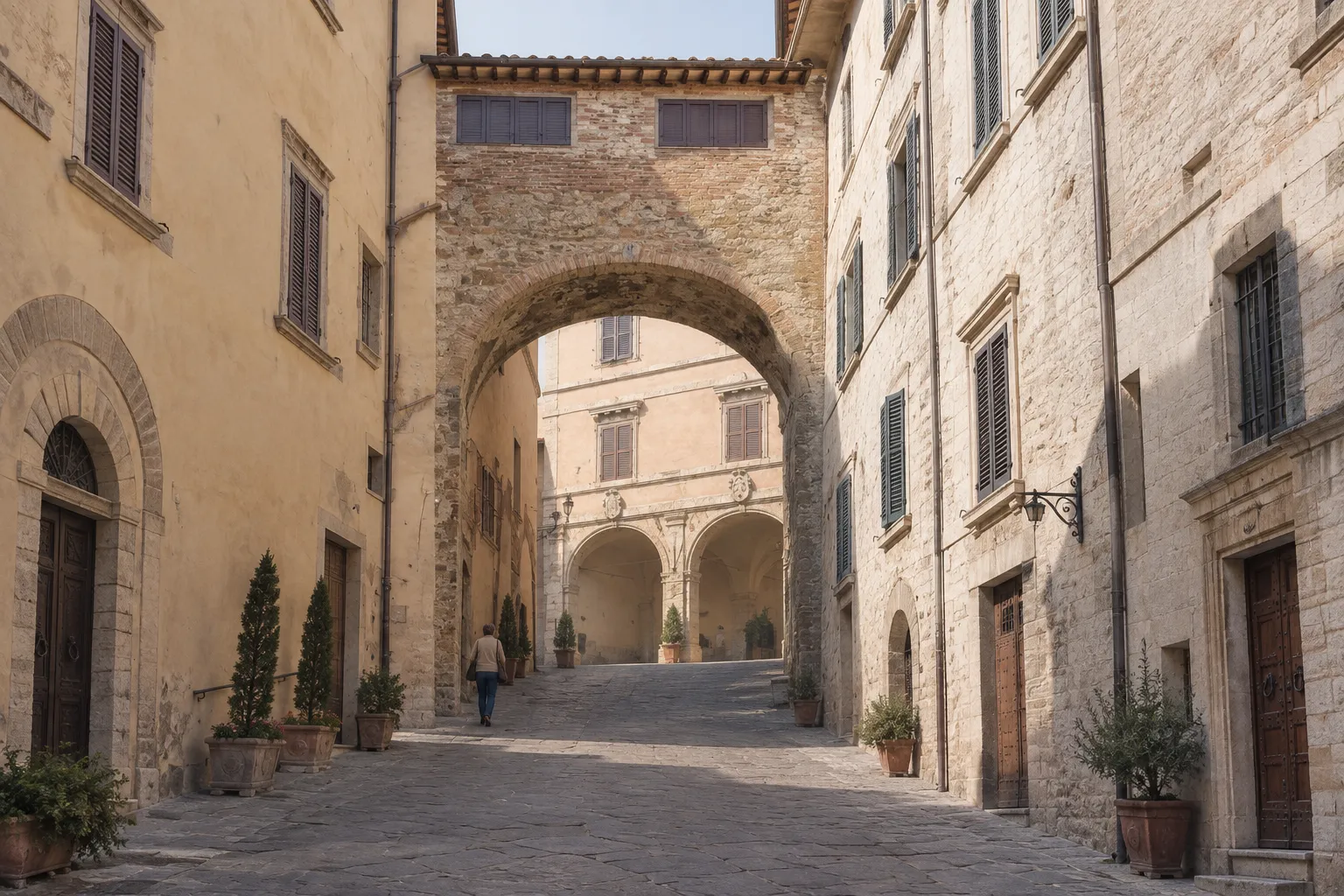
Day three: Montepulciano. Where Pienza is humanist-planned and Montalcino a fortified wine town, Montepulciano is a long Renaissance street climbing a ridge. It is barely twenty minutes from Pienza. Park below the walls near Porta al Prato and walk the Corso up to the Piazza Grande, with its cathedral and town hall. Allow a couple of hours: there are more cellars on the way than anyone expects, many of them cut deep into the rock beneath the palazzi, and several will pour a glass of Vino Nobile di Montepulciano, the town’s DOCG red, for little or nothing. Lunch near the top, outside if the weather holds, and if you order a bistecca alla fiorentina, expect it rare. In this part of Tuscany that is not up for discussion. The valley does not reward a schedule. It rewards whoever is willing to be late for the next thing.
What to skip
What to skip, in all candour. The famous cluster of cypresses beside the Via Cassia near San Quirico d’Orcia is beautiful, and between mid-morning and late afternoon in high season it can be ringed with tripods. See it at first light or not at all. Skip the themed medieval banquets aimed at coach parties. And think twice before giving a whole day to the spa hotels around Bagno Vignoni, lovely as they are: the village’s great sight, the old thermal pool that fills its main square, takes ten minutes to see, and the valley outside is the point.
Leave on the fourth morning by the road to San Quirico and then north toward Siena, with the pecorino in the boot and a bottle of Brunello behind the driver’s seat. The valley holds its shape in the mirror for a while, the cypresses shrinking to a blue line on the horizon. Then come the outskirts of Siena, and the feeling starts to fade. The Val d’Orcia is a rhythm, not a place. Three days is exactly enough to catch it.
Sources
- Pienza · Wikipedia
- Val d’Orcia · Wikipedia
- Val d’Orcia World Heritage Site by UNESCO · parcodellavaldorcia.com
- Pecorino Toscano PDO · pecorinotoscanodop.it
- A Pecorino by Any Other Name: Pecorino di Pienza · cheeseprofessor.com
- Brunello di Montalcino · Wikipedia
- Biondi-Santi Brunello di Montalcino: One of the World’s Great Wine Estates · quillandpad.com
Comments
No comments yet. Start the conversation.