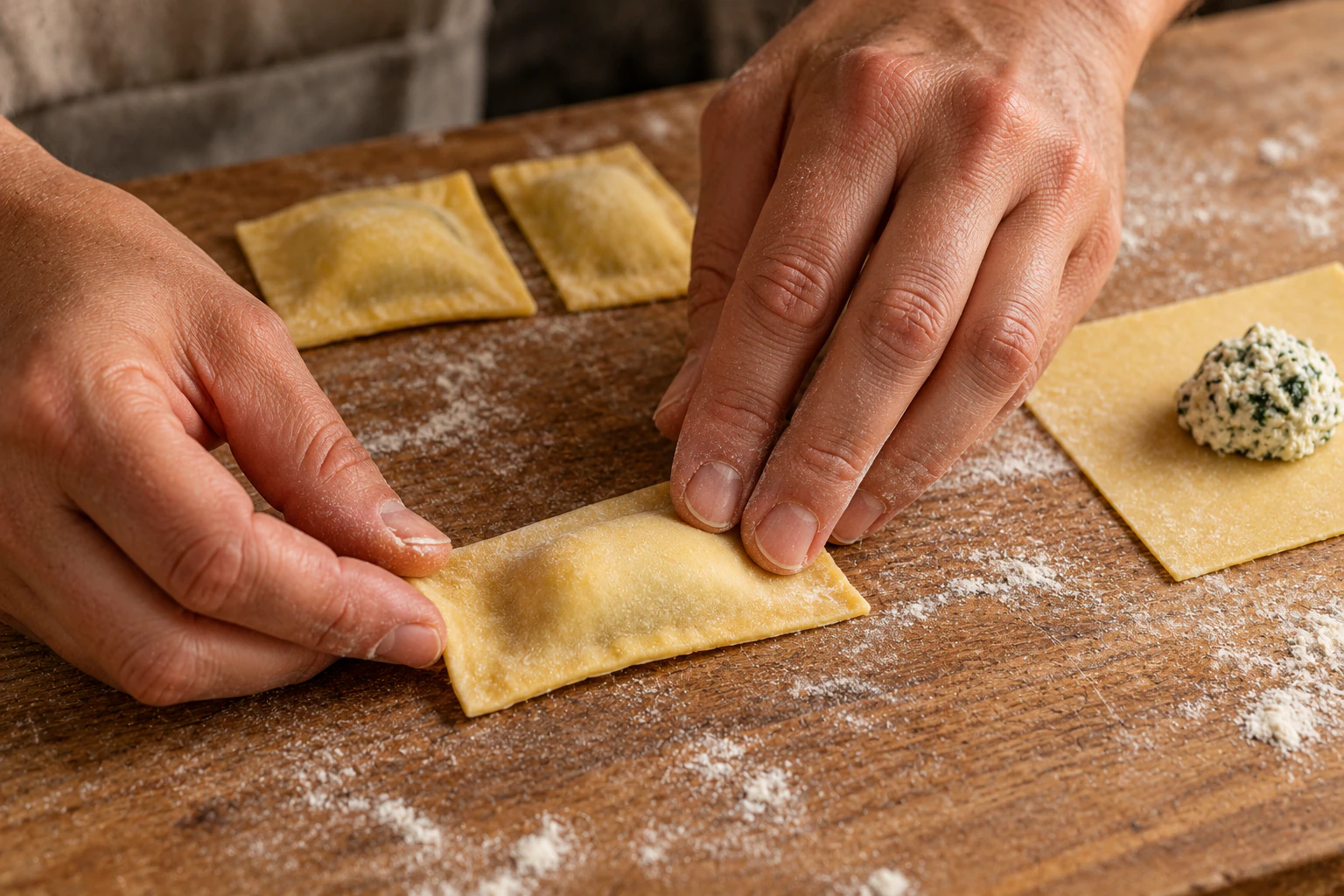
Start with well-drained cooked chard and a filling that holds on a spoon. Press the air out as you close each parcel, keeping the edges clean so they seal.
Tortelli d’erbetta
Prep 1 hr 10 min · Cook 20 min · Rest 30 min · Serves 6 · Difficulty Medium
Method
Put 400 g flour on a board and make a well. Crack four eggs into the center. Draw in the flour with a fork, then knead for 8–10 minutes until the dough is firm and smooth. Cover and let it rest for 30 minutes.Put 14 oz flour on a board and make a well. Crack four eggs into the center. Draw in the flour with a fork, then knead for 8–10 minutes until the dough is firm and smooth. Cover and let it rest for 30 minutes.
Chop the cooked, well-drained chard. Melt 30 g butter in a small pan, add the chard and cook for about 5 minutes, stirring, to remove surface moisture. Spread it on a plate and let it cool before making the filling.Chop the cooked, well-drained chard. Melt 1 oz butter in a small pan, add the chard and cook for about 5 minutes, stirring, to remove surface moisture. Spread it on a plate and let it cool before making the filling.
Mix the cooled chard with the ricotta, 100 g grated Parmigiano Reggiano, the breadcrumbs and the remaining egg. Season with a little salt, pepper and nutmeg. The filling should hold together when lifted with a spoon; keep it covered in the refrigerator while you roll the dough.Mix the cooled chard with the ricotta, 3½ oz grated Parmigiano Reggiano, the breadcrumbs and the remaining egg. Season with a little salt, pepper and nutmeg. The filling should hold together when lifted with a spoon; keep it covered in the refrigerator while you roll the dough.
Divide the rested dough into four pieces and keep three covered. Roll one piece at a time into thin sheets, about 1 mm thick, using a little of the dusting flour to prevent sticking. Cut the sheets into squares about 5 cm across.Divide the rested dough into four pieces and keep three covered. Roll one piece at a time into thin sheets, about 1 mm thick, using a little of the dusting flour to prevent sticking. Cut the sheets into squares about 2 in across.
Place a small level teaspoon of filling in the center of each square. Fold in half into a rectangle, ease out the air around the filling and press the clean edges firmly together. If an edge has dried, dampen it lightly with water before sealing. Set the tortelli on lightly floured trays in a single layer and repeat with the remaining dough and filling.Place a small level teaspoon of filling in the center of each square. Fold in half into a rectangle, ease out the air around the filling and press the clean edges firmly together. If an edge has dried, dampen it lightly with water before sealing. Set the tortelli on lightly floured trays in a single layer and repeat with the remaining dough and filling.
Bring a wide pot of salted water to a gentle boil. Melt the remaining 150 g butter without browning it. Cook the tortelli in batches for about 3–4 minutes, until the pasta edges are tender and the filling is hot; test one rather than relying only on whether it floats.Bring a wide pot of salted water to a gentle boil. Melt the remaining 5½ oz butter without browning it. Cook the tortelli in batches for about 3–4 minutes, until the pasta edges are tender and the filling is hot; test one rather than relying only on whether it floats.
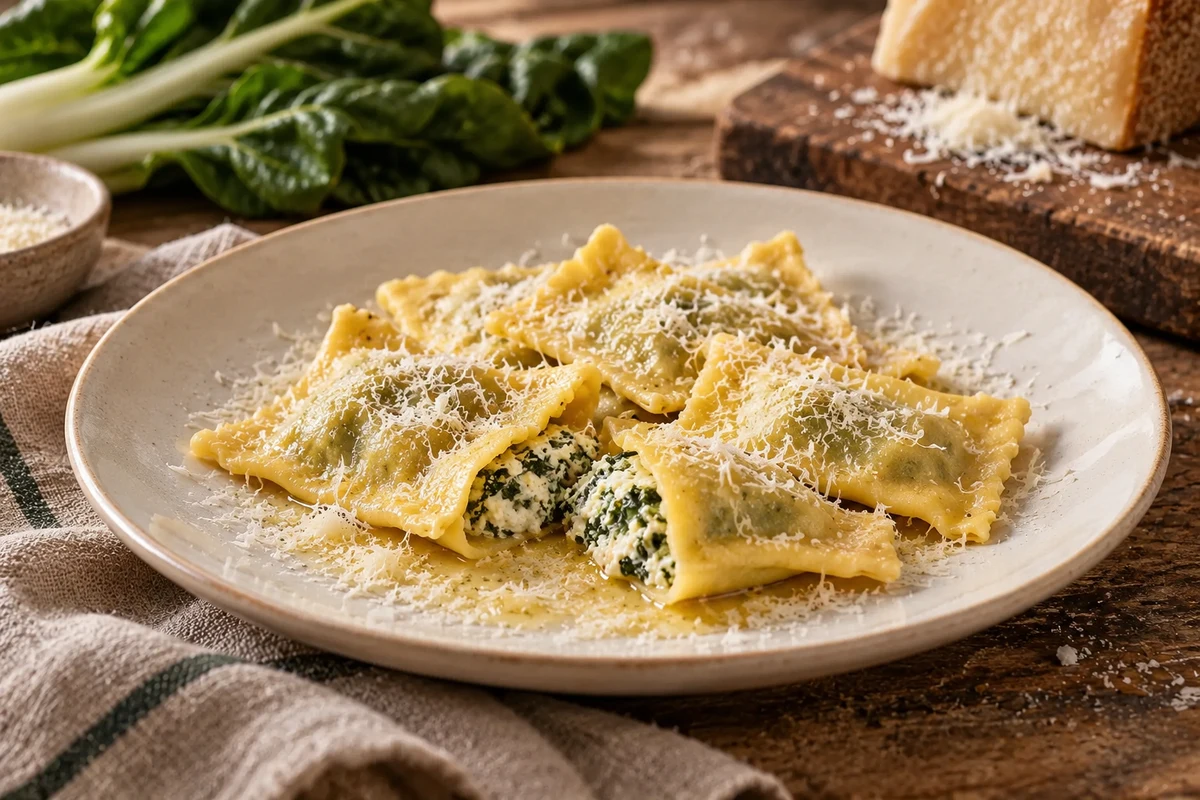
Lift the tortelli out with a slotted spoon and let excess water drain. Arrange them in a warm serving dish in layers, spooning melted butter over each layer and scattering over the remaining 120 g Parmigiano Reggiano. Serve immediately.Lift the tortelli out with a slotted spoon and let excess water drain. Arrange them in a warm serving dish in layers, spooning melted butter over each layer and scattering over the remaining 4 oz Parmigiano Reggiano. Serve immediately.