
Skip to content
Italia Magnifica

Provolone Valpadana

Provolone Valpadana

Po Valley's large stretched-curd cheese, DOP protected.

Photograph · Provolone Valpadana

The story

What you're tasting

Provolone Valpadana DOP is the Po Valley's signature stretched-curd cheese, produced exclusively in specific provinces of Lombardy, Veneto, Emilia-Romagna, and Trentino. This large, pear-shaped or cylindrical cheese is made using the traditional pasta filata technique and aged for extended periods (3-12 months or longer), developing complex flavors that range from mild and buttery (dolce) to intensely sharp and piquant (piccante). The cheese's large size (typically 1-100+ kilograms) and extended aging make it one of Italy's most distinctive and versatile stretched-curd cheeses.

Provolone Valpadana emerged in the Po Valley during the 19th century, when cheesemakers in Lombardy and Veneto began applying the traditional pasta filata technique (used for mozzarella and caciocavallo) to create larger, longer-aging cheeses. The name "Provolone" derives from "provola," a term for stretched-curd cheeses, with the suffix "-one" indicating the large size. The cheese's development in the Po Valley reflected the region's abundant milk production and the need to create cheeses that could be stored and transported, with the large size and extended aging making Provolone Valpadana ideal for both local consumption and export. The tradition of producing both dolce (mild) and piccante (sharp) versions developed as cheesemakers experimented with different aging times and techniques, with the dolce version aged for shorter periods (3-6 months) and the piccante version aged longer (6-12 months or more) to develop intense, sharp flavors. The 20th century saw Provolone Valpadana become one of Italy's most produced and exported cheeses, with production methods standardized and the cheese gaining recognition throughout Italy and internationally. The establishment of the Provolone Valpadana Consortium in 1993 marked a significant step toward protecting the cheese's name and methods, while the DOP designation, granted in 1996, codified the production regulations, geographic boundaries (restricted to specific provinces in Lombardy, Veneto, Emilia-Romagna, and Trentino), and quality standards that ensure Provolone Valpadana maintains its traditional character. Today, Provolone Valpadana stands as a symbol of Po Valley cheesemaking excellence, with production centered throughout the region while maintaining the traditional pasta filata methods and distinctive character that have defined it for over a century.
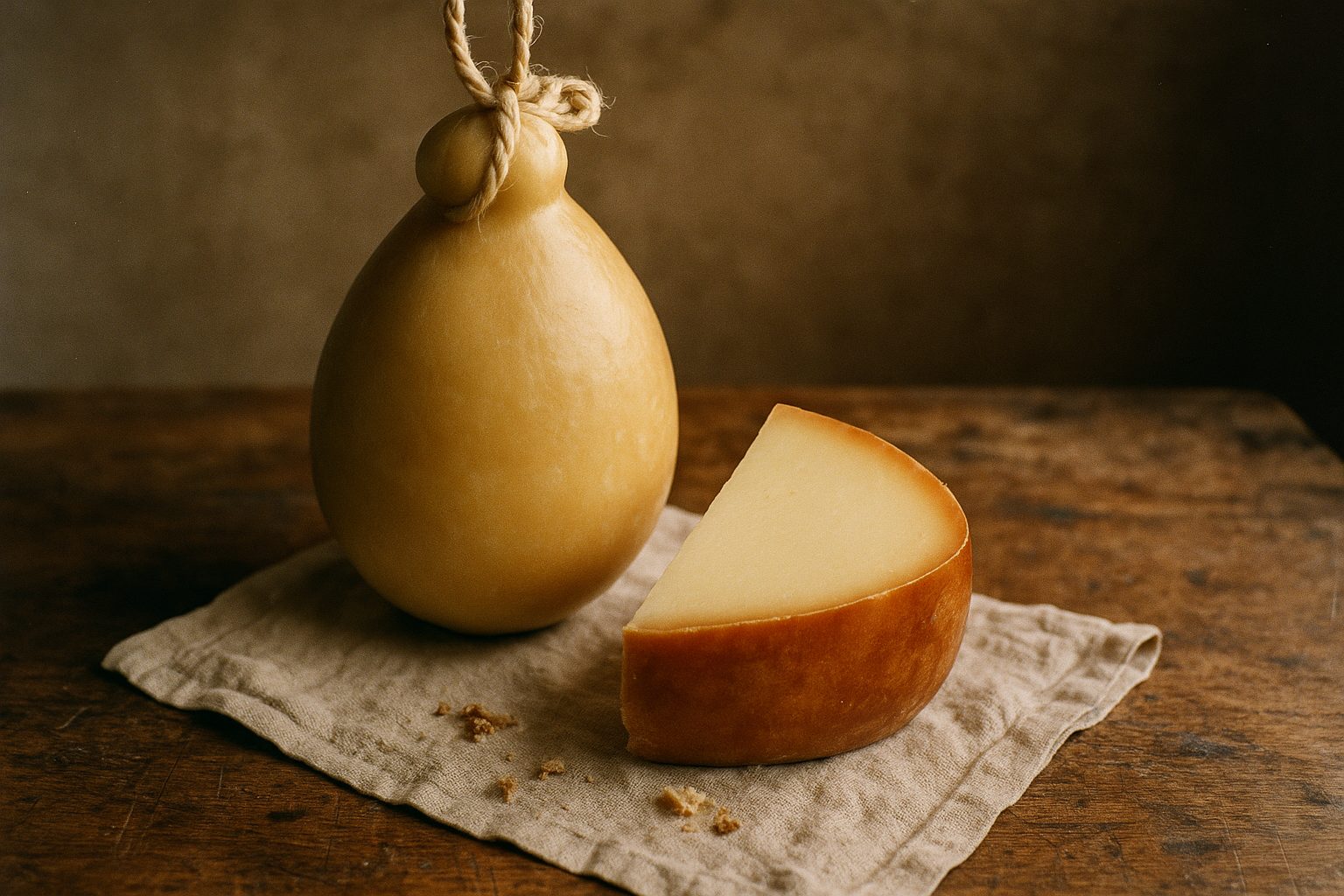
A provolone hanging from its cord beside a cut wedge

Know it

Before you buy

Say it
proh-voh-LOH-neh vahl-pah-DAH-nah
Tasting
Dolce: Mild, buttery, and creamy with semi-soft texture. Piccante: Intense, sharp, and piquant with firm, granular texture. Distinctive stretched-curd character with nutty, savory notes. Becomes increasingly complex with extended aging.
Milk
Cow
Texture
semi-soft to hard
Aging
3-12+ months
How to buy
Look for DOP Provolone Valpadana labels and proper rind development. Specify whether you want Dolce (mild) or Piccante (sharp). Check for proper texture. Buy from reputable sources that can verify Po Valley origin.
Spot the fakes
Verify DOP seals and production methods. Check for proper texture—dolce should be semi-soft, piccante should be firm and granular. Beware of cheeses labeled as "Provolone" without DOP designation or proper origin verification.
Keep it
Unopened: Dolce 3-6 months, Piccante 6-12+ months. After opening: 3-4 weeks if properly stored.

The making

How it's made

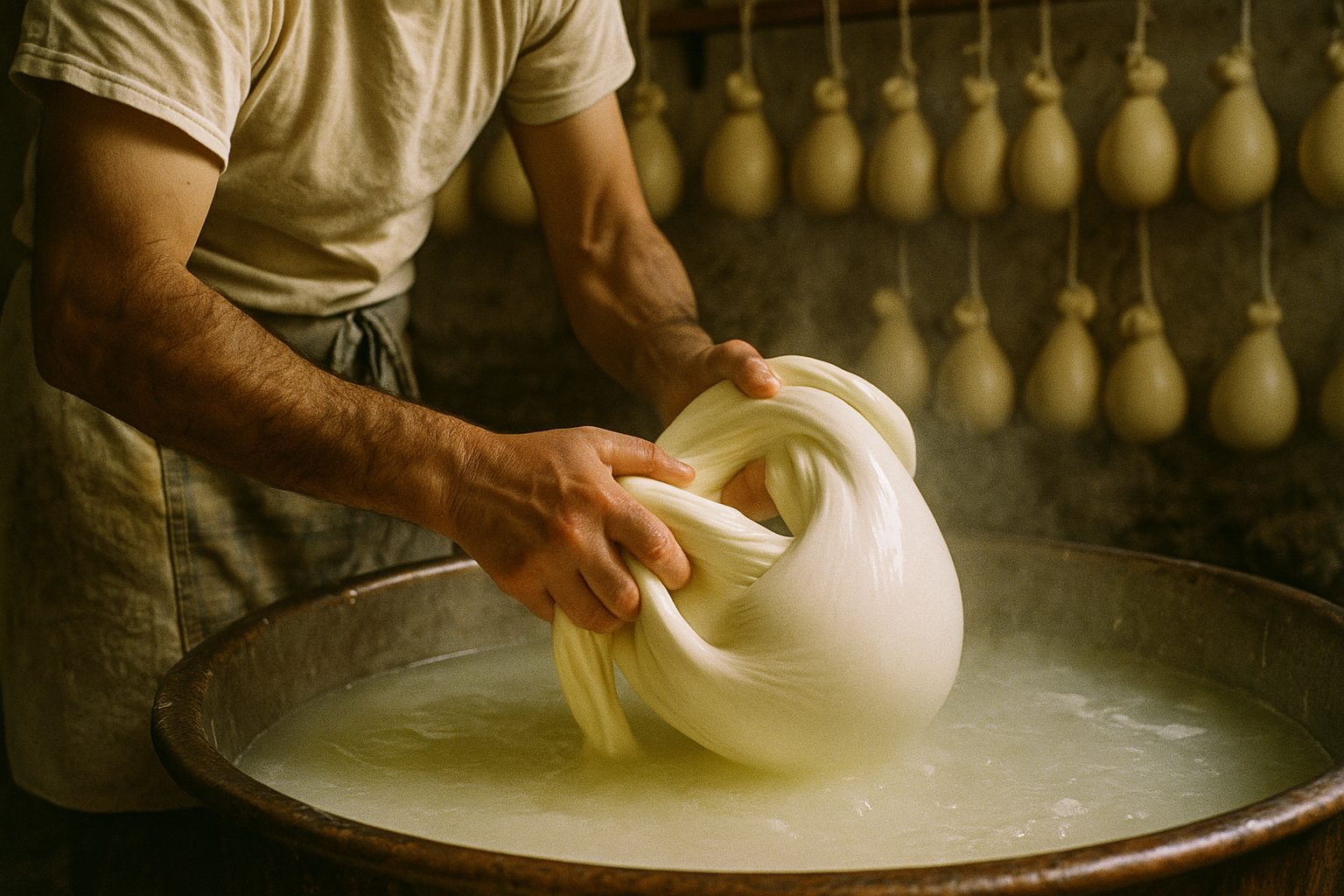
Provolone Valpadana production follows the traditional pasta filata technique combined with extended aging, beginning with fresh, whole or partially skimmed cow's milk from the designated production zone. The milk is heated in traditional copper cauldrons and coagulated using natural calf rennet, creating a firm curd that is cut into pieces and drained to expel whey. The curd is then allowed to acidify slightly, developing the elasticity necessary for stretching. The critical step—the pasta filata technique—involves heating the curd in hot water or whey (typically 80-90°C) until it becomes pliable and elastic. The cheesemaker then stretches and folds the curd repeatedly, either by hand or using mechanical equipment, creating long, silky strands that are then shaped into the desired form—typically large pear shapes (pera) or cylinders (cilindrico) that can weigh from 1 kilogram to over 100 kilograms. The stretching process aligns the protein structure, creating the characteristic stringy, elastic texture that distinguishes pasta filata cheeses. After shaping, the cheeses are immediately cooled in cold water or brine to set the texture, then tied with rope and hung to age. The aging process takes place in controlled environments where the cheeses are regularly turned and monitored, with the rind developing a hard, golden-yellow to brown exterior while the interior gradually loses moisture and develops complex flavors. For Provolone Valpadana Dolce, the aging period is shorter (3-6 months), resulting in a milder, buttery flavor and softer texture. For Provolone Valpadana Piccante, the aging period is longer (6-12 months or more), resulting in a firmer texture and more intense, sharp, piquant flavors. The extended aging allows for the development of complex flavors through enzymatic breakdown, with the cheeses developing nutty, savory, and sometimes fruity notes. Each wheel is tested by expert graders who evaluate quality through visual inspection, aroma, and texture. Wheels that pass inspection receive the DOP markings, while those that don't meet standards are sold without the protected designation. The finest examples showcase the unique character of aged pasta filata cheesemaking, with the dolce offering mild, accessible flavors perfect for table use and melting, while the piccante develops exceptional intensity and complexity that makes it ideal for grating and use in traditional dishes.

Provolone Valpadana is essential to Po Valley cuisine, used in traditional dishes and as a table cheese. It represents the region's commitment to exceptional stretched-curd cheesemaking and the ability to create large, long-aging cheeses.

Stretching hot provolone curd into shape, corded forms hanging behind

A cross-regional PDO, not a generic provolone

Provolone Valpadana is the protected name for a particular semi-hard *pasta filata* cheese. It is not a synonym for every provolone, a single shape, or a generic northern Italian cheese. Its PDO covers a delimited territory across Lombardy, Veneto, Emilia-Romagna and specified parts of the Autonomous Province of Trento, where the milk, processing and cheesemaking must all take place.1,2

The defined area includes the entire provinces of Cremona, Brescia, Verona, Vicenza, Padua, Rovigo and Piacenza, with listed municipalities in Bergamo, Mantua and Lodi, as well as the defined Trentino territory. It is a precise legal area rather than a broad claim about the whole Po Valley.1,2

Milk, fermentation and a 2026 update

The current EU single document defines Provolone Valpadana as semi-hard stretched-curd cheese from raw whole cow’s milk, with natural acidity from fermentation, collected in the area of origin within 60 hours. The milk may undergo thermisation or pasteurisation. The 2026 approved amendment expressly extended the possibility of pasteurising milk to sharp Provolone Valpadana weighing more than 6 kg, a change already allowed for mild cheese up to 6 kg.1

This is why a durable guide should not call every PDO wheel “raw milk” after production, or imply that only one heat treatment is legal. The legal identity begins with raw whole milk, but the specification permits defined thermal treatment. The distinction is more accurate than a marketing shorthand and important for readers considering a named product.1,2

Mild and sharp are legal varieties

The PDO has *dolce* (mild) and *piccante* (sharp) varieties. Up to three months, the specification describes a delicate flavour; with further maturation, or with goat or lamb rennet used alone or together, it becomes progressively sharper. The terms therefore describe a regulated product distinction, not a casual promise that any producer’s cheese will be sweet or fiery.1

Maturation depends on weight and variety. Cheeses up to 6 kg require at least 10 days, those over 6 kg at least 30 days, and sharp cheeses over 15 kg at least 90 days. A sharp cheese over 30 kg labelled P.V.S. (*Provolone Valpadana Stagionato*) must mature for more than eight months. The cheese may also be smoked.1

These categories should not be collapsed into a single “aged X months” field. A small mild cheese and a large P.V.S. sharp cheese have materially different legal minima. The rules define a framework, not a universal serving recommendation or a direct measure of quality.1

Shape is part of the craft, not a brand trick

Provolone Valpadana may be sausage-shaped, melon-shaped, truncated-cone or pear-shaped, sometimes with a rounded *fiaschetta* top. Supporting cords may leave light indentations on the exterior. Weight varies by form. This variety comes from the ability to work stretched curd into different formats, not from a licence to use the PDO for any rope-hung cheese.1

The rind is smooth and thin, light yellow to golden and sometimes yellow-brown. Mild cheese intended for portioning may have no rind. The generally pale-yellow paste is compact, sometimes with small holes, and flakes more noticeably as maturation lengthens. The legal water maximum is 46% for mild cheese and sharp cheese up to 6 kg, and 43% for sharp cheese over 6 kg; fat in dry matter ranges from 44% to 54%.1,2

Feed, geography and the production chain

At least half of basic dairy-cattle feed must come from the area of origin, and at least 75% of the dry matter in the daily fodder ration must come from feed produced in the milk-production area. The legal feed list is detailed. It includes fresh and dried fodder, grass silage and other specified feeds, rather than an undifferentiated claim that the cattle eat only local grass.1,2

All production steps take place in the defined geographical area. The EU document links the cheese to a part of the Po Valley with fodder production, milk availability and dairy expertise. It also identifies the use of whey from earlier processing as starter material, different rennets, and the working of the curd as elements of the production tradition. These are source-backed ways to explain the geographic link without inventing a single magical terroir ingredient.1,2

P.V.S. and the label

P.V.S. is not a casual synonym for an old cheese. It stands for *Provolone Valpadana Stagionato* and may be requested only for the sharp variety from the eighth month of maturation. The cheese must pass a specialist technical check before receiving the fire mark.1

History without a false linear story

The EU geographic-link account says stretched-curd cheese originated in southern Italy, then became established in the north through the skills of Po Valley cheesemakers and the region’s milk supply. It dates Provolone Valpadana production in the specified area from the second half of the nineteenth century, with twentieth-century evidence. This is a better account than claiming that the PDO itself is an ancient, unchanging northern tradition.1

Sources and citations (2)

Sources and citations (2)
  1. EUR-LexProvolone Valpadana PDO approved standard amendment and single documentSection 4.2Read source
  2. MASAFDisciplinare di produzione della DOP Provolone ValpadanaArticles 2-3Read source

Verified details

Each statement below is linked to the record or institution that supports it.

Provolone Valpadana is registered as a protected designation of origin, or DOP, agricultural product.1

The registered geography includes the Autonomous Province of Trento and qualifying territories in Lombardia, Veneto, and Emilia-Romagna, so Provolone Valpadana DOP is a cross-region identity.1

Provolone Valpadana is a semi-hard stretched-curd cheese from whole cow’s milk with natural acidity from fermentation, collected in the origin area within 60 hours and permitted to undergo thermisation or pasteurisation.2

The PDO has mild and sharp varieties. Minimum maturation is 10 days up to 6 kg, 30 days over 6 kg, 90 days for sharp cheese over 15 kg, and over eight months for sharp P.V.S. cheese over 30 kg.2

All production steps take place in the defined cross-regional area. At least 50% of basic dairy-cattle feed must come from the origin area, and at least 75% of daily fodder dry matter must come from feed produced in the milk-production area.2,3

P.V.S. means Provolone Valpadana Stagionato. It can be requested only for the sharp variety from the eighth month of maturation and after a specialist technical check.2

Sources and citations (3)
  1. MASAFElenco delle DOP e IGP dei prodotti agricoli e alimentariProvolone Valpadana entry, DOP column, extracted lines 769-774Read source
  2. EUR-LexProvolone Valpadana PDO approved standard amendment and single documentSection 4.2Read source
  3. MASAFDisciplinare di produzione della DOP Provolone ValpadanaArticles 2-3Read source

Where it's from

The land behind it

  1. RegionLombardy
  2. RegionVeneto