

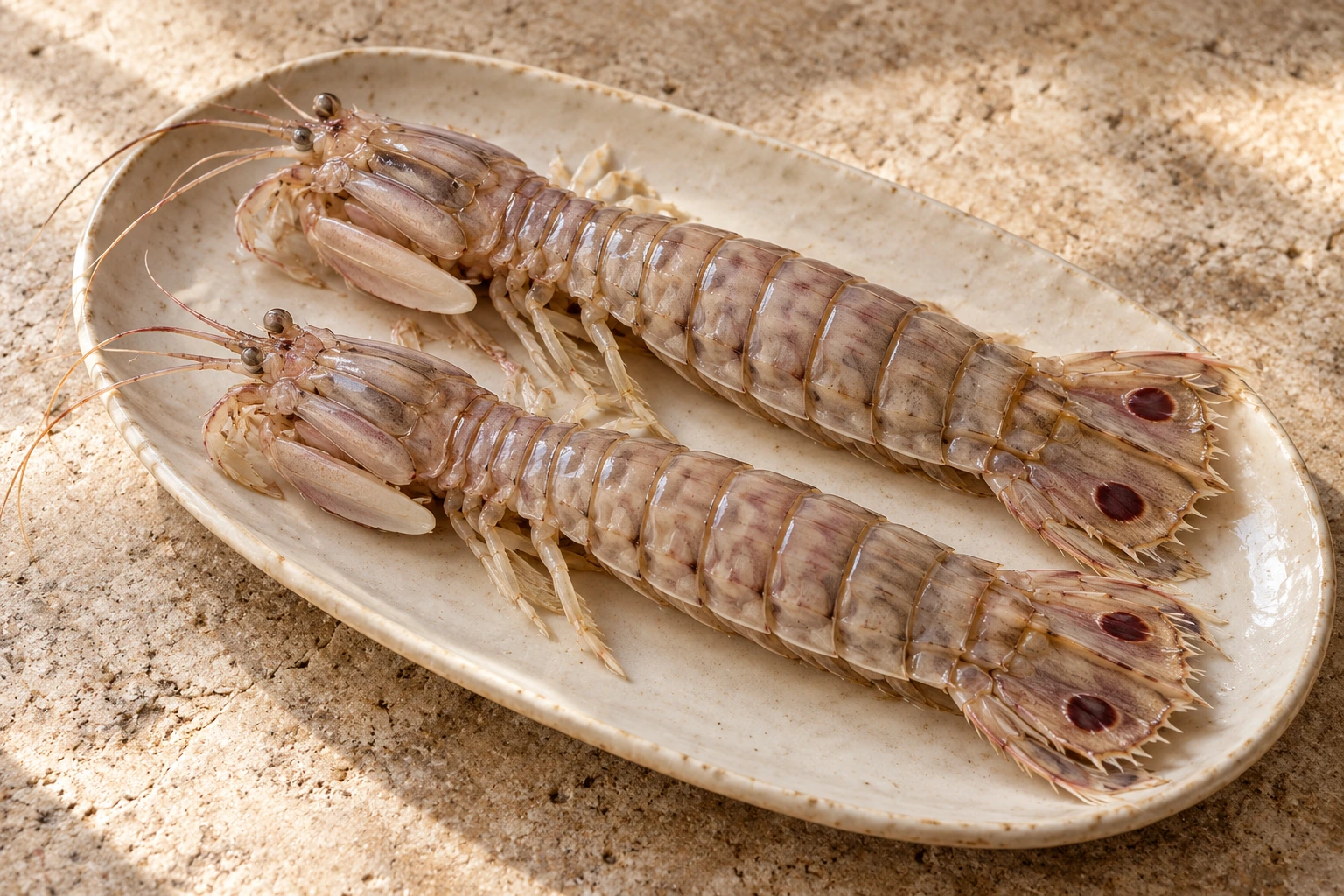
Mantis shrimp
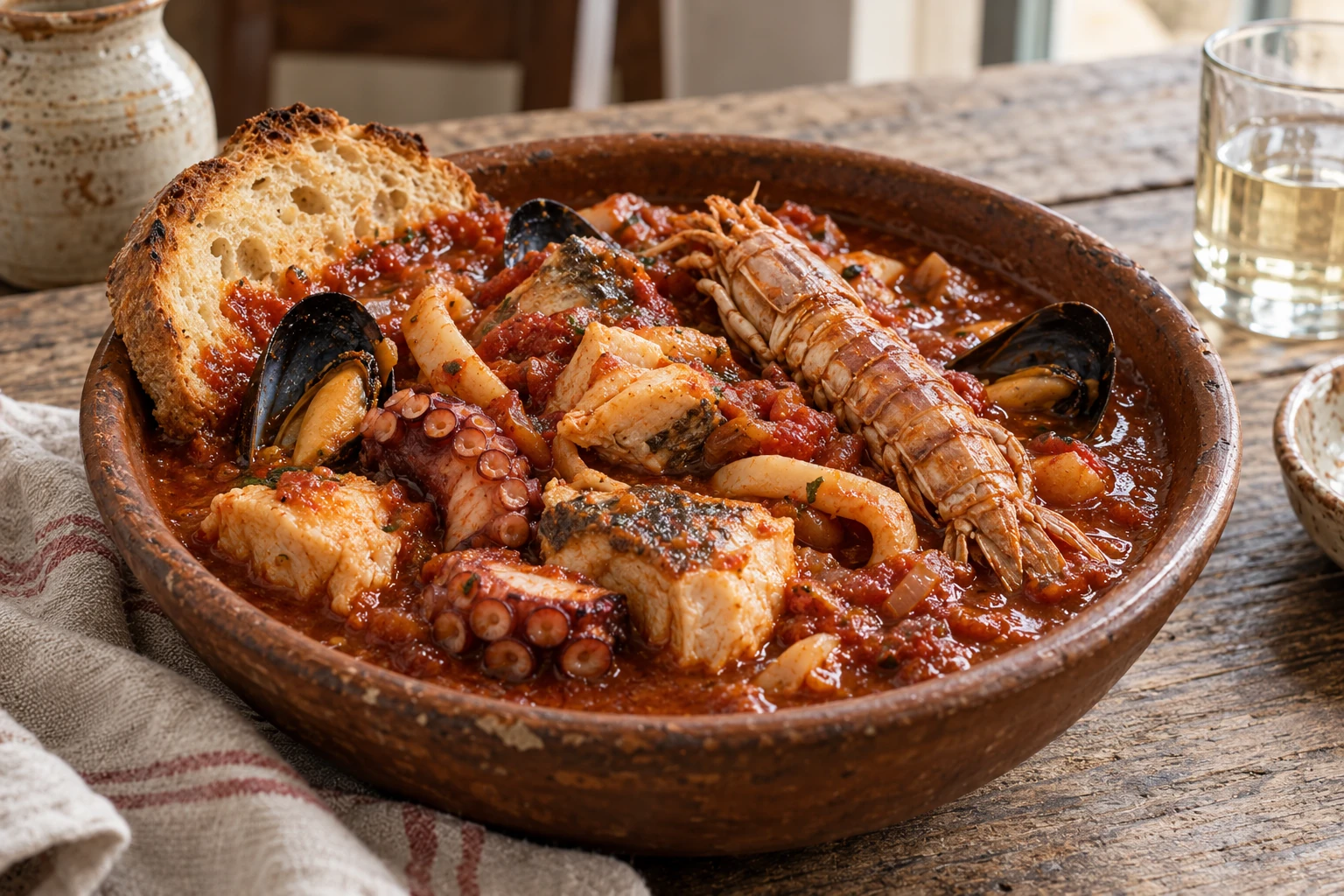
Cannocchie bring delicate flesh to Adriatic brodetti. Their flattened segmented body and paired dark tail spots distinguish them from prawns and scampi.
- Identity
- Squilla mantis, a stomatopod crustacean.
- Form for the pan
- Whole raw animals with shell.
Prepare the right cut
Keep the shell-on form for brodetto and have the fishmonger advise on trimming the sharp edges. Clean the animals before cooking and follow the order of additions in the chosen brodetto. Lift them gently when portioning: the shell protects a relatively small amount of soft flesh.
In Adriatic fish cooking
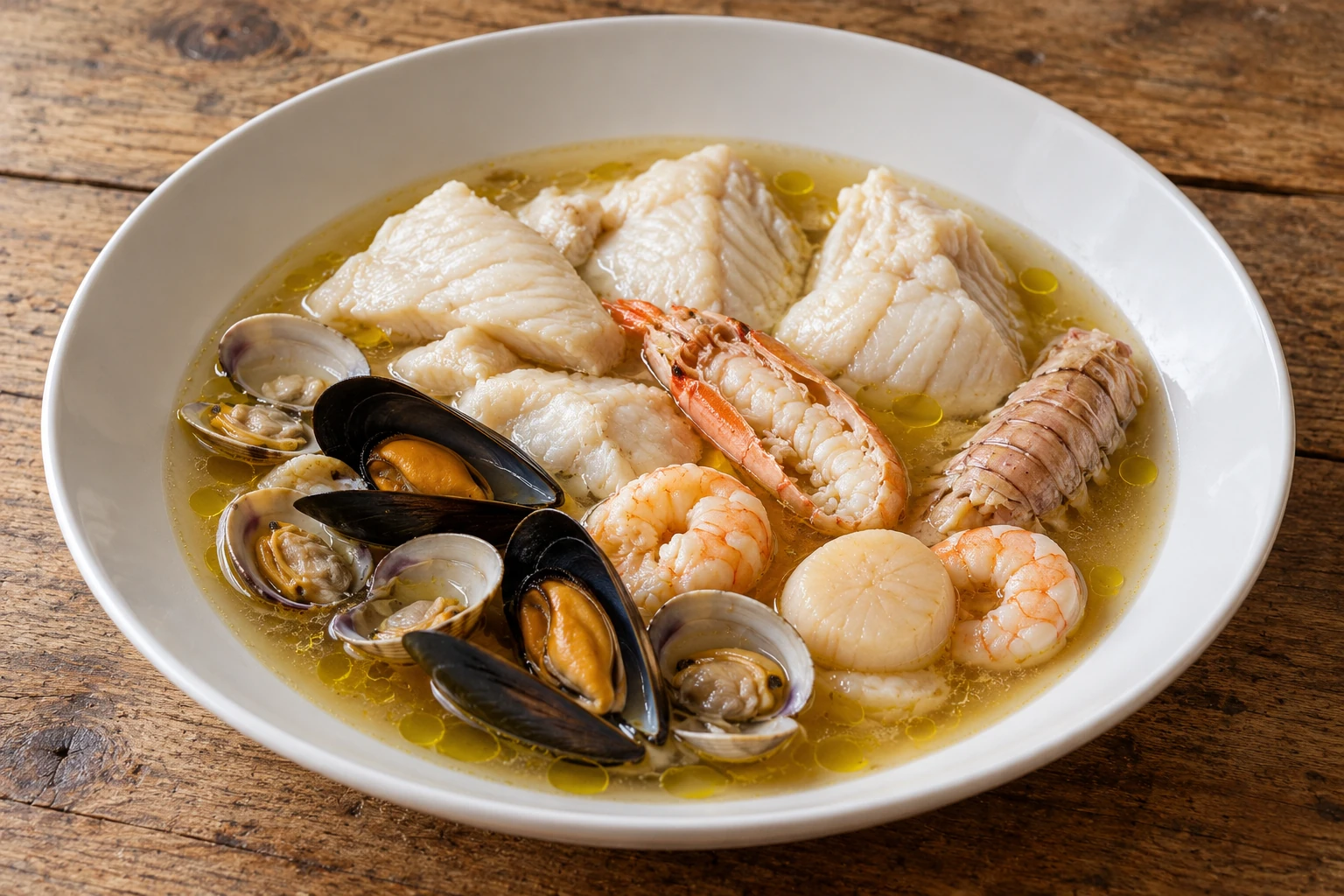
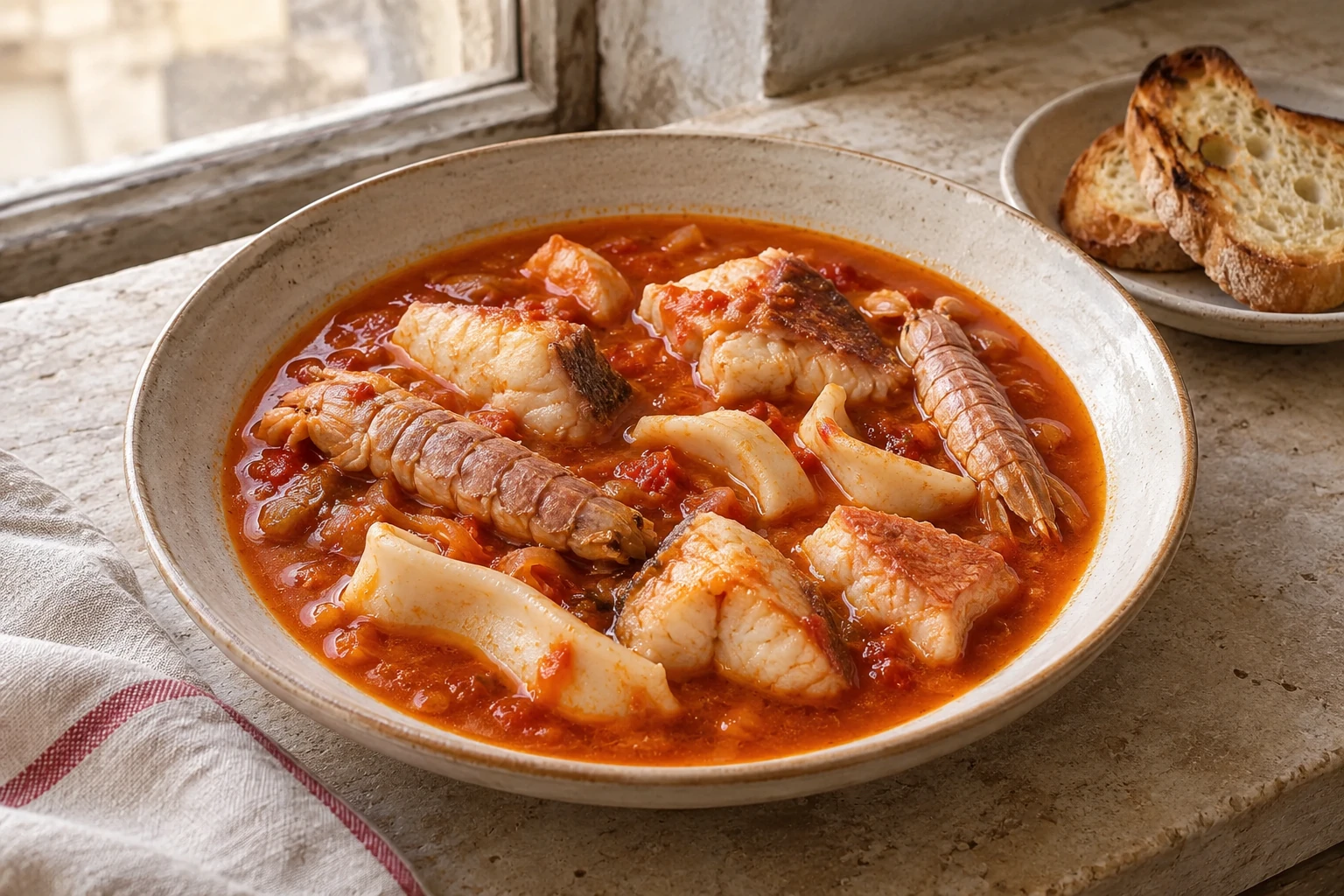
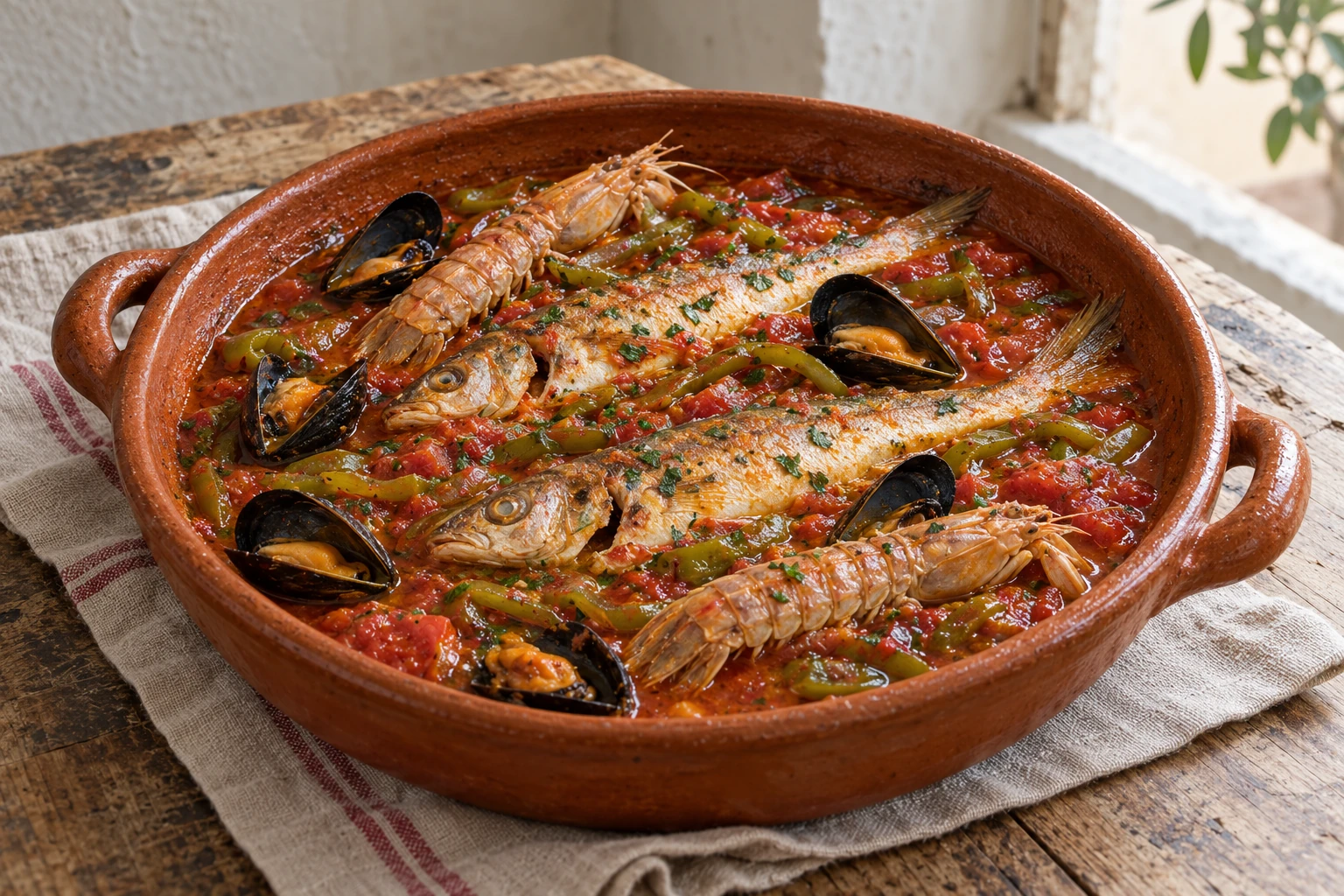
Cannocchia, canocchia and pannocchia name the same crustacean in Italian fish cooking. In Chioggia’s brodeto it joins the other shellfish before the fillets. In brodetto alla fanese it goes into the pan during the last five minutes. That late addition keeps the delicate meat distinct from the fish and cuttlefish that have cooked longer.
Confirm species and purchase form
Ask for raw Squilla mantis, whole and shell-on. A label such as mantis shrimp is useful only when it identifies the animal being sold; it does not make prawns or scampi equivalent. Check the purchase unit, since a count of whole cannocchie differs from a weight of extracted meat.
Keep it cold until cooking
Follow the seller’s storage directions and the package date. Keep raw seafood covered and refrigerated, separate from food ready to eat. Prepare the fish stock and seafood with clean tools and keep the cleaned pieces cold until their turn in the pan.
