
Skip to content
Italia Magnifica

Caciocavallo Silano

Caciocavallo Silano

Southern Italy's ancient stretched-curd cheese, DOP protected across Campania, Basilicata, Calabria, Molise, and Puglia.

Photograph · Caciocavallo Silano

The story

What you're tasting

Caciocavallo Silano DOP is one of southern Italy's most ancient and distinctive stretched-curd cheeses, produced exclusively in specific provinces of Campania, Basilicata, Calabria, Molise, and Puglia. This pear-shaped cheese is made using the traditional pasta filata technique and aged for extended periods (2-12 months or longer), developing complex flavors that range from mild and buttery when young to intensely sharp and piquant when aged. The cheese's distinctive shape and traditional production methods make it a symbol of southern Italian cheesemaking excellence.

Caciocavallo Silano represents millennia of southern Italian cheesemaking tradition, with production methods that date to ancient times. The cheese's name derives from "cacio" (cheese) and "cavallo" (horse), though the origin of this name is debated—some suggest it refers to the traditional method of hanging cheeses in pairs over a beam (like a saddle over a horse), while others connect it to historical trade routes or production methods. Historical records from Greek and Roman times document the production of stretched-curd cheeses in southern Italy, with the techniques refined over centuries to create what would become Caciocavallo. The tradition became particularly important in the mountainous regions of southern Italy, where the cheese's ability to be stored and transported made it valuable for pastoral communities. The name "Silano" refers to the Sila plateau in Calabria, though the DOP production zone extends across five regions, reflecting the widespread tradition of producing this cheese throughout southern Italy. The 20th century saw the formalization of production methods, with local cheesemakers establishing consistent techniques for creating the pear-shaped, aged cheese that would become Caciocavallo Silano. The establishment of the Caciocavallo Silano Consortium in 1993 marked a significant step toward protecting the cheese's name and methods, while the DOP designation, granted in 1996, codified the production regulations, geographic boundaries (restricted to specific provinces in Campania, Basilicata, Calabria, Molise, and Puglia), and quality standards that ensure Caciocavallo Silano maintains its traditional character. Today, Caciocavallo Silano stands as a symbol of southern Italian cheesemaking excellence, with production centered throughout the five-region zone while maintaining the traditional pasta filata methods and distinctive character that have defined it for centuries.
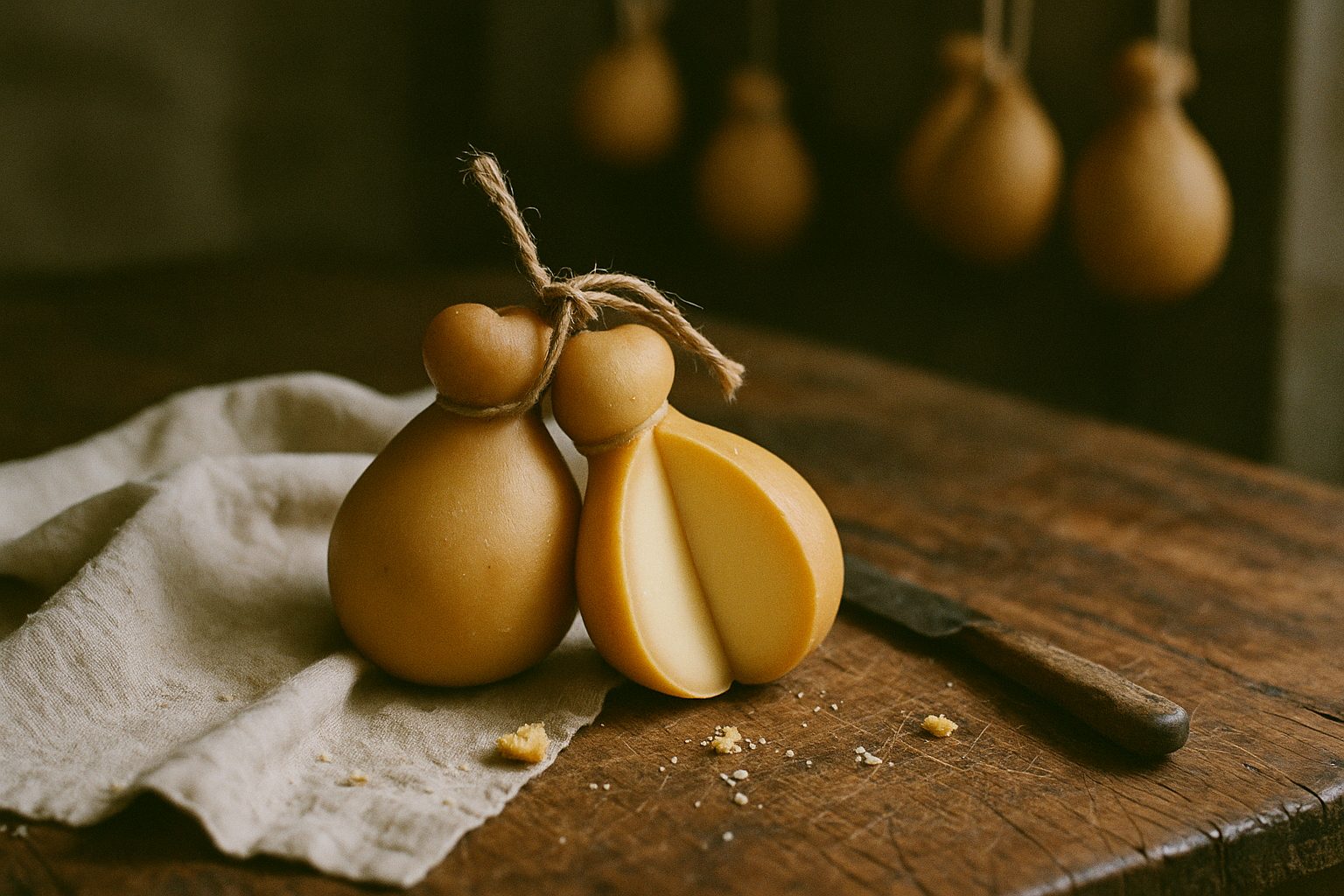
Pear-shaped caciocavallo cheeses tied in pairs, one cut open

Know it

Before you buy

Say it
kah-choh-kah-VAHL-loh see-LAH-noh
Tasting
Young: Mild, buttery, and creamy with semi-soft texture. Aged: Intense, sharp, and piquant with firm, granular texture. Distinctive stretched-curd character with nutty, savory notes. Becomes increasingly complex with extended aging.
Milk
Cow or Mixed (Cow and Sheep)
Texture
semi-soft to hard
Aging
2-12+ months
How to buy
Look for DOP Caciocavallo Silano labels and proper rind development. Check for distinctive pear shape. Specify desired age (young for mild, aged for sharp). Buy from reputable sources that can verify southern Italian origin.
Spot the fakes
Verify DOP seals and production methods. Check for proper texture and distinctive pear shape. Beware of cheeses labeled as "Caciocavallo" without DOP designation or proper origin verification. Authentic Caciocavallo Silano should have the characteristic shape and aging.
Keep it
Unopened: 2-12+ months. After opening: 3-4 weeks if properly stored.

The making

How it's made

Caciocavallo Silano production follows the traditional pasta filata technique combined with extended aging, beginning with fresh, whole cow's milk (or a mixture of cow's and sheep's milk in some traditional versions) from the designated production zone. The milk is heated in traditional copper cauldrons and coagulated using natural calf rennet, creating a firm curd that is cut into pieces and drained to expel whey. The curd is then allowed to acidify slightly, developing the elasticity necessary for stretching. The critical step—the pasta filata technique—involves heating the curd in hot water or whey (typically 80-90°C) until it becomes pliable and elastic. The cheesemaker then stretches and folds the curd repeatedly by hand, creating long, silky strands that are then shaped into the distinctive pear shape (pera) that characterizes Caciocavallo Silano. The cheeses are typically tied in pairs with rope and hung over beams to age, creating the traditional appearance that may have inspired the name. After initial shaping and tying, the cheeses are brined in salt solution for several days, then transferred to aging rooms where they mature for a minimum of 2 months, though most are aged 4-8 months, with premium examples aged 12 months or longer for increased complexity. During aging, the cheeses are regularly turned and monitored, with the rind developing a hard, golden-yellow to brown exterior while the interior gradually loses moisture and develops complex flavors. The extended aging allows for the development of complex flavors through enzymatic breakdown, with the cheeses developing nutty, savory, and sometimes piquant notes that reflect both the pasta filata technique and the traditional aging methods. Each wheel is tested by expert graders who evaluate quality through visual inspection, aroma, and texture. Wheels that pass inspection receive the DOP markings, while those that don't meet standards are sold without the protected designation. The finest examples showcase the unique character of southern Italian pasta filata cheesemaking, with flavors that develop from mild and buttery when young to intensely sharp and complex when aged, making Caciocavallo Silano ideal for both table use and grating.

Caciocavallo Silano is essential to southern Italian cuisine, used in traditional dishes throughout Campania, Basilicata, Calabria, Molise, and Puglia. It represents the region's commitment to exceptional stretched-curd cheesemaking and ancient pastoral traditions.

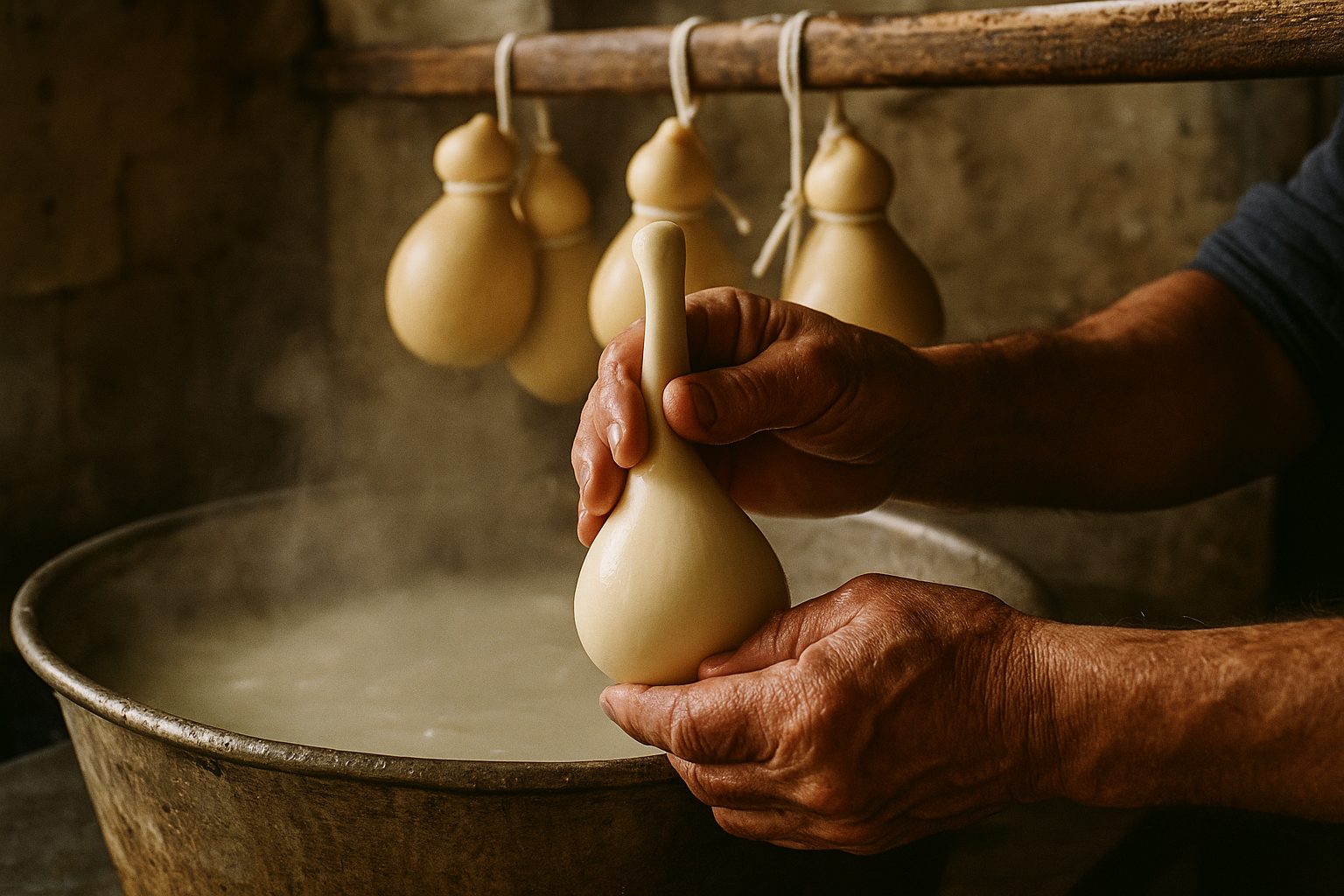
Shaping caciocavallo by hand over a steaming basin, finished pairs hanging behind

In the kitchen

Recipes that call for it

  1. RecipeFiadone

Where it's from

The land behind it

  1. RegionCalabria
  2. RegionCampania