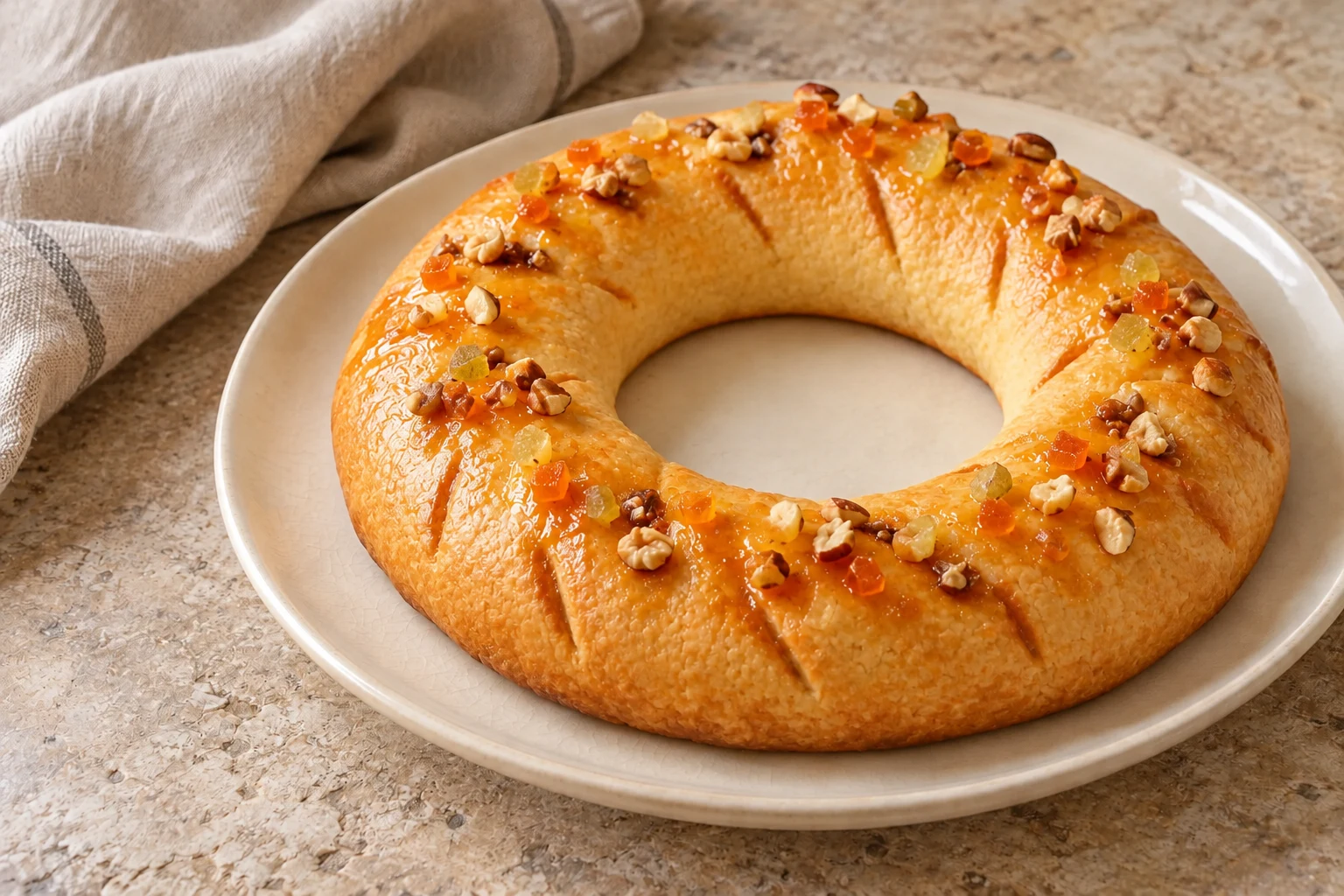
Shared timballo
- Dish
- A large mould or casserole, lined with breadcrumbs
- Surface
- A golden crust around pasta dressed with ragù and cheese
- Service
- A centrepiece divided at the table

Small pasta rings, tomato ragù and a golden breadcrumb crust make a generous Palermo first course. At Christmas, anelletti al forno bring the family table together around a dish whose cheeses, fillings and presentation vary from kitchen to kitchen.
The same small rings can fill a family-sized mould or individual baking dishes. Choose the preparation and its presentation together.
| Shared timballo | Individual baked portions | |
|---|---|---|
| Dish | A large mould or casserole, lined with breadcrumbs | Small baking dishes, each holding one portion |
| Surface | A golden crust around pasta dressed with ragù and cheese | Visible rings beneath a cheese-and-breadcrumb topping |
| Service | A centrepiece divided at the table | Separate dishes brought directly to each place |
Anelletti take their name from their ring shape. In Palermo, those small loops become a substantial baked pasta with sauce, cheese and a crisp surface.
The pasta remains recognisable after baking: short, smooth rings with a hole through the centre, turned at different angles beneath the crust. Tomato ragù coats the rings and fills the spaces between them. Cheese joins the pasta as it bakes, while breadcrumbs give the surface a contrasting texture.
The name identifies a dish with many household versions. Minced meats, peas and caciocavallo appear in one preparation; primosale or fresh tuma can supply another cheese. Cooked ham, salame, hard-boiled eggs and vegetables belong to particular versions. A plate of anelletti is not a promise that every one of these ingredients will be present.
Prepare the ragù for the chosen version before assembling the dish. Tomato, minced meat and aromatic vegetables form a sauce that coats the pasta; peas can be added toward the end of the sauce preparation. Boil the rings until the stage specified by the full recipe, then drain and dress them with the ragù.
Grease the mould or casserole and coat it with breadcrumbs. Mix in or layer the chosen cheeses and additions as the recipe directs. More breadcrumbs and grated cheese can finish the top before baking. The dish develops a golden surface while the dressed rings remain moist inside. A shared timballo and small ramekins have different proportions and cooking needs: keep the instructions for the actual dish you are making.

Anelletti al forno are closely associated with Palermo and are prepared across Sicily. Christmas is one occasion for this rich first course, alongside other family celebrations. Sicilian Christmas menus differ between provinces and households; anelletti belong to that variety rather than to a single menu followed throughout the island. The shared timballo makes a natural centrepiece, while individual dishes offer another way to serve the same pasta.
SicilyOne Palermo family preparation layers hard-boiled egg into rings dressed with ragù, peas, cured meats and cheese. Another version combines peas with fried aubergine, cooked ham and primosale, then finishes individual dishes with caciocavallo and breadcrumbs. These are distinct choices, each with its own balance.
Aubergine can also line a mould, giving the outside a different appearance from a breadcrumb-coated timballo. A white ragù makes another separate variation. Decide which preparation you want, then keep its sauce, cheeses and filling together. Adding every possible extra makes it harder to retain the character of a particular version.
Bring Palermitan baked ring pasta to the Christmas table as a shared timballo or individual dish, choosing one household version for the sauce, cheeses and filling. Explore panelle for another Sicilian course, buccellato for the festive sweet table, and the wider Christmas recipe collection.
Choose the pasta shape specified by the recipe: small anelletti for this baked preparation. The ring should have a clear opening and a short, substantial wall. A packet of a differently sized soup pasta is not automatically the same choice. Keep the producer’s directions with the pasta.
For a prepared timballo, ask about the ragù, cheeses and additions. The regional name alone will not tell you whether the dish contains peas, aubergine, ham, salame or egg. If you order for a festive meal, confirm whether it comes ready to serve or needs finishing in its baking dish.
Follow the complete recipe or maker’s instructions for holding, chilling and any reheating. A whole timballo and individual ramekins need different treatment. Keep the ingredient information available when serving, and retain the directions for the actual preparation rather than borrowing a time from another baked pasta.
No. They are a Palermo festive first course served at Christmas and on other family occasions.
No. Eggs, cured meats, peas and aubergine vary between preparations. Check the actual filling rather than assuming one fixed list.
No. A shared timballo or casserole is one presentation; small individual baking dishes are another.
The places, tables and makers we found worth your time. One email, no noise.
Please enter a valid email address.
One letter a month. Unsubscribe at any time. We never share your address.