On Capri’s south-eastern shore, three rocky spurs stand in a clear sequence: Terra, also known as Stella, remains joined to the coast; the Faraglione di Mezzo opens into a natural arch; and the outer Faraglione di Fuori faces the open sea. A little beyond them, the smaller Monacone completes the familiar group.
Their silhouettes rise from a coast shaped by tectonic lines and long processes of erosion. From land, the Gardens of Augustus bring the three stacks into one panorama with Marina Piccola and Via Krupp. The name faraglione recalls Greek pharos, or lighthouse; the Comune suggests that fires on coastal heights may once have guided sailors along this demanding shore.
Fuori is closely associated with Capri’s blue lizard, a striking island form of the wall lizard. A 2006 study measured specimens from Faraglione Esterno and Mezzo, while more recent research has focused on Scopolo. The small rocky habitats give the lizard story a particular place in Capri’s landscape.
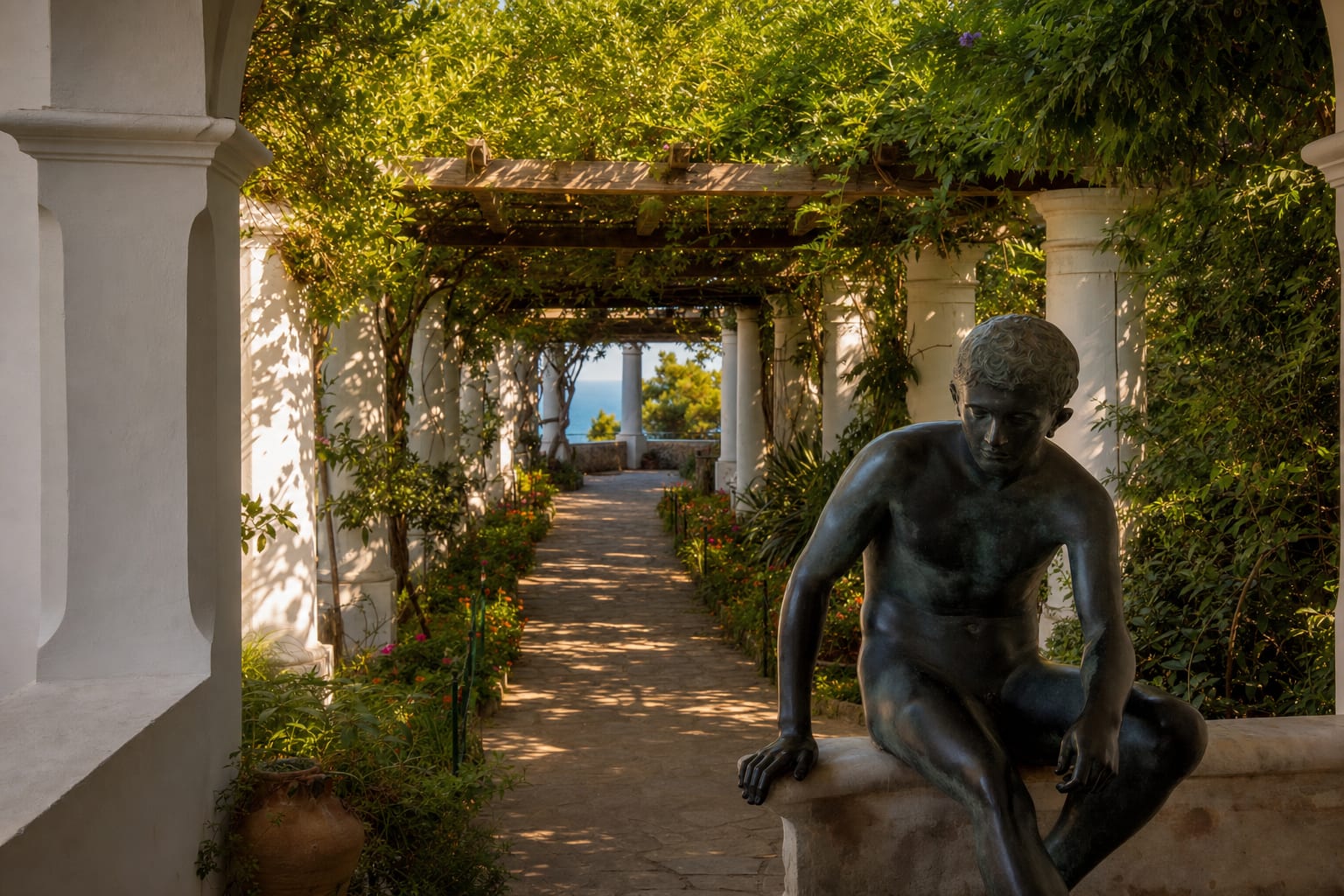
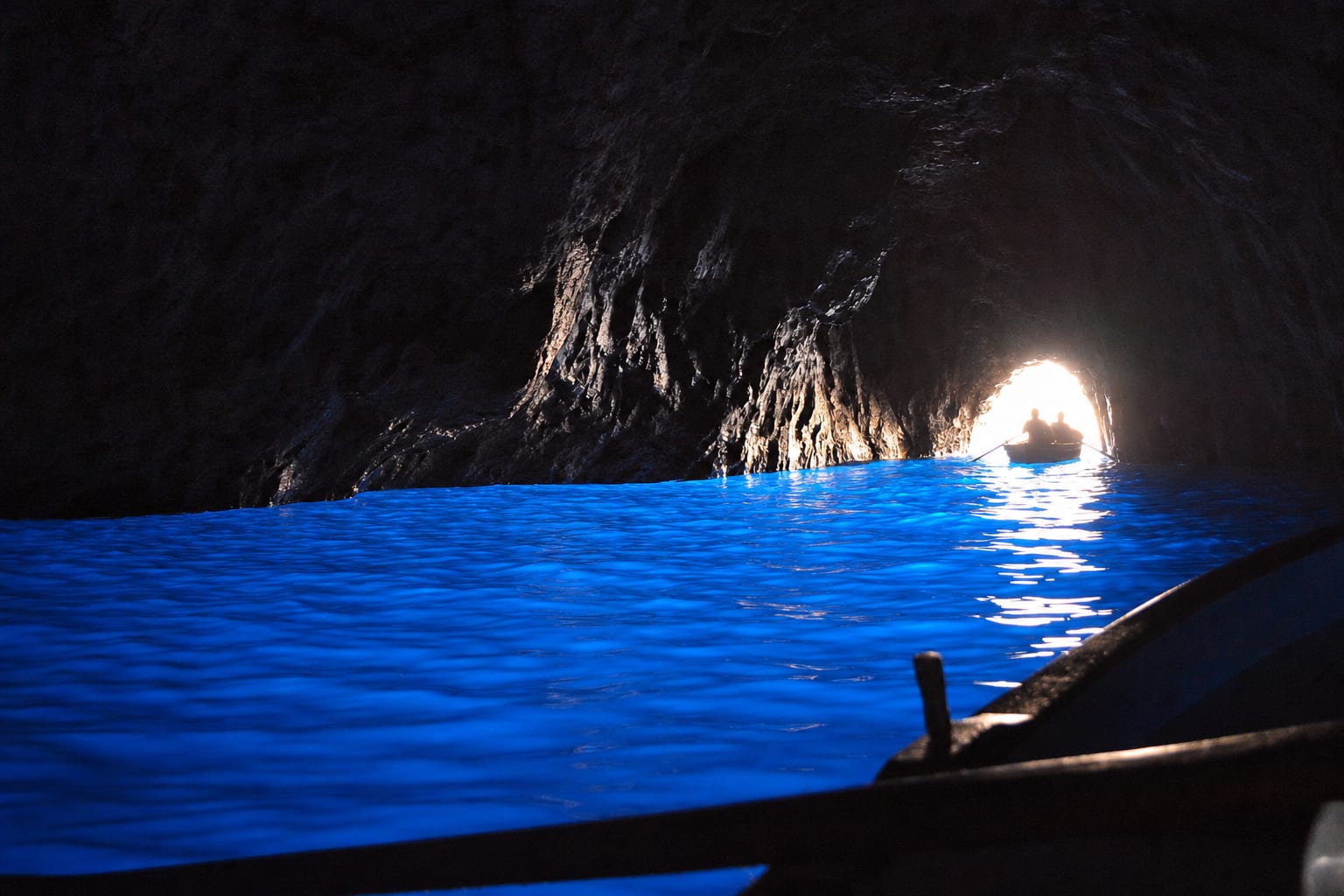
Walk from Piazzetta along Via Vittorio Emanuele and Viale Giacomo Matteotti to the Gardens of Augustus, checking the garden’s separate entry terms before setting out. For a closer perspective, boat tours leave mainly from Marina Grande; fares and itineraries vary by operator and conditions at sea. Continue your island route with the Blue Grotto and Villa San Michele.
The Comune connects the name faraglione with Greek pharos, or lighthouse, and suggests that fires on coastal heights may once have guided sailors. The rocks remain Capri’s best-known natural outline offshore.