

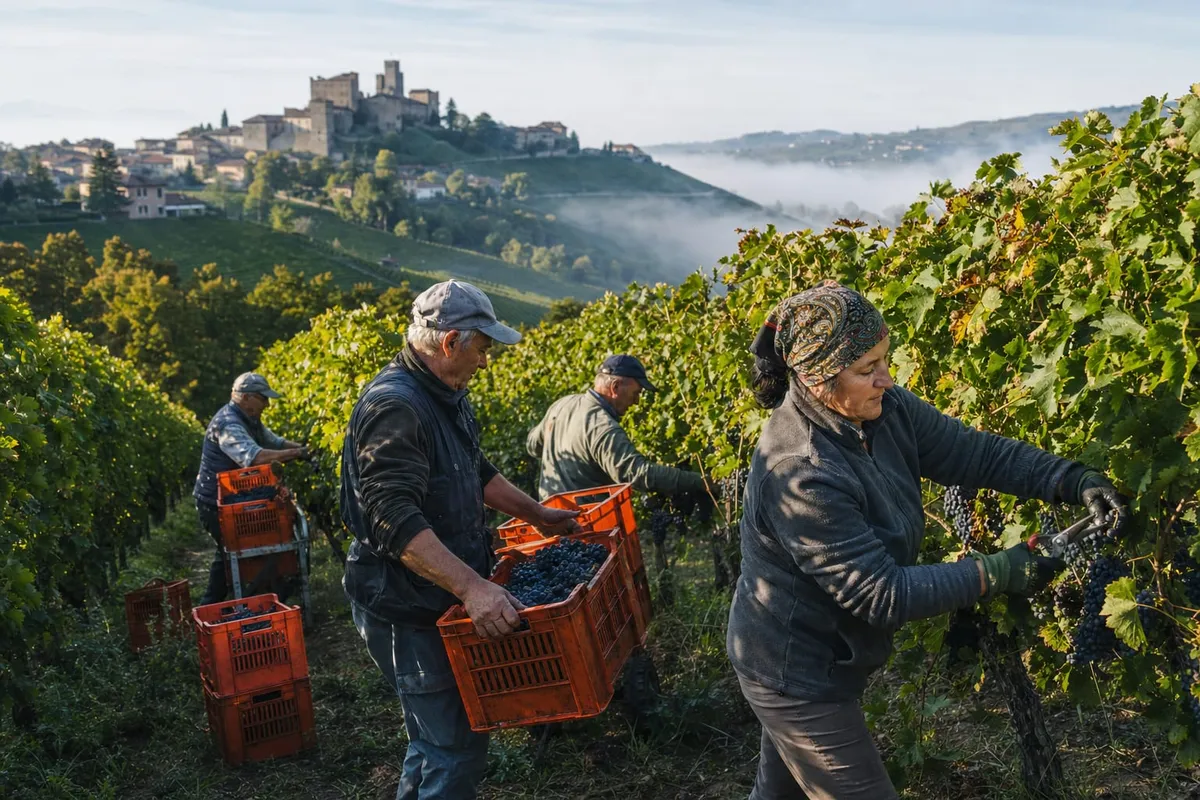
At a quarter past seven on an October morning, the fog still lies in the valleys below Serralunga d’Alba, and the ridge above it is already in the sun. This is the hour when the growers walk their Nebbiolo. You see them along the rows, taking a grape between thumb and forefinger, pressing it, putting the split skin to the tongue. They do it dozens of times a morning in the few weeks that decide the year. The grape takes its name, most people will tell you, from nebbia, the fog that fills these valleys in autumn, and in October the connection needs no explaining.
Nebbiolo is one of the latest-ripening red grapes in Italy. In the Langhe the Dolcetto comes in first, the Barbera follows, and then the vineyards go quiet. Nebbiolo is usually picked from early to mid October, later in a cool year. The grape builds sugar steadily, but what the patient growers are waiting for is the other ripeness: the tannins, colour and aromas in the skin, which keep developing after the sugar numbers already look ready. Pick too early and the wine can be pretty and short-lived. Pick at the right moment and a Barolo can hold its shape for decades.
The hand is a reliable guide. A ripe Nebbiolo cluster has a density you can feel, the skin giving slightly under the thumb before it splits, the seeds turned brown rather than green. Growers check the figures as well, sugar, acidity and pH, sampled through September and into October. But spend a harvest morning on the ridge and you will hear the same idea again and again: the numbers tell you what the hand already knew, only later.
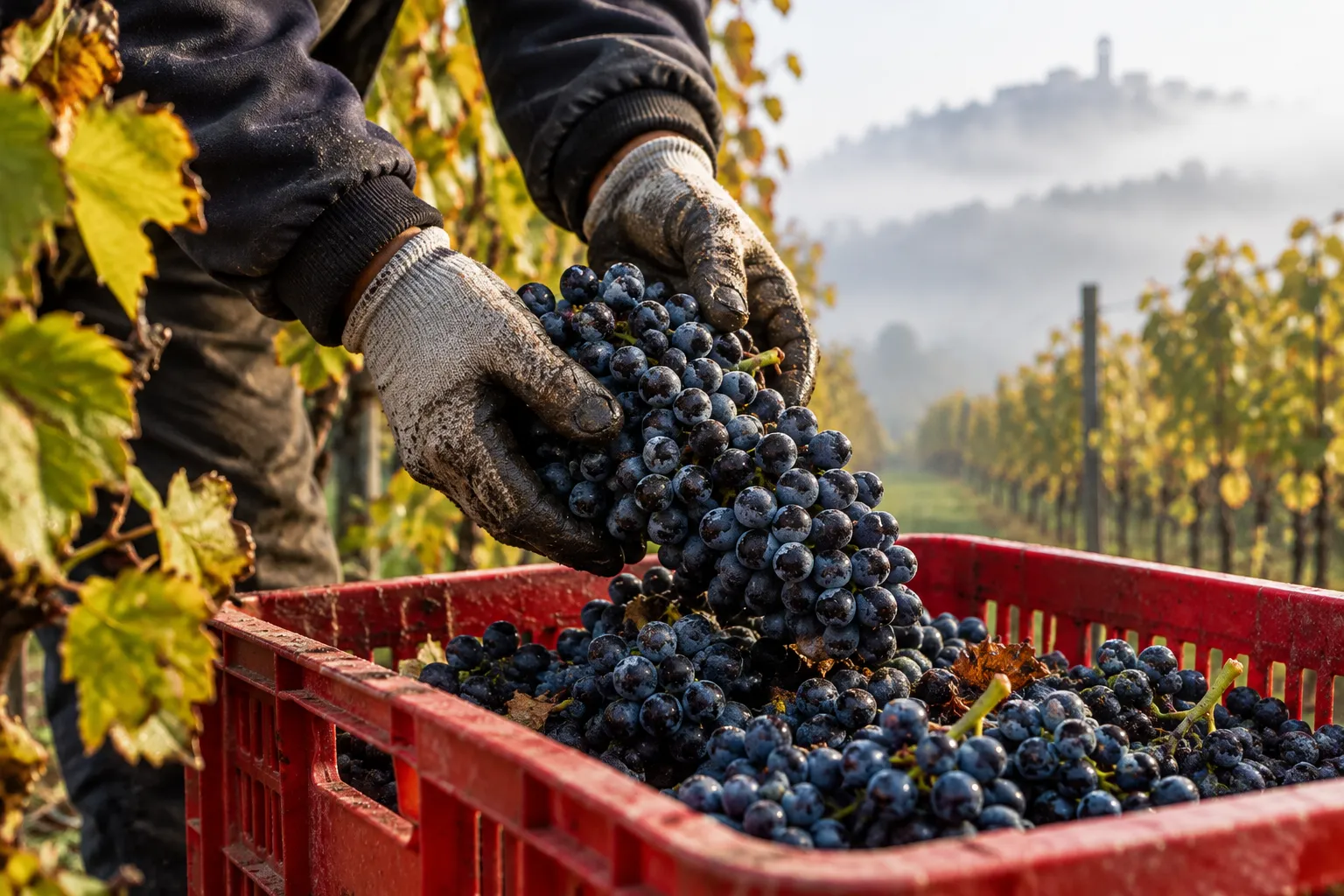
The numbers tell you what the hand already knew, only later.
Serralunga d’Alba sits on a long ridge on the eastern side of the Barolo zone, crowned by a tall fourteenth-century castle, and its wines are known as some of the most structured and long-lived of the appellation, a reputation usually traced to its soils. The Langhe, with the Roero and Monferrato, have been a UNESCO World Heritage cultural landscape since 2014, and from the ridge you can see why: row after row laid across the slopes, hazelnut groves on the cooler ground, a village or a castle on every crest. The harvest here is done by hand, into small plastic crates that keep the bunches whole, because the slopes are steep and the grape bruises easily. Crews start early and often stop around midday; warm grapes at the press are the enemy of Nebbiolo.
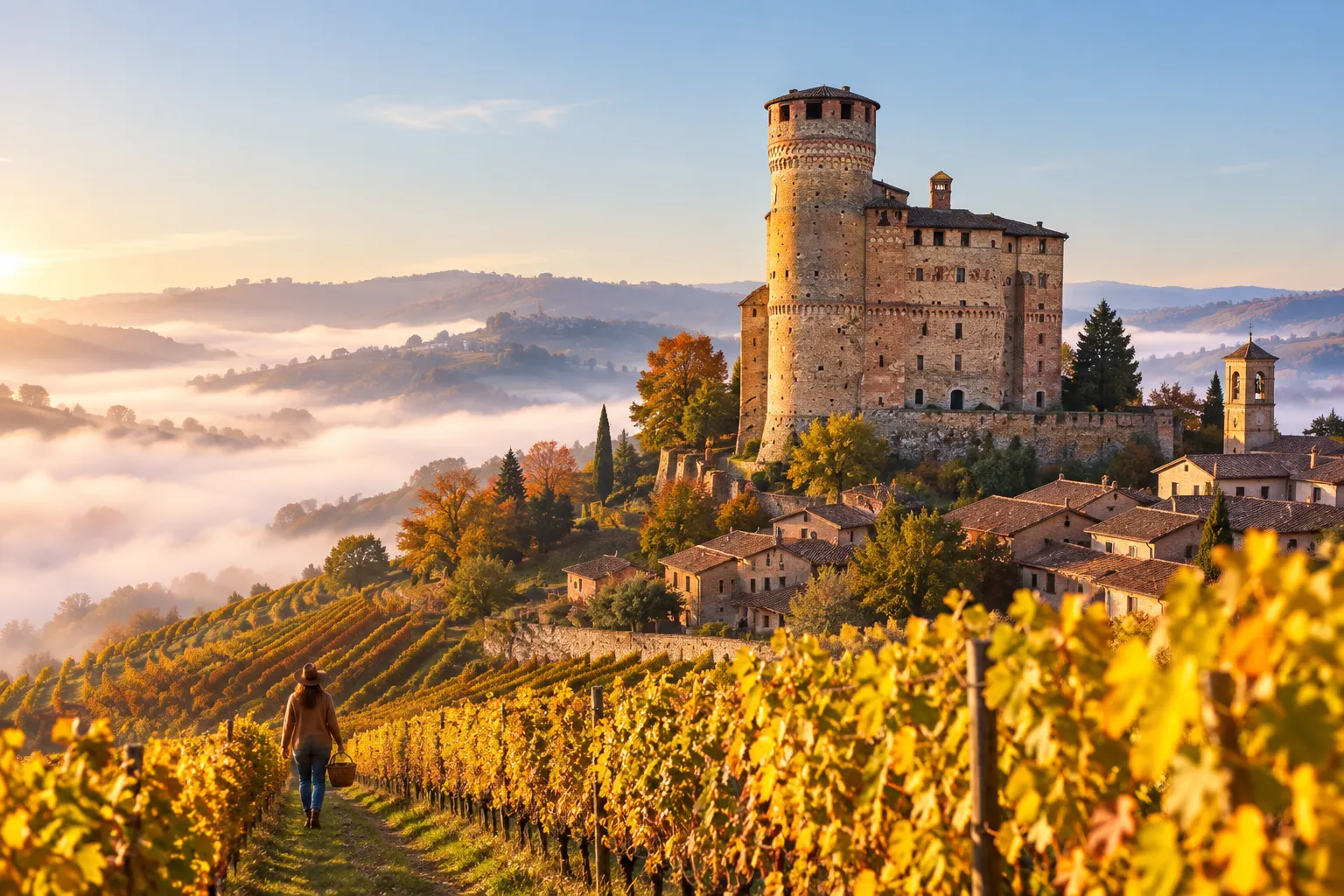
What keeps growers waiting in the last stretch is the temperature at night. Nebbiolo likes cool nights at the end of the season. The swing between warm days and cold nights helps fix colour and aroma in the skin and slows the sugar enough for the rest of the grape to catch up. In a hot, dry vintage like 2017, the fruit ran ahead and the harvest came early. In a year when the nights turn cold at the end of September and stay that way, the patient can let the fruit hang into mid October while the neighbours’ crates are already stacked. Waiting has its own risk, and everyone on the ridge knows it: a week of autumn rain can undo a season.
The last grape off a hill is always a small ceremony, even when nobody calls it one. A picker lays the final cluster in the crate with both hands. Someone writes the date in the cellar book. Then the long part begins. By the rules of the appellation a Barolo cannot be released until it has aged at least 38 months, 18 of them in wood, and a Riserva waits 62. Some of the wine made this week will be at its best when the pickers’ children are grown, which, if you count properly, makes the work of a vintage something like twenty or thirty years long. On the ridge, the fog is lifting. It is barely ten o’clock.
Comments
No comments yet. Start the conversation.