

In this article
It’s seven in the evening, the light has gone gold, and every bar on the street has spilled onto the pavement. People are standing around with orange drinks, picking at little bowls of crisps and olives, and nobody seems to be in a hurry to go to dinner. They will go to dinner. Just not yet.
This is aperitivo, and it’s one of the easiest Italian rituals to join. You order a drink, something to nibble arrives with it, and you spend an hour or so waking your appetite up instead of killing it. No reservations, no dress code, no rules you can seriously break. But it helps to know how it works, because what “aperitivo” gets you in Milan is not what it gets you in Venice.
What aperitivo actually is
Aperitivo is the pre-dinner drink, and the time spent drinking it. The word comes from the Latin aperire, to open: the idea is a light, usually bitter drink that opens the stomach before a meal. It’s a social habit more than a party. Colleagues after work, friends before a film, couples on the way to a trattoria.
The hours are roughly 6 to 9 pm. In Milan, many bars run their aperitivo menu from about 6 until 9 or 9:30. Further south, where dinner starts later, aperitivo slides later too. Show up at 5 and you’ll find bars still setting up; show up at 9:30 in Rome and you’ll be right on time.
Good to know
What the price includes
Here’s the part that surprises visitors: in most Italian bars, ordering a drink at aperitivo time brings something to eat with it, at no extra charge. How much depends on the bar and the city.
| What you get | Where it’s typical | Rough price |
|---|---|---|
| A drink plus stuzzichini: crisps, olives, peanuts, a few small bites | Almost everywhere | Drink price only, often €5–10 |
| A drink plus a board of cured meats and cheese | Wine bars, Milan and Turin | About €10–15 |
| Apericena: a drink plus a buffet big enough to replace dinner | Milan above all, also Turin and other big cities | Often around €12–17 |
| A spritz or a small glass of wine, with cicchetti bought separately | Venice’s bacari | Spritz about €3–5; cicchetti about €1.50–3 each |
Prices vary a lot by city, neighbourhood and how good the view is. A table on a famous piazza costs more than a stool in a side street, just as it does with coffee.
Apericena (aperitivo + cena, dinner) is the Milanese invention that turned the snacks into a spread: pasta salads, focaccia, rice, vegetables, sometimes hot dishes, all included with one drink. Quality ranges from excellent to tired. Many Italians treat it as a cheap night out with friends rather than a meal they’d recommend.
What to order
You can order anything, but these are the drinks Italians actually reach for.
Spritz. Prosecco, a bitter aperitif and a splash of soda over ice, garnished with an orange slice. The standard recipe is 90 ml prosecco, 60 ml Aperol and a splash of soda. The bitter depends on where you are: Aperol is the default across most of Italy; in Venice the local Select is the classic, served with a big green olive; ask for a Campari spritz if you like it more bitter. Our Aperol spritz and Select spritz recipes have the details.
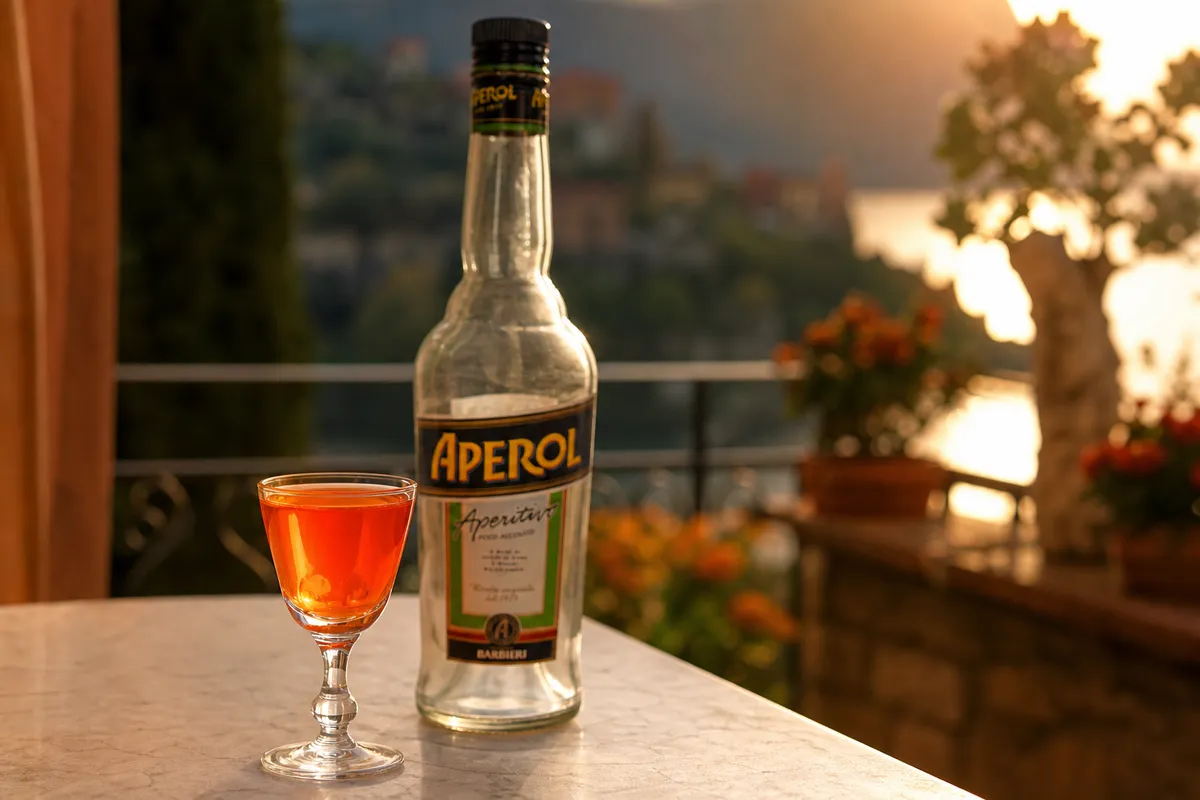
Aperol
Light, sweet-orange aperitivo from Veneto, created in 1919. Lower ABV (11-12%) makes it approachable. Essential in the Aperol Spritz, one of Italy’s most popular aperitivo cocktails.
Negroni. Equal parts gin, Campari and sweet vermouth. Strong, bitter, beautiful. The best-known story places its birth in Florence around 1919, when Count Camillo Negroni asked the bartender at Caffè Casoni to swap the soda in his Americano for gin; the details are disputed, the drink is not. A Negroni sbagliato is the lighter version, with sparkling wine in place of gin. Our Negroni recipe has the method.
Americano. Campari and sweet vermouth in equal parts, topped with soda. Without the soda it’s the Milano-Torino, named for Campari’s city and vermouth’s. With it, it’s the Americano, lower in alcohol and very easy to like.
Campari soda. Campari topped with soda water, very cold. In Milan it’s the classic counter order.
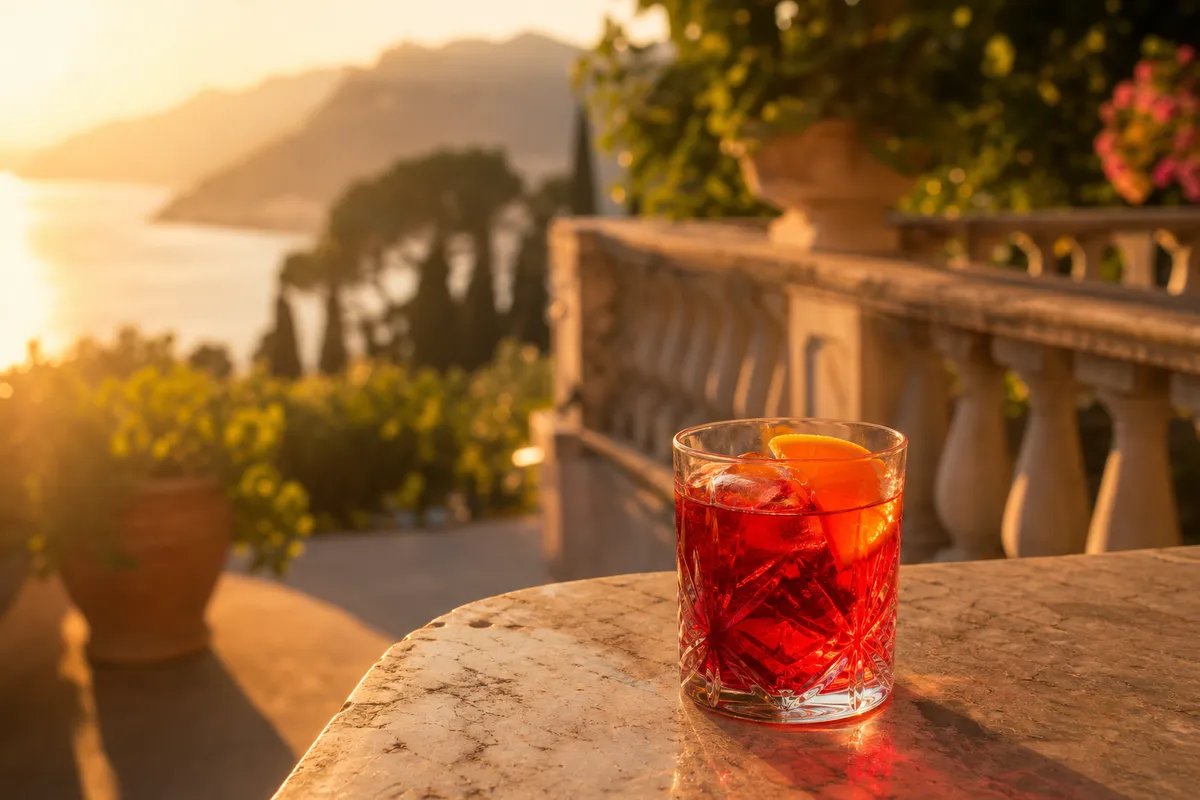
Campari
World-famous aperitivo from Lombardy, created in 1860. Intensely bitter-orange flavour, essential in cocktails like the Negroni. The iconic red aperitivo that defined Italian aperitivo culture.
A glass of bubbles or wine. A calice of prosecco in the Veneto, Franciacorta around Milan and Brescia, a local white or red anywhere else. Never a wrong choice.
Analcolico. Not drinking? Ask for an analcolico. The two classics are Crodino, the golden non-alcoholic aperitif first made in Crodo, in Piedmont, in 1965, and Sanbitter, the red one from Sanpellegrino. Both come in small bottles, poured over ice, and both get the snacks.
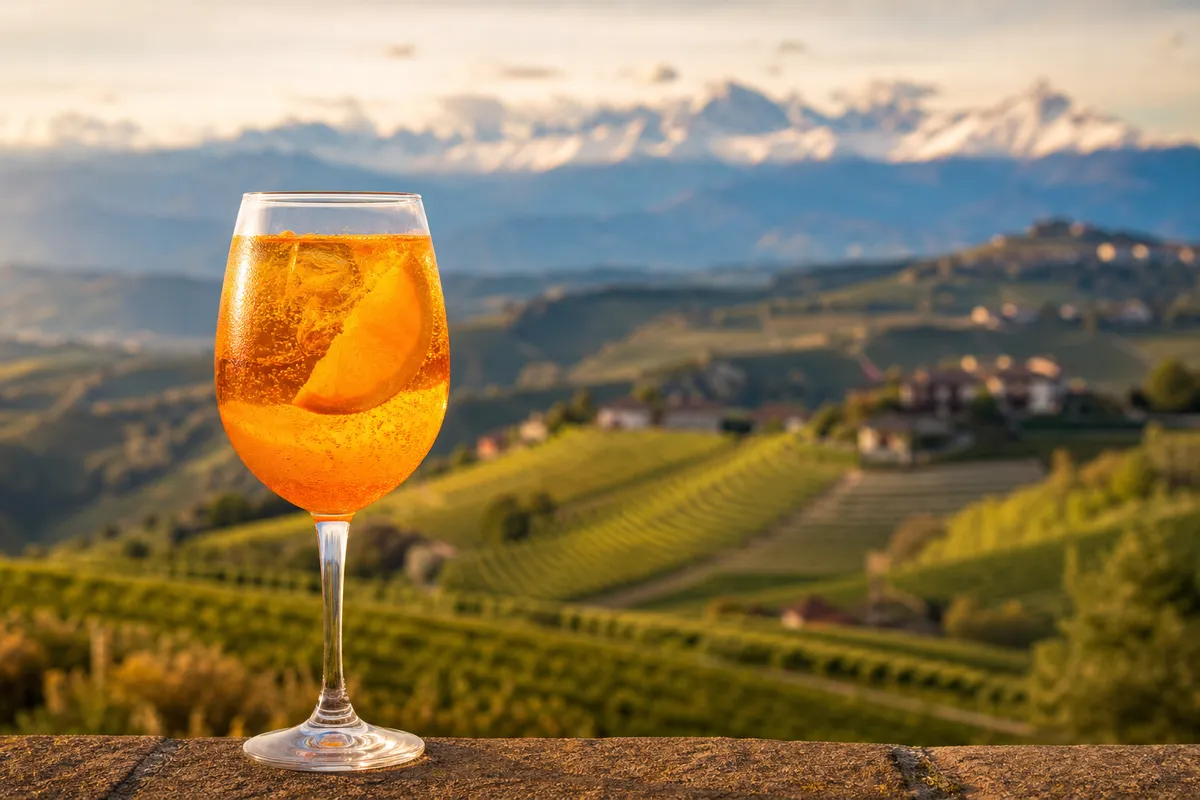
Crodino
Italy’s beloved non-alcoholic aperitivo, from the alpine springs of Crodo.
How to do aperitivo in Italy
- Pick your moment. Arrive between about 6 and 8 pm, a little later in the south. Earlier and the bar may not be ready; later and the crowd is already heading to dinner.
- Choose counter or table. Standing, or a stool at the counter, is usually cheaper. A table, especially outside on a piazza, costs more and comes with table service.
- Order a drink. Say what you want: “uno spritz”, “un Negroni”, “un calice di prosecco”, “un analcolico”. For the Venetian version, ask for a spritz al Select.
- Let the food come to you. Small bites usually arrive with the drink. At an apericena bar the barman will point you to the buffet: take a plate and go back as often as is decent.
- Pay and go to dinner. Pay at the till or ask for the bill at your table. Tipping is not expected. Then go and eat, which is the whole point.
How it changes from city to city
Milan. The capital of aperitivo as a social event. Campari is Milanese to its bones: Gaspare Campari opened Caffè Campari in the Galleria Vittorio Emanuele II in 1867, and in 1915 his son Davide opened Camparino beside it, with soda water piped up from the cellars so the Campari soda was always cold. Milan is also where you’ll find the big apericena buffets, especially along the Navigli.
Turin. The home of vermouth. Antonio Benedetto Carpano is credited with making the first commercial vermouth in Turin in 1786, in a shop near the Palazzo Reale, and the city still drinks it before dinner. Order a glass of Vermouth di Torino, now a protected geographical indication, neat or over ice, in one of the historic cafés on Piazza San Carlo or Piazza Castello.
Venice. Here aperitivo happens standing up in a bacaro, a small wine bar with a counter of cicchetti: crostini with baccalà mantecato, meatballs, sardines in saor, half an egg with an anchovy. You order an ombra, a small glass of house wine, or a spritz with Select, and pay for each cicchetto separately. The Venetian move is to drink one or two and walk on to the next bacaro.
Rome and the south. Aperitivo here is looser and later. Expect a glass of wine or a spritz with crisps, olives and a few bites rather than a buffet, often in an enoteca or a bar on a small piazza. The ritual is the same; the clock runs about an hour behind.
Our tip
Questions, answered
What is aperitivo in Italy?
Aperitivo is the pre-dinner drink and the social hour around it, roughly 6 to 9 pm. You order a drink, usually a spritz, a Negroni, a Campari soda or a glass of wine, and small snacks come with it.
Is the food free at aperitivo?
Usually the snacks come with the drink at no extra charge: crisps, olives and a few small bites. In Milan many bars offer an apericena buffet included in a higher drink price, often around €12–17. In Venice’s bacari, cicchetti are paid for one by one.
What time is aperitivo?
Roughly from 6 to 9 pm. Milan bars often run aperitivo until 9 or 9:30. In Rome and the south it starts and ends later, because dinner does too.
What is the difference between aperitivo and apericena?
Aperitivo is a drink with small bites before dinner. Apericena is a Milanese-style aperitivo with a buffet generous enough to replace dinner, included in the price of one drink.
What can I order if I don’t drink alcohol?
Ask for an analcolico. Crodino and Sanbitter are the classic non-alcoholic aperitifs, and the snacks come with them just the same.
Why it’s worth doing
Aperitivo is the hinge of the Italian evening. Work is over, dinner hasn’t started, and for an hour the whole street is in the same good mood. You don’t need to know the history or order the perfect drink. Find a bar where people are standing outside, order a spritz, eat the olives, and stay until you’re hungry. That’s it. You’re doing aperitivo.
Sources and citations (16)
- IBA: Spritz
- IBA: Americano
- Camparino in Galleria: History
- Campari Group: Aperol toasts to 100 years
- Select (aperitif)
- A Venezia apre Ca' Select
- Difford's Guide: History of the Negroni
- Antonio Benedetto Carpano
- Cos'è il Vermouth di Torino e come si produce
- Gambero Rosso: Vermouth Torino
- Aperitivo in Milan spending little
- Dove fare aperitivo a Milano spendendo poco
- Venice Cicchetti Guide
- Cheap eats guide to Venice
- Il Post: perché il Crodino si chiama così
- Sanpellegrino: Arriva Sanbitter Fizz


