

All the monuments, city by city
The landmarks and masterpieces worth planning a day around.
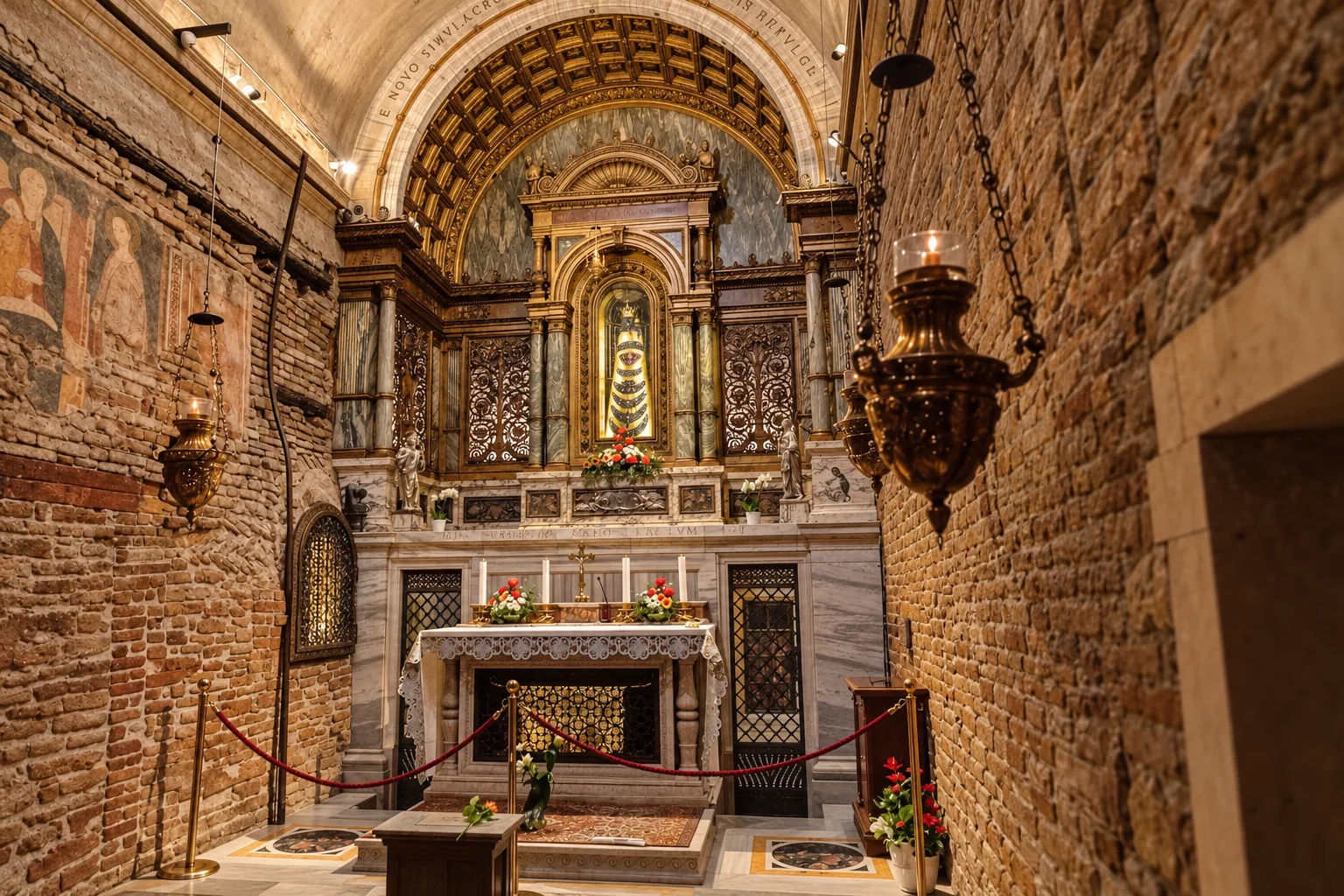 LoretoBasilica della Santa CasaThe Holy House of Nazareth, marble screen by Bramante's school, Black Madonna, hilltop pilgrim cityLoreto's basilica grew up around a small stone house that, by tradition, angels carried here from Nazareth in 1294, the childhood home of the Virgin Mary. Built between 1468 and 1587 to shelter it, the church wraps the Holy House in a marble screen carved by pupils of Bramante and Sansovino, its reliefs telling the story of the Annunciation. Pilgrims still circle the brick walls inside on their knees, a devotion that has worn grooves into the stone floor over centuries. Above the altar stands a dark cedarwood Madonna, carved in 1921 after fire destroyed the medieval original. Loreto itself, a hill town above the Adriatic, has drawn travelers since the Middle Ages, and the basilica's dome announces the sanctuary long before you reach the piazza.Plan the visit
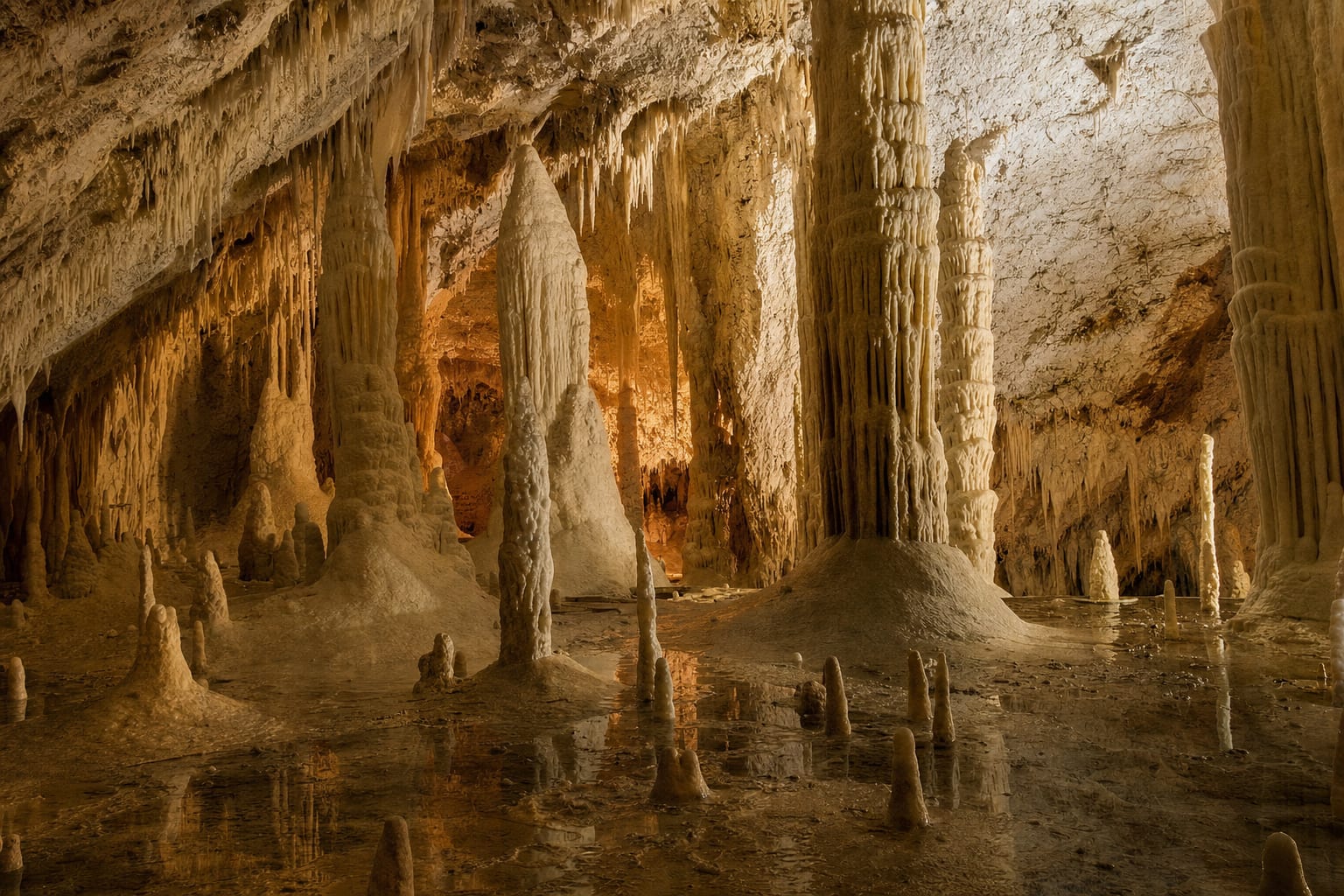 GengaFrasassi CavesAbisso Ancona chasm, giant stalagmites, Valadier temple hermitage, guided cave tourCavers from Ancona found a hole in the Frasassi gorge in 1971 and lowered themselves into the Abisso Ancona, a chamber so vast it could swallow Milan Cathedral whole, dome and all. Only a fraction of that abyss opens to the public: a paved, lit route of about a kilometer winds past crystal-clear pools and stalagmites the size of towers, some still growing by a millimeter every few decades. Near the entrance, the small octagonal church of Santa Maria infra Saxa, rebuilt in the 1820s to a design linked to the architect Giuseppe Valadier, shelters inside a cliff cave, a startling piece of Neoclassical order tucked into raw limestone. Guides keep groups moving at a steady pace, so the visit covers only a fraction of the system even though the cave system beneath the gorge runs for many more kilometers.
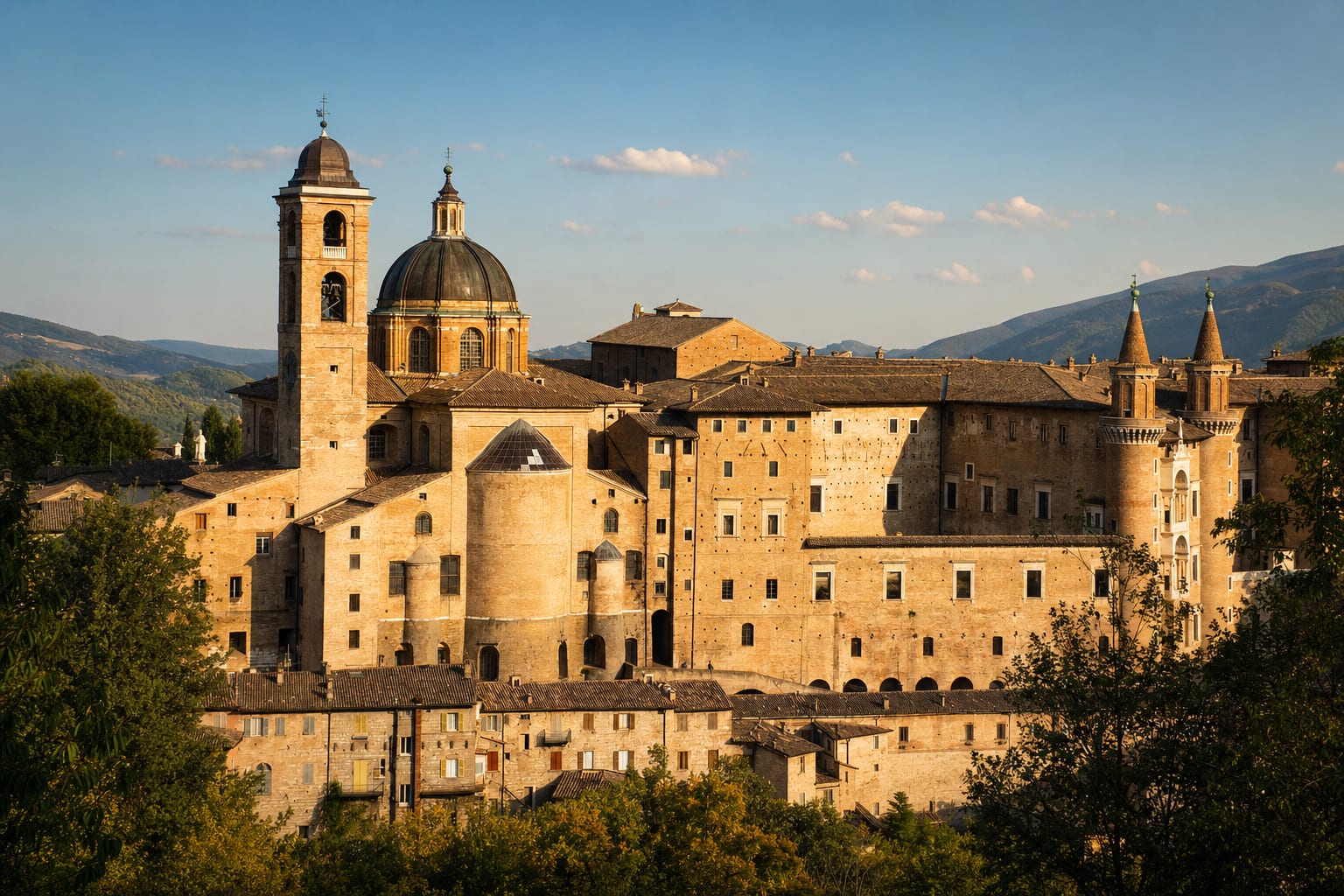 UrbinoUNESCODucal Palace of UrbinoFederico da Montefeltro's court, twin-turret facade, studiolo intarsia, Piero's FlagellationFederico da Montefeltro, the condottiero-duke who ran Urbino as a model Renaissance state, began his palace around 1454 and by 1465 had hired the Dalmatian architect Luciano Laurana to build its twin-turreted facade, a design so influential it became shorthand for the ideal court. Inside, Federico retreated to a tiny studiolo just over three meters across, its walls entirely inlaid in wood (intarsia) with trompe l'oeil shelves of books, armor, and instruments, a private illusion built for a man who read constantly and trusted almost no one. The palace now holds the Galleria Nazionale delle Marche, whose greatest possession is Piero della Francesca's Flagellation of Christ, a small panel whose staged, geometrically precise scene has puzzled historians for over a century.
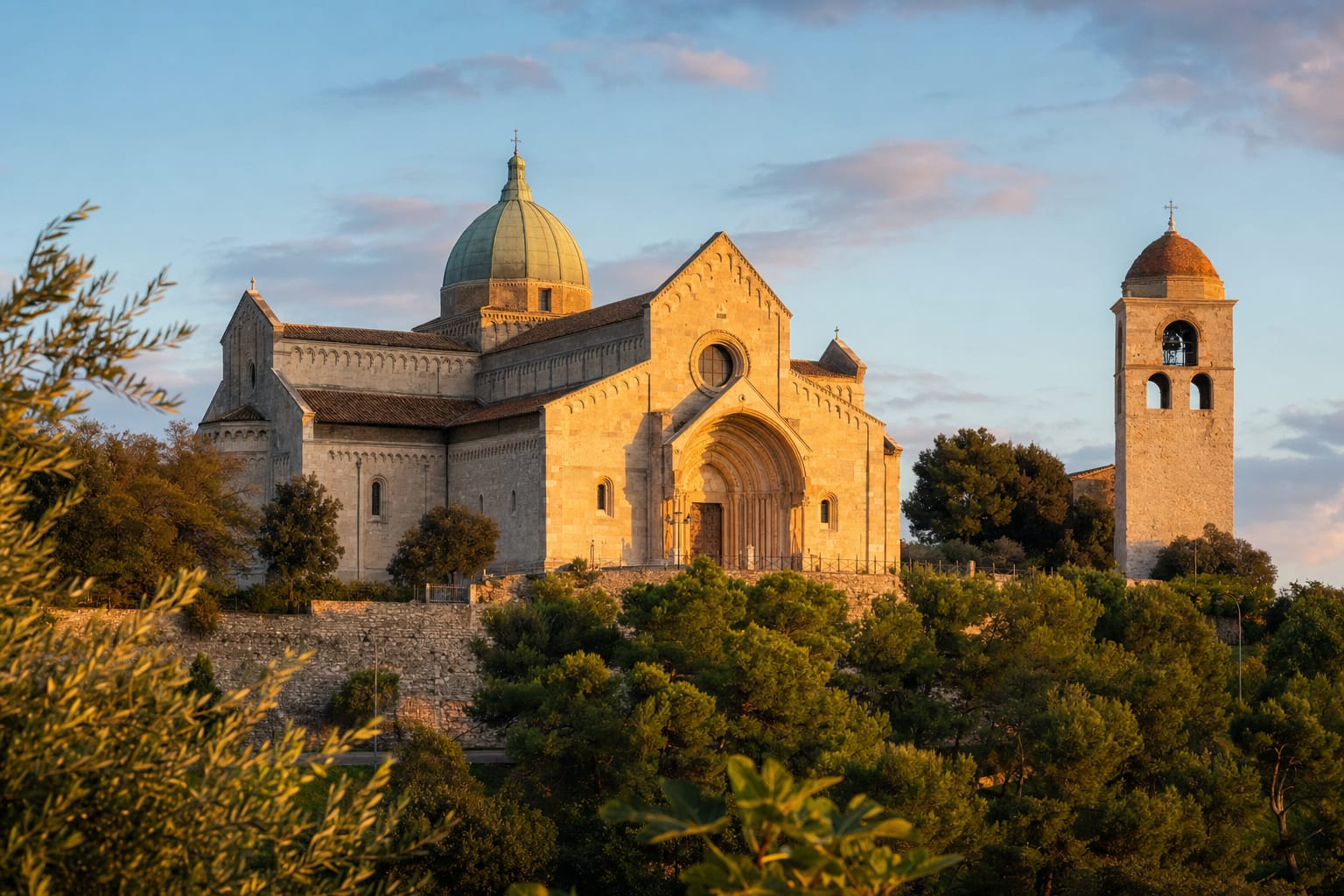 AnconaAncona CathedralHarbor-hill cathedral, Greek-cross plan, Byzantine-style dome, carved lion protiro, Aphrodite temple siteSan Ciriaco stands on Ancona’s Guasco hill, the acropolis where Syracusan Greek settlers once raised a temple to Aphrodite to watch over their harbor. A paleochristian basilica went up on the same spot in the sixth century, and by the eleventh it had become the city’s cathedral; the Greek-cross plan and thirteenth-century twelve-sided dome, rare for Italy, borrow as much from Byzantium as from Romanesque builders back home. The protiro at the entrance rests on two carved stone lions, medieval guardians still doing their job. Bombed in the Second World War, the cathedral was rebuilt stone by stone; restorer Giuseppe Sacconi had already stripped its Baroque overlay around 1900, so what stands today reads close to medieval. The terrace outside gives one of the best harbor views in the Marche.
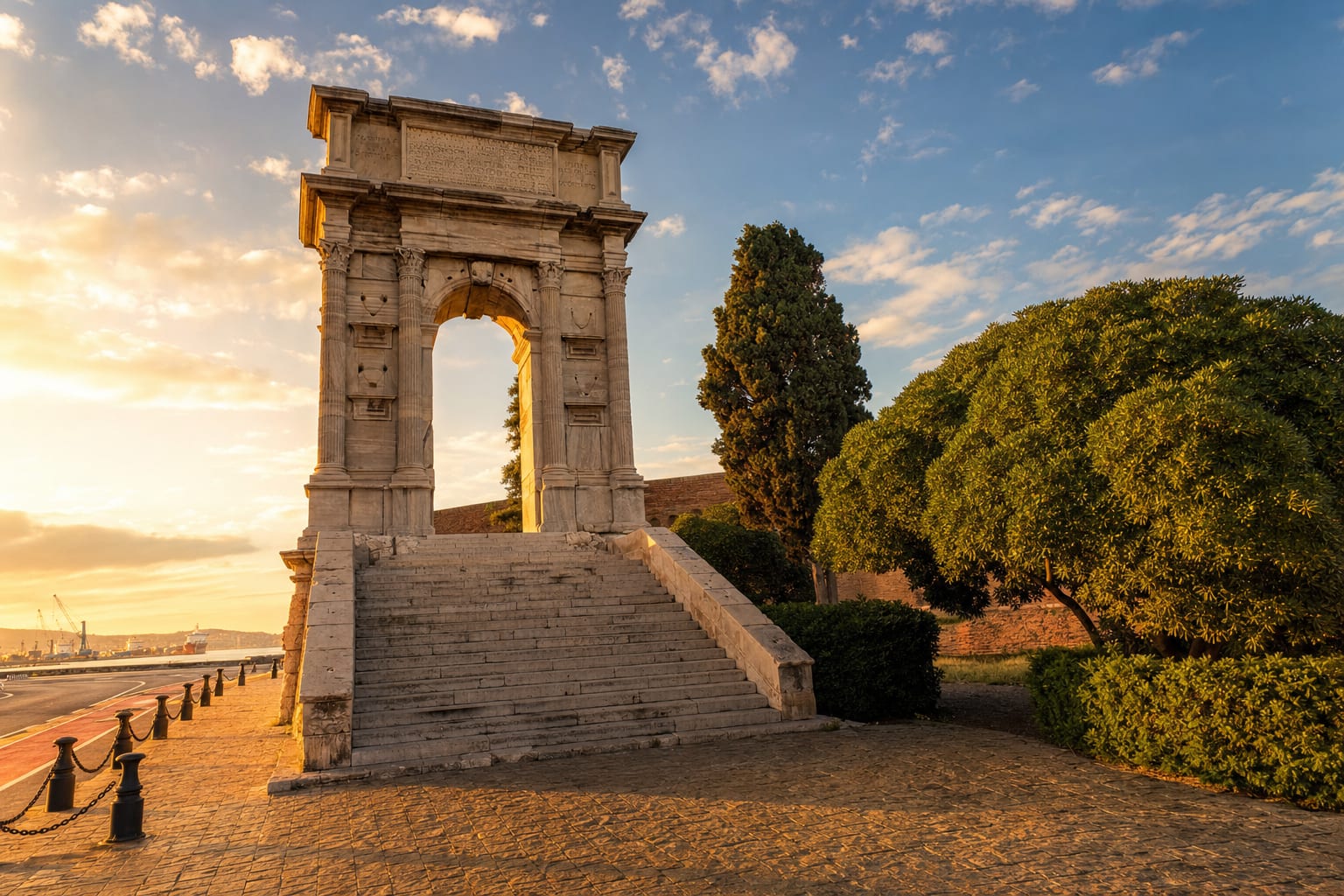 AnconaArch of Trajan of AnconaHarbor-mole arch of 115 AD, Apollodorus of Damascus, slender Corinthian columns, Trajan’s port giftTrajan paid to enlarge Ancona’s harbor at his own expense around 100 AD, and a grateful Senate raised this arch on the mole itself, dedicating it around 115. Likely designed by Apollodorus of Damascus, the same architect behind Trajan’s Column in Rome, it is built of pure white Greek marble, its fluted Corinthian columns giving it a slenderness unusual among Roman triumphal arches. Six bronze statues once stood along its attic, facing land and sea, and fourteen bronze ship’s rams decorated it; all were stripped during a Saracen raid in 839. A 2000 restoration removed the nineteenth-century railings that had fenced it off, and today it stands open on the harbor mole, visible from the cathedral hill above and from ships still entering the port it was built to celebrate.
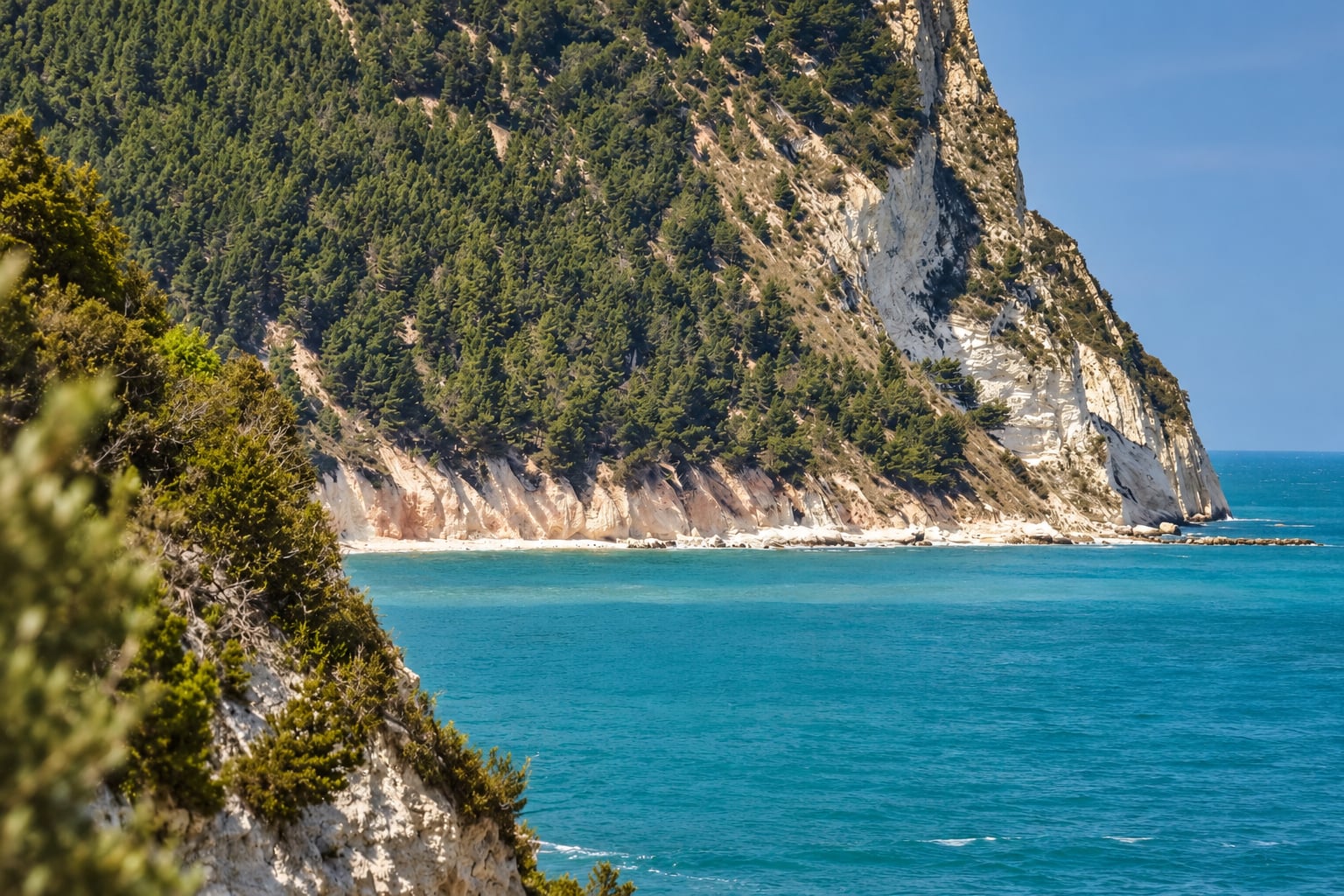
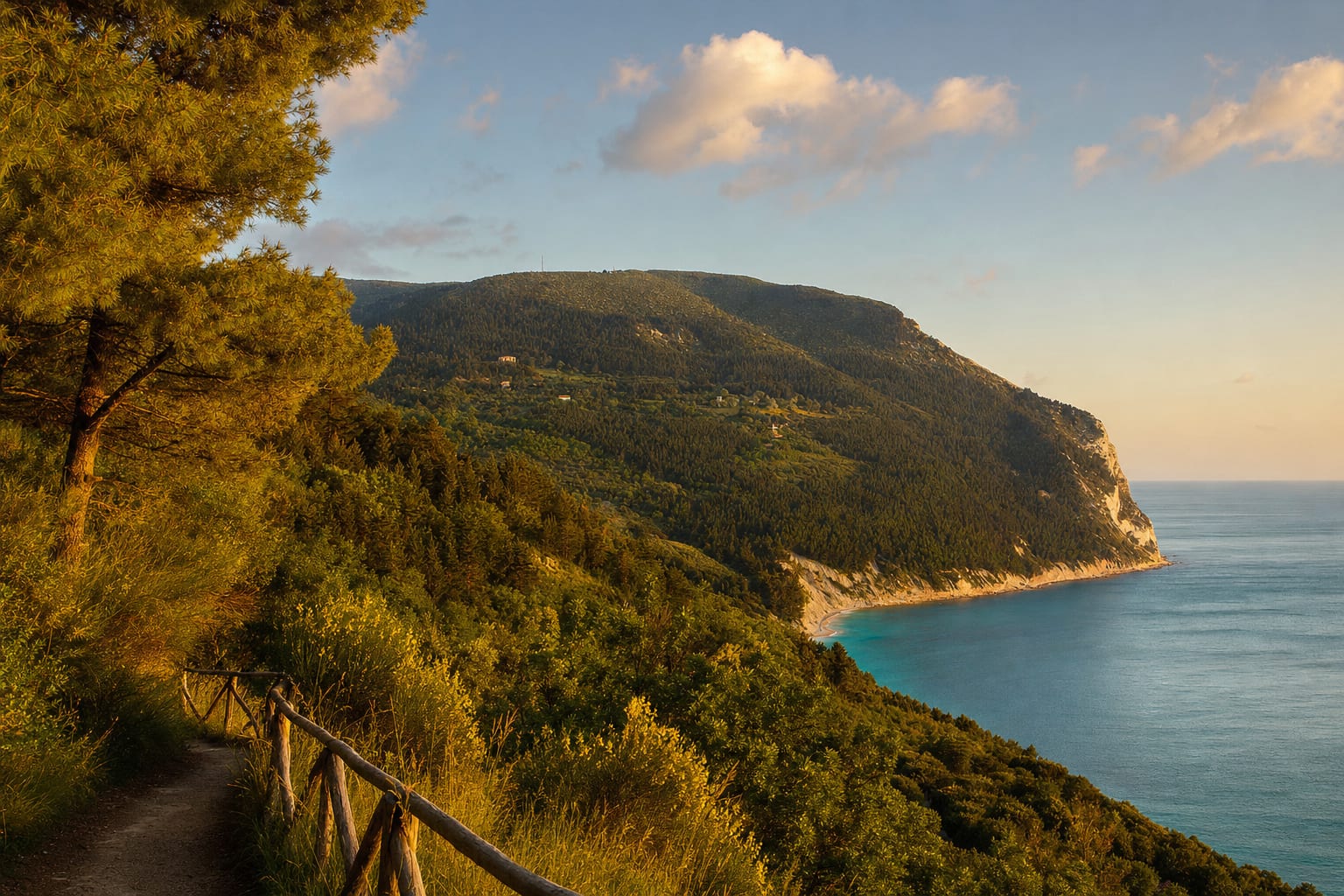 AnconaMonte ConeroWhite cliffs over the Adriatic, Due Sorelle sea stacks, arbutus woods, eighteen hiking trailsThe Adriatic’s flat western shore breaks only once between Trieste and the Gargano promontory, at Monte Conero’s white limestone prow above Ancona. The mountain rises straight from the sea to 572 meters, its cliffs dropping into water that shifts from turquoise to deep blue with the light. Eighteen marked trails cross pine and arbutus woods that scent the air with myrtle and rosemary, many ending at a viewpoint over the Due Sorelle, twin sea stacks guarding a beach reachable only by boat or a steep path down from Sirolo. Golden eagles and peregrine falcons nest on the cliffs, and Sirolo and Numana, the two towns sharing the headland, still feel like fishing villages that happened to end up beside a nature reserve.
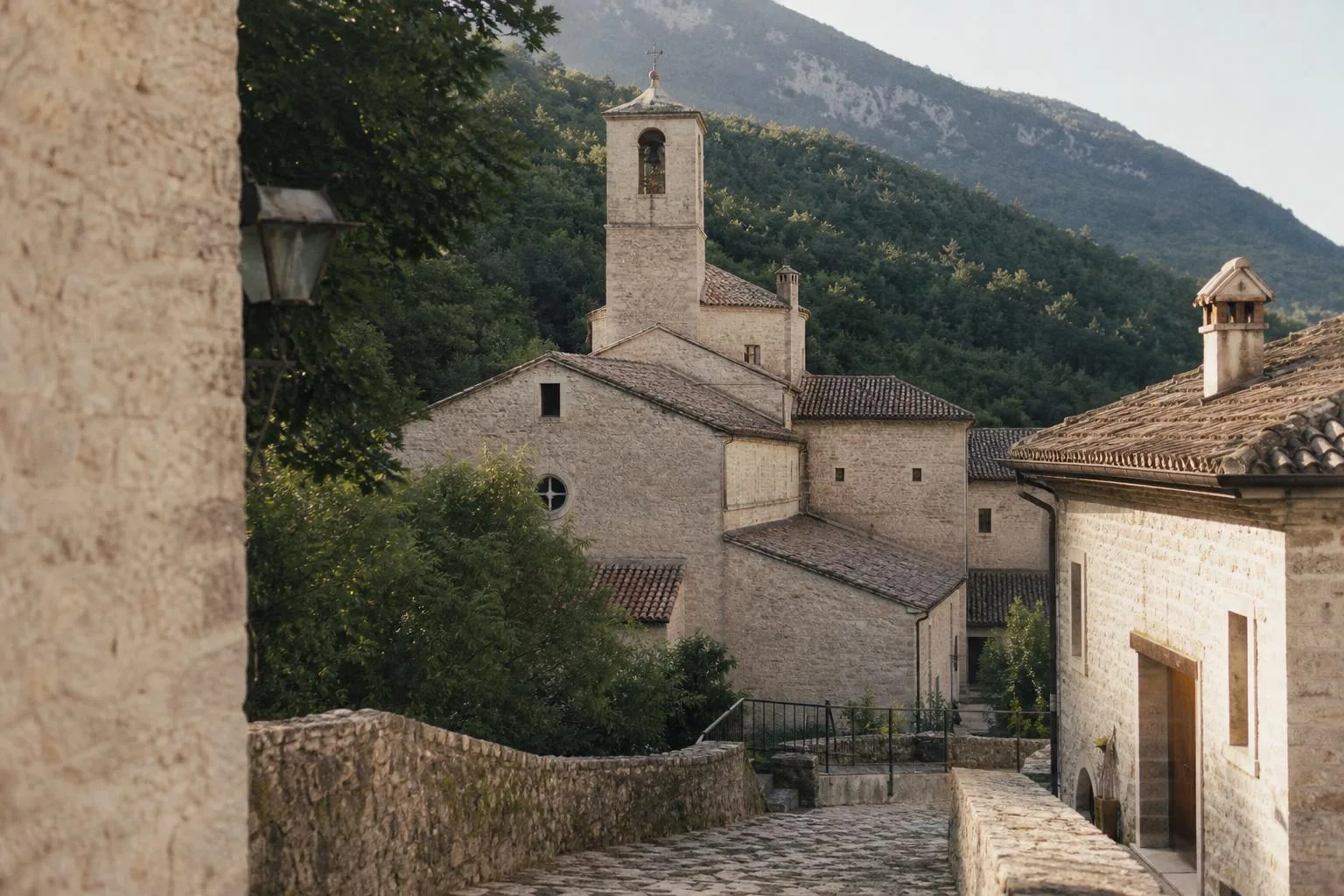 Serra Sant'AbbondioHidden GemFonte AvellanaCamaldolese hermitage since 980, Dante’s stay, sole Camaldolese abbey, historic pharmacyCamaldolese monks have prayed at Fonte Avellana since around the year 980, tucked into a fold of Monte Catria where the silence itself feels built. Saint Peter Damian arrived as a monk in 1035 and later became prior, shaping both the community’s austere rule and the stone cloister that still stands. Dante Alighieri is said to have stayed here while exiled from Florence, and wrote a hermitage very like it into the Paradiso. In 1325 Fonte Avellana became an abbey, the only Camaldolese house ever raised to that rank, and Pope John Paul II marked its thousandth anniversary with a visit in 1982. Monks still keep the ancient pharmacy that once served pilgrims with herbal remedies, and a botanical garden of the monastery’s own medicinal plants has been open to visitors since 2007.
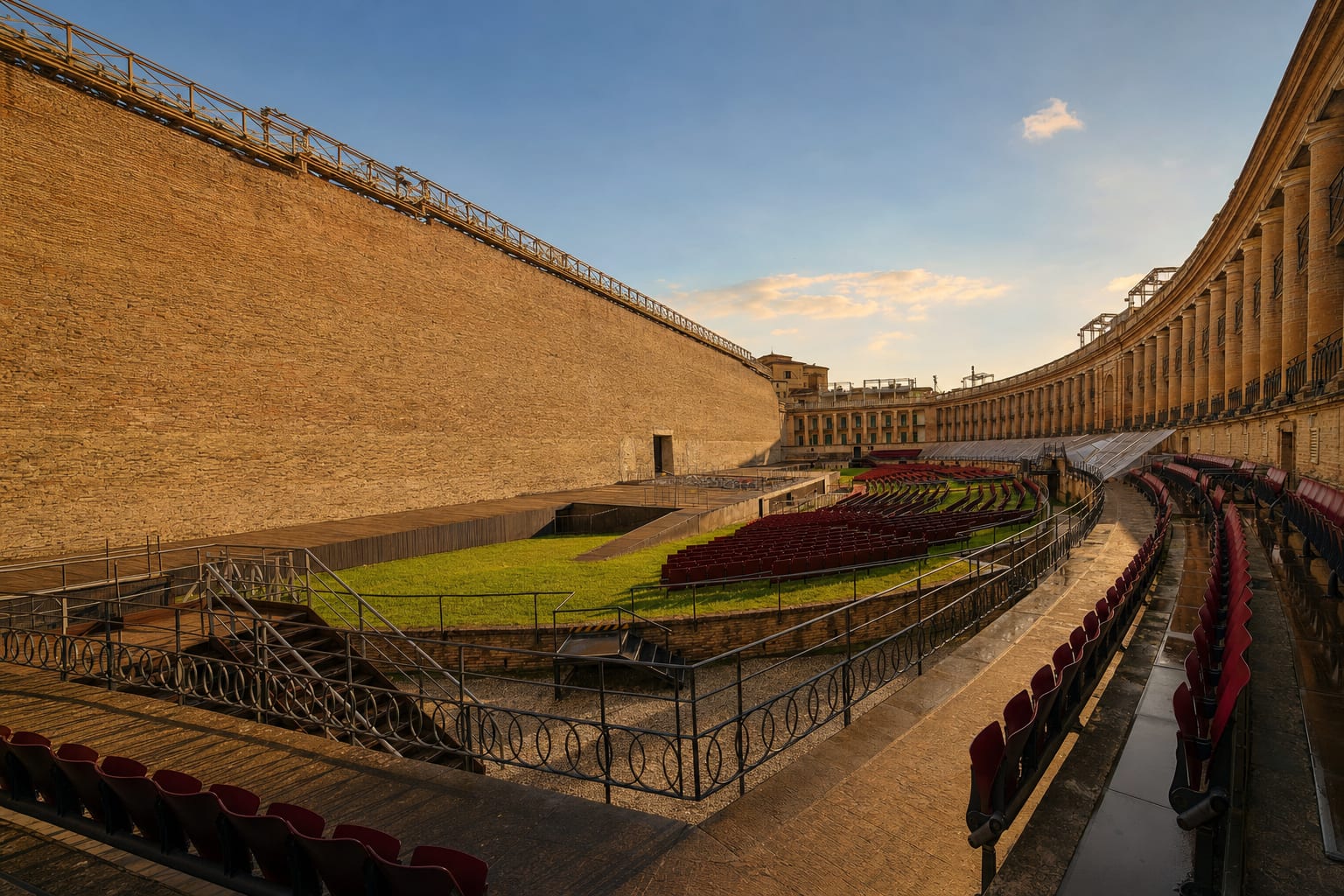 MacerataSferisterio of MacerataNeoclassical arena, hundred-meter acoustic wall, summer opera festival since 1967, ball-game originsMacerata's city fathers commissioned this neoclassical arena in 1820 to host pallone col bracciale, a fast, glove-and-ball game once as popular in the Marche as football is today; construction under the architect Ireneo Aleandri finished in 1829. The hundred-meter stage wall that once simply stopped balls turned out to carry sound with unusual clarity, and by the mid-20th century the arena had become an opera house for three summer months a year. The Sferisterio Opera Festival, running here since 1967, stages full productions in the open air against that same wall, drawing directors and sets that use its scale rather than fight it. Outside festival season, the arena stands open for daytime visits, its tiered stone seating and the wall itself worth seeing even empty, with views back toward Macerata's historic center from the top rows.
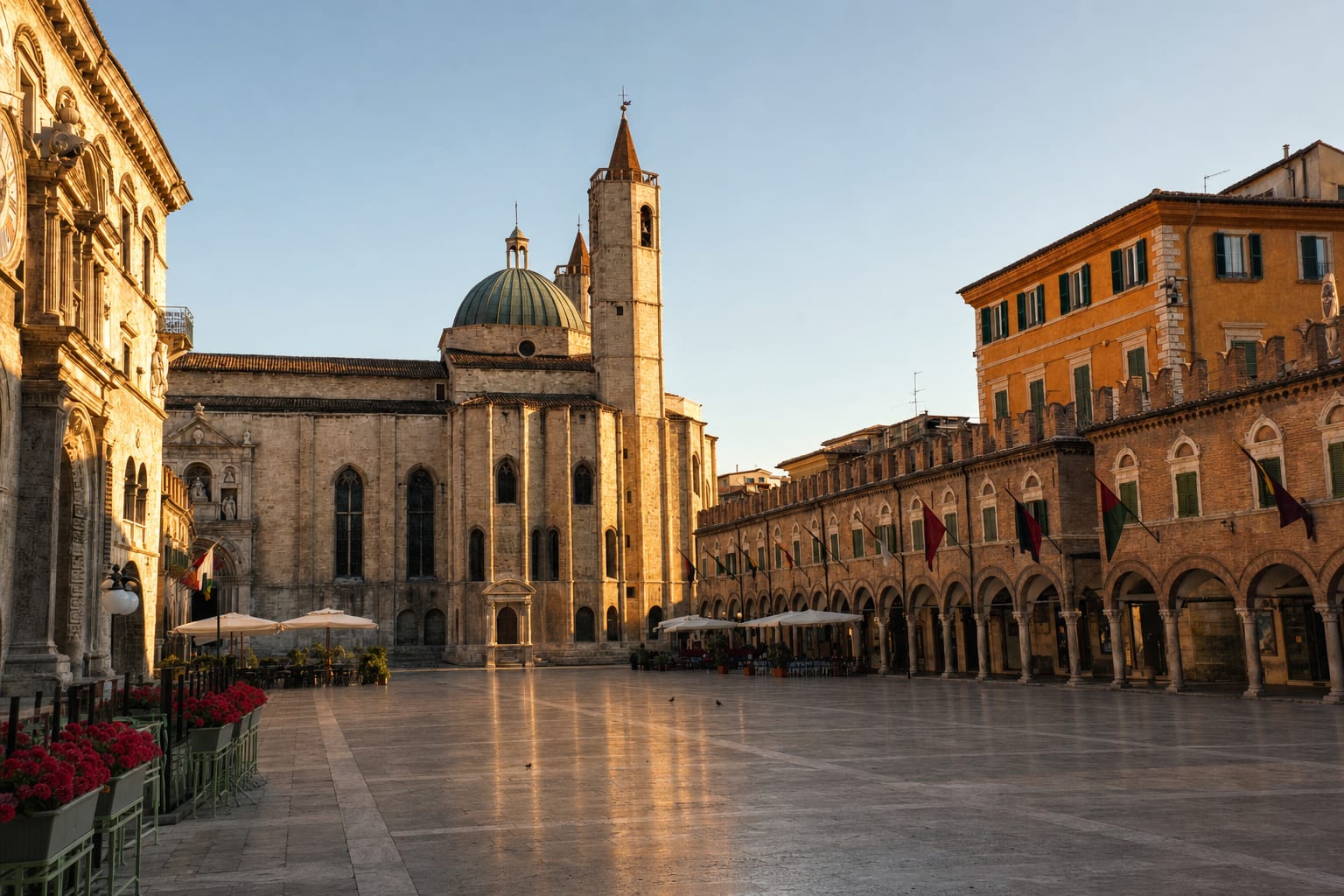 Ascoli PicenoPiazza del Popolo of Ascoli1509 Julius II redesign, travertine paving, Caffe Meletti anisetta, Palazzo dei Capitani towerAscoli's main square takes its name from the Palazzo dei Capitani del Popolo, the medieval town hall with a crenellated tower that still anchors its western side. The square reached its current form in 1509, when Pope Julius II ordered governor Raniero de' Ranieri to rebuild it as a single travertine hall, roughly 2,500 square meters laid out on a strict 1:3 ratio and closed on the north by the Gothic facade of the Basilica di San Francesco. Travertine paving had already gone down in the late fifteenth century, and it is polished enough that on a wet evening the whole square turns into a mirror. Caffe Meletti has occupied the western arcade since 1907, its Art Nouveau room barely changed, and it remains the place to order a glass of anisetta, the anise liqueur the town calls its own.
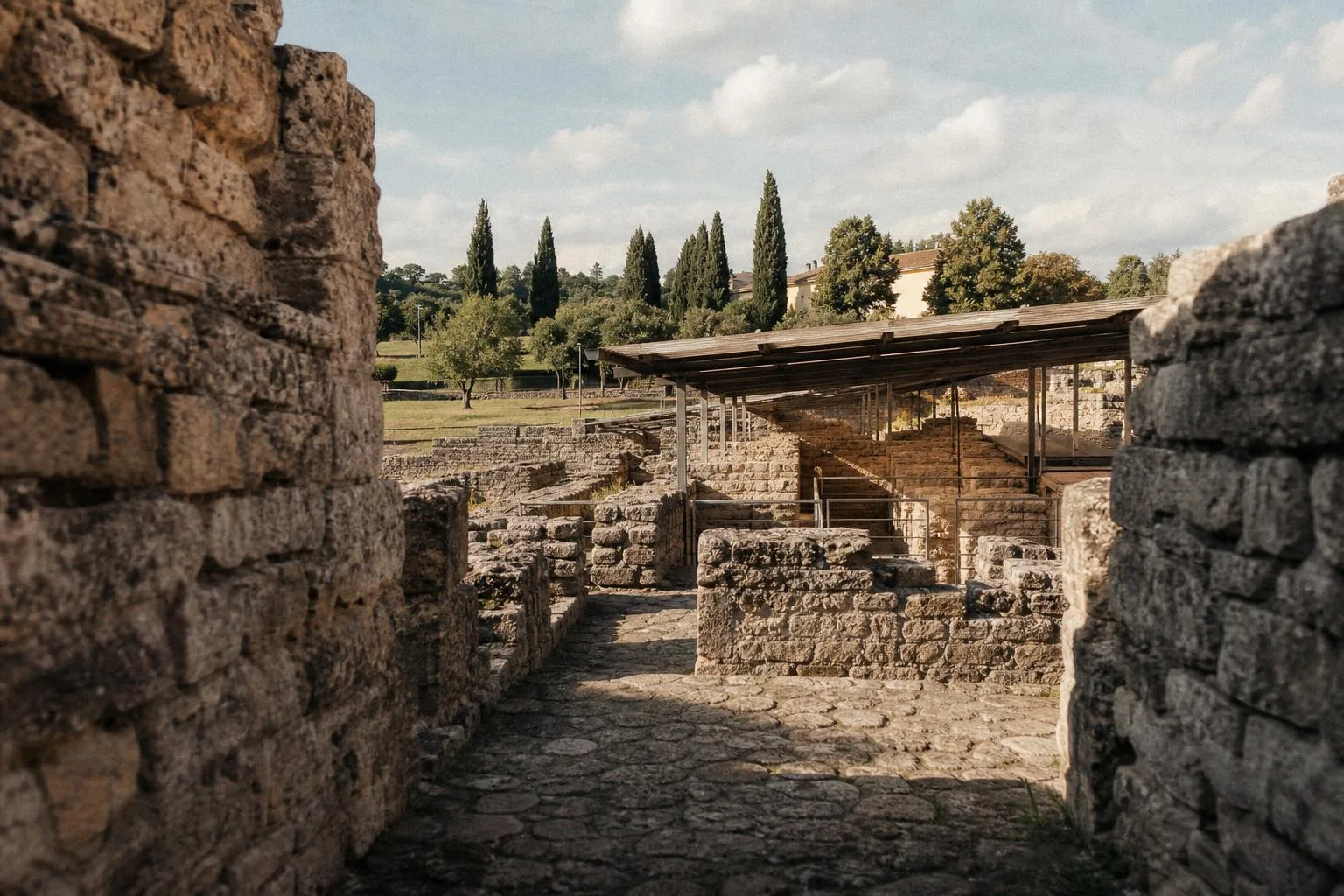 Castelleone di SuasaHidden GemSuasaDomus dei Coiedii mosaics, Roman forum and amphitheater, civic archaeological museumSuasa was a Roman town founded after the Battle of Sentinum in 295 BC on land taken from the Senones, and it sat where a branch of the Via Flaminia crossed the Via Salaria Gallica. It flourished for centuries, was sacked by Alaric’s Goths in 409 and was abandoned after the Gothic War. Since 1987 the University of Bologna has excavated a forum, theater and amphitheater. The star is the Domus dei Coiedii, a large aristocratic house with mosaic floors of remarkable quality and painted plaster. Part of it is visible on site; the rest is displayed in the civic archaeological museum in nearby Castelleone di Suasa, so plan to see both.
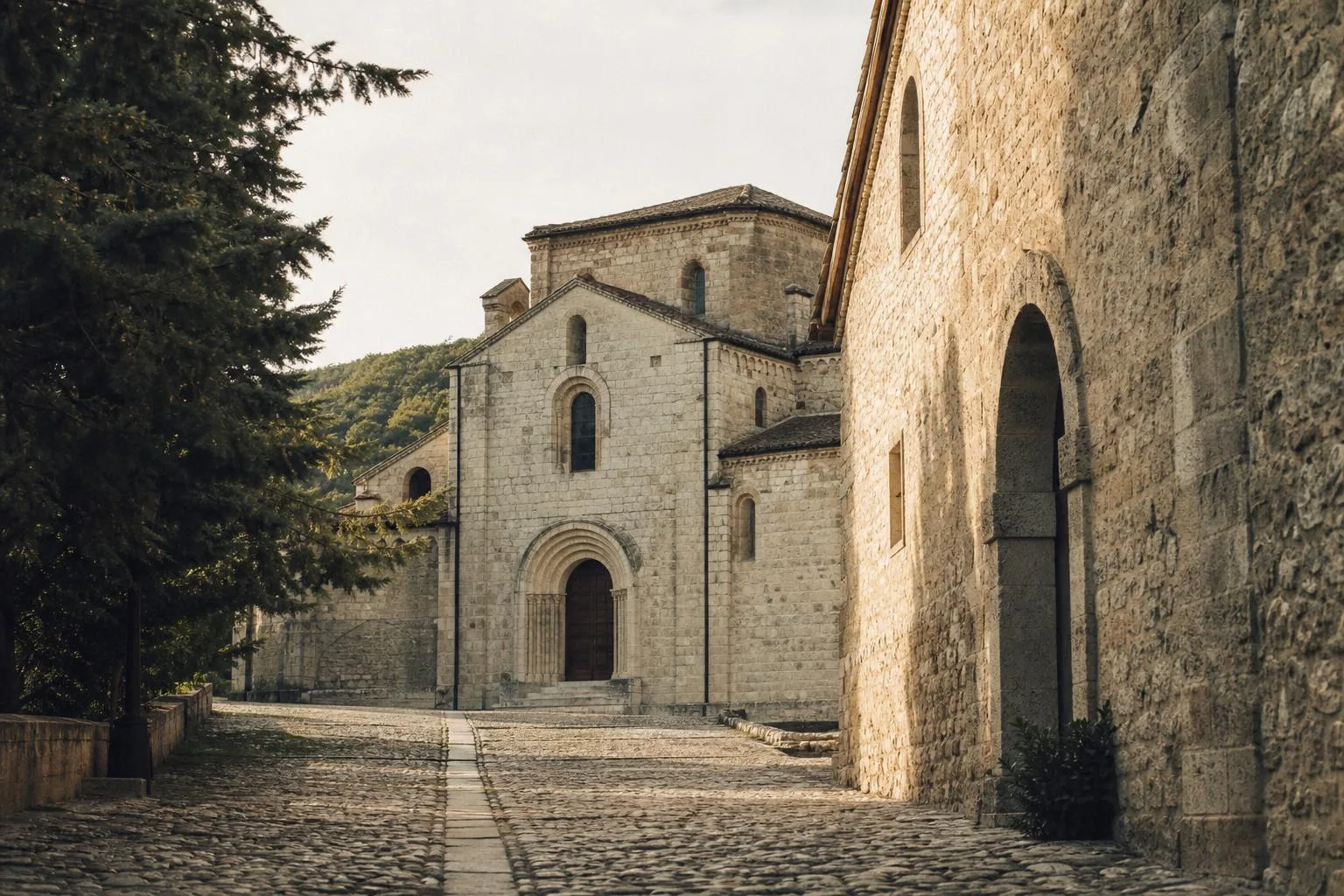 TolentinoHidden GemChiaravalle Abbey, Fiastra1142 Cistercian foundation, Romanesque-Gothic church, six historic grance farms, surrounding nature reserveCistercian monks from Milan founded this abbey in 1142 on land given by Duke Guarniero II of Spoleto, consecrated its church by 1170, and built it into the most important monastic complex in the Marche, controlling thirty-three dependent churches and monasteries at its thirteenth-century peak with some two hundred monks. Braccio da Montone's mercenaries sacked it in 1422, and centuries of decline followed until Cistercian monks returned from Milan in 1985, staying until 2018. The Romanesque-to-Gothic church, cloister, chapter hall, refectory and scriptorium survive largely intact, along with six outlying grance, the abbey's working farms. Since 1985 the surrounding woodland has been protected as a nature reserve, the Riserva Naturale dell'Abbadia di Fiastra, making the abbey and forest a single visit.
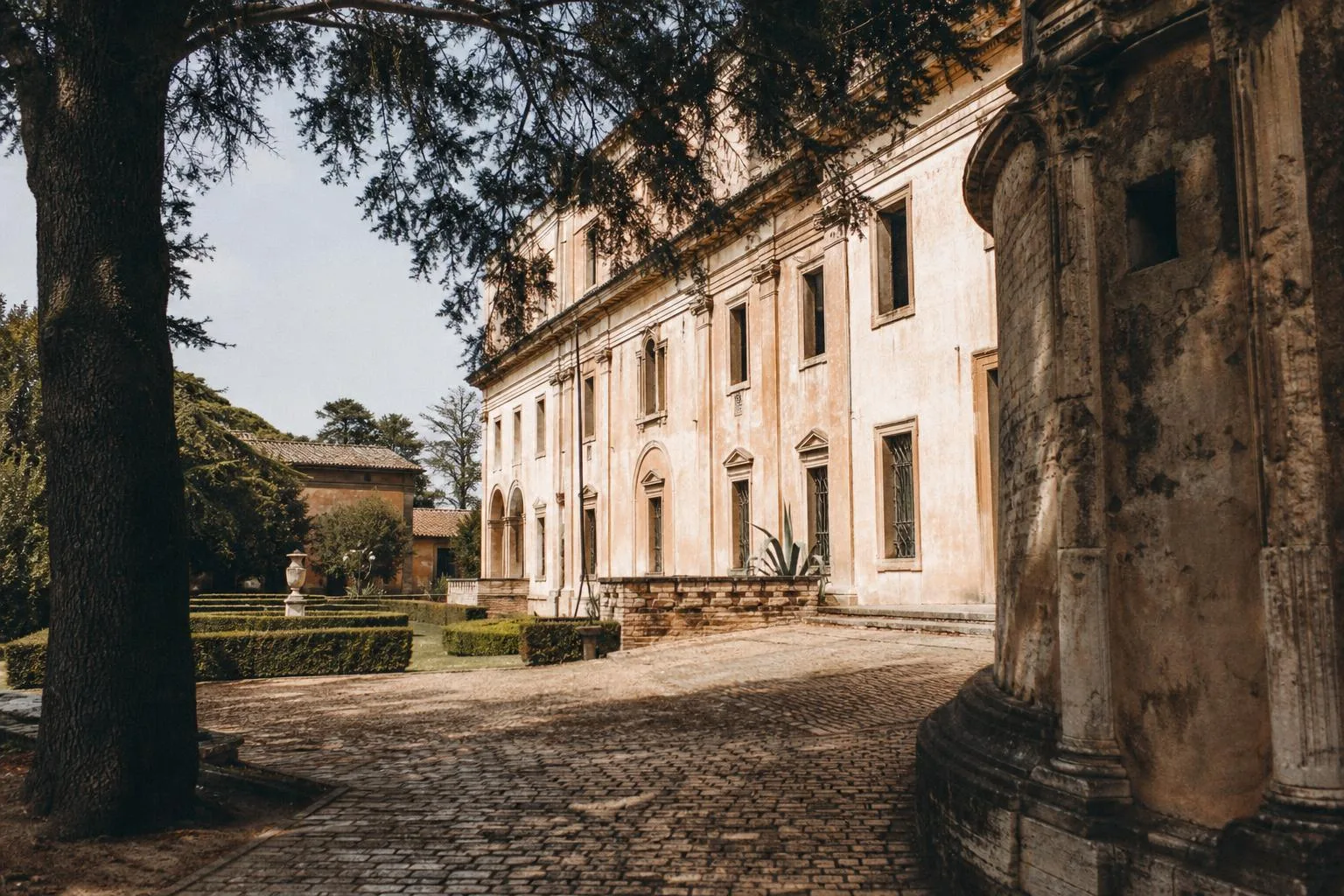 PesaroHidden GemVilla Imperiale of PesaroGirolamo Genga's Mannerist wing, Dosso Dossi and Bronzino frescoes, terraced hillside gardens, private ducal villaFrancesco Maria I Della Rovere, Duke of Urbino, had the architect Girolamo Genga transform a modest fifteenth-century villa above Pesaro into a Mannerist showpiece between 1523 and 1538, adding a quadrangular new wing with loggias on all four sides. Genga coordinated an extensive fresco program for the interiors, bringing in Dosso Dossi, Raffaellino del Colle and a young Agnolo Bronzino to paint rooms that still carry their names among art historians today. Terraced gardens step down the hillside below the villa in a design meant to be seen from the loggias above, part of the same theatrical logic that shaped the architecture. Still privately owned and lived in, the villa has at times opened for guided tours by reservation in late spring and summer.
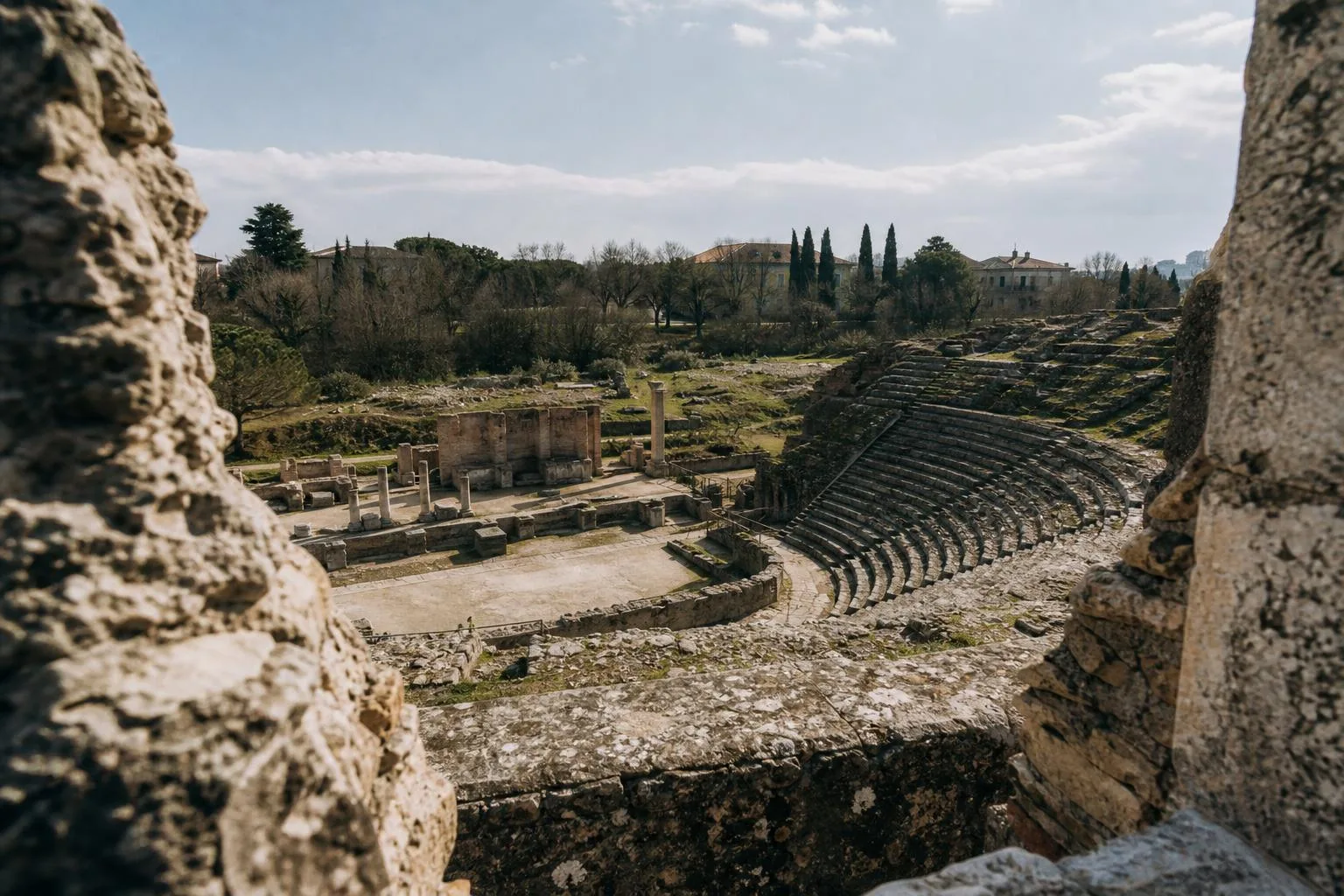 UrbisagliaHidden GemArchaeological Park of Urbs SalviaLargest Marche archaeological park, 23 AD Roman theater, well-preserved amphitheater, on-site museumUrbs Salvia was a Roman colony founded in the second century BC, and its ruins now form the largest archaeological park in the Marche, forty hectares under the management of the regional archaeological authority. A theater built in 23 AD on a Hellenistic model still preserves the lower walls of its stage building beneath a three-tiered auditorium, and an amphitheater raised after 81 AD by the general Lucius Flavius Silva, the same commander who took Masada, ranks among the best-preserved examples of its type in the region, its arena measuring fifty-nine by thirty-five meters with semicircular niches that once supported the seating stairs. A temple complex and an on-site museum round out the visit, all open to the public in the quiet countryside around Urbisaglia.
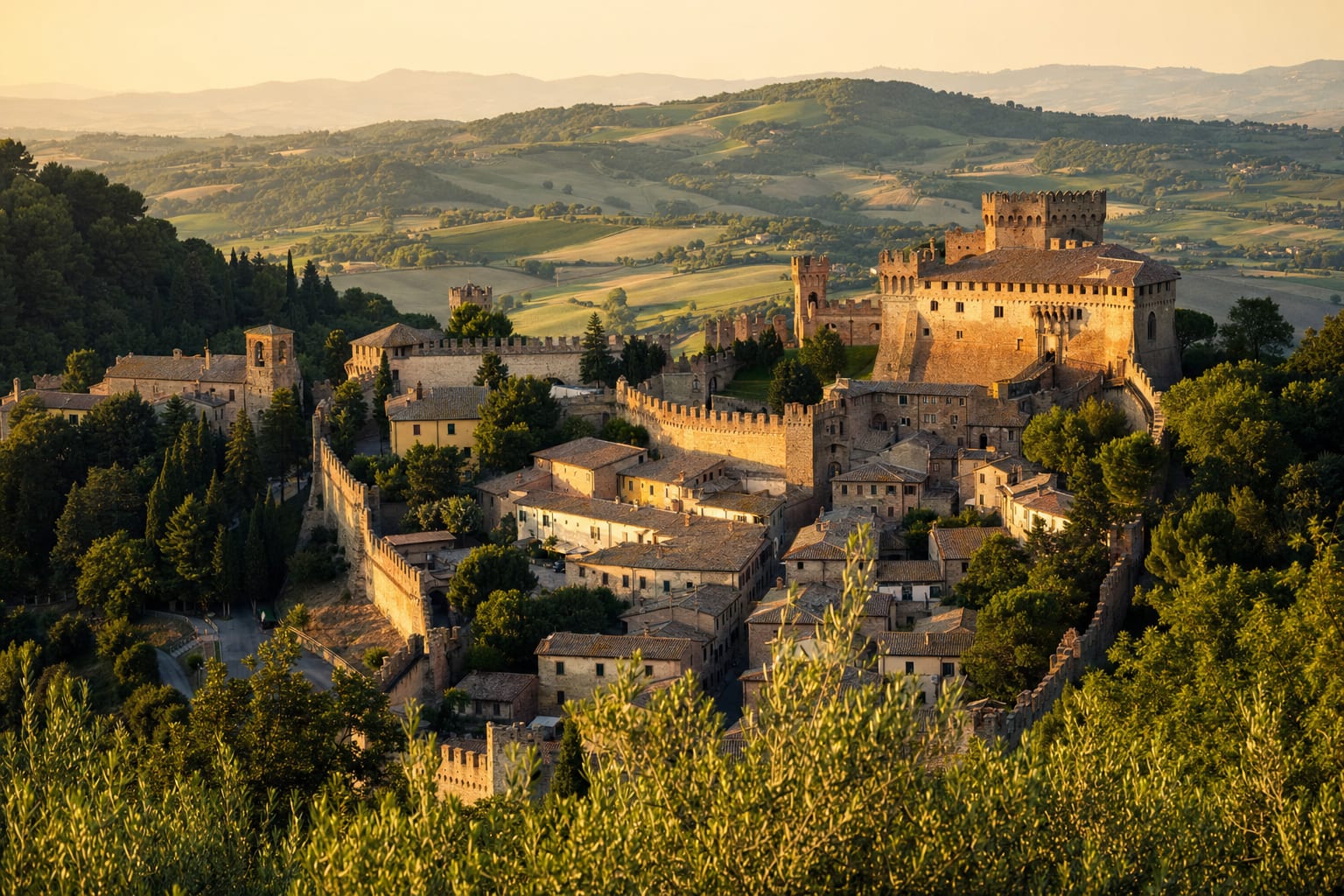 GradaraGradara CastlePaolo and Francesca's tragedy, double-walled fortress, Malatesta-Montefeltro feud, Dante's fifth cantoDante placed Paolo and Francesca's fatal embrace inside this castle, caught together and killed by Francesca's husband Gianciotto, and the fifth canto of the Inferno has shaped Gradara's identity ever since. The fortress itself, built up between the eleventh and fifteenth centuries, sits at the center of a feud between the Malatesta and Montefeltro families that ran for generations before the Sforza eventually took control. A double ring of walls, the outer one extending nearly eight hundred meters, survives complete around the thirty-meter keep, with a covered walkway between the two rings that opens onto views running from the hills down to the Adriatic. More than two hundred thousand visitors came in 2015 alone, making Gradara one of the Marche's most visited monuments, now managed by the Ministry of Culture's regional museum directorate.
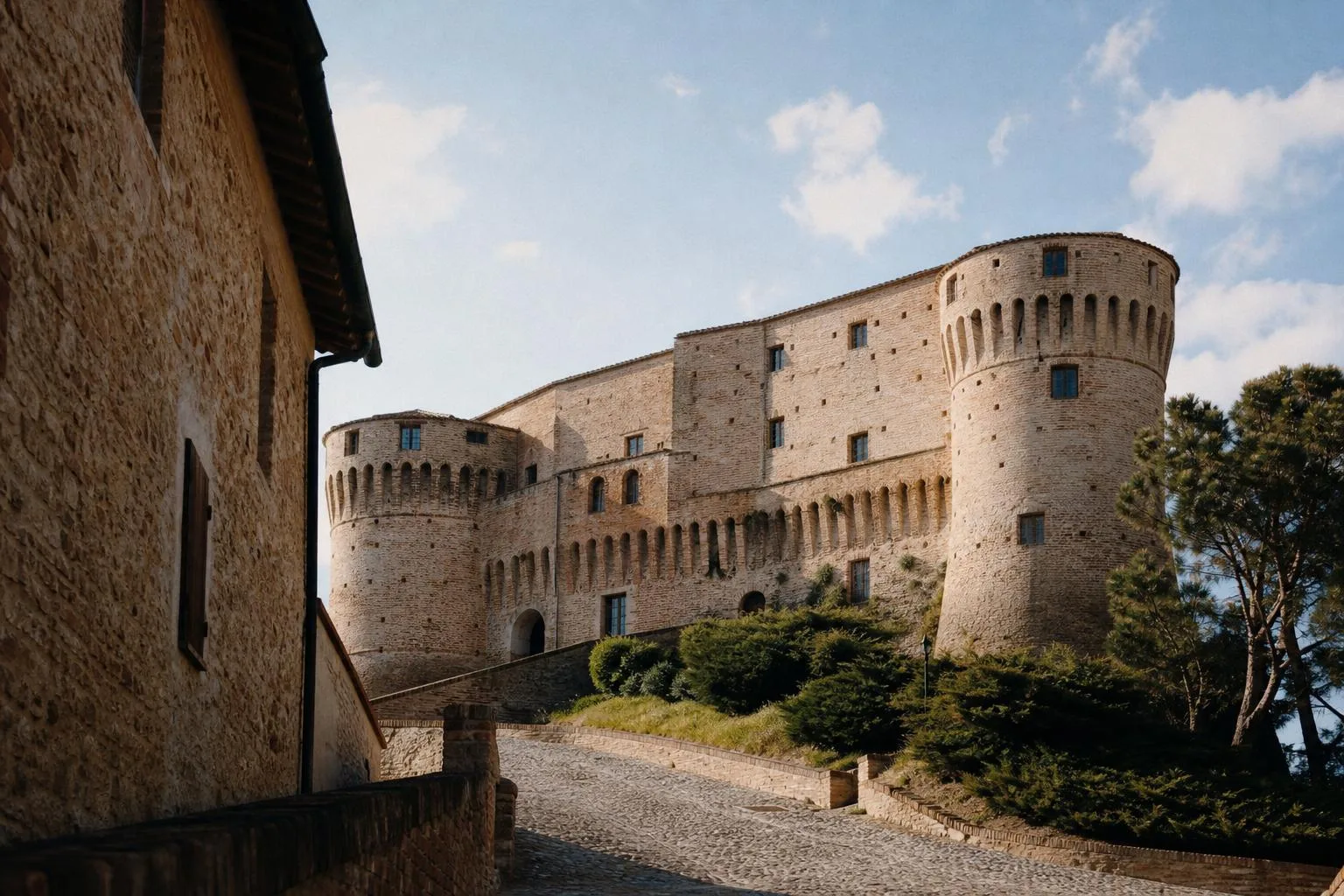 MondavioHidden GemRocca di MondavioFrancesco di Giorgio Martini design, rounded anti-cannon bastions, arms and armor museums, mid-August reenactmentGiovanni della Rovere commissioned this fortress around 1492 from Francesco di Giorgio Martini, the military engineer who was rethinking castle design for the age of cannon. Its walls curve into swept, rounded bastions rather than straight lines, deflecting shot instead of absorbing it, and the result is one of the best-preserved examples of transitional fortress architecture in Italy. Inside, quiet stone halls hold a museum of arms and armor, and the fortress still hosts a costumed medieval reenactment every mid-August, when Mondavio's own piazza becomes a jousting ground. Climb to the keep for a view over the Cesano valley's soft Marche hills.
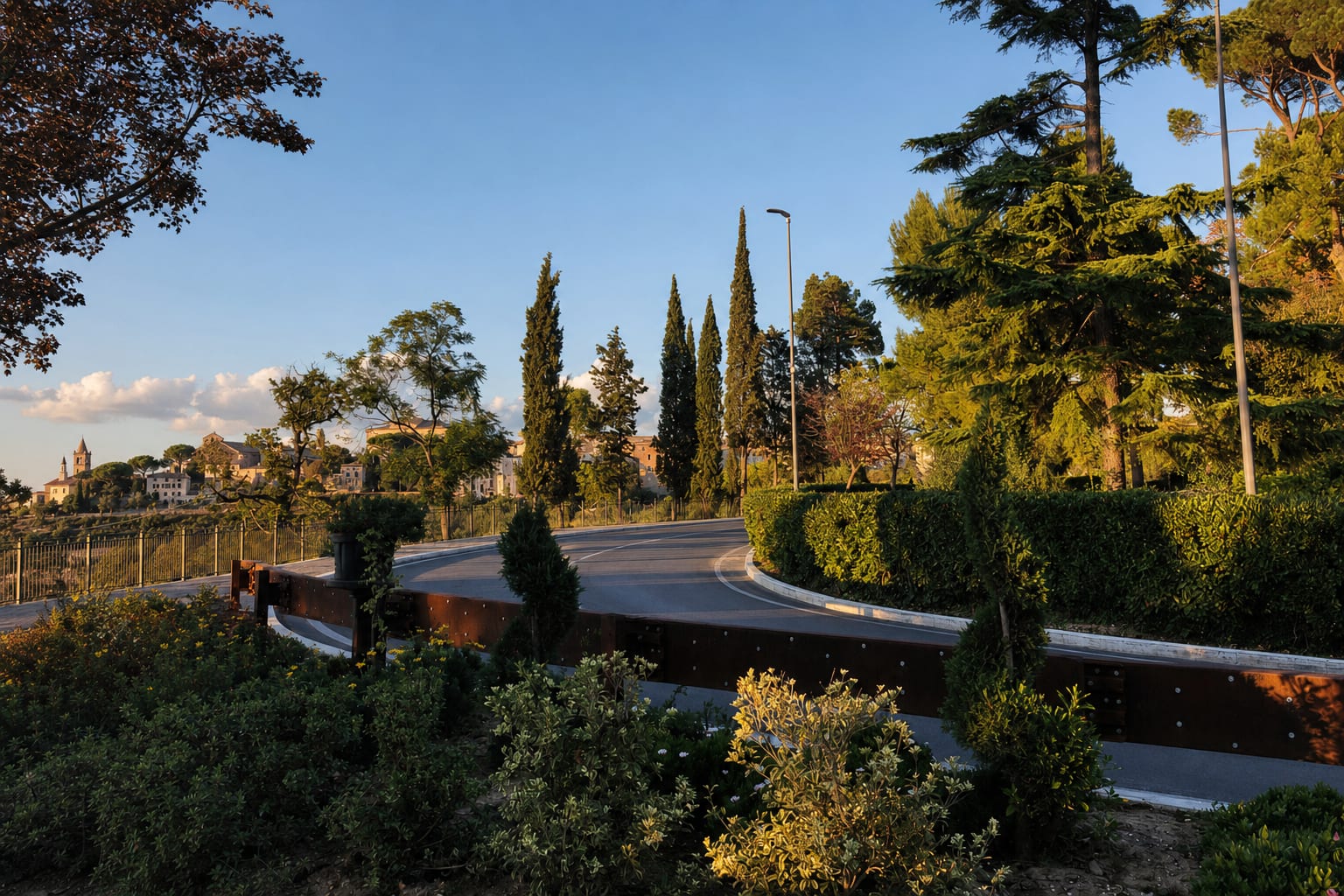 RecanatiColle dell'InfinitoLeopardi's hedge and horizon, L'Infinito's birthplace, FAI-managed Orto next door, literary pilgrimageGiacomo Leopardi was a sickly, largely housebound young man in provincial Recanati when he climbed this hill behind a hedge that blocked his view of the horizon, and in that blocked view found the subject of L'Infinito, arguably the single most memorized poem in the Italian language. The hedge (real, replanted, and maintained more or less where tradition places the original) still frames the same limited view, hills and sky and little else, which is the entire point: the poem imagines what lies beyond what the eye can see. The adjoining Orto dell'Infinito, the walled garden Leopardi could reach directly from his house, requires a separate ticket from the FAI, which manages it.
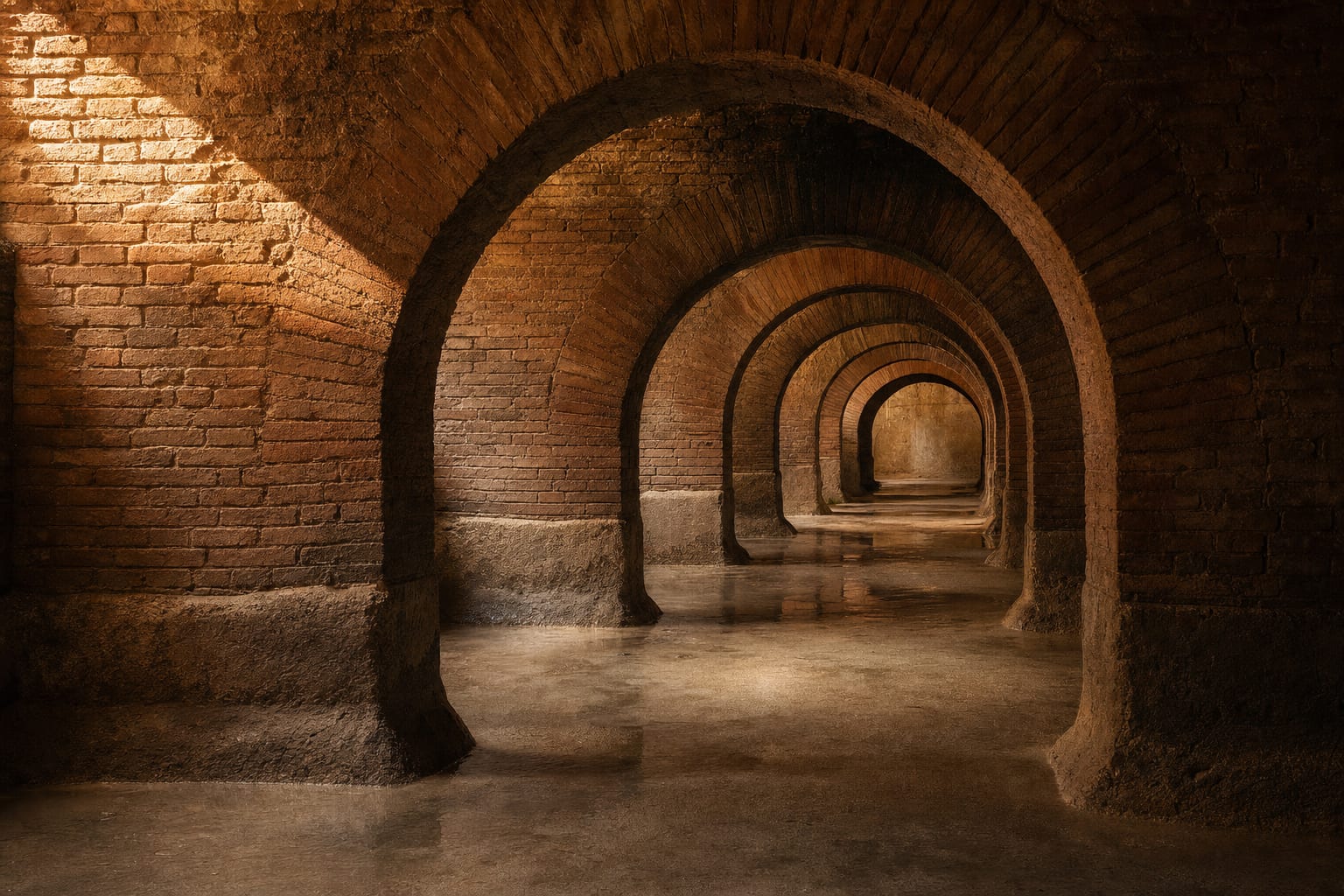 FermoRoman Cisterns of FermoThirty interconnected chambers, Augustan-era waterworks, 2,200 square meters intact, torchlit reflections undergroundBeneath Fermo's tidy hilltop center lies an entirely different kind of monument: thirty interconnected chambers, covering some 2,200 square meters, that stored the Roman city's water supply and survive today in near-perfect condition. Built under Augustus, the vaulted halls still collect a few centimeters of rainwater on the floor, which mirrors visitors' lamps back at the ceiling and turns a straightforward engineering tour into something closer to a light installation. The cisterns are seen on guided visits, and the constant cool underground temperature is a relief in a Marche summer.
Tours worth booking in Marche
Compared by our editors, across providers.
Booking through these links may earn Italia Magnifica a commission, at no cost to you.
- Viator
- 3h
- 5.0★ · 3 reviews
from €15Book this tour- Viator
- 2h 30m
from €99Book this tour- Viator
- 3h
from €80Book this tour- Viator
- 6h
from €540Book this tour


City by city
Where the monuments cluster in Marche.