

All the monuments, city by city
The landmarks and masterpieces worth planning a day around.
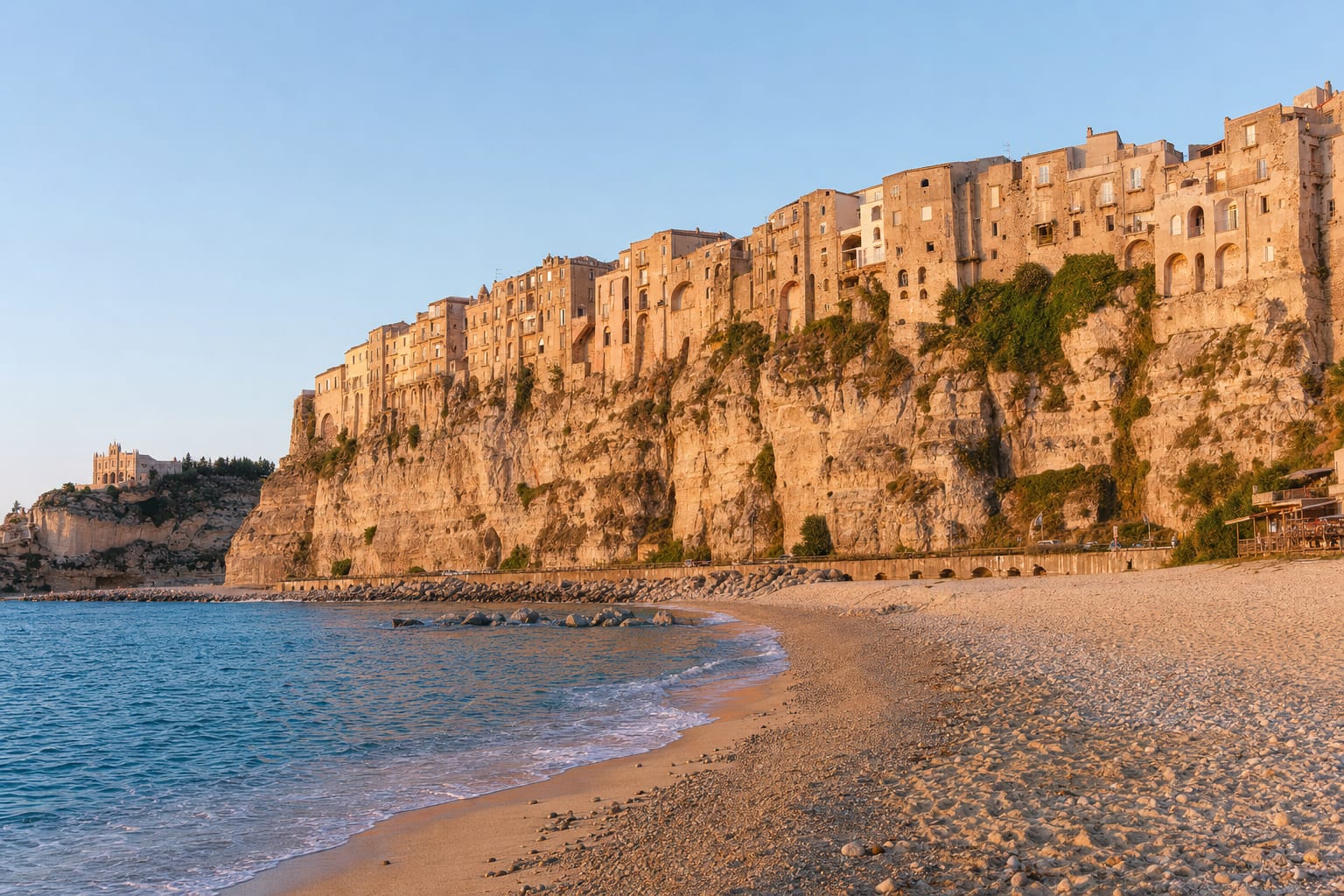 TropeaTropeaClifftop old town, Santa Maria dell’Isola, Norman cathedral, red onion IGPTropea stands on a sandstone bluff on the Tyrrhenian coast of Calabria, its old town perched directly above beaches so pale and clear that the scene is often mistaken for the Caribbean. Palazzi from centuries of prosperity crowd the cliff edge, and from the belvedere the sanctuary of Santa Maria dell’Isola sits on its own rocky outcrop just offshore, once the seat of Basilian monks and later of Benedictines from Montecassino. The Norman cathedral in yellow stone keeps the icon of the Madonna di Romania. On a clear evening, Stromboli smokes on the horizon. The town’s sweet red onion, grown in the sandy coastal soil and protected by an IGP designation, shows up in nearly every restaurant.Plan the visit
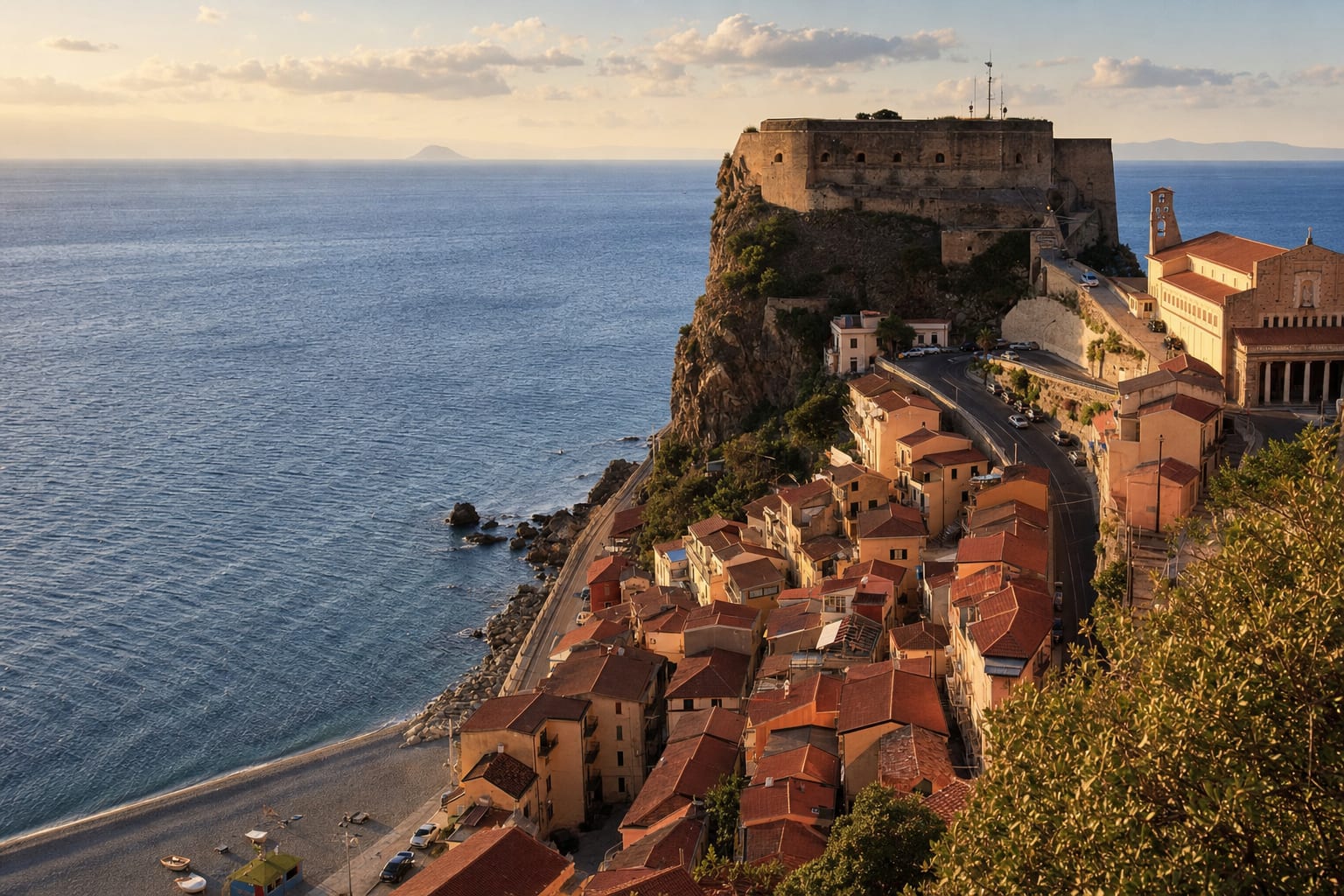 ScillaScilla and ChianaleaScylla myth, Ruffo Castle, Chianalea waterfront houses, swordfish boatsScilla sits on the Calabrian shore of the Strait of Messina at the spot where Homer’s Odyssey places the monster Scylla, a many-headed creature that devoured sailors passing near the whirlpool Charybdis. The identification is legend rather than archaeology, but it has stuck for centuries. The Ruffo Castle, rebuilt and expanded across the medieval and early modern periods, stands on the rocky promontory above the fishing quarter of Chianalea. Chianalea’s houses have their foundations in the water, with doors opening onto tiny landings just above the waves, which earned it the nickname Little Venice of the South. Local swordfish boats called passerelle still fish the strait with a tall mast-top lookout and a long bow plank for the harpooner.
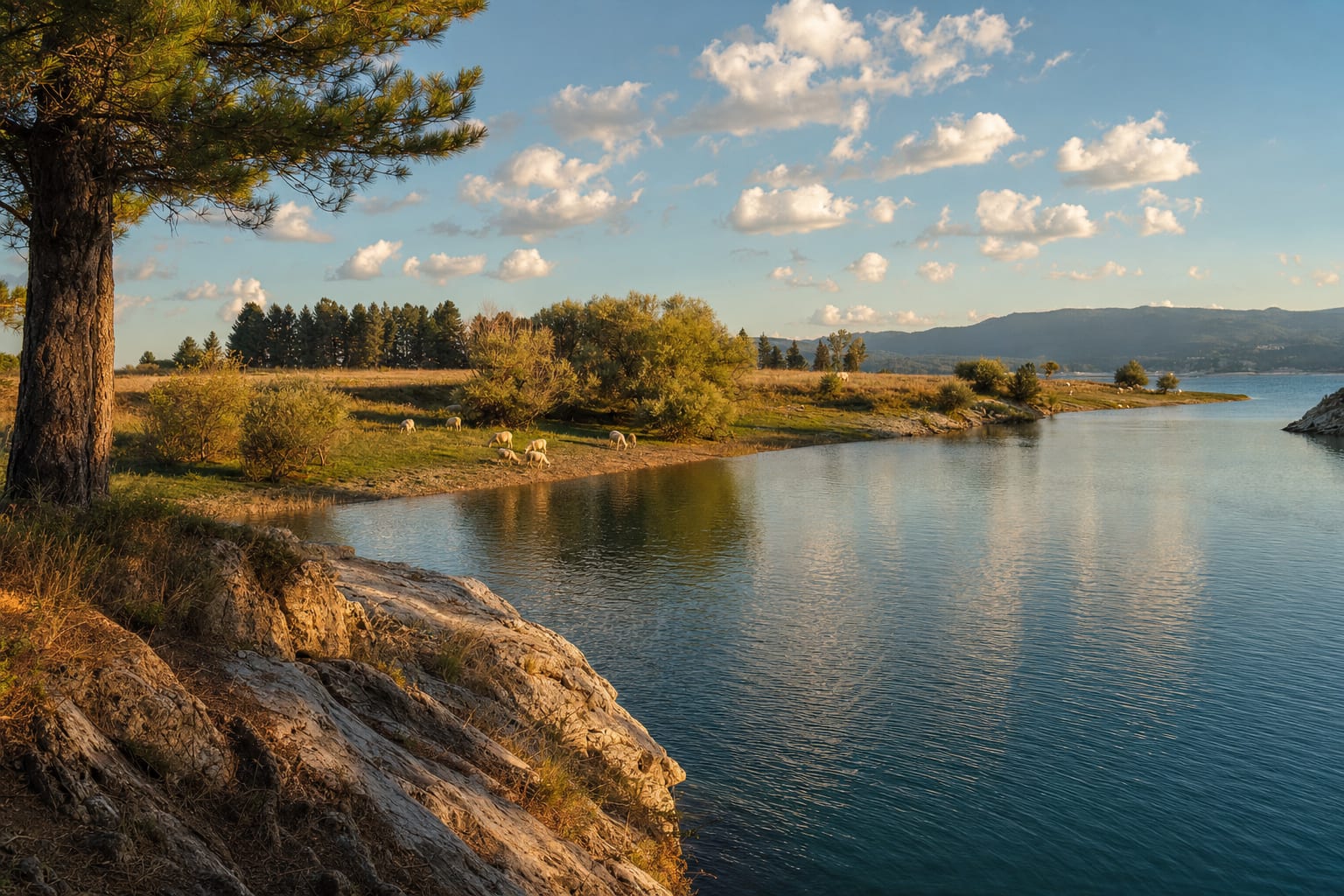 Camigliatello SilanoSila National ParkGiant laricio pines, Lake Cecita, Giganti della Sila reserve, snow in the deep southThe Sila is a high plateau in the toe of Italy where the south turns unexpectedly alpine. The national park, protected since the late 1990s, covers about 73,000 hectares of laricio pine and beech forest, lakes such as Cecita, Arvo and Ampollino, and open meadows, and it is a UNESCO biosphere reserve. The centuries-old giant pines of the Giganti della Sila reserve, some about 40 meters tall, are the star; the small town of Camigliatello Silano is the base, with mushrooms and caciocavallo cheese in every shop window. Snow falls here in winter, wildflowers carpet the meadows in spring and the lakes reward a summer picnic. Wolves live in the park, though you are more likely to see a squirrel.
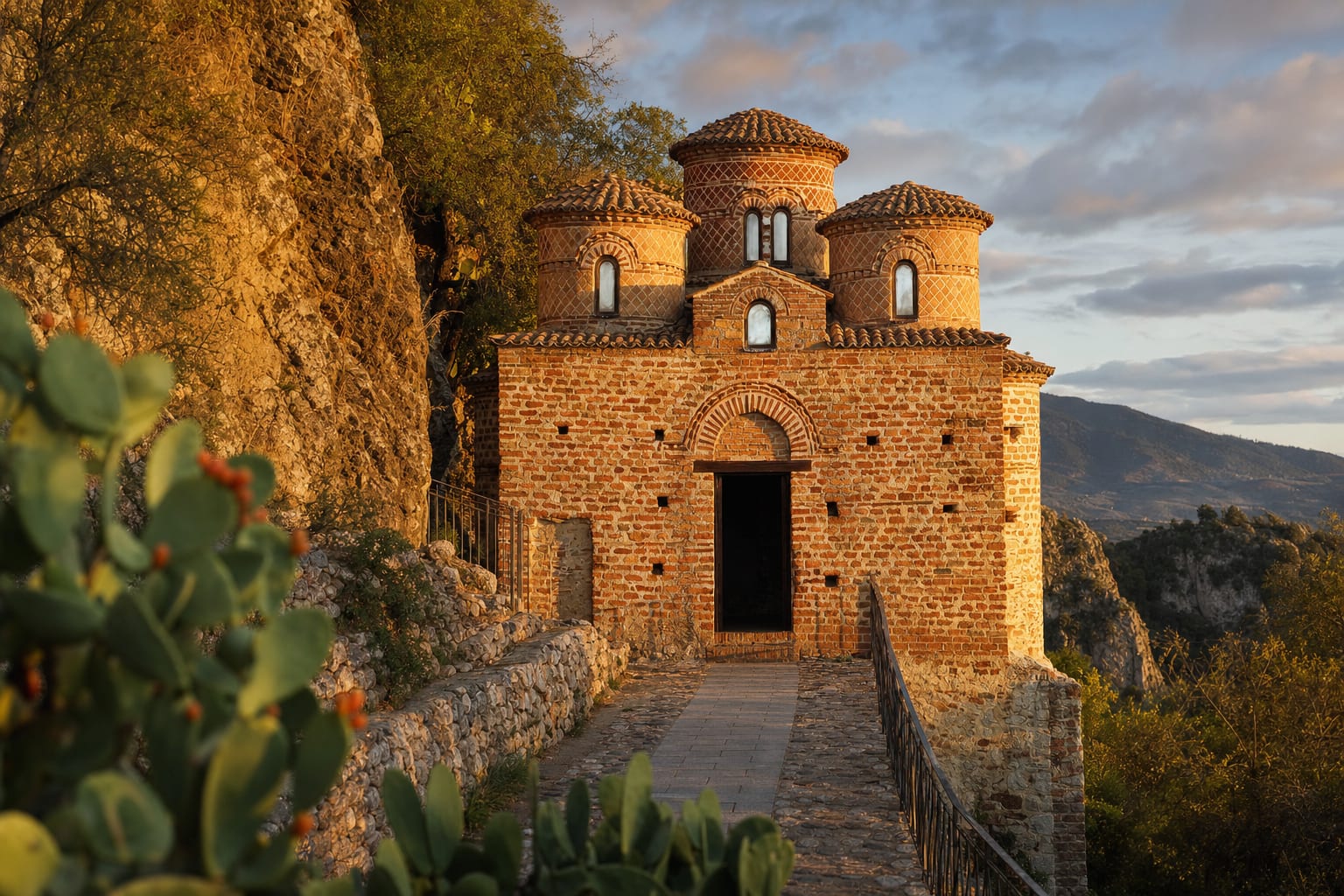 StiloHidden GemCattolica di StiloFive-domed Byzantine church, brick cube, 1927 frescoes, Monte Consolino settingLa Cattolica is a tiny Byzantine church on the slope of Monte Consolino above Stilo, built between the late tenth and early eleventh centuries by Eastern monks in the last years of Byzantine Calabria. It is a cube of brick, five cylindrical drums rising from the roof, each topped with a small dome, and it counts among the best-preserved Byzantine churches in Italy. Inside, four ancient columns carry the central dome; one bears a jeweled cross and another has Arabic inscriptions. Frescoes discovered in 1927 include the Dormition of the Virgin and the Ascension, with Christ in a mandorla. The church looks out over the valley and the sea beyond, and sits in a small setting of terraces.
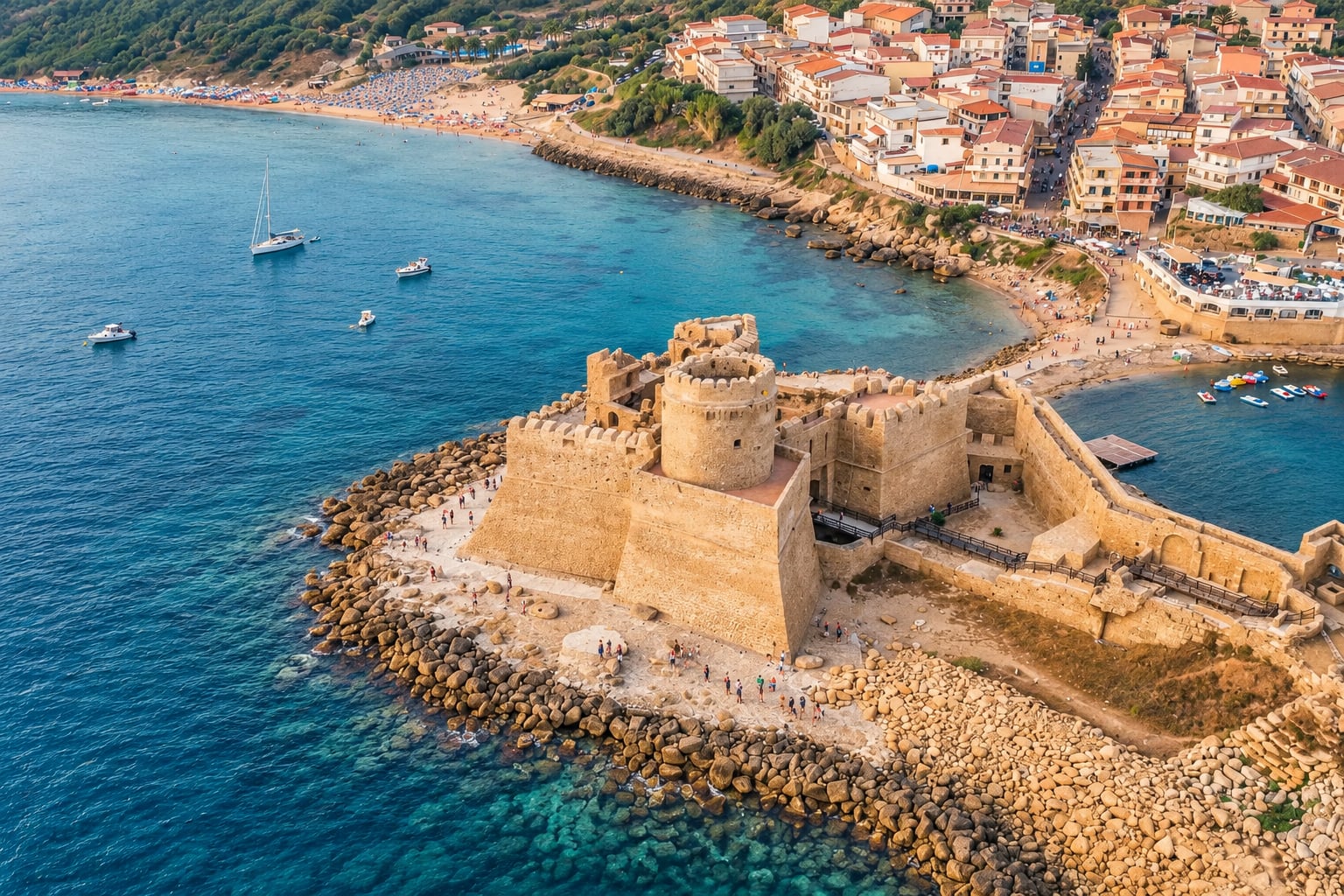
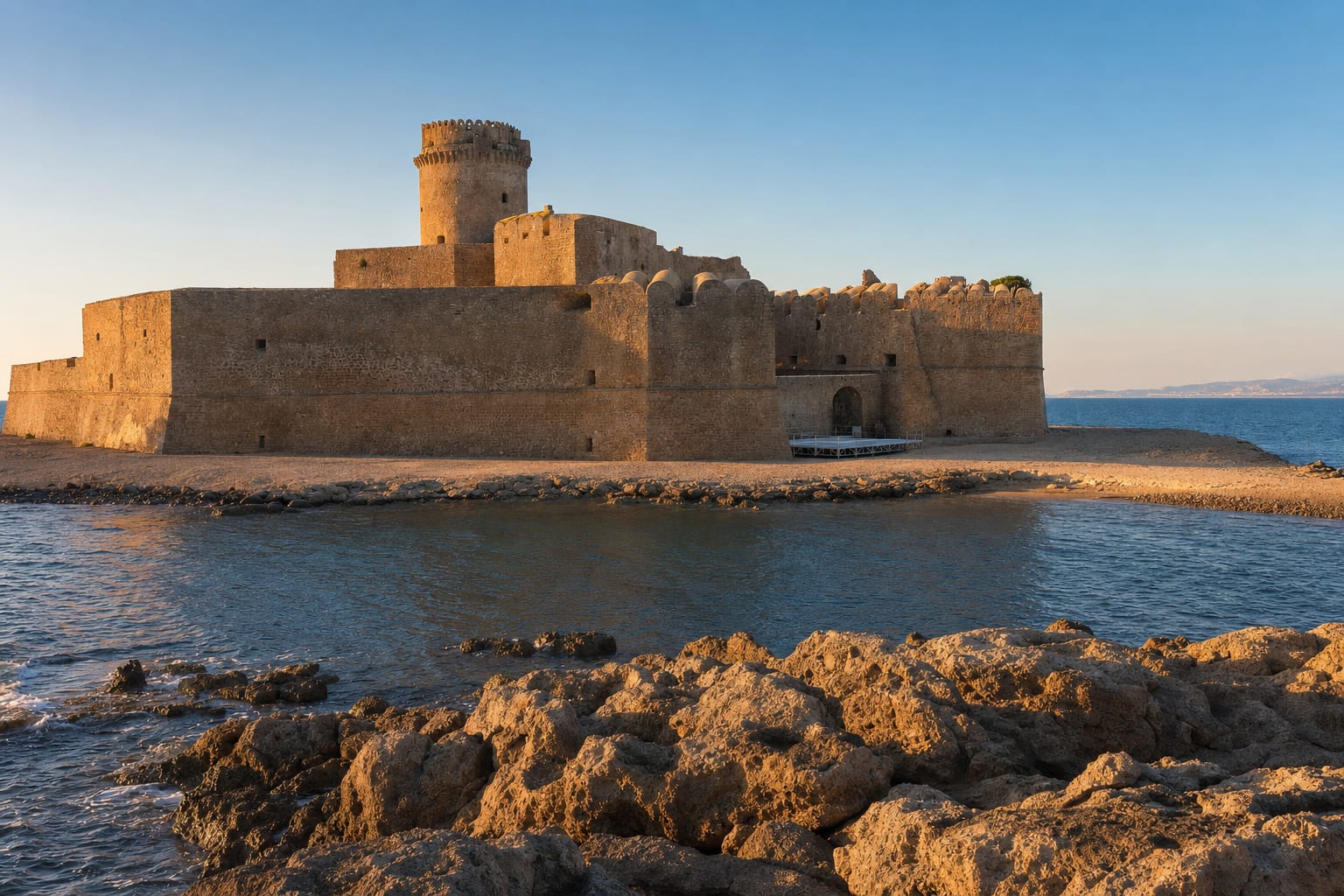 Isola di Capo RizzutoLe CastellaAragonese castle on an islet, Capo Rizzuto marine reserve, Pasolini film location (Gospel of Matthew, Medea)A causeway barely wider than a footpath links the village of Le Castella to its Aragonese castle, planted on an islet the Ionian Sea has circled for five centuries. Built in its present form in the 16th century to watch for Ottoman raiders, on foundations that go back to Greek quarry works from the 6th to 3rd centuries BC, the fortress has outlasted the corsairs it was built against, including Barbarossa's 1536 raid on the coast below it. Pier Paolo Pasolini filmed scenes of both The Gospel According to Matthew and Medea against its walls, drawn by a backdrop that needed no set dressing. The water around the castle belongs to the Capo Rizzuto marine reserve, one of the largest protected stretches of sea in Italy, and it stays a striking blue in every season.
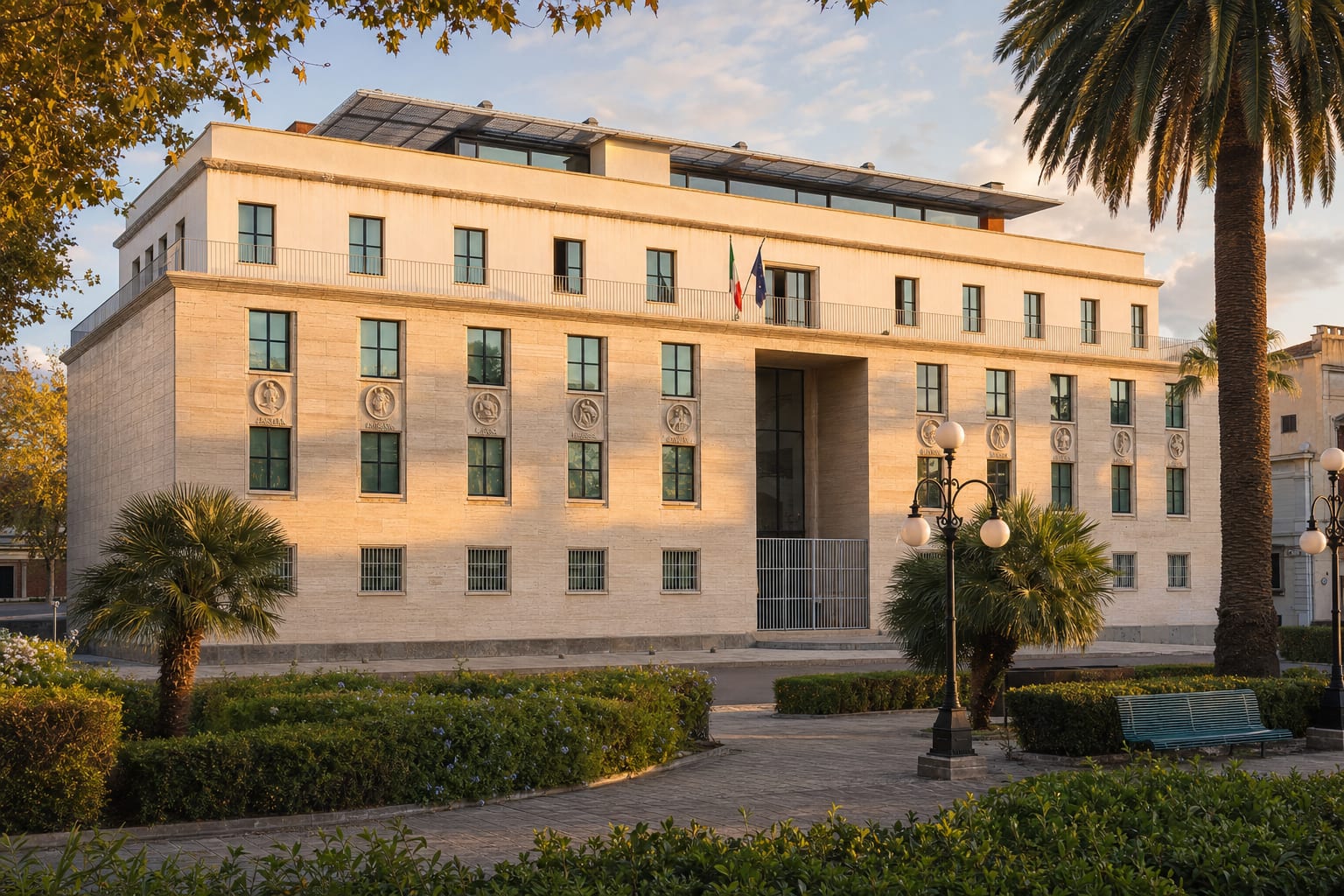 Reggio CalabriaNational Museum of Magna GraeciaRiace Bronzes, fifth-century BC Greek warriors, climate-controlled display hall, Magna Graecia collectionIn August 1972, a snorkeler off Riace Marina spotted what looked like an arm buried in the sand, and it turned out to belong to one of two full-size Greek bronze warriors, cast around the fifth century BC and lost to the sea for more than two thousand years. Both statues spent years in restoration in Florence before Reggio Calabria's archaeological museum built them a room of their own: visitors pass through a climate-controlled anteroom first, so the display hall itself stays at a stable temperature and humidity. The museum around them holds one of Italy's richest collections of Magna Graecia material, from painted vases to architectural terracottas, but the Riace Bronzes, entered on their own after the wait, remain the reason most people come.
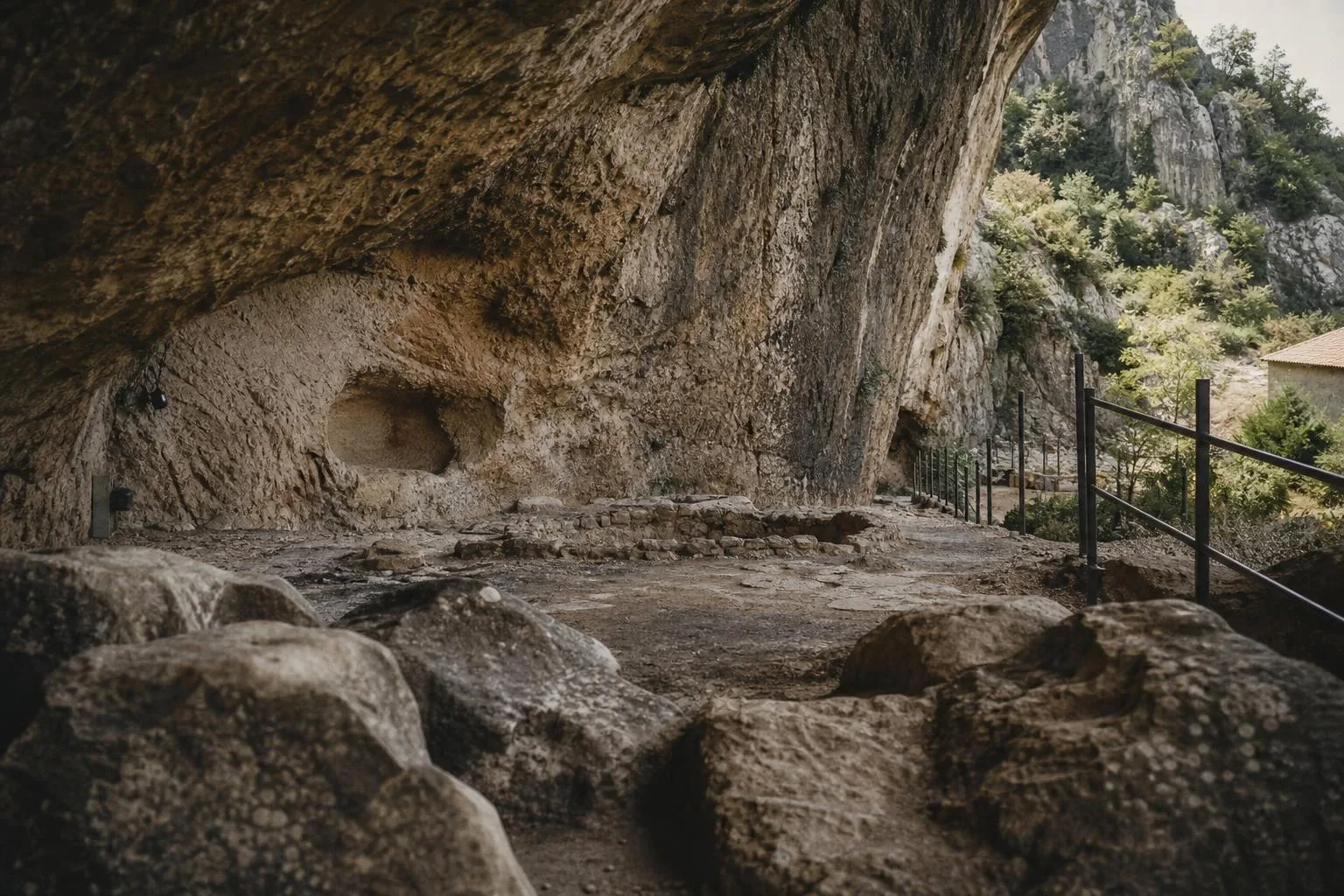 AltomonteHidden GemRomito CaveAurochs engraving, Paleolithic burials, Antiquarium, Lao river, Pollino National ParkThe Romito Cave opens in a limestone cliff above the Lao river, in Pollino National Park near Papasidero. People lived here from the Upper Paleolithic to the Neolithic, and it counts among the most important prehistoric sites in southern Italy. The great find is a large engraving of an aurochs, the wild ox, cut into the rock about 12,000 years ago and among the oldest works of art found in Italy; a cast is shown at the museum. The cave also held burials, including that of an achondroplastic man. A small Antiquarium at the ticket office explains the excavations and shows finds, and a short path leads to the cave. Visits are always with a guide.
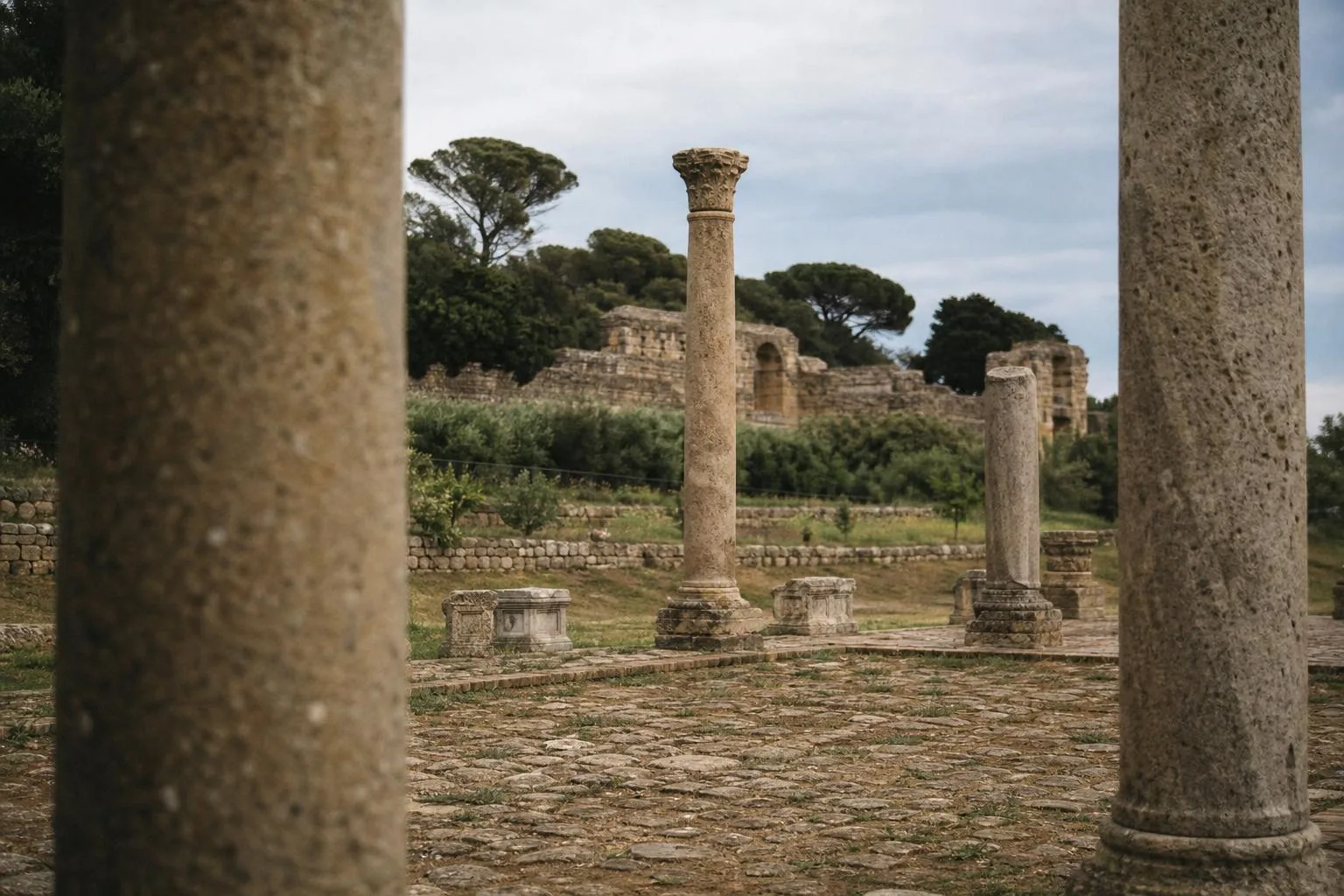 CatanzaroHidden GemScolacium (Scylletium)Roman theatre and amphitheatre, Greek Skylletion origins, unfinished Norman basilica, olive-grove settingThe Roman colony of Minervia Scolacium rose here around AD 100, on the Gulf of Squillace, over an older Greek settlement the Greeks called Skylletion; Virgil, in the Aeneid, calls it ship-wrecking Scylaceum for its exposed stretch of the Ionian coast. Excavated ruins scattered through an old olive grove now include a theatre cut partly into the hillside, an amphitheatre, a forum, and three sets of baths, along with the aqueduct that once fed them. The most photographed structure is newer by a thousand years: the roofless brick basilica of Santa Maria della Roccella, begun by Norman monks in the 11th century and never finished, its huge round window still open to the sky. A small on-site museum displays what excavation turned up, from inscriptions to household finds, and its own building, a restored olive mill, belongs to the estate's more recent working history.
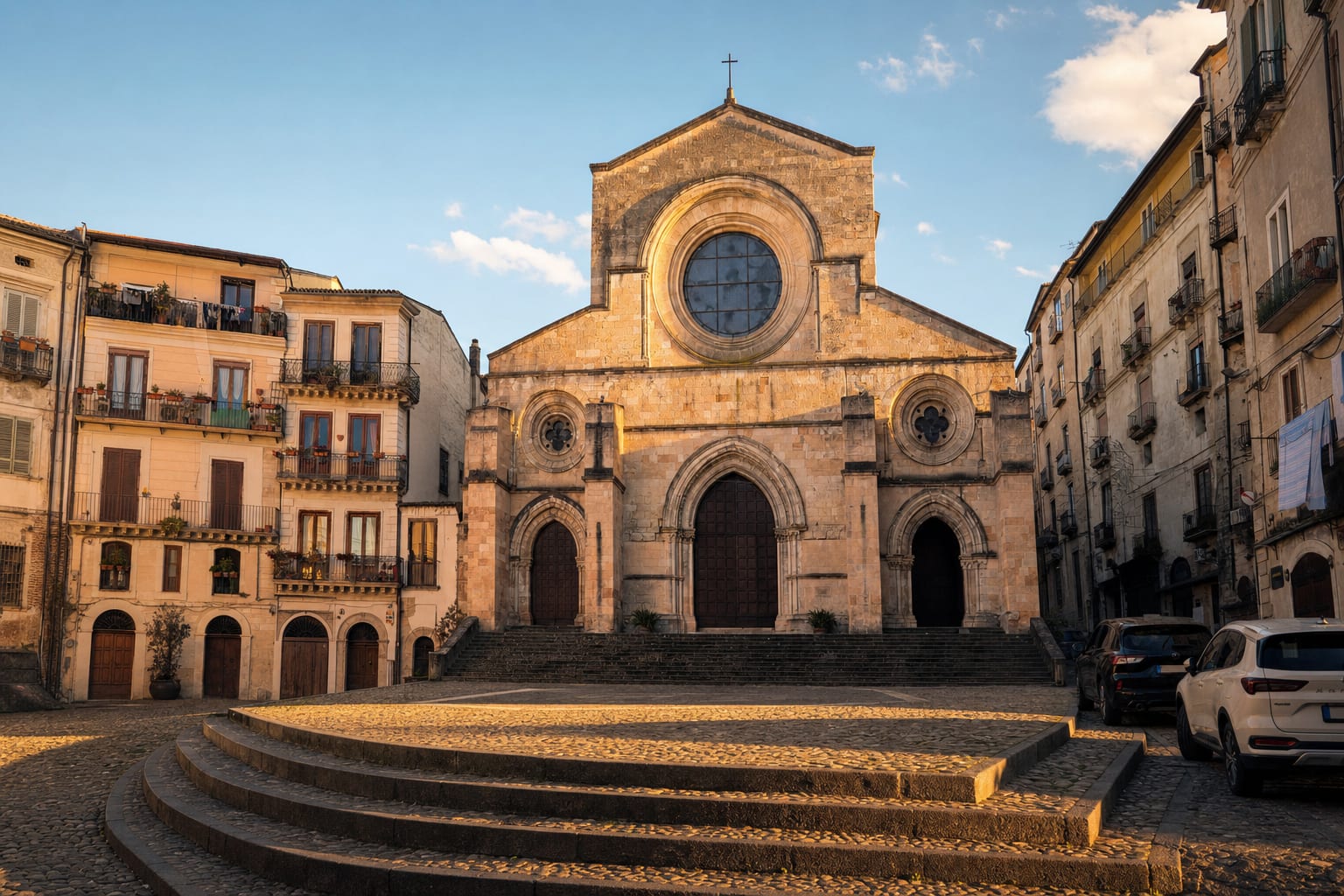 CosenzaCosenza CathedralConsecrated before Frederick II, Isabella of Aragon’s tomb, Madonna del Pilerio icon, UNESCO peace cultureCosenza’s cathedral was consecrated on 30 January 1222 in the presence of Emperor Frederick II, who gave the city a jeweled cross reliquary, the Stauroteca, now kept in the diocesan museum. Rebuilt after the earthquake of 1184, it keeps its Romanesque-Gothic frame beneath later Baroque and Neo-Gothic additions. Inside, look for the Gothic tomb of Isabella of Aragon, queen of France, in the left transept, and the twelfth-century Byzantine icon of the Madonna del Pilerio, the city’s protector. UNESCO recognized the cathedral in 2011 as a place that bears witness to a culture of peace. It stands on Piazza Duomo, at the heart of the old town above the Busento river.
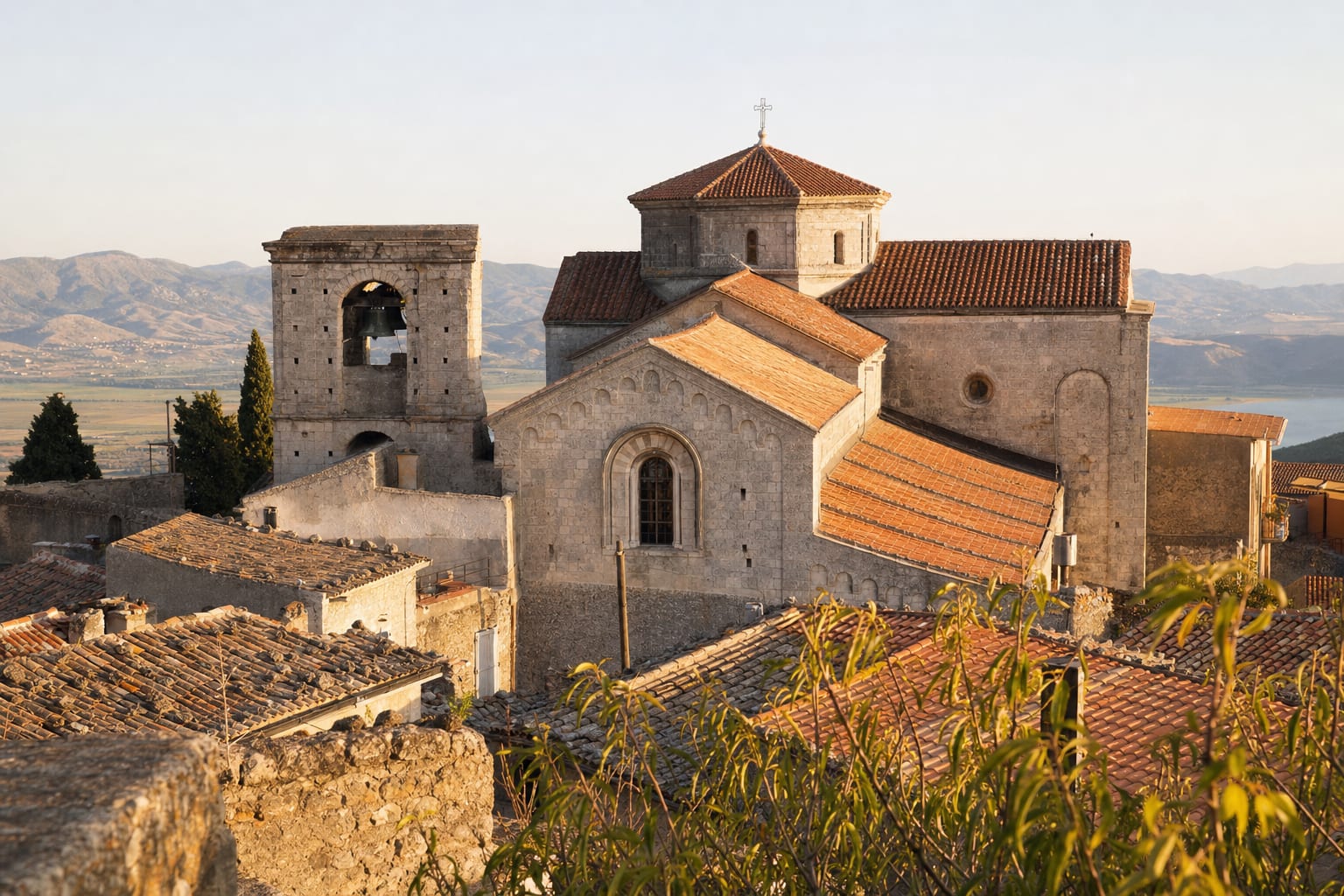 GeraceGerace CathedralLargest church in Calabria, reused Locri columns, crypt, diocesan treasury, medieval hill townGerace’s cathedral is the largest church in Calabria, a Byzantine-Norman basilica of roughly 1,700 square meters built in the late eleventh and early twelfth centuries on a rock crag above the Ionian coast. Three naves are divided by twenty granite and marble columns, some recovered from the ruins of ancient Locri, so the nave reads like a catalogue of reused antiquity. Below lies the crypt, the oldest part of the complex, with a fourteenth-century marble Madonna and the diocesan treasury, which includes a twelfth-century silver Stauroteca. Around it, the medieval upper town survives so intact that film crews use it as a stand-in for the Middle Ages.
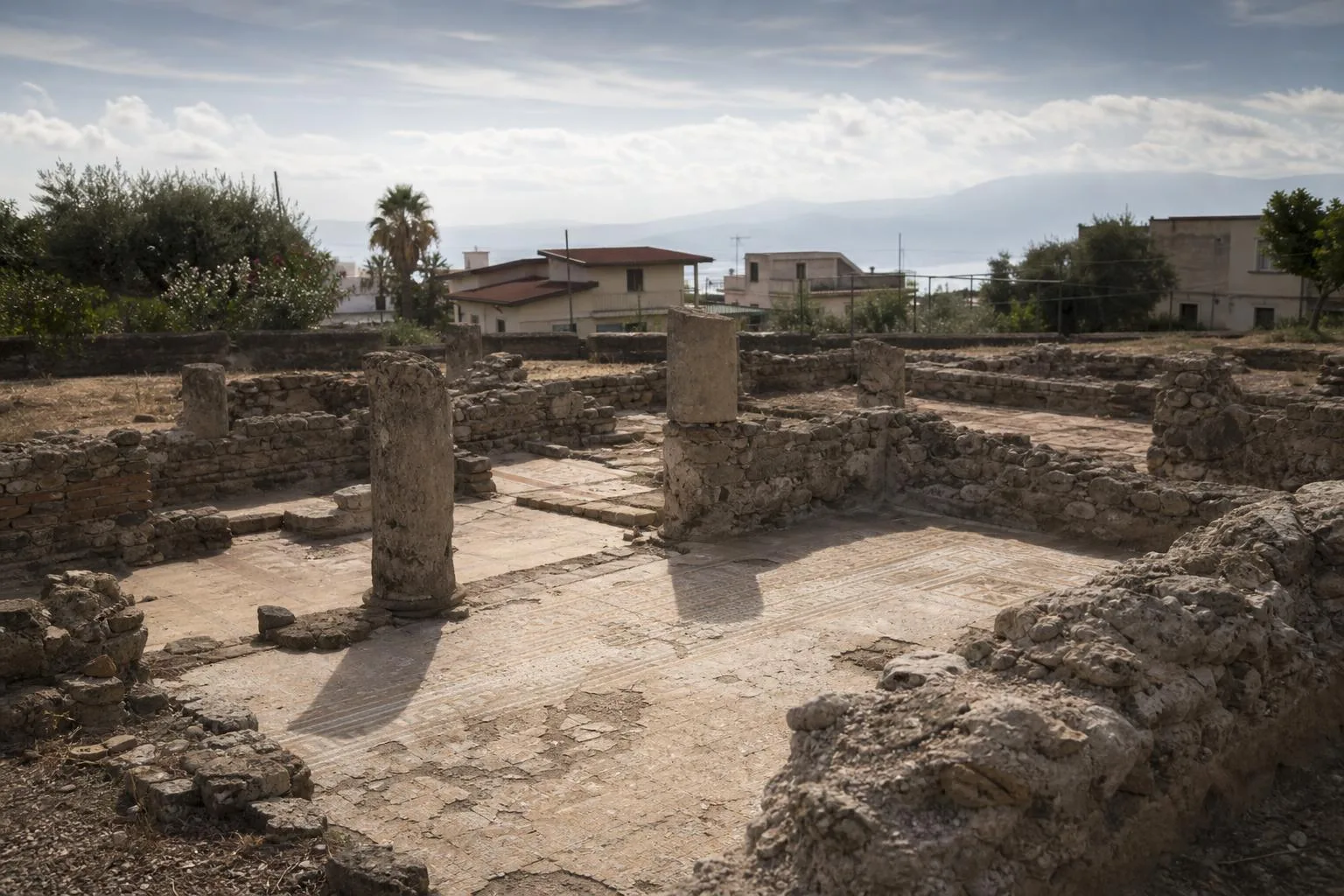 Reggio CalabriaHidden GemBova Marina SynagogueMenorah mosaic floor, second-oldest synagogue in Italy, Museo Archeoderi, 1983 discoveryRoad workers modernizing a street in 1983 uncovered the remains of the second-oldest synagogue found in Italy, a fourth-to-sixth-century building whose thirty-square-meter mosaic floor still carries a menorah, a shofar, an etrog and palm branch, and a Solomon's knot worked in tesserae. Archaeologists first mistook the two-chamber structure for a Roman villa until the Jewish symbols surfaced. Only the Ostia Antica synagogue near Rome is older. The finds and a reconstruction of the mosaic are displayed at the small on-site Museo Archeoderi, part of an archaeological park now managed by Calabria's regional museum authority, and a rabbi from the small local Jewish community sometimes leads tours of the site.
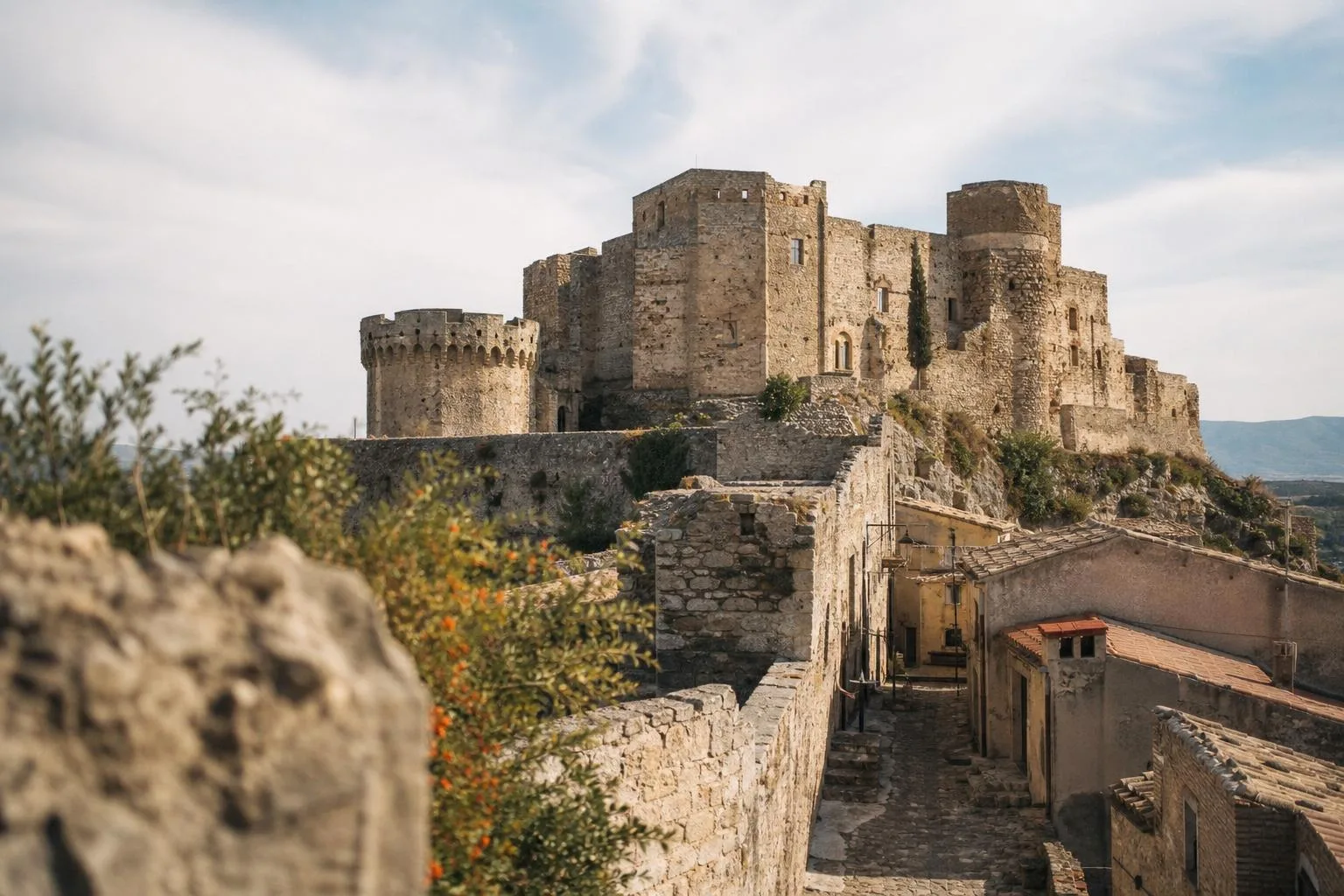 CrotoneHidden GemCastle of Santa SeverinaNorman castle over Byzantine fortress, 1076 Guiscard construction, protohistoric bronzes, Calabrian castles centerRobert Guiscard, the Norman leader who had just received the dukedom of Puglia and Calabria, ordered this castle built in 1076 over fortifications that likely dated to the Byzantine era, when the town was known as Aghia Severini. The Angevins later modernized it with cylindrical towers and thicker walls, and in the sixteenth century Andrea Carafa expanded the defenses further with new fortified rings around the older Angevin core. Ownership shifted from the Carafa to the Ruffo, Sculco and Greuther families before feudalism's abolition in 1806 passed the castle to Church jurisdiction, and then to the town after Italian unification in 1860. Excavations between 1994 and 1998 recovered protohistoric bronzes from the fifteenth to eighth centuries BC, now displayed alongside a documentation center on Calabrian castles inside the same walls.
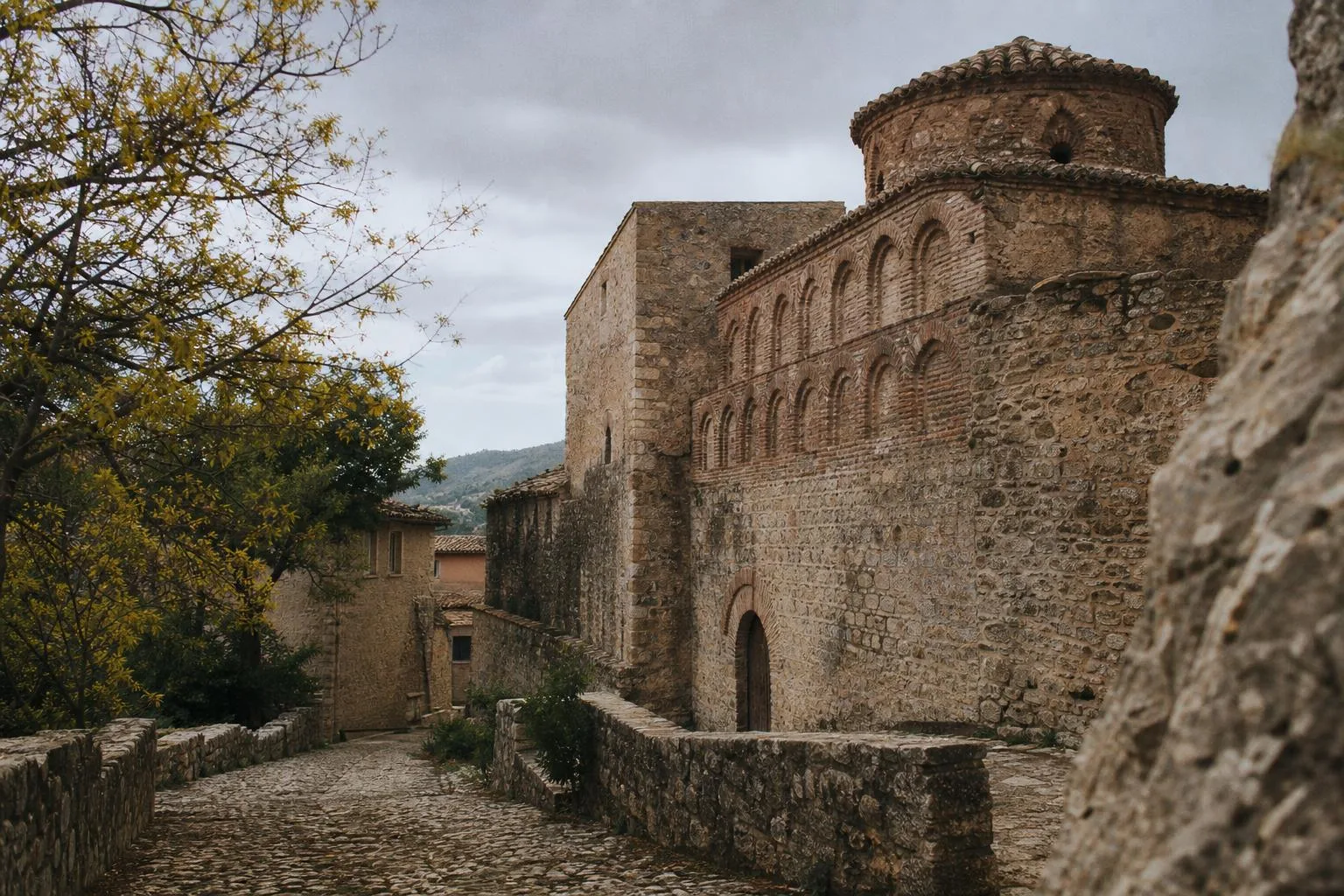 StiloHidden GemSan Giovanni TheristisByzantine-Norman brick church, Basilian monastery, Orthodox liturgy, Stilaro valleyThis small Byzantine monastery stands in the Stilaro valley near Bivongi, in a green fold of the Calabrian Serre. It is named for John Theristis, a ninth-century monk from the region whose name means ‘the reaper’. The monastery grew in the eleventh century and became one of the most important Basilian houses in southern Italy through the Norman period, with a church that mixes Byzantine walls and Norman pilasters supporting a brick dome. Monks left in 1662 and the buildings were abandoned; the commune of Bivongi took them over in 1980. Since 1994 monks from Mount Athos and, from 2008, the Romanian Orthodox Church have lived here again. You can visit, and join the Divine Liturgy.
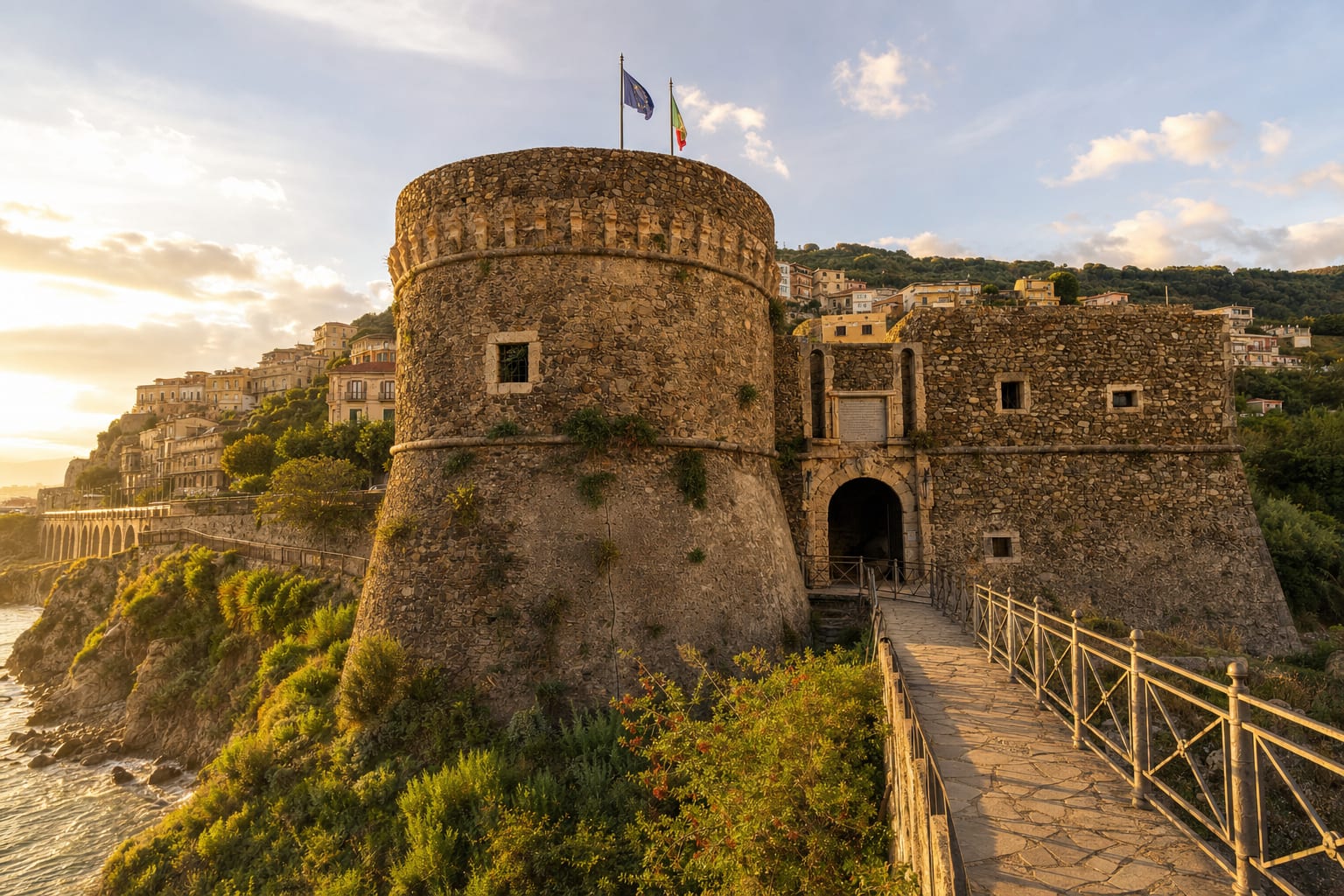 PizzoMurat CastleJoachim Murat's 1815 execution, Aragonese keep, preserved cell and sentencing room, steps from Pizzo's tartufo piazzaNapoleon's flamboyant brother-in-law Joachim Murat, king of Naples, met his end in this small Aragonese castle in October 1815, court-martialed and shot by firing squad after landing nearby in a doomed bid to reclaim his throne. He is said to have directed the execution himself, refusing a blindfold. His cell and the room where the sentence was handed down are preserved as a small museum, all of it a short, strange walk from the piazza where Pizzo's tartufo gelato was supposedly invented, one of Calabria's odder juxtapositions of tragedy and treat.
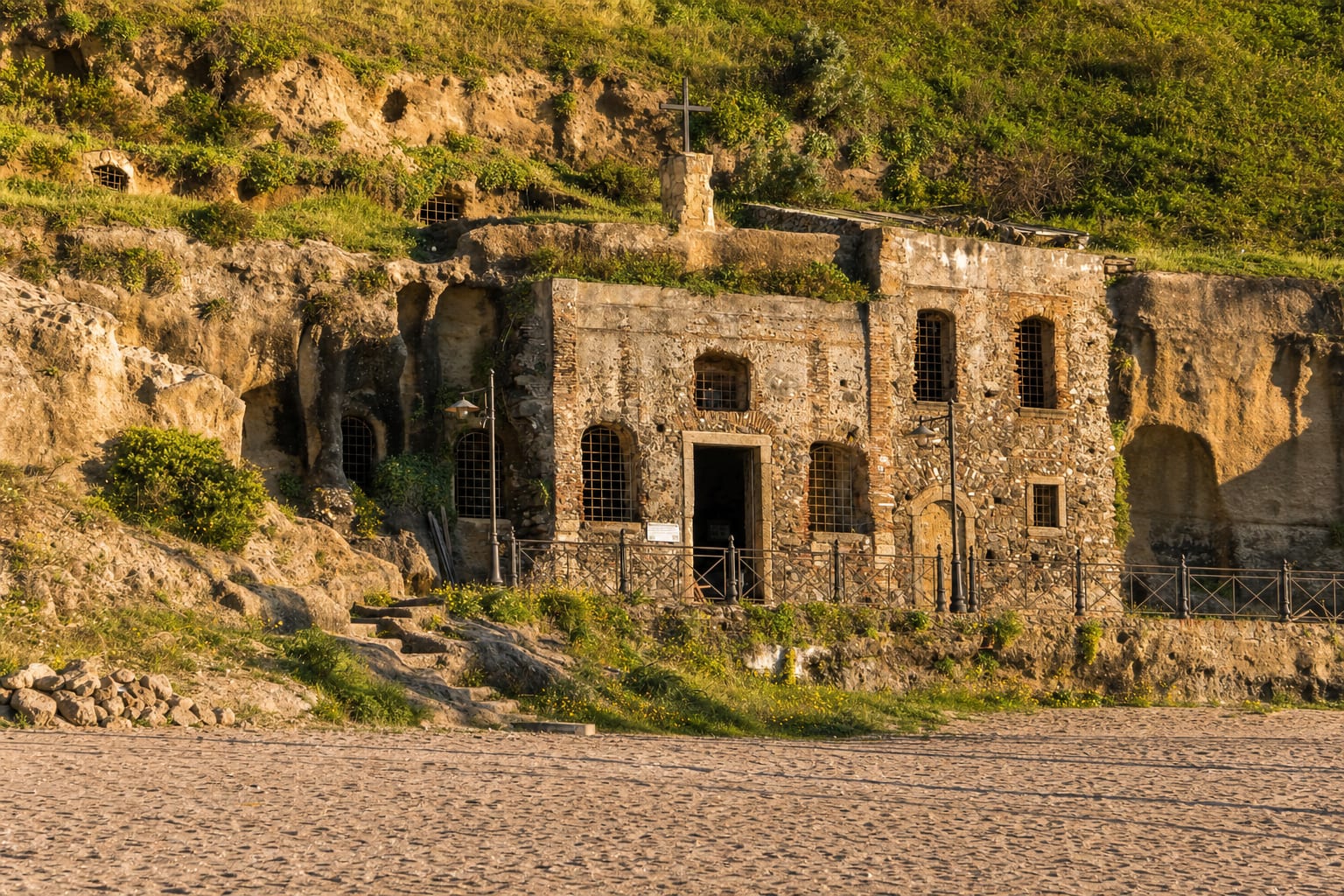 PizzoPiedigrotta ChurchChurch carved into sea tuff, 17th-century shipwreck vow origin, generations of carved saints, cave nave beside the beachSailors caught in a storm off Pizzo are said to have vowed to carve a chapel into the shoreline's soft tuff if they survived, and their gratitude in the 17th century began a tradition that local families kept adding to for two centuries afterward. The result is a cave church that grows more crowded the deeper you go, dozens of stone saints and biblical figures emerging directly from the rock walls, some crude and folk-carved, others startlingly refined, all lit by natural openings toward the beach just outside. Restoration work over the decades has stabilized the soft stone, but the church still feels handmade rather than built.
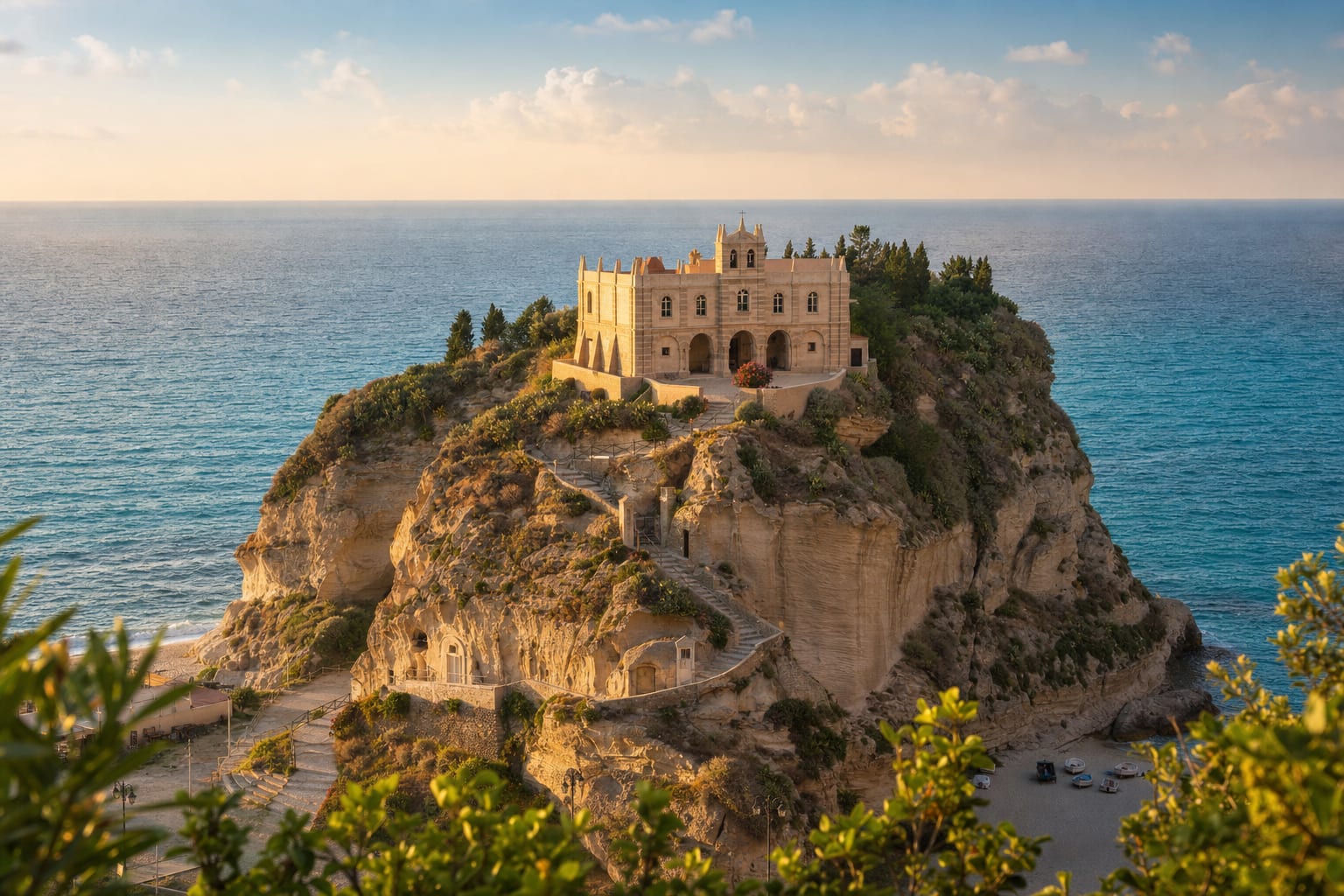 TropeaSanta Maria dell'IsolaSanctuary on a freestanding sea rock, Byzantine-then-Benedictine history, rock-cut stairway, sea-green terraceTropea's most photographed view centers on this sanctuary, perched alone on its own rock between the town's two beaches, first settled by Basilian monks in the Byzantine centuries before a Benedictine community took over the site. Steps cut into the rock climb from the sand to the church door, and a small terraced garden behind it looks straight down into water so clear it reads as bottle-glass green from above. A modest museum inside holds monastic relics, but most visitors come simply to stand on the terrace, the whole curve of the Tyrrhenian coast opening out on either side.
Tours worth booking in Calabria
Compared by our editors, across providers.
Booking through these links may earn Italia Magnifica a commission, at no cost to you.
- Viator
- 3h
- 5.0★ · 1 reviews
from €35Book this tour- Viator
- 2h
- 5.0★ · 16 reviews
from €190Book this tour- Viator
- 4h
- 5.0★ · 115 reviews
from €400Book this tour- Viator
- 4h
- 5.0★ · 67 reviews
from €830Book this tour- Viator
- 4h
- 5.0★ · 140 reviews
from €485Book this tour- Viator
- 4h
- 5.0★ · 49 reviews
from €730Book this tour


City by city
Where the monuments cluster in Calabria.