Skip to content

Scilla and Chianalea

Homer’s Scylla, a clifftop castle and Chianalea, a fishing quarter with houses standing in the sea.

  • Scilla
  • District
Where
Scilla
Best for
Scylla myth
Allow
2 hours
Tickets
Free

Scilla sits on the Calabrian shore of the Strait of Messina at the spot where Homer’s Odyssey places the monster Scylla, a many-headed creature that devoured sailors passing near the whirlpool Charybdis.

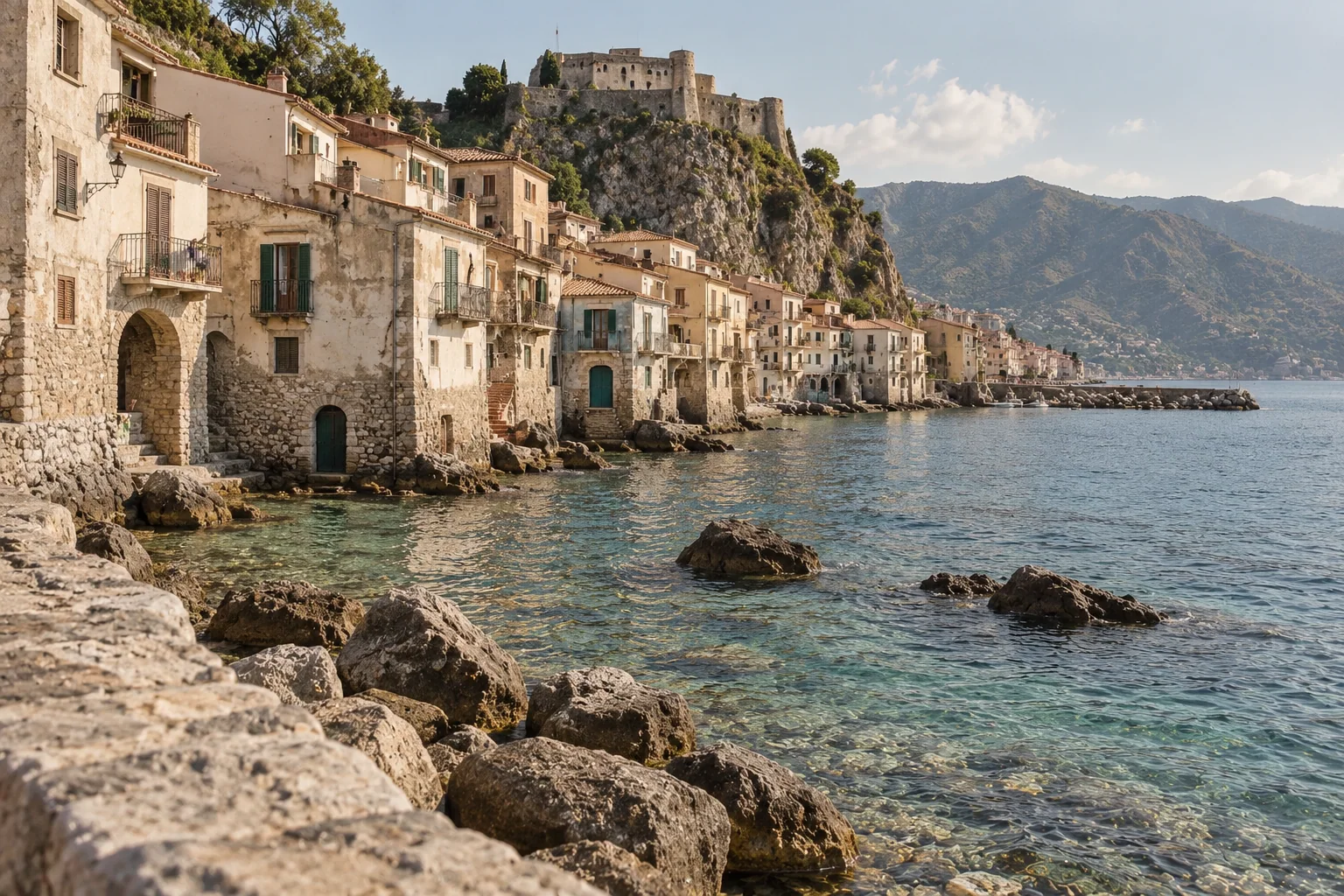
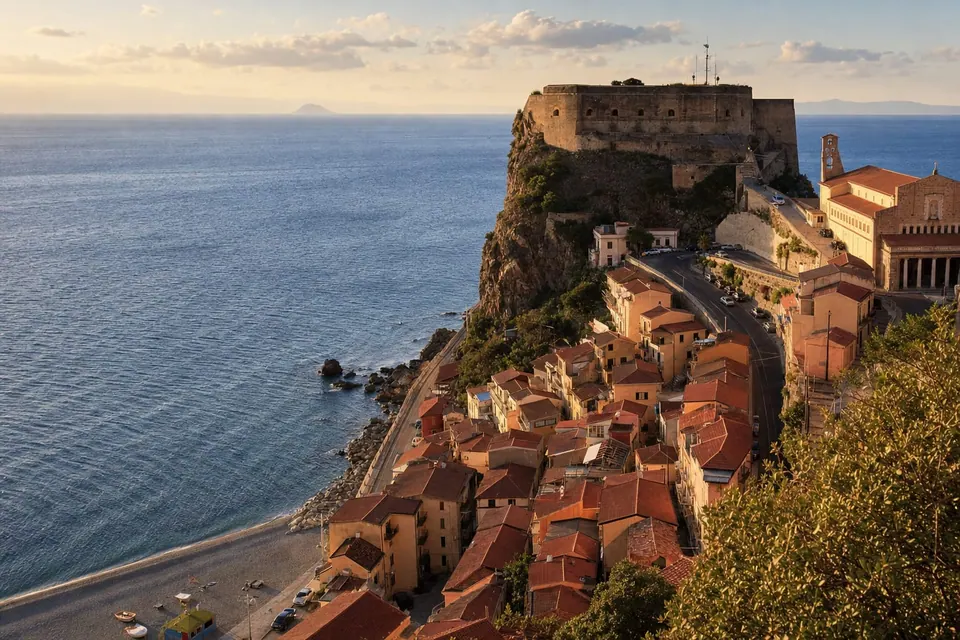
The identification is legend rather than archaeology, but it has stuck for centuries. The Ruffo Castle, rebuilt and expanded across the medieval and early modern periods, stands on the rocky promontory above the fishing quarter of Chianalea. Chianalea’s houses have their foundations in the water, with doors opening onto tiny landings just above the waves, which earned it the nickname Little Venice of the South. Local swordfish boats called passerelle still fish the strait with a tall mast-top lookout and a long bow plank for the harpooner.
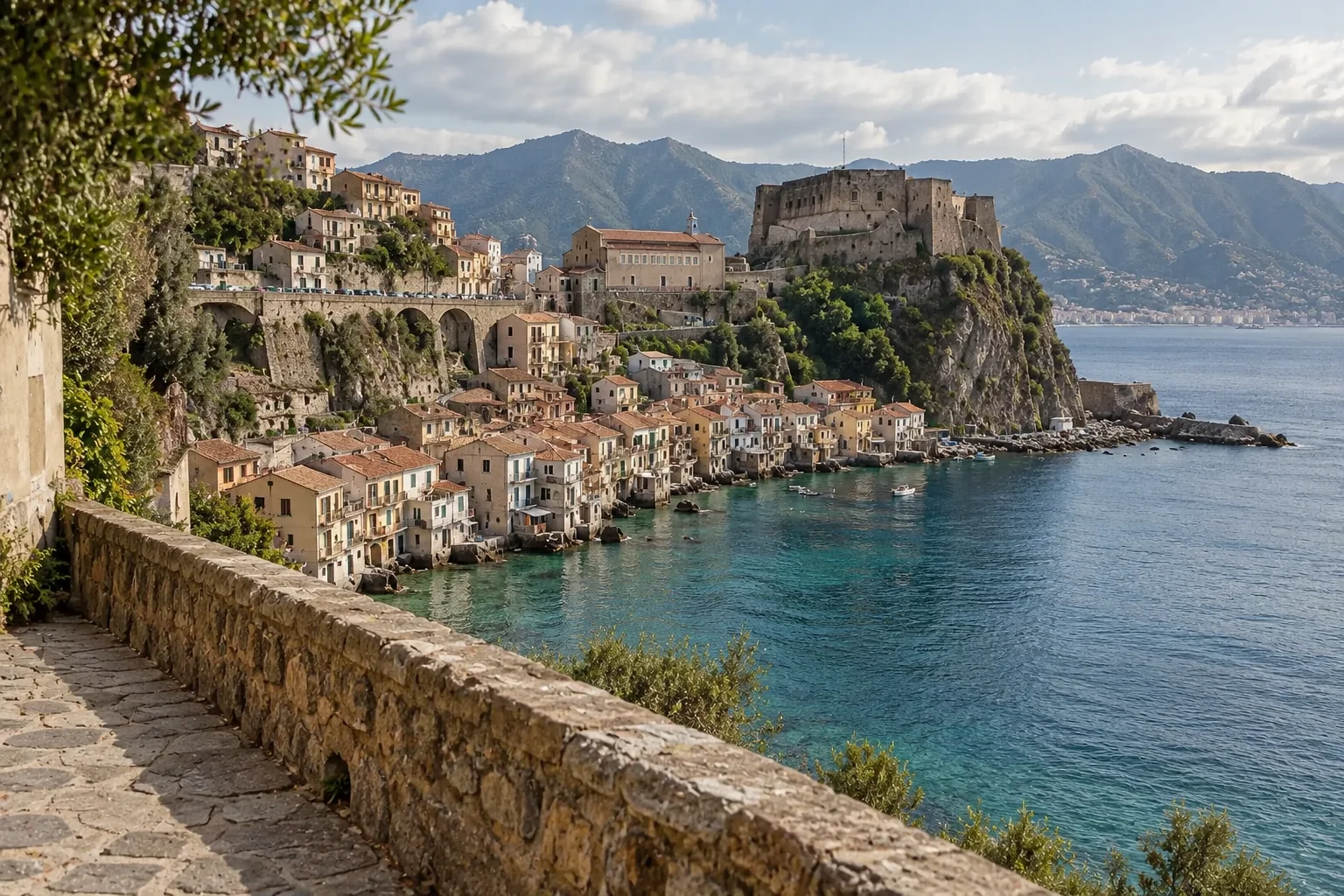
The fishing quarter of Chianalea along the water’s edge in Scilla, seen from above
A single line of terracotta roofs follows the water below the hill town of Scilla.

Look closer

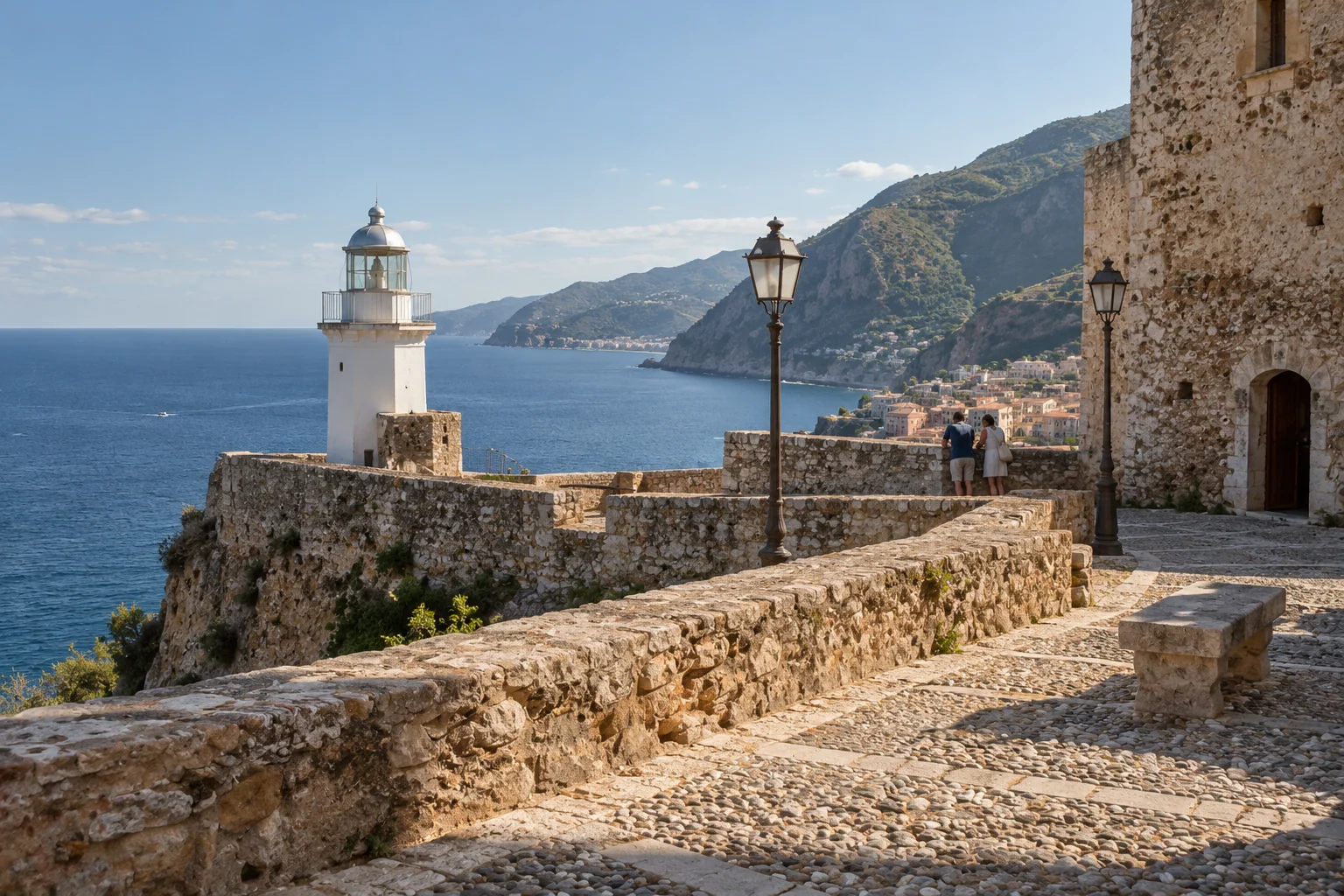
The upper terrace of Castello Ruffo in Scilla with its lighthouse and the open sea
The castle terraceThe terrace of Castello Ruffo, with its lighthouse, looks straight out over the strait.
Houses of Chianalea built straight into the sea, seen from the stony shore
Houses in the seaDoors open onto tiny landings just above the waves in the Little Venice of the South.
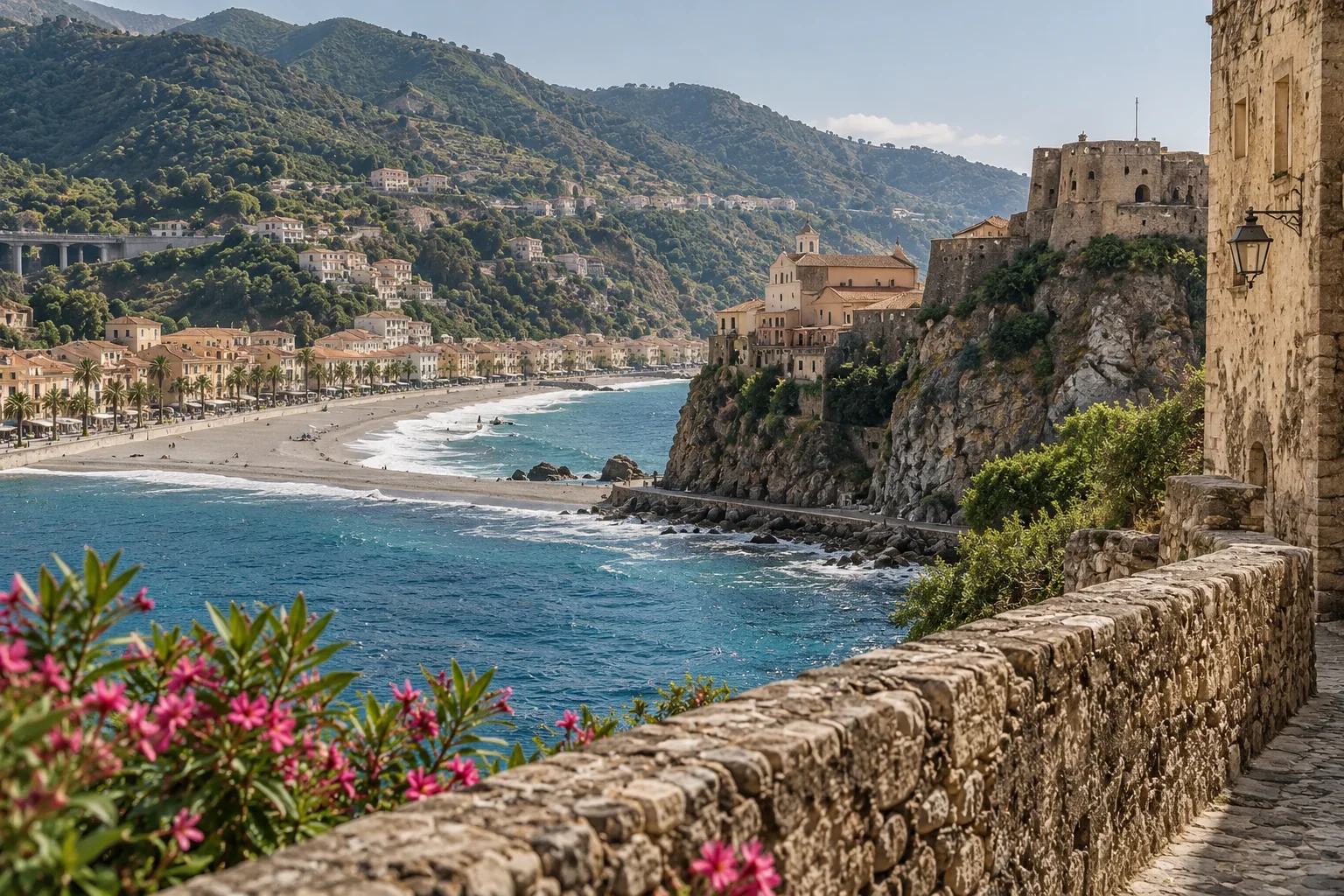
Marina Grande beach in Scilla seen from above, with green mountains behind
Marina GrandeA long pale beach curves between two headlands, backed by steep green mountains.

Four things worth finding

If you see nothing else, see these.

  1. Castello Ruffo

    A castle on the promontory with a lighthouse terrace looking out over the Strait of Messina and Sicily.On the rock between Chianalea and Marina Grande

  2. Chianalea

    A single street of houses built right into the sea, with doors opening on tiny landings; nicknamed the Little Venice of the South.The fishing quarter north of the castle

  3. Marina Grande

    A beach between two rocky headlands, with the 16th-century church of the Holy Spirit and its painting by Celebrano.South of the castle

  4. Swordfish boats

    Boats with a tall central lookout mast and a long bow plank for harpooning, a survival of traditional swordfish hunting.In the harbor

Plan your visit

Everything you need before you go.

Tickets
Free
Booking
No booking needed
Time needed
2 hours
Best time
Early evening, when Chianalea’s houses catch the last light
Getting there
Scilla has its own station on the Tyrrhenian line, with the village a short walk from it. By car, leave the A2 at Scilla and park on the upper roads, then walk down to Chianalea.
Accessibility
Chianalea’s alleys are extremely narrow, some barely wider than a doorway, with steps down to the water’s edge; not suitable for wheelchairs.

Walking Scilla and Chianalea is free. The Ruffo Castle charges a small entrance fee, with free entry for young children and over-70s.

Walk Chianalea on foot rather than driving around it: it is one long pedestrian lane between houses and sea, and a car cannot show you what makes it worth the trip.

Get directionsGoogle MapsApple Maps

Good to know

How long should you spend in Scilla?

About two hours covers Chianalea, the castle and Marina Grande at a relaxed pace. Add time for a seafood dinner, since this is a place to linger at sunset.

Do you need to book Scilla?

No, the village is free to wander. Waterfront restaurants fill at sunset in summer, so reserve a table if you want the view.

Is Scilla worth visiting?

Yes, for the houses standing in the water and the myth of Scylla and Charybdis. Add it as a stop on a Calabria drive rather than a long detour.

A letter from Italy, once a month.

The places, tables and makers we found worth your time. One email, no noise.

One letter a month. Unsubscribe at any time. We never share your address.

Help us get it right

What is it about?