

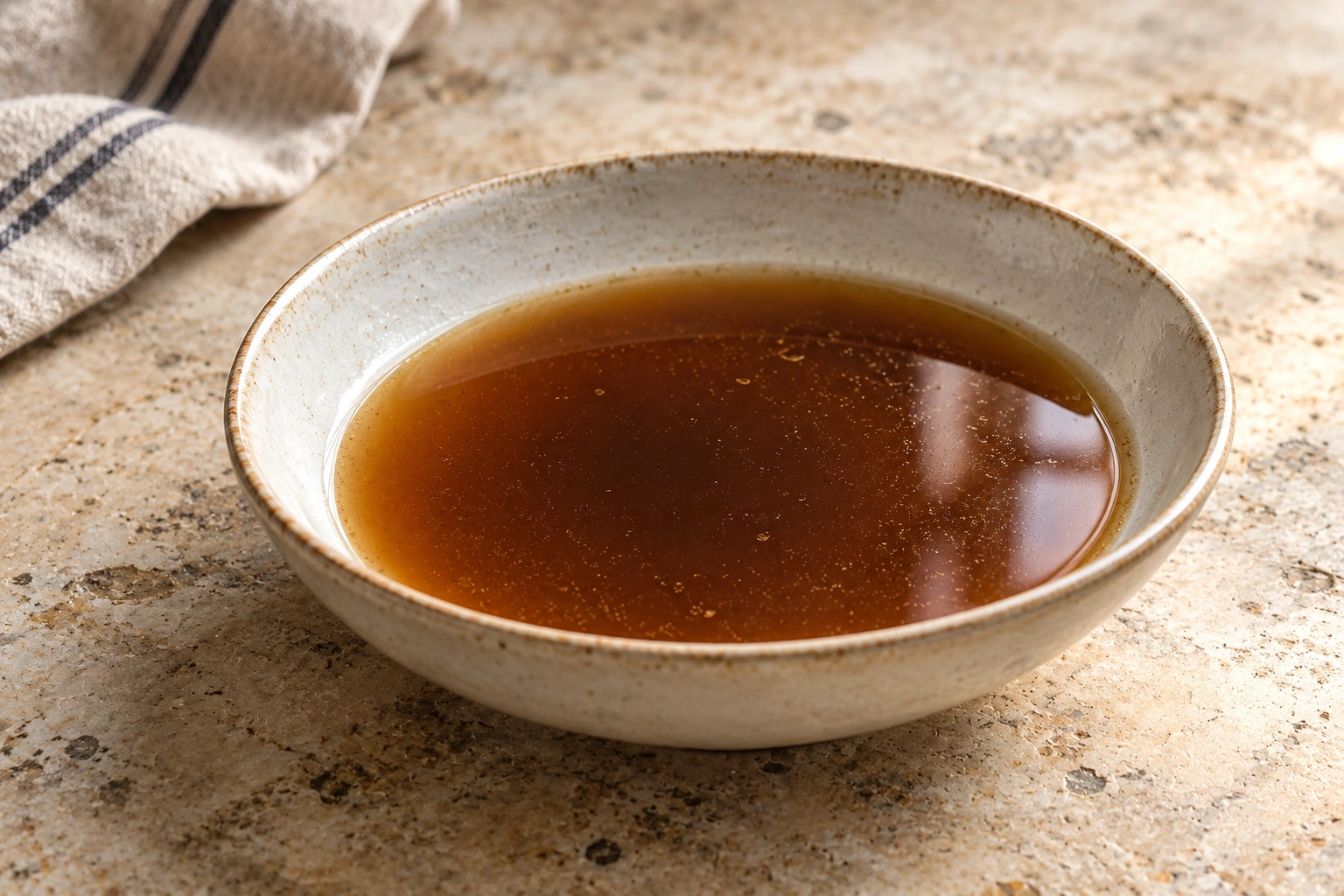
Plain roast meat gravy
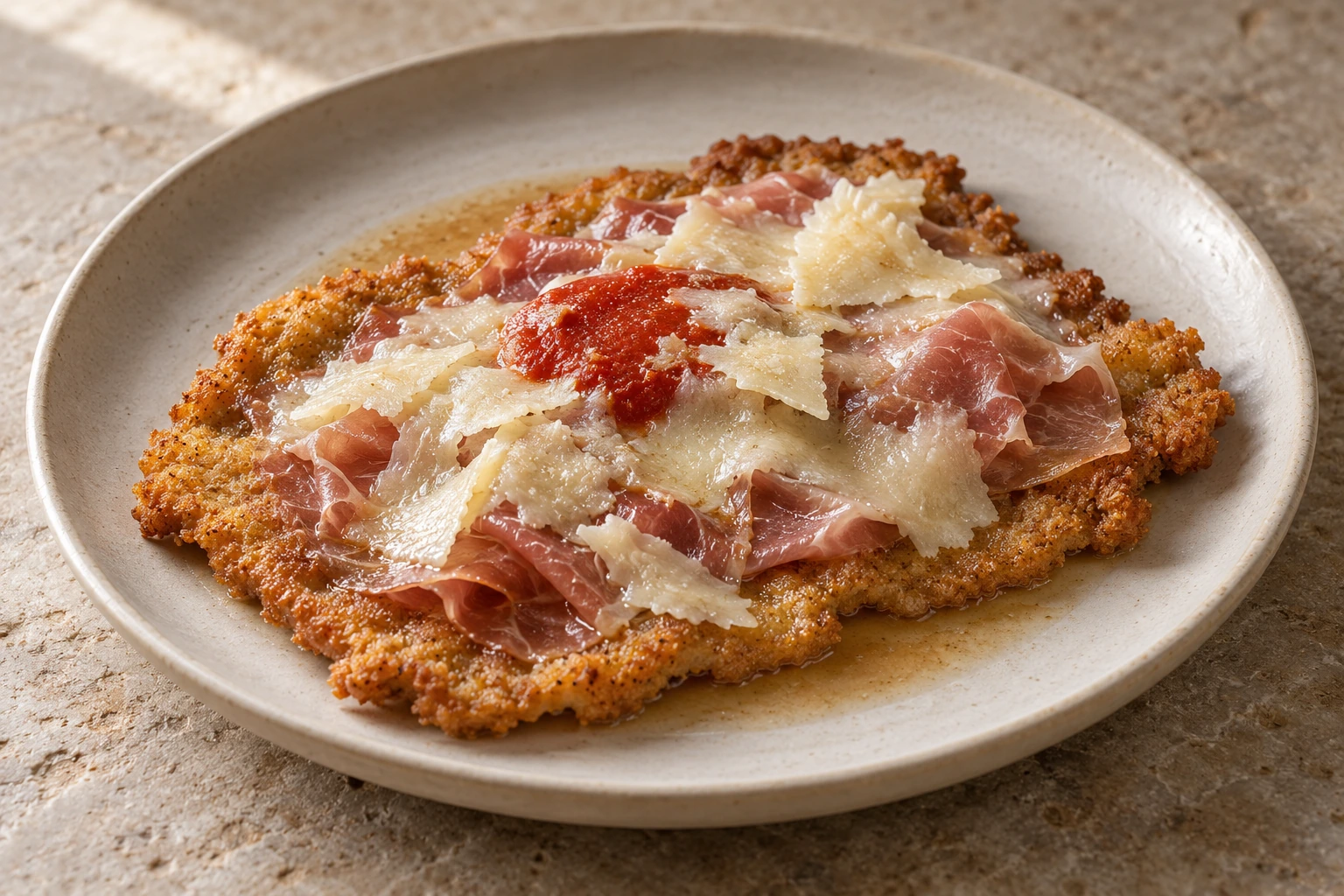
Plain roast meat gravy is the strained cooking juice from a meat roast, loosened and reduced as needed. In cotoletta alla bolognese, a small amount joins the broth beneath the prosciutto and Parmigiano.
- Form
- Strained roast juices, without flour or starch thickening.
- For the cutlet
- Unsalted or prepared without added salt.
- Distinct from broth
- Roast juices and broth have separate quantities.
Strain a plain liquid
For an unthickened fondo, loosen the browned pan deposits with the liquid required by the roast recipe, then strain. Spoon off excess surface fat and reduce gently if necessary. Do not add flour or starch for this form. Weigh the finished liquid for the cutlet; a thick flour-based sauce will behave differently.
The roast’s juices in another dish
Browning leaves flavorful deposits in a roasting pan. A little liquid loosens them into the meat juices, which can be strained and gently reduced. The resulting fondo d’arrosto is a prepared cooking ingredient. In cotoletta alla bolognese, meat gravy and hot broth enter the covered pan together. Their jobs overlap but their amounts remain separate: the gravy carries the roast’s concentrated juices, while the broth supplies additional liquid.
Use a small, measured amount
Add the measured gravy around the cutlets with the hot broth, avoiding the prosciutto topping. Cover and heat gently to melt the cheese. Use a plain, unsalted batch so that cured ham and cheese do not meet an already heavily seasoned reduction.
Ask what the sauce contains
If buying prepared roast juices, check the ingredients and whether they have been salted or thickened. A stock cube, powdered gravy mix and brown sauce bound with flour are not this ingredient. Choose by composition rather than the word gravy alone.
Cool and reheat carefully
Refrigerate prepared gravy promptly in a shallow covered container rather than leaving a large warm batch on the worktop. Follow the maker’s storage instructions for a purchased product. When reheating gravy, bring it to a boil before adding the measured amount to the recipe.
