

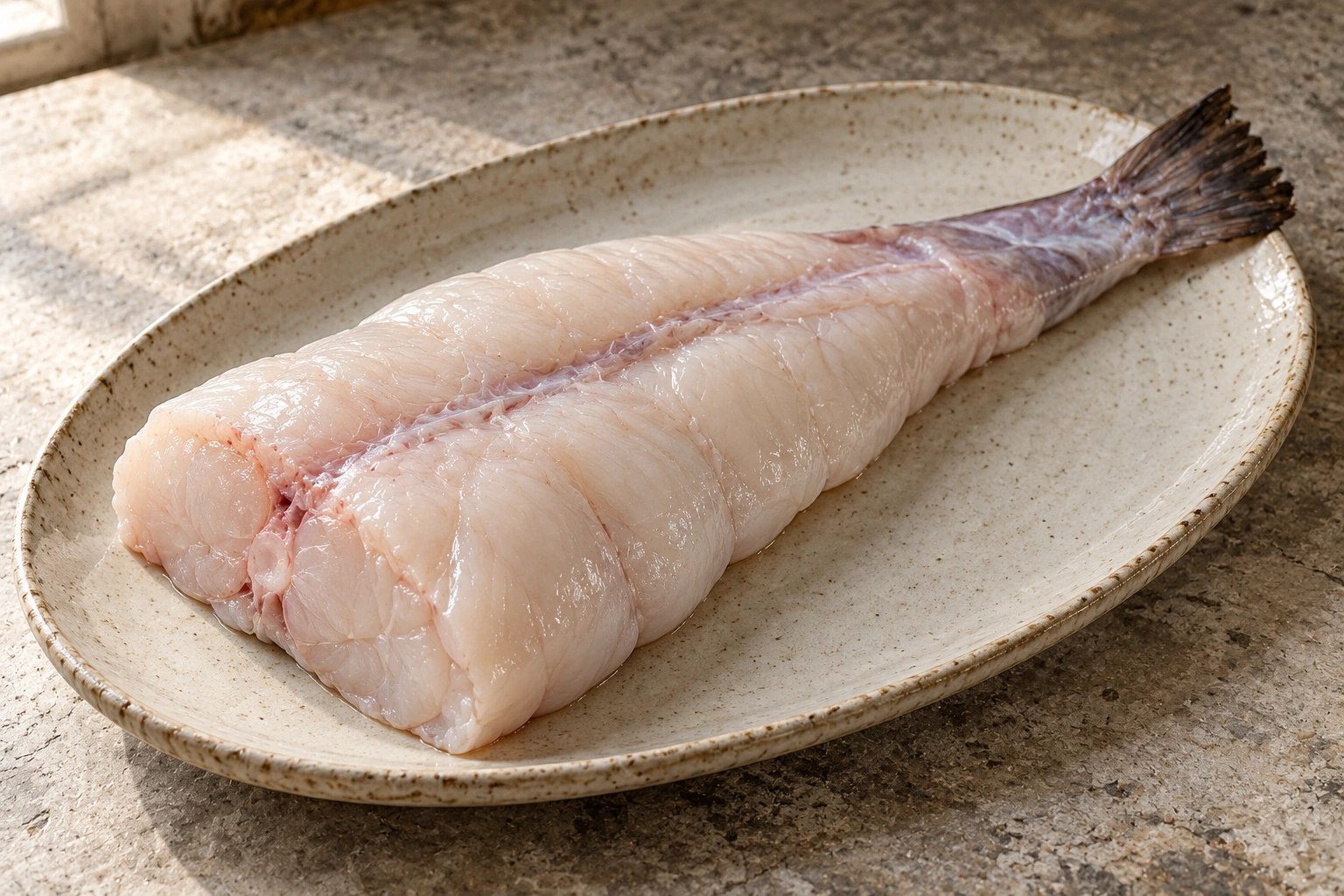
Monkfish tail
Monkfish tail brings firm flesh to the brodetti of Chioggia and Fano. Ask for the bone to stay with the purchase: it serves a different purpose in each preparation.
- Identity
- Lophius spp., including L. piscatorius and L. budegassa.
- Form for the pan
- Raw bone-in tail, skinned before cooking.
Prepare the right cut
Choose the cut before weighing it. For fillets and stock, have the fishmonger remove the skin and separate the flesh from the central bone. Keep that bone clean and separate until making the broth. For bone-in brodetto pieces, have the tail portioned evenly so the flesh cooks at a similar pace across the pan.
In Adriatic fish cooking
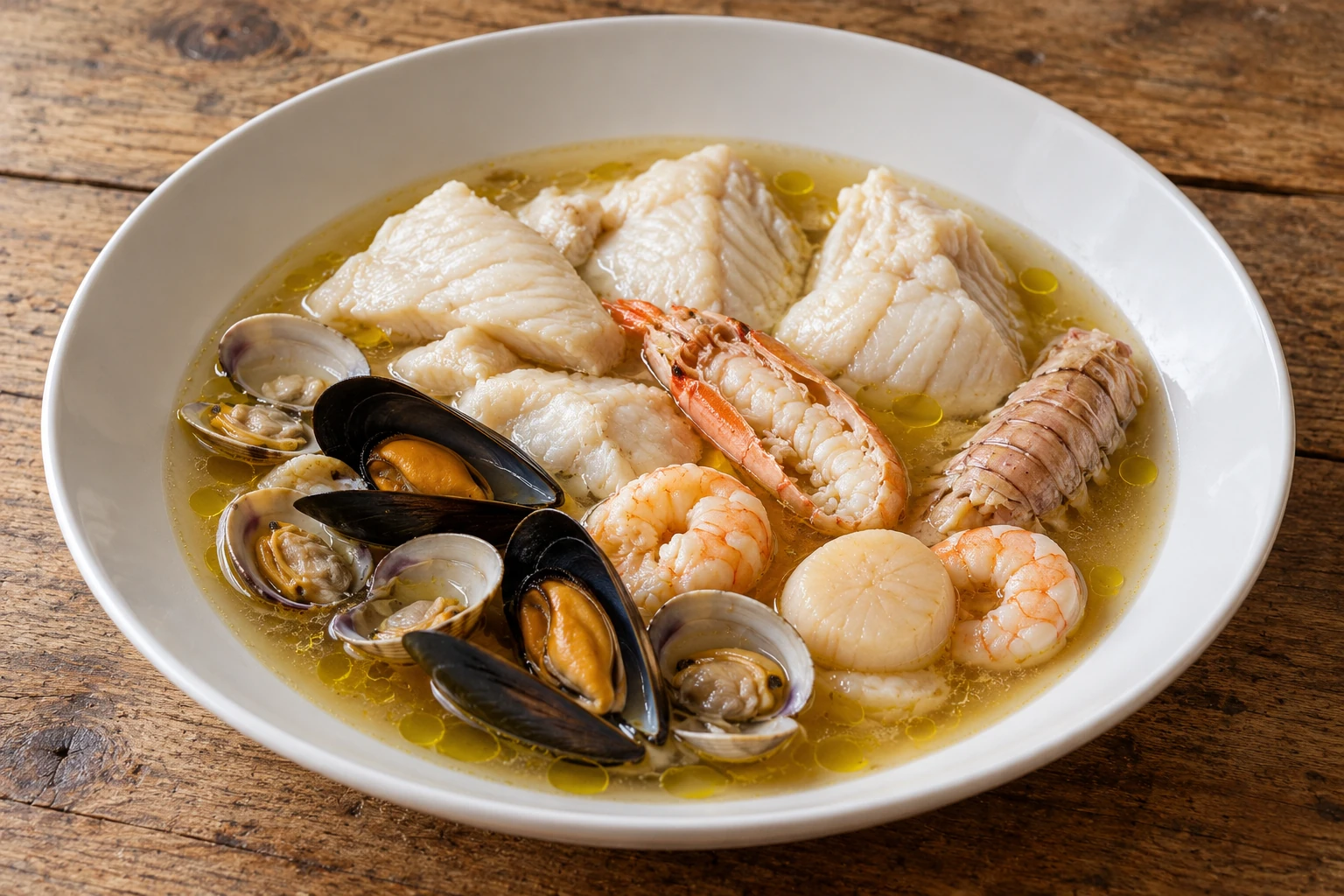
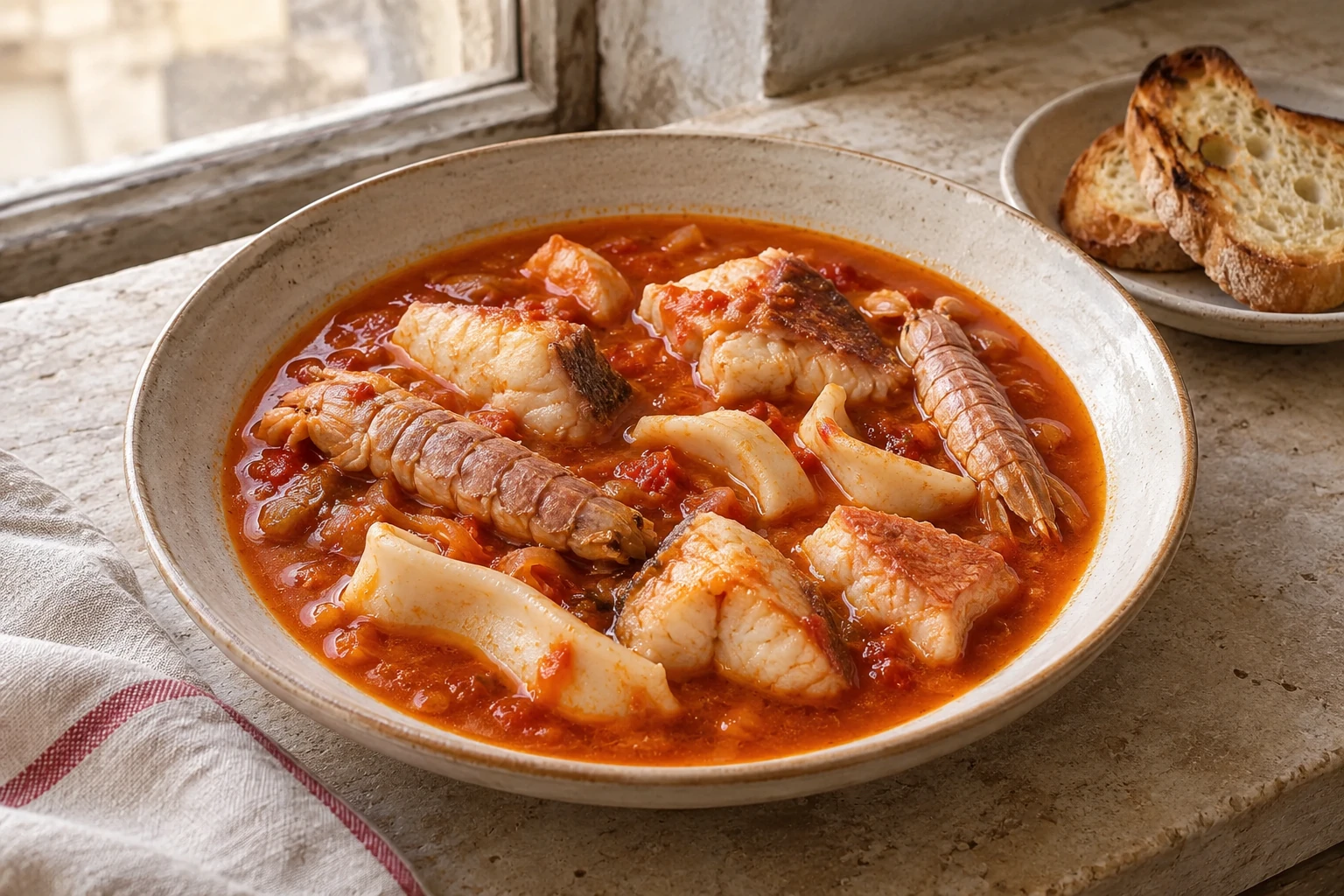
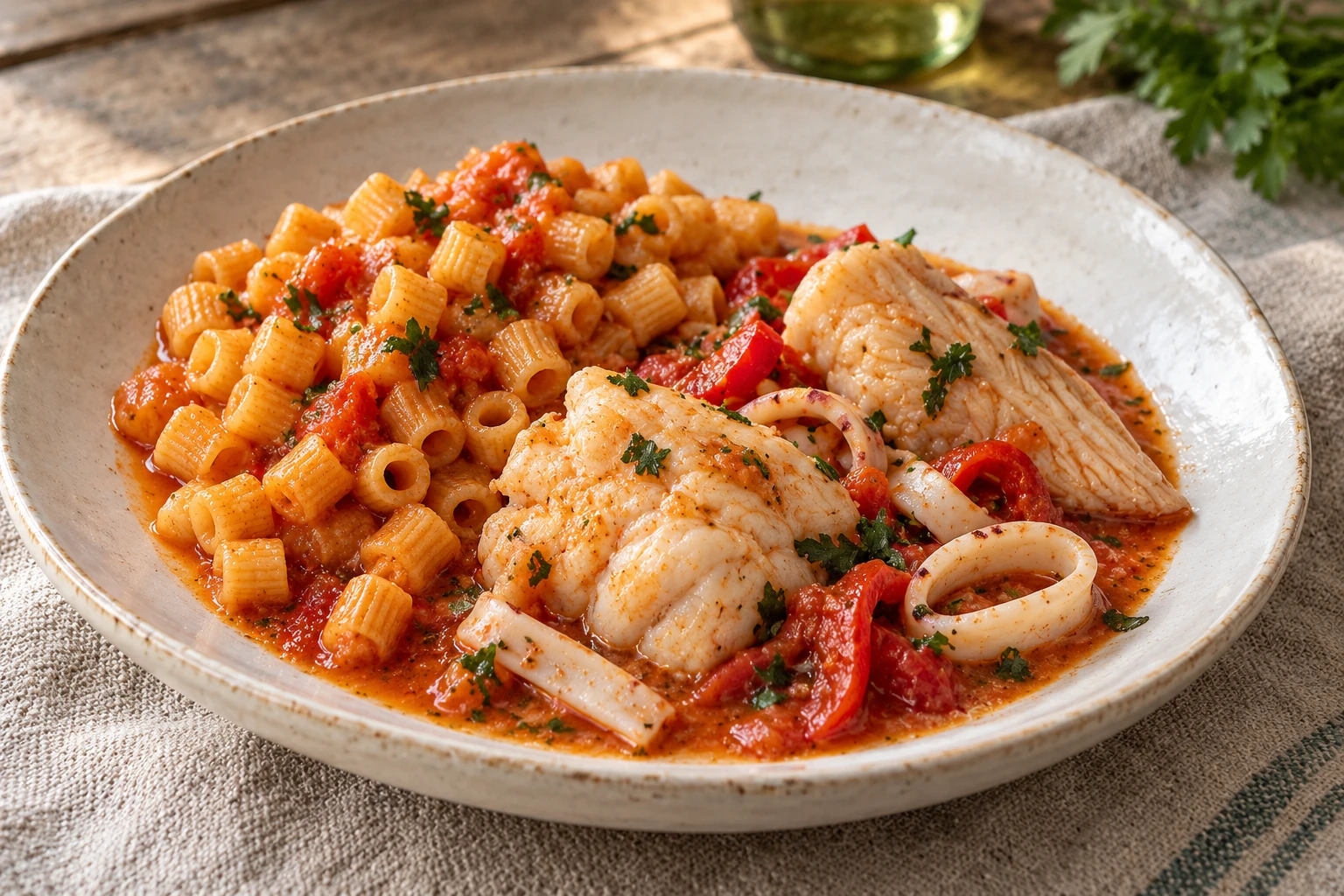
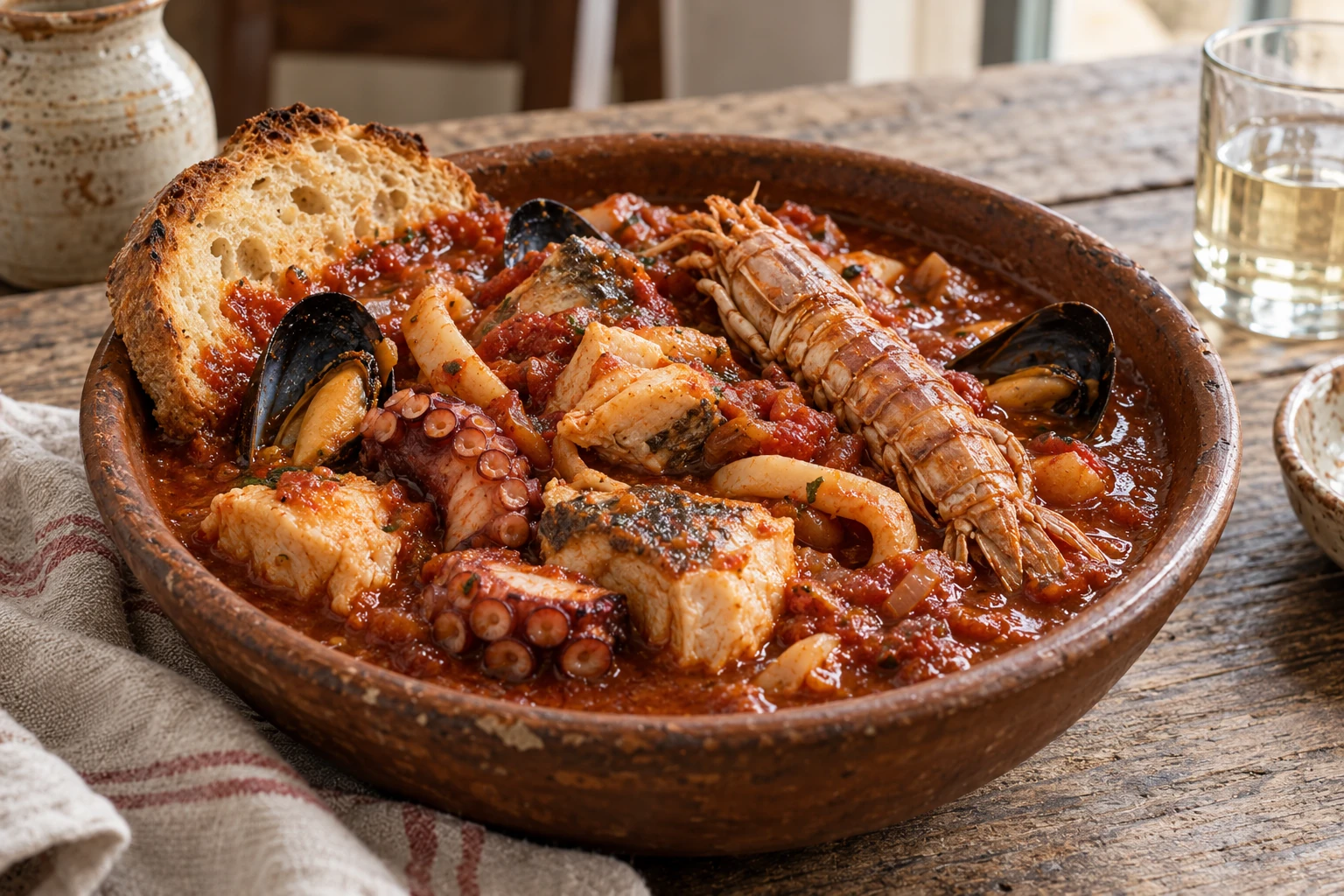
Coda di rospo is the tail portion of rana pescatrice. The whole fish has a very broad head and a tapering body, but the market cut concentrates on the fleshy rear portion. In Chioggia’s brodeto, the tail is skinned and filleted and its cleaned bone goes into the fumetto. In Fano’s brodetto, cleaned bone-in pieces enter the pan with the mixed fish.
Confirm species and purchase form
Ask for raw bone-in monkfish tail and check the scientific name on the label. Rana pescatrice can name both Lophius piscatorius and Lophius budegassa. A skinless boneless fillet and a bone-in tail have different yields, even if they look like similar portions at the counter.
Keep it cold until cooking
Follow the seller’s storage directions and the package date. Keep raw seafood covered and refrigerated, separate from food ready to eat. Prepare the fish stock and seafood with clean tools and keep the cleaned pieces cold until their turn in the pan.
