

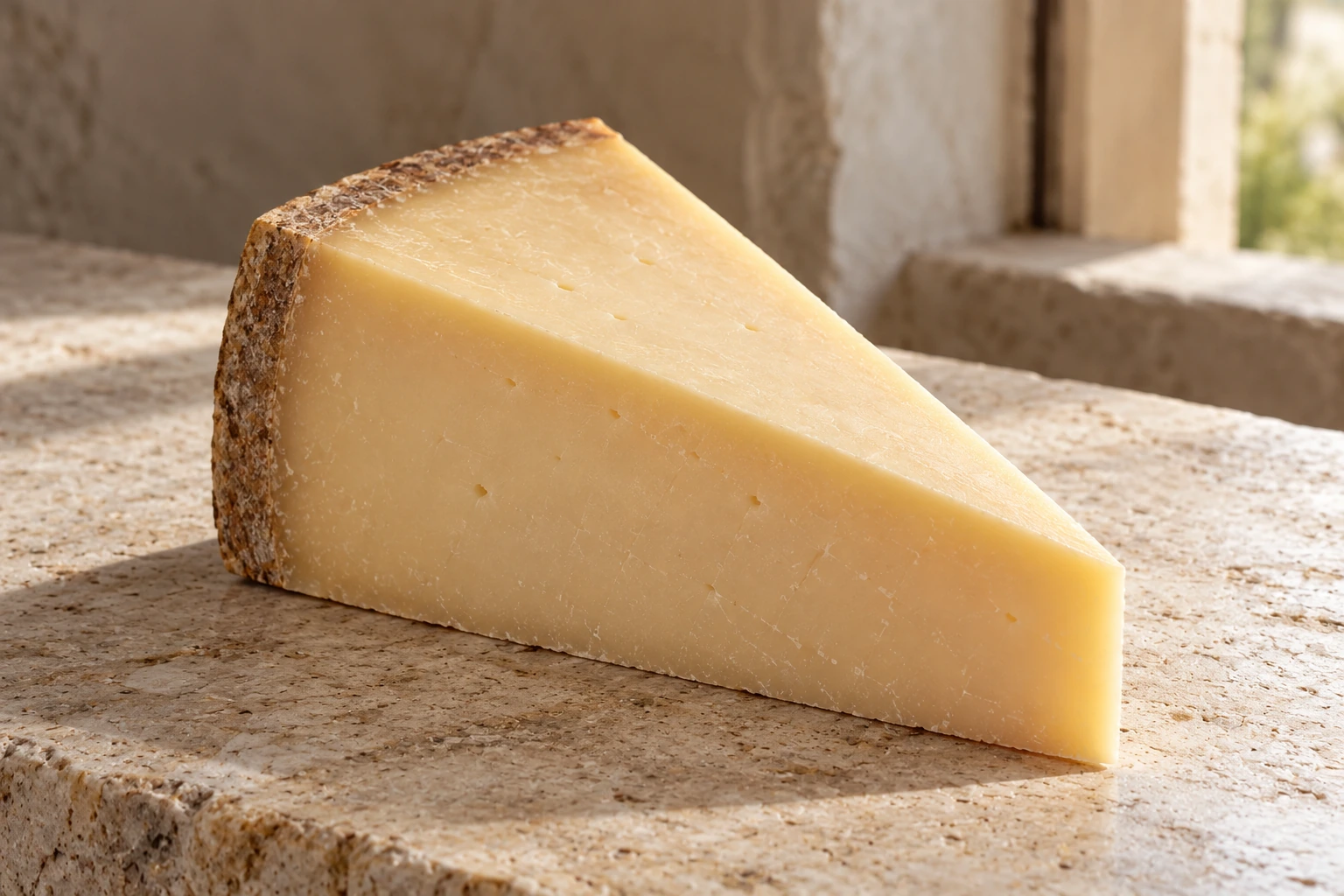
Gruyère
Gruyère is a Swiss cow’s-milk cheese with a firm, cuttable paste. Small rindless cubes join Pecorino Romano and Parmigiano in this Umbrian-style Easter loaf, a specific cheese choice for that recipe.
- Origin
- Switzerland.
- Form for the bread
- A piece of cheese to trim and cut into small cubes.
- Recipe role
- One component of a mixed-cheese Easter dough.
Trim, weigh and cube
Remove the outer rind before weighing the amount needed for the dough. Cut the cheese into small, even cubes using a sharp knife on a stable board. Add the cubes at the stage specified in the Easter-bread recipe so they are distributed through the dough with the other cubed cheeses. Keep the grated cheeses separate until their own mixing step.
Swiss cheese in an Umbrian house loaf
Gruyère takes its name from the Gruyère region of the Swiss canton of Fribourg. Its place in this Easter loaf is as a named Swiss ingredient alongside Italian cheeses, rather than as an Italian regional cheese. Small cubes distribute pieces of cheese through the enriched dough. The Italian word groviera can be used broadly in recipes. For this loaf, choose Gruyère by its actual label rather than treating that broader word as a guarantee of identity. Emmental is a different cheese and should not be selected merely for its familiar large holes.
Slice after the loaf has cooled
Let the rich cheese bread cool as directed before cutting. The cubes belong within the loaf, alongside the grated cheeses blended into the crumb. Their quantity contributes to the balance of the mixed-cheese dough. Cut even slices so each serving includes crumb and pieces of cheese.
Cook with it
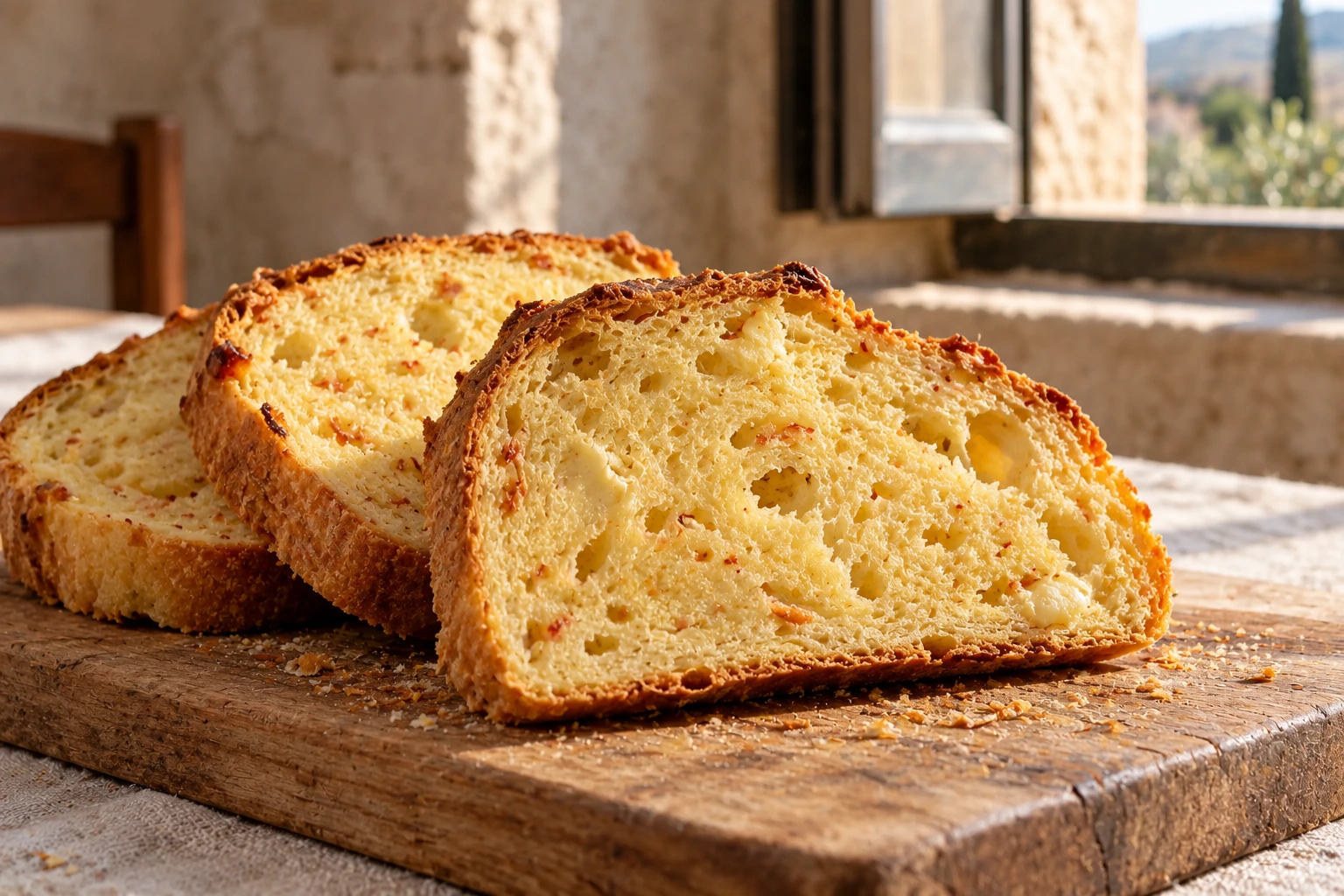
Read the cheese name
Ask for a piece of Swiss Gruyère suitable for cutting, rather than a processed cheese spread or a bag of mixed grated cheese. Check the label and origin. If buying Le Gruyère AOP, look for that actual designation on the product: it identifies the protected Swiss cheese and is not a name to apply to every cheese sold as groviera. Choose the amount needed after allowing for the rind.
Keep the cut cheese covered
Keep the cheese refrigerated according to the seller’s or pack’s instructions, with the cut surface protected in suitable food wrapping or a closed cheese container. Return the unused portion to the refrigerator after cutting. Keep it separate from raw foods and follow the stated use instructions; the storage of the cheese and of a baked loaf are different tasks.
