

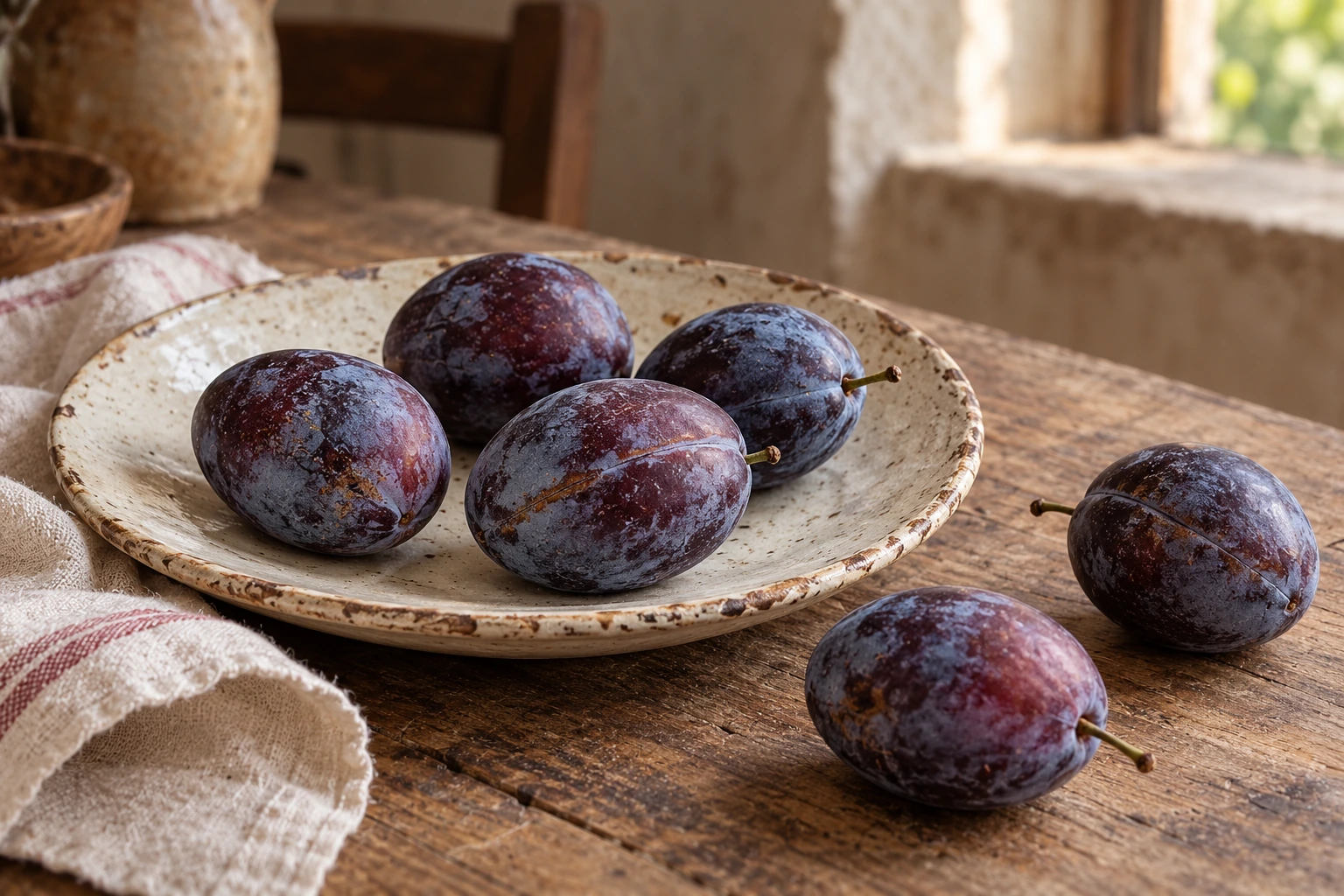
Fresh freestone plums
Freestone plums have flesh that separates readily from the stone. For filled potato gnocchi, choose small fresh fruit that can be pitted neatly and enclosed in the dough.
- Form
- Fresh fruit, with the stone removed for cooking.
- Stone
- Freestone describes how the flesh releases from the stone.
- Recipe choice
- Small fruit for individual filled gnocchi.
Wash, dry and pit
Wash the fruit and dry it before preparation. Open each plum enough to remove the stone without crushing the flesh. Check the cavity for any broken stone fragments. Keep the fruit in the shape directed by the recipe.
A useful distinction among plums
Plums vary in size, color, firmness and how closely their flesh clings to the stone. Freestone fruit is a practical choice when a recipe needs the stone removed while leaving most of the fruit intact.
Wrap one fruit at a time
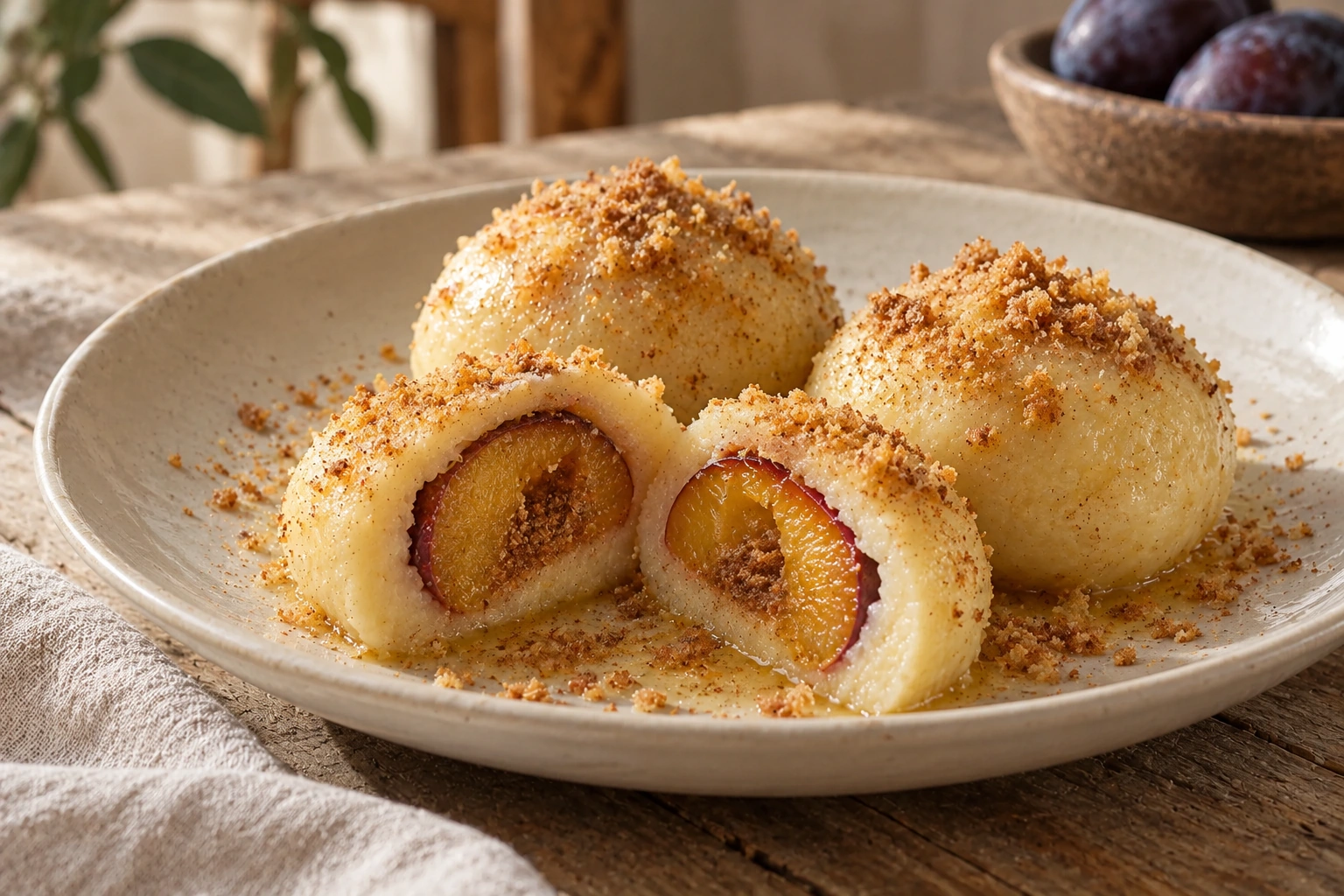
For gnocchi di susine, prepare the fruit before dividing the potato dough. Small plums are easier to enclose evenly. Follow the recipe’s filling measure and seal the dough carefully around each plum; large or very soft fruit makes that step harder.
Cook with it
Choose fruit for the job
Ask for small freestone plums and choose sound fruit that holds its shape when handled. Check that the flesh releases easily from the stone; skin color alone will not tell you.
Refrigerate ripe fruit
Keep ripe plums in the refrigerator and check them before use. Handle them gently to avoid bruising. Wash only the amount you are preparing, and keep cut fruit covered and refrigerated until needed.
