

Fennel seeds
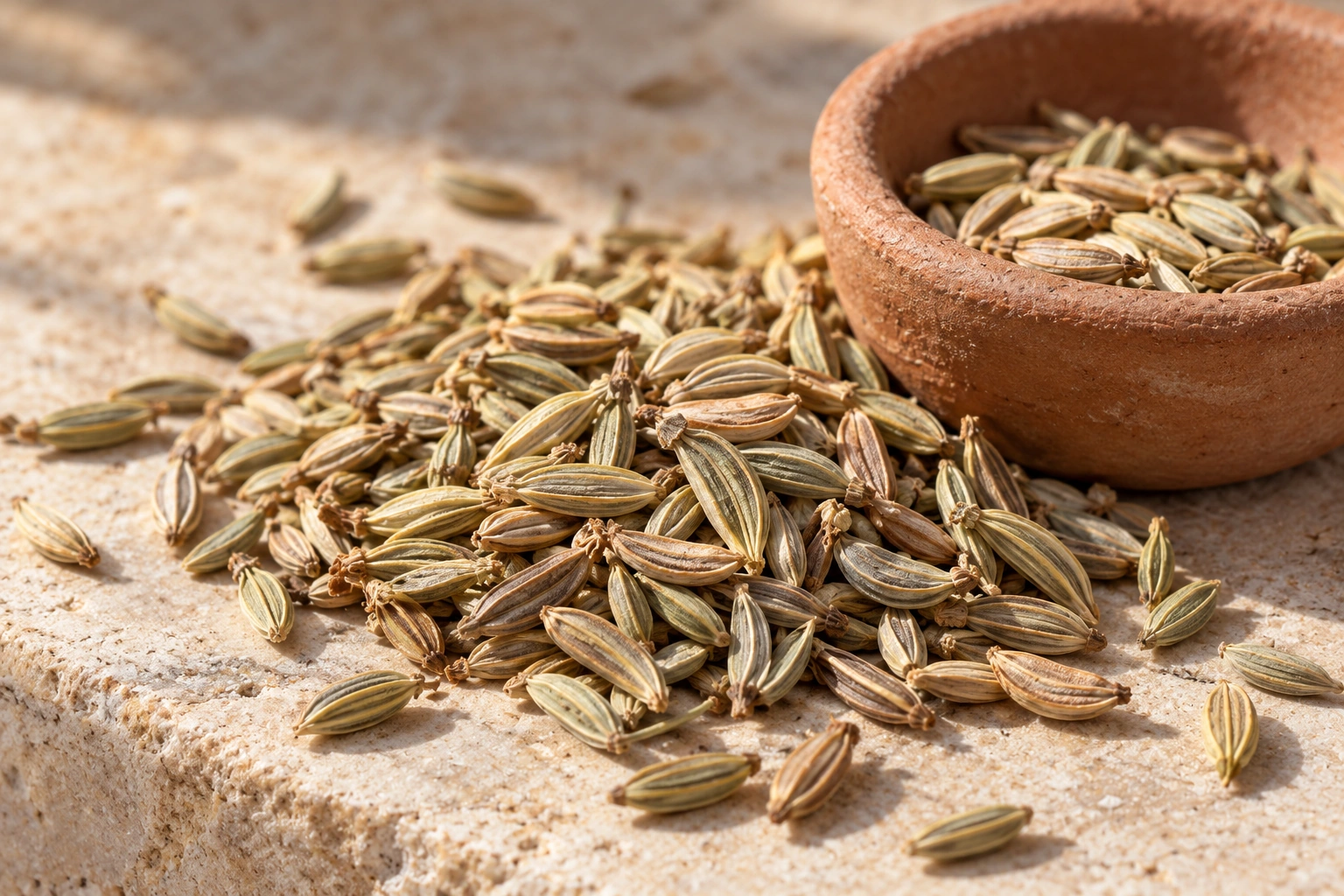
Fennel seeds are the small, ribbed dried fruits of the fennel plant. Their aromatic note carries through Italian breads and cookies, including the fruit-filled dough of pandolce genovese.
- Form
- Dried fennel fruits, commonly called seeds.
- Choose
- Whole culinary fennel seeds.
- Italian use
- Pandolce genovese and other baked doughs.
Distribute them through the dough
Measure the seeds before mixing. Add them in the recipe’s stated sequence and work the dough until the fruit and aromatics are distributed. For this pandolce, keep the seeds whole rather than substituting an unmeasured spoonful of ground spice.
Aromatic fruits in a Genoese dough
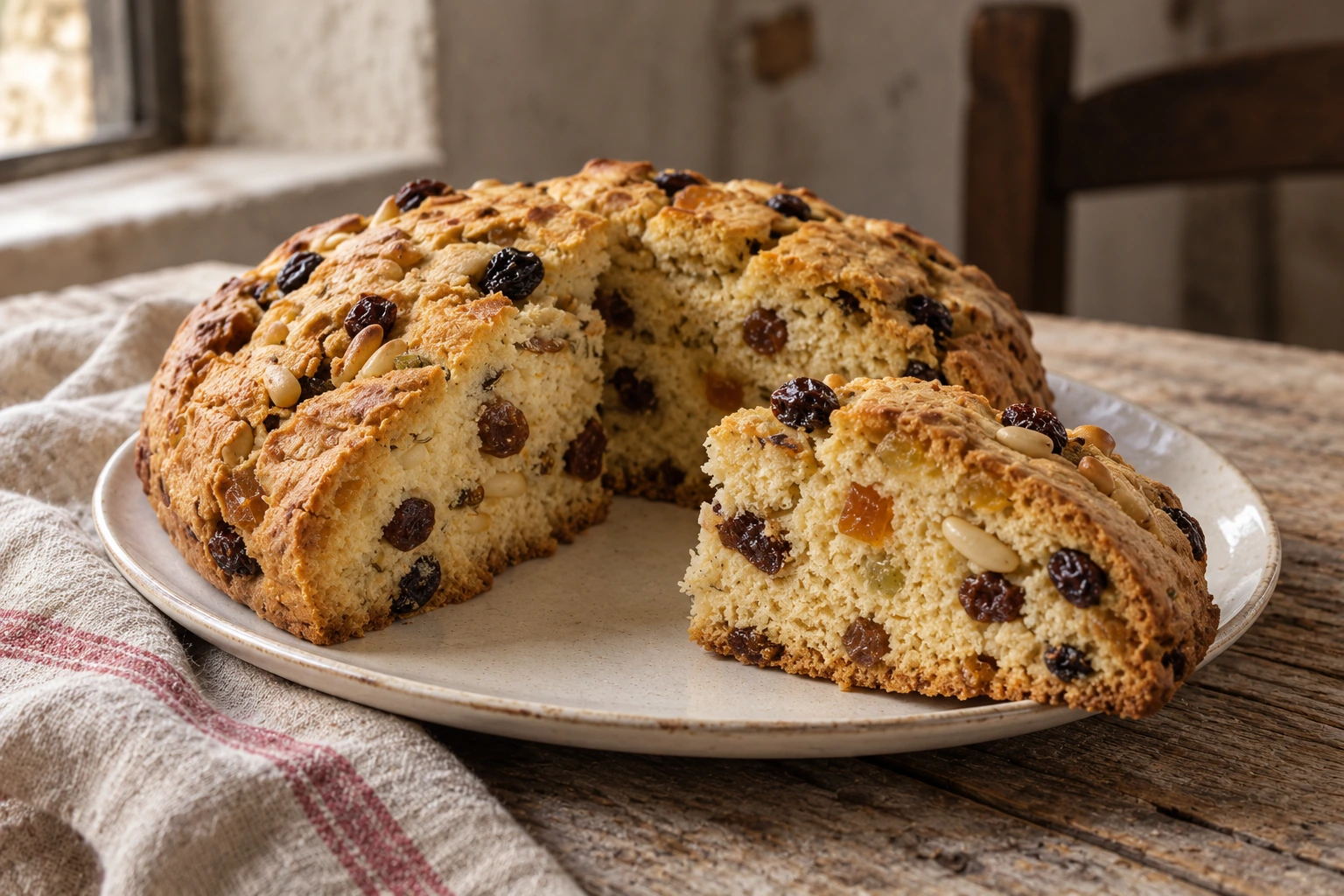
In pandolce genovese, fennel seeds share the dough with raisins, pine nuts and candied fruit. Their elongated, ridged form is distinct from the tender fennel fronds used in pasta con le sarde. The two ingredients serve different recipes and preparation states.
Let the loaf cool before slicing
The seeds remain within the baked pandolce alongside its fruit. Leave the loaf to cool before cutting so the crumb can be sliced cleanly. Prepare the knife and board for a fruit-studded loaf rather than a soft cream-filled cake.
Cook with it
Choose the dried culinary form
Look for semi di finocchio or fennel seeds on a food-spice label. Whole fruits have lengthwise ridges and naturally varied pale green, tan and brown tones. Anise seeds, fresh fennel leaves and fennel pollen are separate ingredients.
Keep aroma in the container
Follow the spice pack’s storage directions and keep it closed, away from steam and direct heat. Measure with a dry spoon and close the lid before mixing the dough. Keep the name and date visible.
