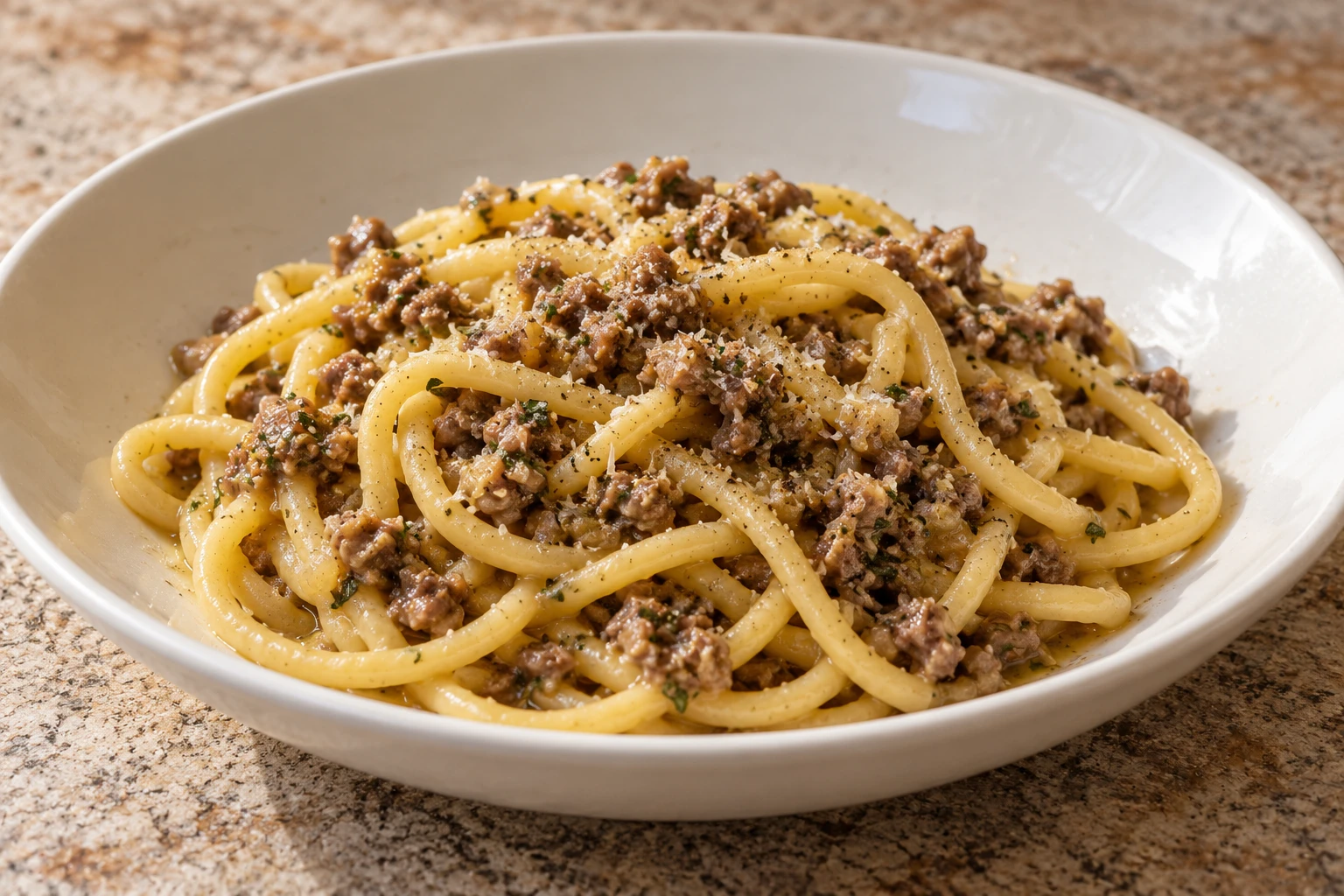
The ingredient
Ordinary raw duck liver, cleaned for a finely chopped pasta dressing.
Duck liver is a smooth-lobed organ. The raw liver used here is an ordinary giblet for cooking, rather than a finished pâté or a portion of prepared foie gras.
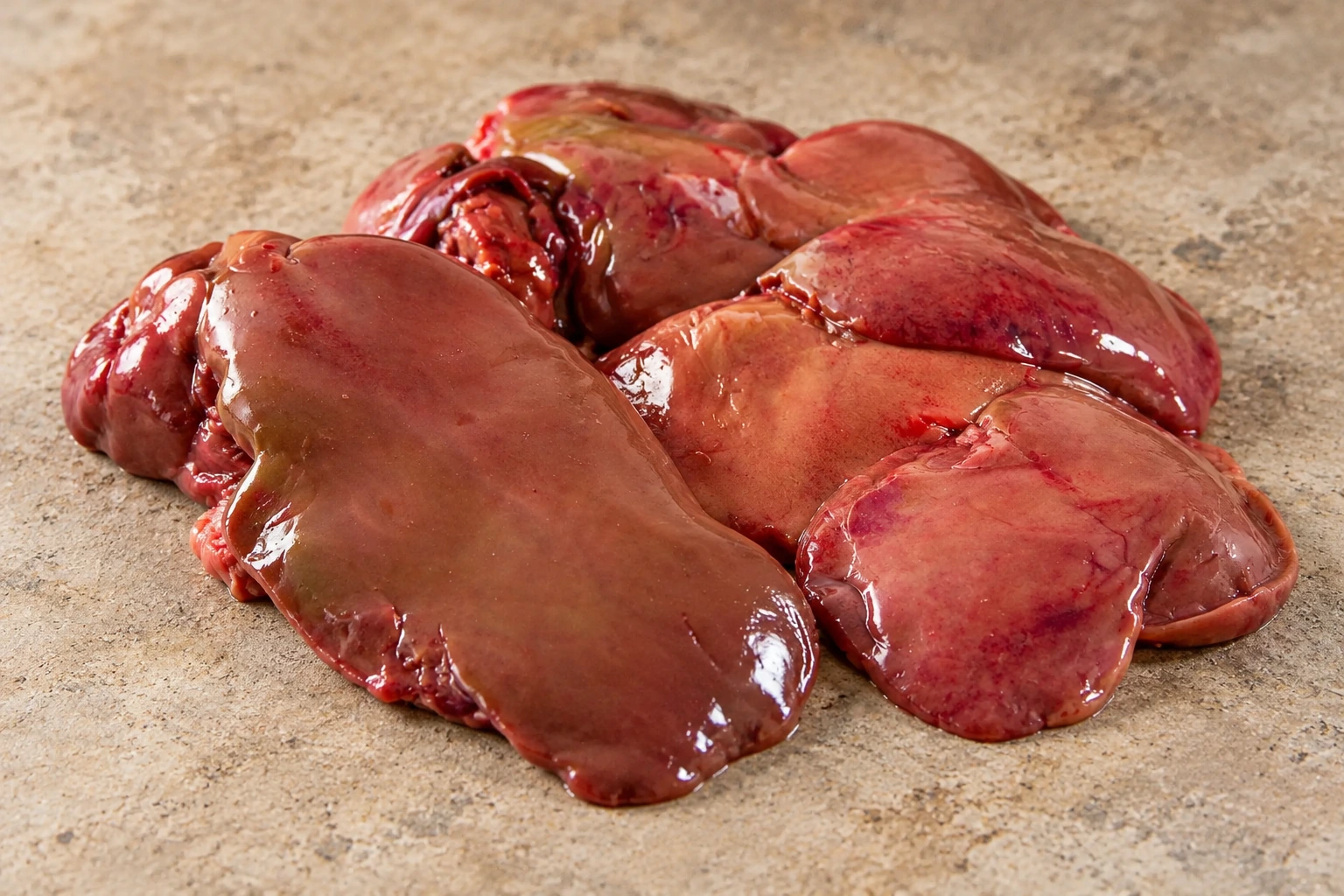
Ordinary raw duck liver, cleaned for a finely chopped pasta dressing.
Duck liver is a smooth-lobed organ. The raw liver used here is an ordinary giblet for cooking, rather than a finished pâté or a portion of prepared foie gras.
Ask for a cleaned liver with unwanted attached tissue removed. Handle it gently, keep it chilled while the broth cooks, and chop it shortly before its turn in the pan. Cook through to the recipe’s poultry-offal endpoint rather than relying only on the color of its surface.
In duck bigoli, liver is one of the separately weighed giblets used in the dressing. It is chopped and cooked in the aromatic pan mixture near the end of the broth preparation.
The four-portion bigoli dressing uses 50 g of cleaned duck liver, weighed separately from the whole duck, gizzard and heart. Keep that allocation distinct when ordering a mixed pack of giblets.
Order duck liver by species and raw state. Check whether a product described as liver is ordinary duck liver, foie gras or an already prepared terrine; these are not the same ingredient form.
Keep raw liver refrigerated, covered and separate from cooked ingredients. Follow the supplier’s use-by and handling instructions; do not leave it out during the long broth stage.
No. It calls for cleaned raw duck liver as an ordinary giblet.
No. Separate and weigh the actual liver; a mixed pack can contain different organs and proportions.
The places, tables and makers we found worth your time. One email, no noise.
One letter a month. Unsubscribe at any time. We never share your address.