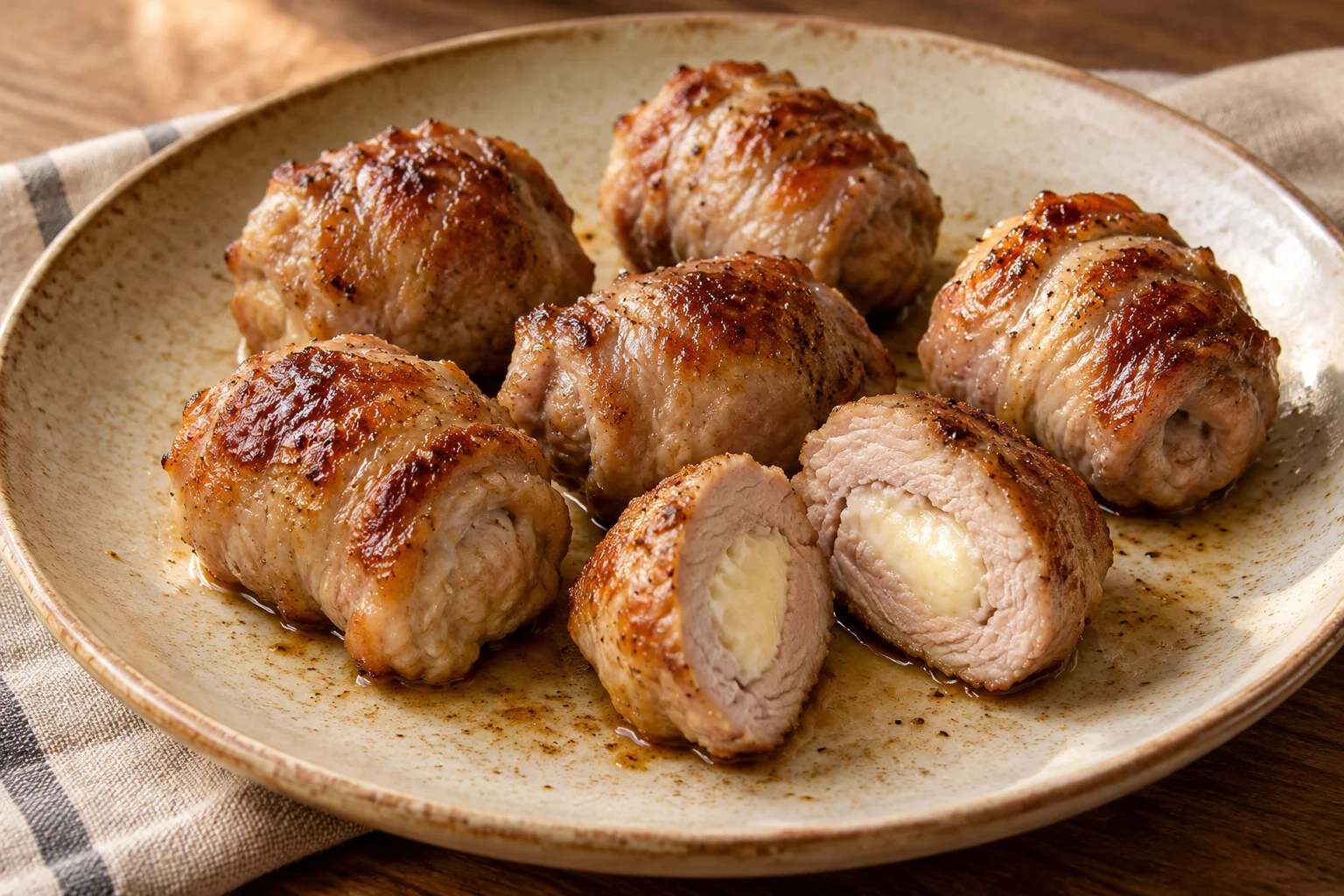
Fresh capocollo
- State
- Raw meat for cooking
- Appearance
- Marbled muscle, in a joint or slices
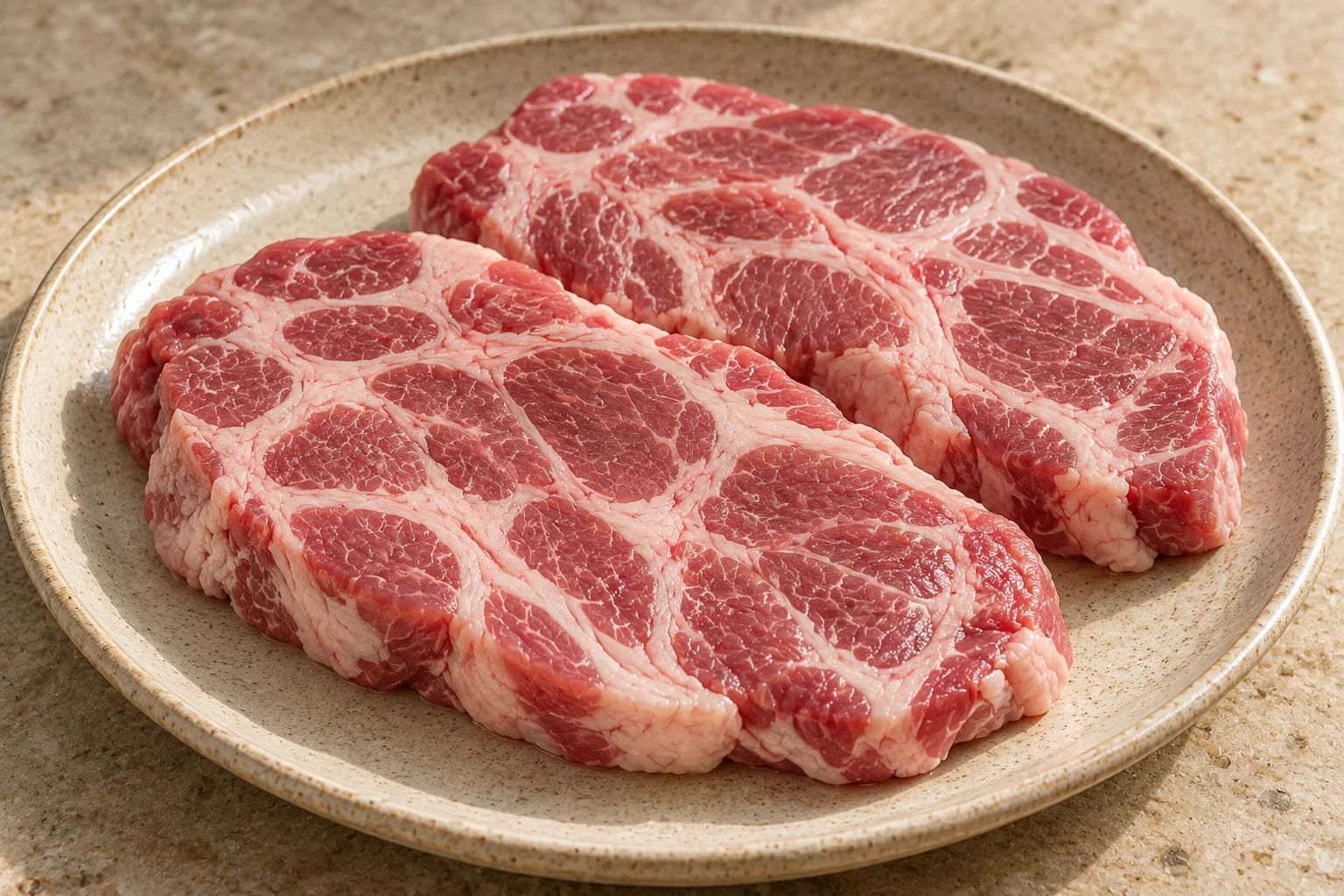
Fresh pork collar, also called capocollo fresco or coppa, is marbled raw meat for small rolls, steaks and roasting.
Read the preparation, not just the cut name.
At the butcher’s counter, capocollo can mean meat to cook rather than a salume to slice.
The fresh cut has visible veins of fat running through the muscle. Keep that marbling when preparing small rolls, trimming only ragged edges that make the parcel difficult to close. When a recipe calls for fresh capocollo, buying the cured product changes both the texture and the way the dish cooks.
For bombette, ask for thin slices that can bend around a small piece of cheese without tearing. Flatten thicker spots gently between sheets of food-safe paper. Fold the short edges inward, roll the meat around the filling and secure it for cooking. Remove every toothpick before the rolls reach the table.
In the Valle d’Itria, fresh capocollo is used for bombette, associated with towns including Martina Franca and Cisternino. Their canestrato filling and rounded shape distinguish them from a plain pork steak. The home oven is a practical way to cook the parcels; the regional fornello is a different cooking setup.
Fresh capocollo forms the small rounded parcels of Puglian bombette, enclosing canestrato, salt and pepper. The meat can also be cut into steaks for the pan or grill, or left in a larger piece for roasting. Match thickness and cooking method: a thin cheese-filled roll and a thick steak should not share an automatic cooking time.
Ask for capocollo fresco or coppa fresca and say what you plan to cook. Choose slices with even thickness for rolls and check that they are large enough to enclose the filling. Cured capocollo, pancetta and pork loin are different products; do not let the shared name or a similar-looking packet decide the purchase.
Keep the raw meat refrigerated in its packaging or a covered container that catches drips. Respect the use-by date and the supplier’s storage instructions. Prepare it with clean tools and keep the raw slices separate from cooked rolls and foods that will be served without cooking.
Use the fresh raw cut for this preparation. Cured capocollo is already processed and is not a direct substitute.
Plain bombette enclose canestrato, salt and pepper in fresh capocollo. Pancetta-wrapped rolls are a separate variation.
The places, tables and makers we found worth your time. One email, no noise.
One letter a month. Unsubscribe at any time. We never share your address.