

Skip to content

Centro Storico di Gallipoli

Gallipoli Old Town

Island citadel, Baroque cathedral, fishing harbor ramparts, underground oil mills.

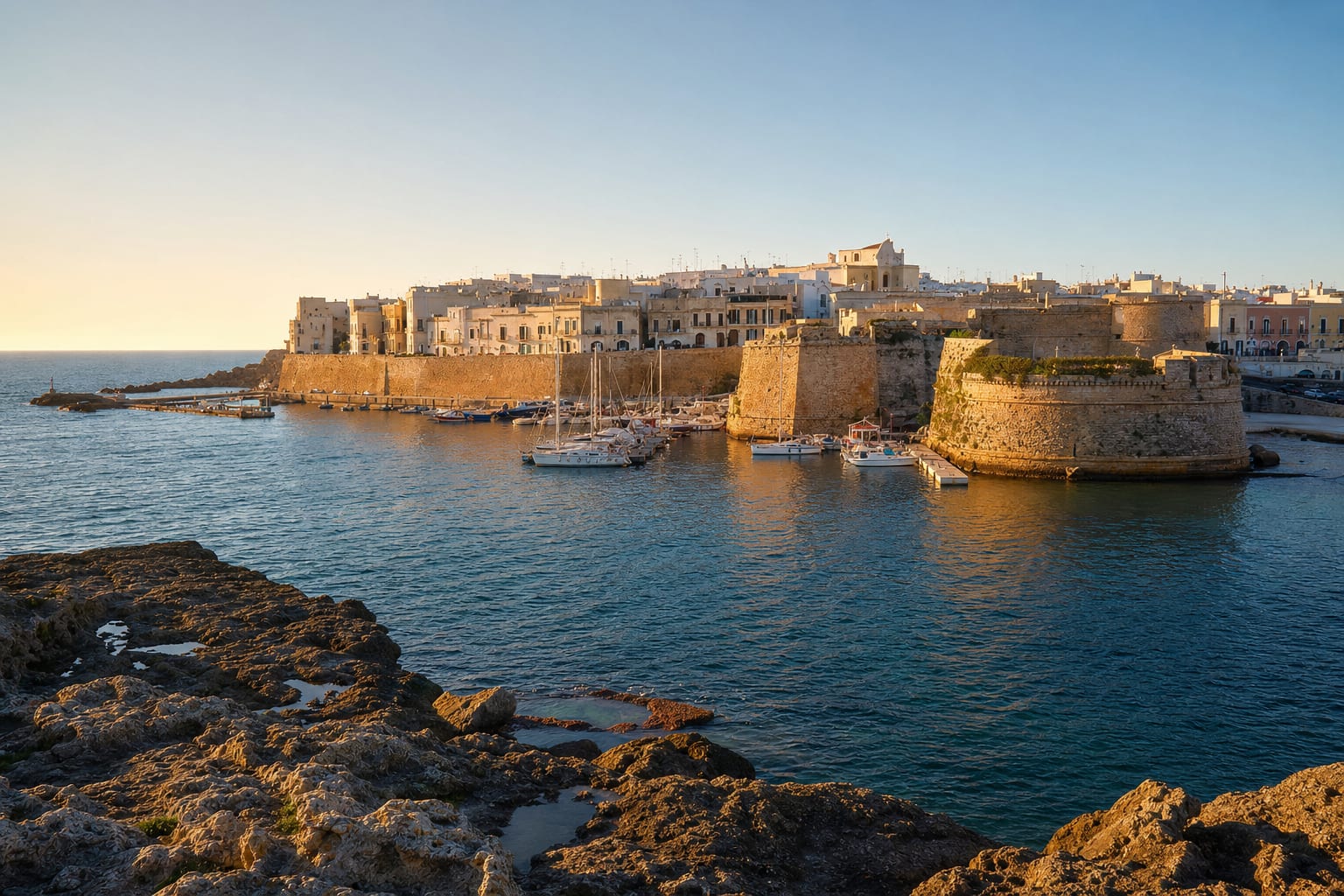
Photograph · Centro Storico di Gallipoli

At a glance

Gallipoli Old Town facts that matter

Names, makers, dates, and context before the story opens up.

Italian nameCentro Storico di Gallipoli
What it isDistrict
WhereGallipoli, Puglia
Known forIsland citadel, Baroque cathedral, fishing harbor ramparts, underground oil mills

The story

What you're looking at

Old Gallipoli sits on its own island behind ramparts, joined to the new town by a single bridge. Beneath the Baroque cathedral and the fish market, underground presses once supplied lamp oil to half of Europe.

Verified details

Each statement below is linked to the record or institution that supports it.

Gallipoli Old Town is the historic city on a limestone island to the west of the newer town, joined to the mainland by a masonry bridge. It is a district, not a synonym for the Castle, cathedral, walls, port or the municipality as a whole.1

Municipal planning material identifies the island-city character as central to Gallipoli's historic fabric and describes a defensive response to maritime exposure, with perimeter walls, bastions and fortifications. The City links major defensive works to the period after the 1480 attack on Otranto. This supports a fortified-city context, not a claim that every visible wall is from one campaign or period.2,1

The municipal centre analysis identifies a persistent internal axis running from the Castle toward the opposite side of the island through the cathedral square. It is an urban-morphology observation, not a mapped walking route or a claim that all buildings on it are open to visitors.2

The municipal historical overview links Gallipoli's later port development to lampante-oil trade, saying the port became a major Mediterranean base for that commerce under Bourbon rule. This explains one economic layer of the historic city but does not identify every underground oil mill, warehouse or merchant palace without site-specific evidence.3

Individual sites at the entrance and within the island retain their own identities. The national catalogue treats Fontana Greca as a separately catalogued entrance monument, while the municipal account refers separately to the Castle, cathedral, churches, palaces and courts. A district guide must link to, not absorb, their histories and access.4,3

Sources and citations (4)
  1. Comune di GallipoliMura urbicheDetail descriptionRead source
  2. Comune di GallipoliAnalisi del sistema Centro AnticoHistoric-centre analysisRead source
  3. Comune di GallipoliCenni storiciHistorical overviewRead source
  4. Ministero della CulturaFontana Greca, GallipoliDescriptionRead source

Plan your visit

Before you go

Booking
Walk-up friendly

Find it

Where to find Gallipoli Old Town

Get directionsGoogle MapsApple Maps