

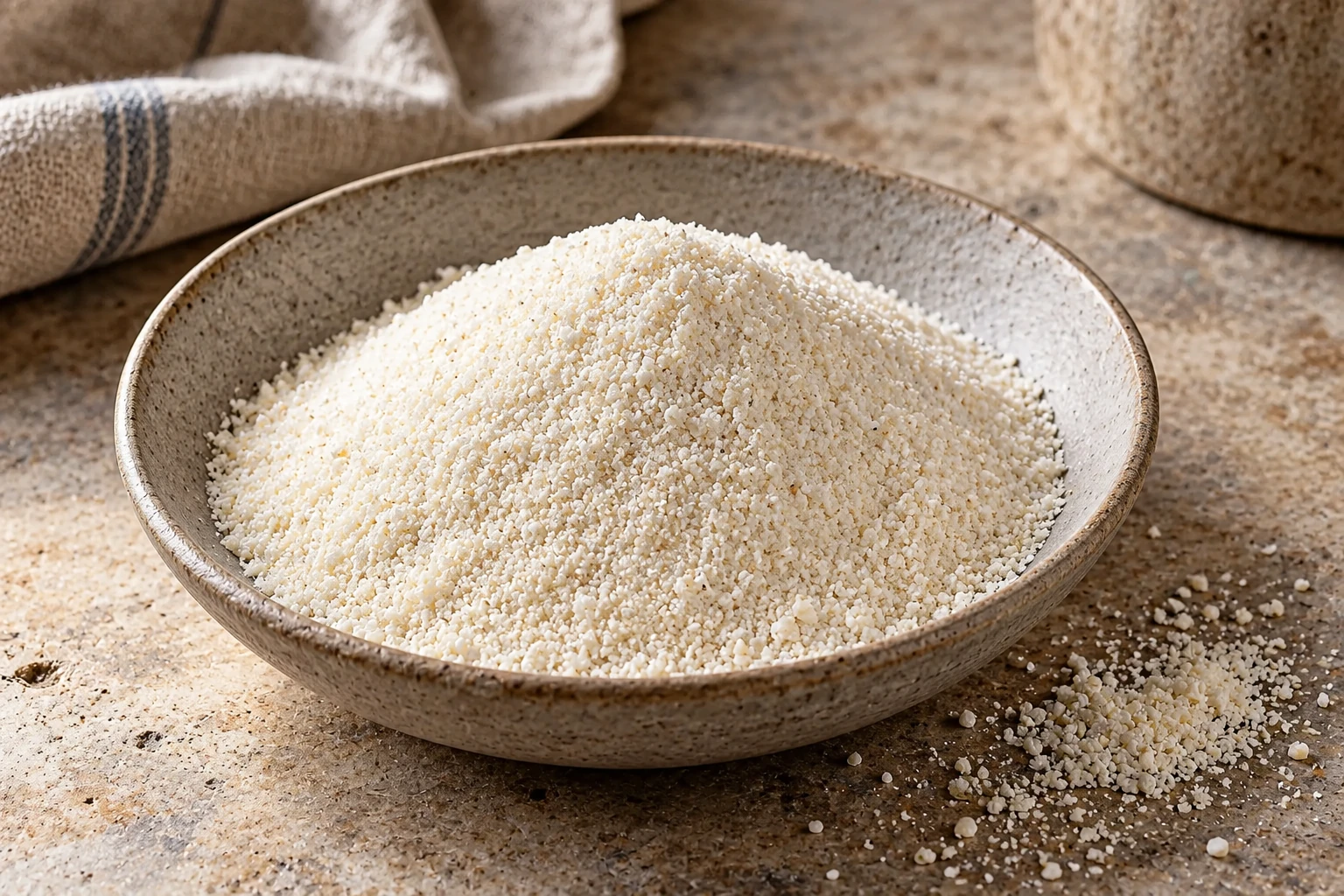
White polenta cornmeal
White polenta cornmeal is milled from naturally white maize. Cooked into a soft polenta or cooled and grilled, it accompanies Venetian baccalà mantecato and Grado’s peppery boreto.
- Form
- Dry, uncooked white maize meal for traditional polenta.
- Color
- White maize, distinct from yellow meal and cornstarch.
Add the meal gradually
Measure the dry meal before cooking. Bring the recipe’s water to the required heat and add the meal gradually while stirring, so it disperses instead of forming dry lumps. Keep stirring as the polenta thickens, reaching the bottom and corners of the pan.
Follow the cooking time and liquid guidance for the particular meal, adjusting the finish to the dish. A freshly spooned accompaniment and a polenta intended to cool for grilling need different final handling.
White polenta beside fish
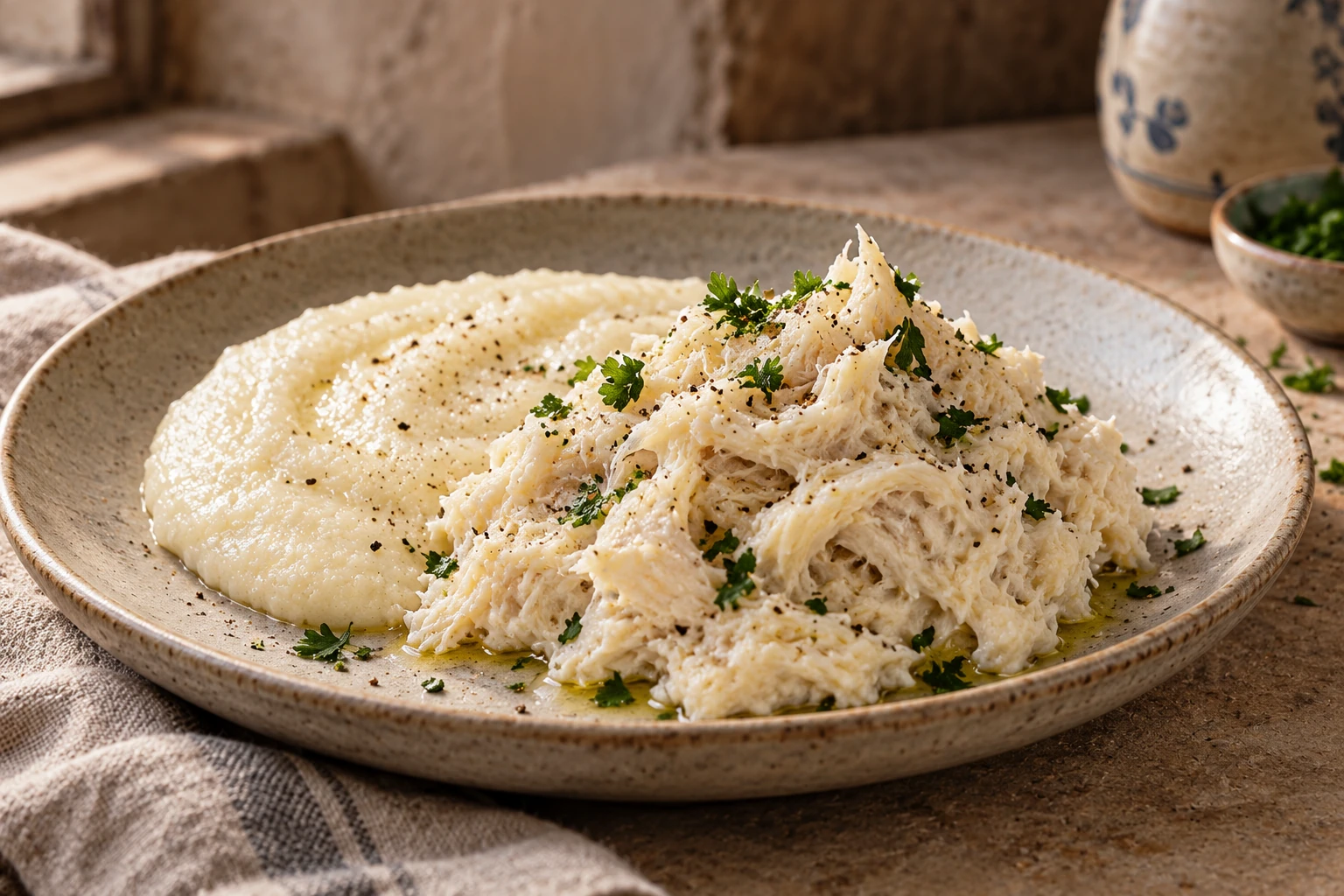
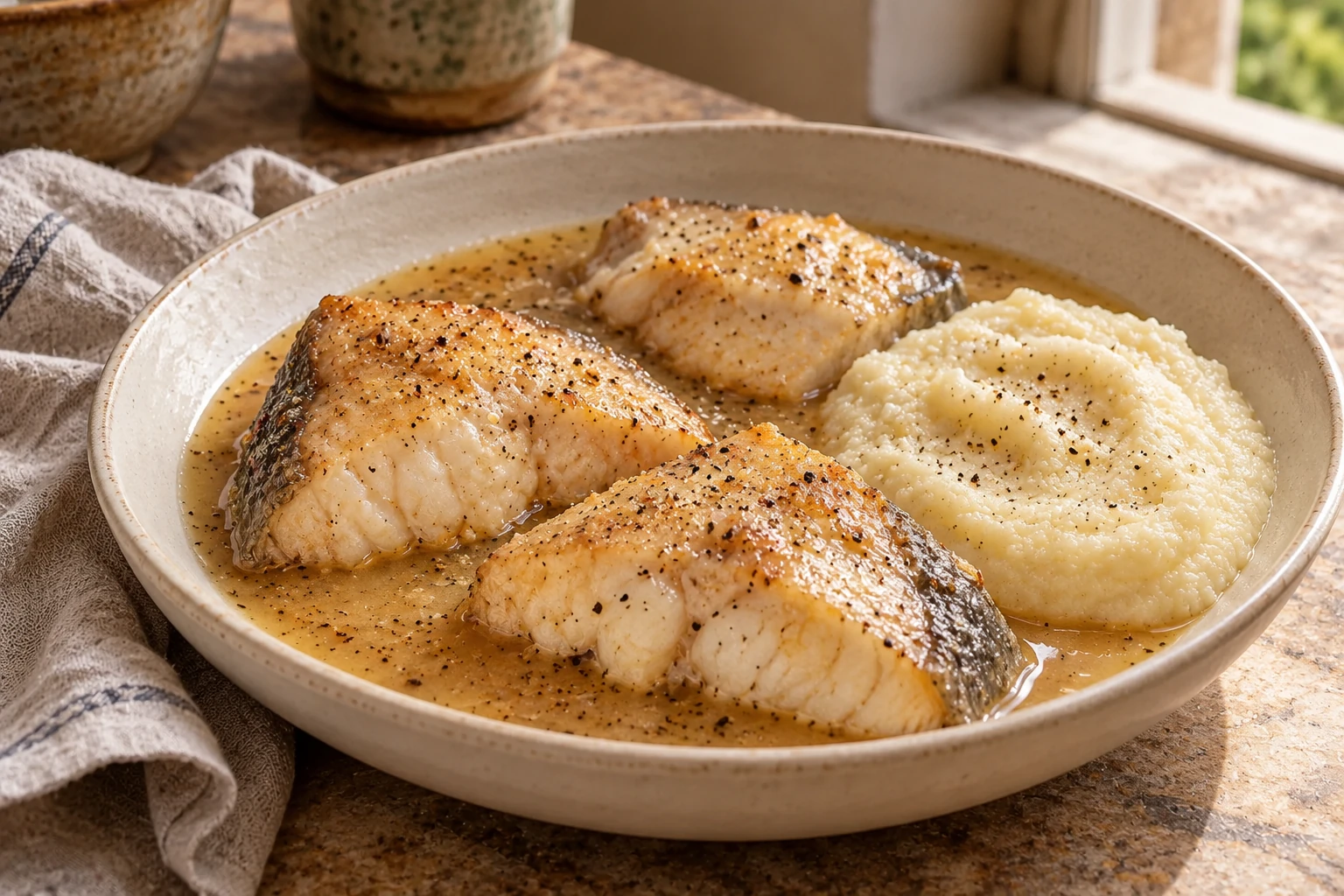
White maize gives this polenta its pale color. A bramata meal has a noticeable grain, and traditional meal needs time in the pan rather than the brief preparation of an instant product. The exact cooking time depends on the milling and the package. In Venetian cooking, polenta accompanies baccalà mantecato, made with prepared stockfish. In Grado, white polenta sits beside boreto, taking up its vinegar-and-pepper sauce. These are serving traditions, not a requirement to buy maize from a particular grower or a named local variety.
Choose soft or grilled
Spoon soft white polenta beside boreto so the sauce can run into it. With baccalà mantecato, serve it freshly cooked or let it set before slicing and grilling. Keep the polenta and fish distinct on the plate, with enough contact to gather the dressing or sauce.
Cook with it
Read both color and cooking method
Choose farina di mais bianco per polenta. Check that it is traditional uncooked meal rather than precooked instant polenta. Bramata describes the milling, not the maize color, so check for bianco as well. Cornstarch and whole maize kernels are different ingredients.
Store the dry meal separately
Keep the meal dry and tightly closed, following the package’s date and storage instructions. Use a clean, dry scoop and protect the bag from splashes while cooking. Treat cooked polenta as a prepared dish and follow the recipe’s cooling and refrigeration directions.
