

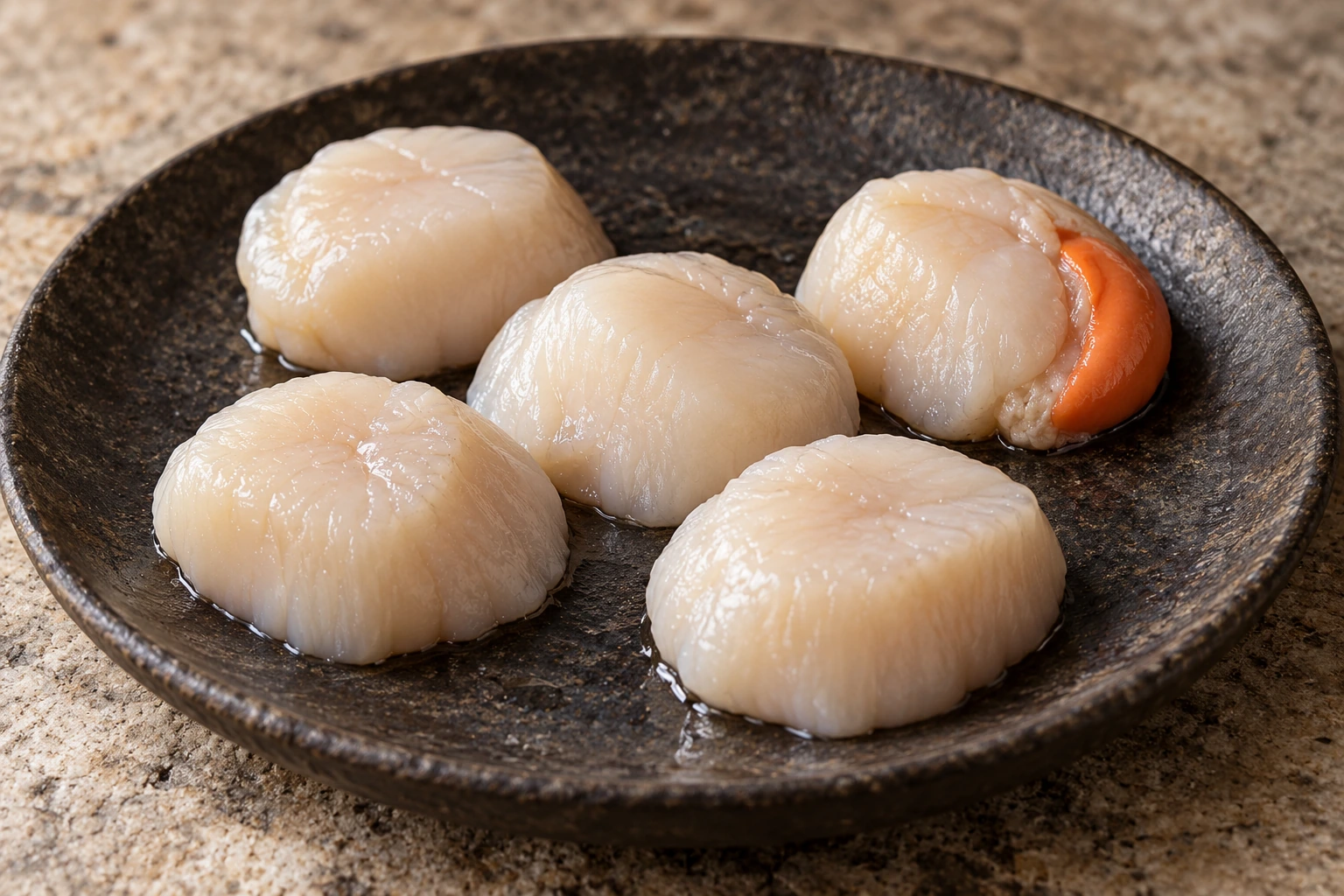
Scallops
Scallops add a rounded piece of tender flesh to Chioggia’s brodeto. Their fan-shaped shells come off before they join the mixed seafood.
- Identity
- Pectinidae; examples include Mediterranean Pecten jacobaeus and Atlantic Pecten maximus.
- Form for the pan
- Raw shucked scallops, cleaned before cooking.
Prepare the right cut
Ask the fishmonger to shuck and clean the scallops, retaining the edible muscle and coral. Check that no shell fragments remain. Keep each scallop intact for the brodeto and add it at the shellfish stage before the fish fillets, following the recipe’s sequence. Stir gently to avoid breaking the soft flesh.
In Adriatic fish cooking
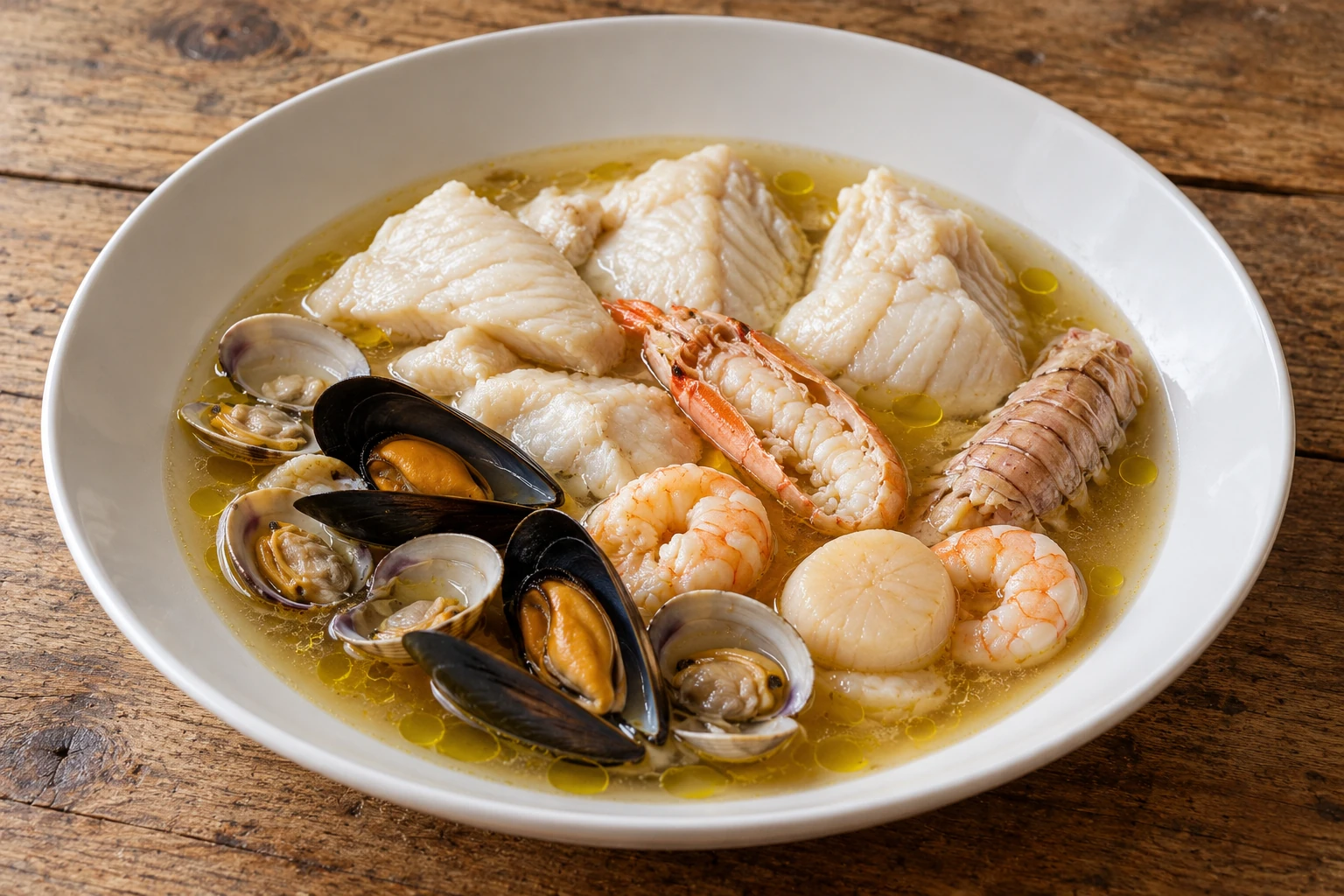
In brodeto de pesse alla ciosota, capesante join mussels, clams, mantis shrimp, prawns and fish fillets. They are opened and cleaned before cooking, rather than served in their shells. The white muscle and the coral form a different texture from the flaking fish. Mediterranean cappasanta and cappasanta atlantica are sold under distinct names; capesante alone does not establish where a purchase was caught.
Cook with it
Confirm species and purchase form
Buy raw scallops and specify shucked flesh for the pan. Check whether the purchase includes coral or muscle alone, and read the species and origin on the label. Pecten jacobaeus and Pecten maximus should not be silently relabelled as the same Mediterranean catch.
Keep it cold until cooking
Follow the seller’s storage directions and the package date. Keep raw seafood covered and refrigerated, separate from food ready to eat. Prepare the fish stock and seafood with clean tools and keep the cleaned pieces cold until their turn in the pan.
