

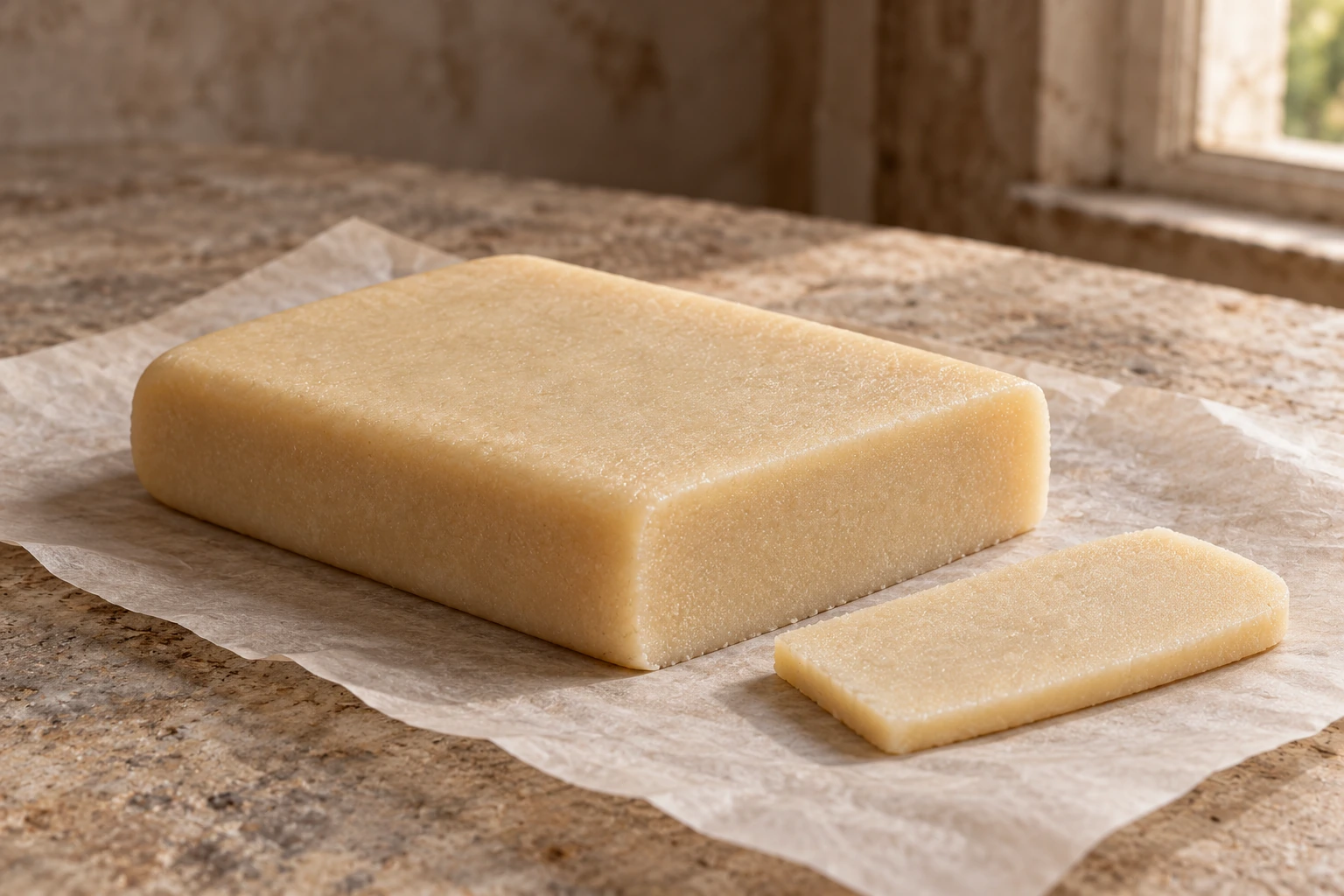
Plain almond marzipan
Plain almond marzipan is a sweet, moldable paste ready to roll into cake linings and decorations. For the pale cassata lining, choose an uncolored product made with almonds and sugar.
- Purchase form
- Ready-made, uncolored almond marzipan.
- Preparation
- Knead briefly, then roll and cut.
- In cassata
- A measured almond-paste lining beside sponge cake.
Roll a measured sheet
Weigh the marzipan before starting. Knead it briefly until pliable, then roll to the thickness given in the recipe, using only the measured dusting sugar needed to prevent sticking. Cut panels to fit the mold and press joins gently. Keep the remaining paste covered while working so its surface does not dry. Do not add water to turn it into a spread.
Almond paste with a structural role
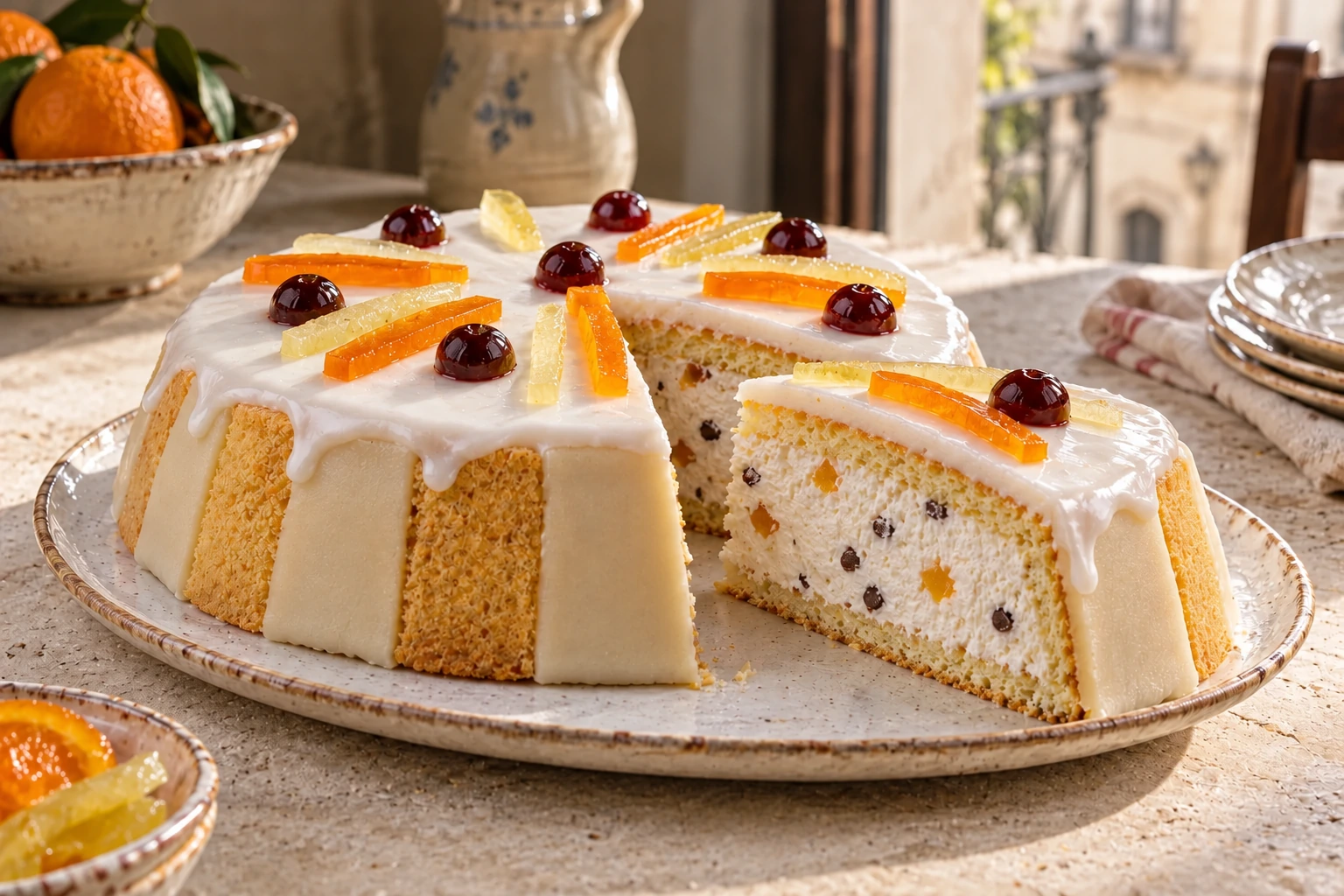
Marzipan brings almonds and sugar together in a fine paste that can be formed into blocks, sheets and small shapes. In cassata, almond paste lines the mold alongside pieces of sponge and helps enclose the ricotta cream. Leaving it pale gives the lining the natural color of the prepared paste. The proportions of almonds and sugar vary between products. For this use, the useful distinction is a finished, pliable marzipan intended for rolling and modeling. Unsweetened almond butter, ground almonds and a loose almond filling do not perform the same job.
Fit the lining around the cream
Alternate marzipan panels and sponge as directed for cassata, then fill the lined mold. The paste is part of the cake’s structure and sweetness, rather than an unlimited garnish. Use the measured quantity, including any pieces reserved to patch small gaps.
Cook with it
Choose by ingredients and purpose
Buy a plain, uncolored almond marzipan labeled for rolling, modeling or covering cakes. Check that almonds are present and read the ingredient list before choosing a paste sold under a broader almond-paste name. White sugar fondant contains no necessary almond component, while colored modeling pastes may have different ingredients. Avoid chocolate-coated marzipan confectionery when you need an uncoated sheet for a cake lining.
Seal against drying and strong smells
Keep the unopened pack in the cool, dry conditions specified by its manufacturer. After opening, wrap the unused paste closely and place it in a closed food container, following the pack’s storage instructions. Protect it from sunlight and strong odors. Once incorporated into a ricotta cake, store the finished cake in the refrigerator as its recipe directs.
