

Skip to content
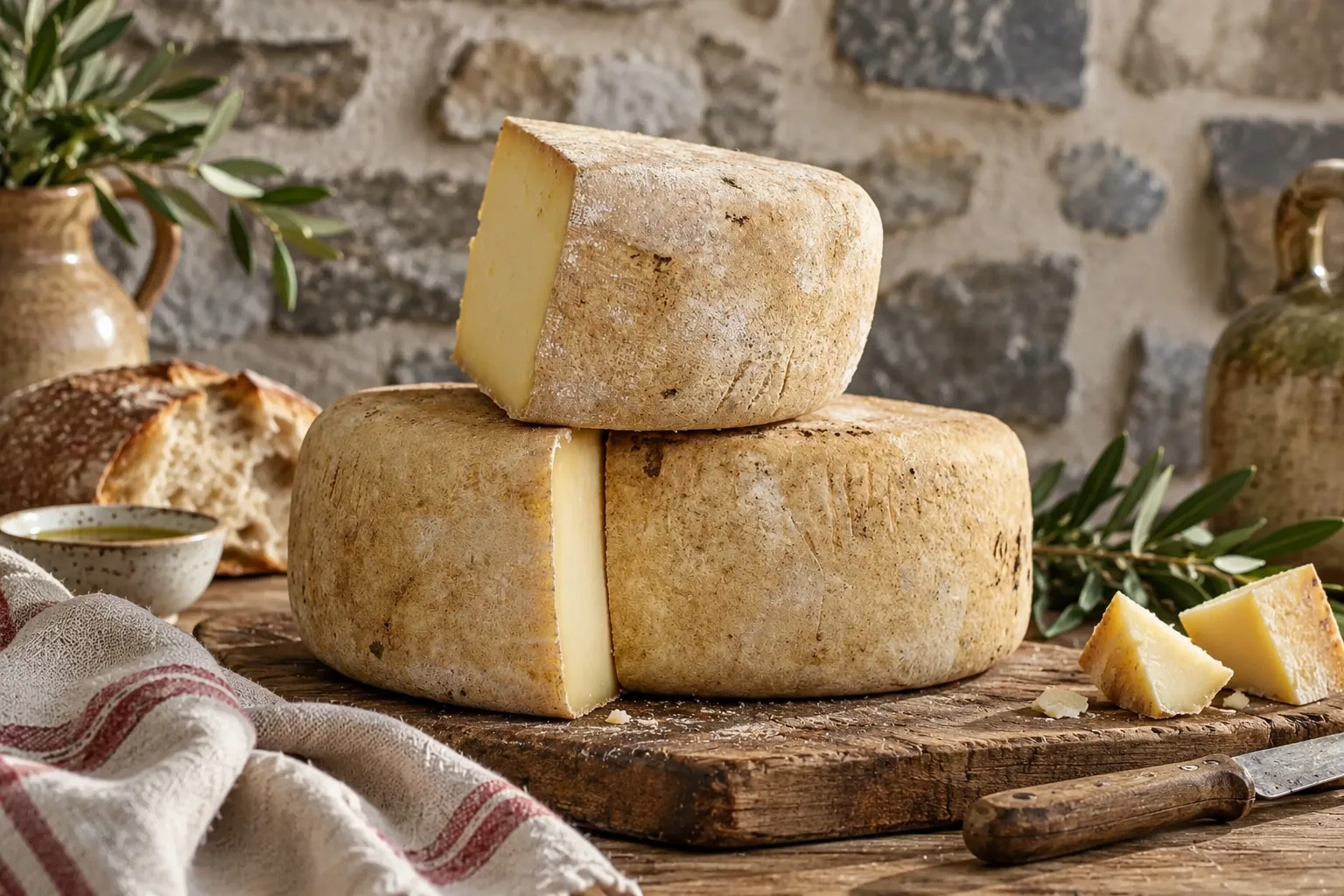
Aged cheese wheels against a stone wall

Pecorino Siciliano

Pecorino Siciliano DOP is a raw sheep’s milk cheese made across Sicily, pressed in rush baskets and sold in three ages: Fresco, Semistagionato and Stagionato.

Milk
Whole raw sheep’s milk
Protection
DOP since 1996
Where it is made
The whole of Sicily
Fat on dry matter
At least 40%

A basket-marked cheese with a long name

Pecorino Siciliano was among the cheeses Italy recognised in 1955.

Italy gave Pecorino Siciliano a protected designation of origin by decree in 1955, and the European Union registered it as a DOP in 1996. The rules call the tradition very old and set no date on it. The rind still records the method: every form is shaped and turned in a rush basket, which leaves its woven pattern on the surface.

Until 2020 the DOP applied only to the cheese aged at least four months. The 2020 amendment brought the younger cheese under the name as Fresco and Semistagionato, dropped the old Tuma and Primo sale stages from the rules, and lifted the limit that kept production between October and June.

Lamb rennet, rush baskets and hot whey

The milk comes from sheep of any breed or cross, fed on pasture, fresh forage, hay and straw; at least 80% of their yearly dry feed must come from Sicily, and silage is banned. Milk from one or two milkings is worked within 24 hours, warmed to no more than 40 °C and moved to a wooden vat. Lamb rennet paste from Sicilian suckling lambs sets it in 40 to 50 minutes.

The cheesemaker breaks the curd with a wooden stick, the rotula, down to the size of rice grains, adds water at 70–90 °C and lets it rest. The curd is then pressed by hand into rush baskets. After one or two hours the forms are cooked for three to four hours in the hot whey left from making ricotta, the scotta, and turned in their baskets to take the imprint. They firm up for a day or two, are salted dry and/or in brine, and ripen at 14–18 °C on untreated wooden shelves.

The three ages

Fresco
20–30 days; 3–5 kg; no rind
Semistagionato
Up to 90 days; 3–5 kg; thin straw-yellow rind
Stagionato
At least 4 months; 6–14 kg; yellowish rind
Sicily

All of Sicily

The sheep must be raised, the milk produced and the cheese made and ripened in Sicily. Only cutting into portions and packing may happen elsewhere.

Sicily

At the table

Fresco and Semistagionato are sweet, with the aromas of pasture, and both may be made with whole black peppercorns, the pepato style. Serve them as table cheeses. Stagionato has a compact, straw-yellow paste with few eyes and a sharper, piccante flavour: grate it over pasta courses or eat it with bread and olives.

Reading the rind

Every form carries an oval casein tag with the name, “D.O.P.”, the type, a Trinacria and a serial number. Stagionato also gets a fire brand: a circle with a Trinacria, burned onto a face after 120 days. On pre-cut portions, look for the red ring logo with a black sheep’s head, and a piece of rind or face on the cut. The name cannot be translated or qualified with words such as extra or superiore.

Questions worth asking

Are tuma, primo sale and canestrato Pecorino Siciliano DOP?

No. They are traditional names for young or basket-marked sheep’s cheese. Since 2020 the DOP covers only Fresco, Semistagionato and Stagionato, each sold with the casein tag.

Is it the cheese of pasta alla Norma?

No. Pasta alla Norma is finished with ricotta salata. Use grated Pecorino Siciliano Stagionato on other pasta dishes.

Is the milk pasteurised?

No. The rules require whole raw sheep’s milk.

A letter from Italy, once a month.

Each month: one story, two recipes, an ingredient and a wine of the month, places worth the trip, and the month’s calendar.

One letter a month. Unsubscribe at any time. We never share your address. Choose your desks